
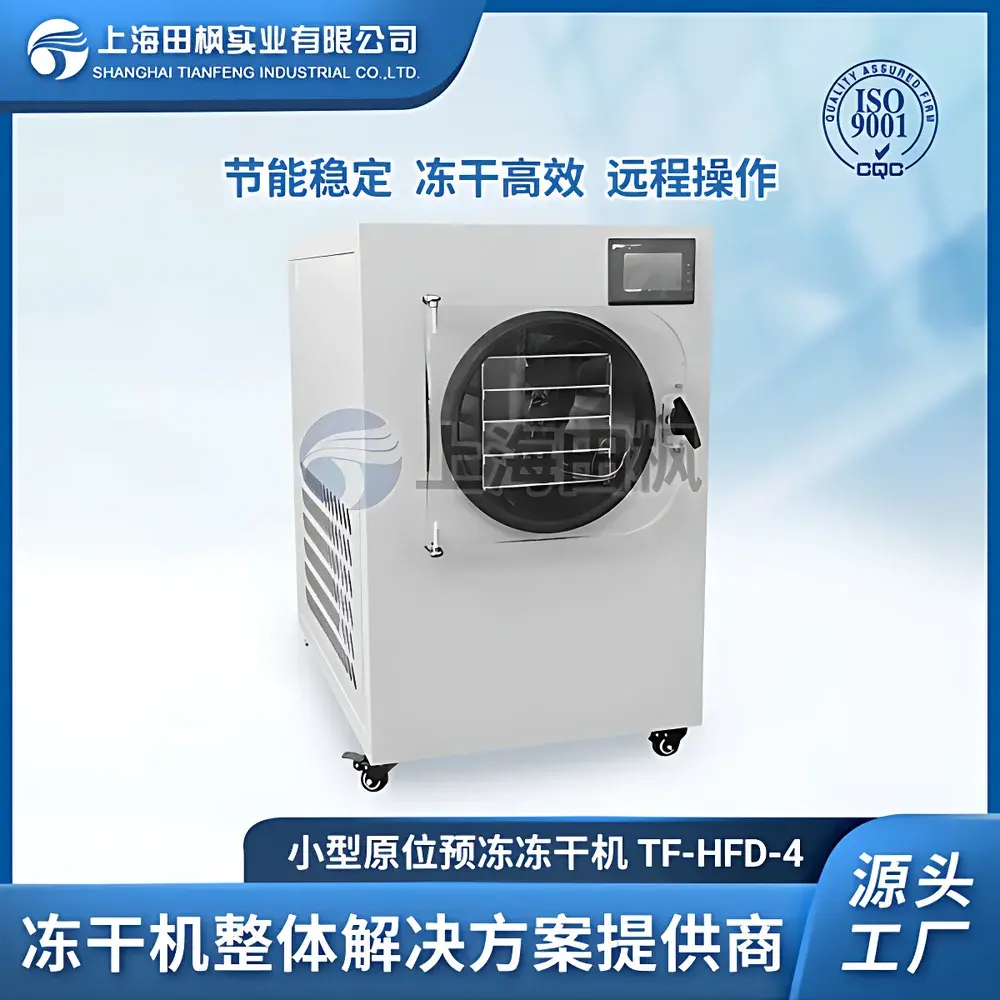
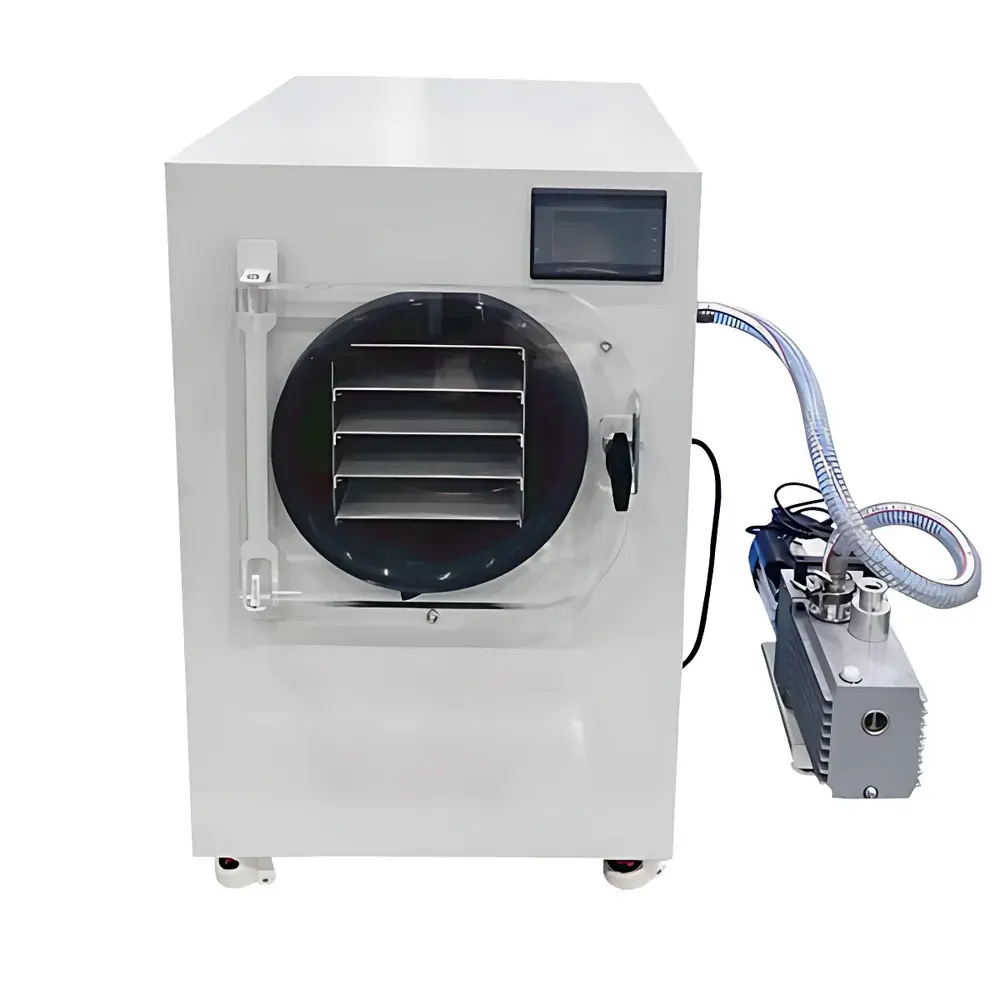
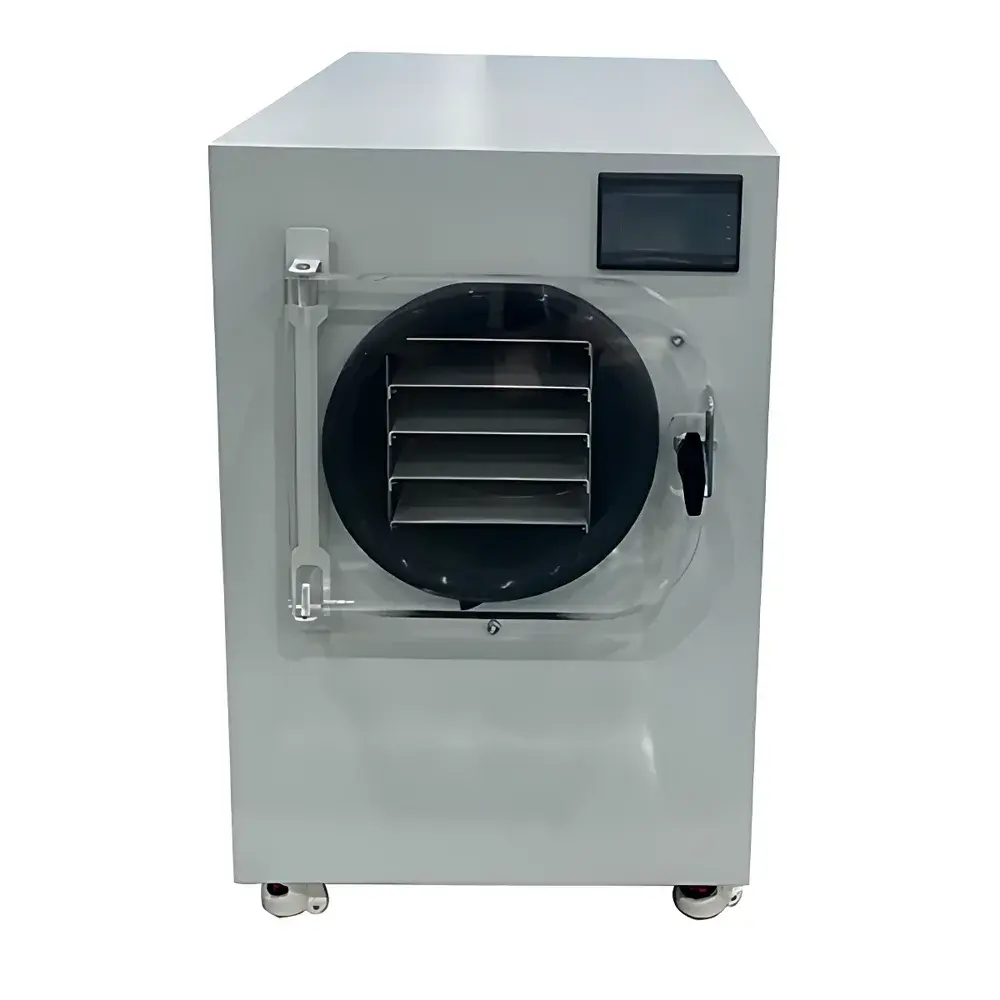
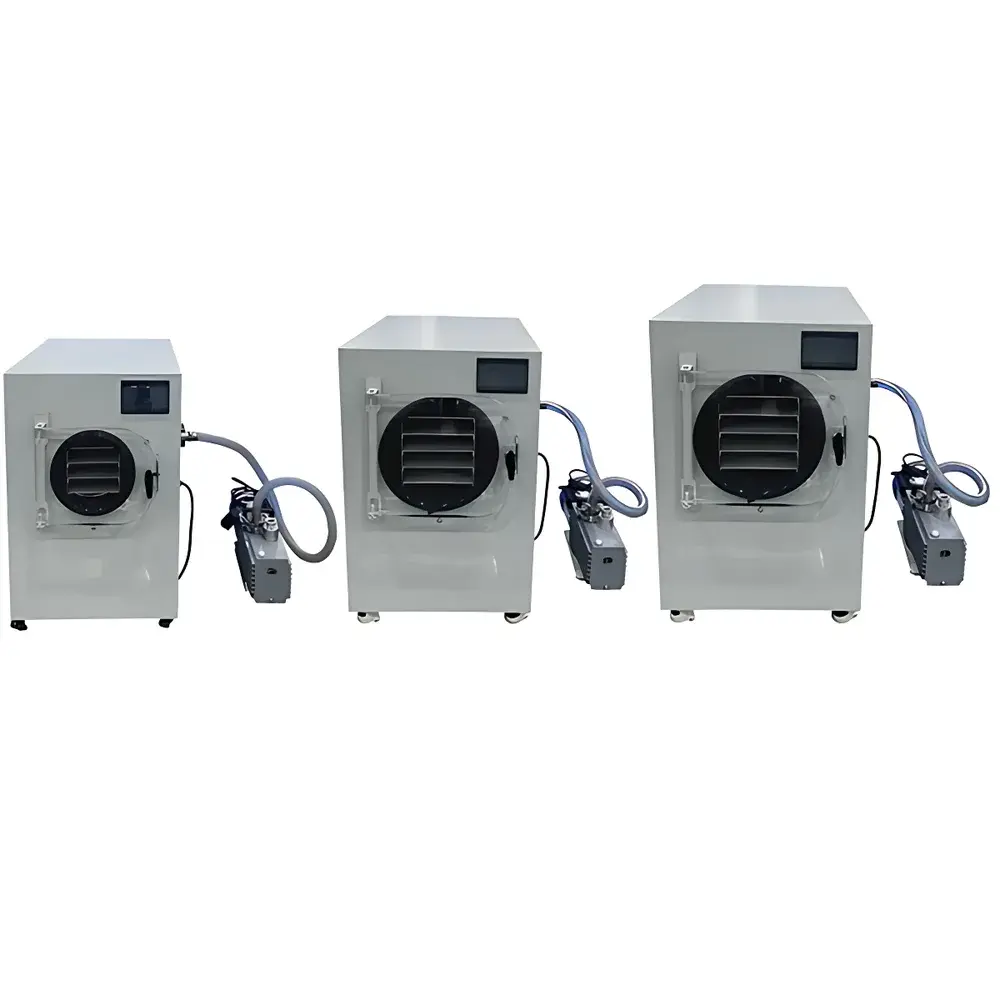
TF-HFD-4 Tianfeng Benchtop Freeze Dryer for Laboratory-Scale Food, Biopharmaceutical, and Herbal Applications
| Brand | Tianfeng |
|---|---|
| Origin | Shanghai, China |
| Manufacturer Type | Direct Manufacturer |
| Product Category | Domestic |
| Model | TF-HFD-4 |
| Instrument Type | Standard Shelf-Type Freeze Dryer |
| Application Scope | Laboratory Use |
| Lyophilization Area | 0.35 m² |
| Ultimate Vacuum (No Load) | 10 Pa |
| Condensate Capacity (24 h) | 5 kg/24 h |
| Cold Trap Temperature | ≤ −40 °C |
| Main Unit Dimensions | 550 mm × 885 mm × 865 mm |
| Temperature Control Range | −30 °C to +60 °C |
| Sample Tray Size | 195 mm × 445 mm × 20 mm |
| Power Supply | 220 V, 50 Hz |
| Rated Power | 1700 W |
| Construction Material | SUS304 Stainless Steel Chamber & Trays |
| Viewing Window | Transparent Acrylic Door |
| Control System | Touchscreen Interface with Real-Time Curve Display & Programmable Freeze-Drying Protocols |
| Defrosting | One-Touch Automatic Defrost |
| Safety Features | Over-Temperature Protection, Current Monitoring, Vacuum Interlock |
Overview
The TF-HFD-4 is a compact, benchtop shelf-type freeze dryer engineered for precision lyophilization in research laboratories, pilot-scale food development, and early-stage biopharmaceutical formulation work. It operates on the principle of sublimation-based primary drying: frozen samples are subjected to high vacuum (≤10 Pa, no-load) while heat is carefully applied to facilitate direct phase transition from ice to vapor—bypassing the liquid phase entirely. This preserves thermolabile compounds, minimizes structural collapse, and yields highly porous, rehydratable powders ideal for functional foods (e.g., catfish jerky powder, egg noodle flakes), botanical extracts, probiotics, and enzyme preparations. Designed for reproducible small-batch processing (0.35 m² shelf area), the unit integrates a high-efficiency cold trap (≤−40 °C) capable of condensing up to 5 kg of water vapor over 24 hours—sufficient for routine multi-sample runs without manual intervention.
Key Features
- Stainless steel (SUS304) chamber and sample trays ensure corrosion resistance, cleanability, and compliance with GMP-aligned lab hygiene standards.
- Transparent acrylic front door enables real-time visual monitoring of sublimation progress, ice formation, and cake morphology—critical for process optimization and troubleshooting.
- Intuitive 7-inch capacitive touchscreen interface supports fully programmable freeze-drying cycles, including ramped freezing, hold steps, controlled primary drying ramps, and secondary drying profiles.
- Integrated data logging records shelf temperature, chamber pressure, cold trap temperature, and elapsed time—exportable via USB for audit-ready documentation.
- Low-noise, high-torque compressor system (imported key components) delivers stable cooling performance with reduced mechanical vibration—enhancing measurement fidelity during sensitive thermal transitions.
- One-touch automatic defrost eliminates manual ice removal; combined with over-temperature protection and vacuum interlock, it ensures operational safety and system longevity.
- Energy-efficient architecture (1700 W rated power) maintains low operating current draw, minimizing thermal load on shared lab circuits.
Sample Compatibility & Compliance
The TF-HFD-4 accommodates diverse sample formats—including vials, Petri dishes, and custom trays (195 × 445 × 20 mm)—making it suitable for homogeneous slurries (e.g., fish protein hydrolysates), viscous pastes (egg-based noodles), delicate biological suspensions, and powdered herbal matrices. Its −30 °C to +60 °C shelf temperature range supports both slow pre-freezing of heat-sensitive biologics and accelerated secondary drying of low-moisture food powders. While not certified for cGMP manufacturing, the device meets essential engineering benchmarks referenced in ISO 22000 (food safety), USP (sterile processing principles), and ASTM F2337 (freeze-drying equipment validation guidance). Its stainless steel construction and traceable parameter logging support GLP-compliant documentation workflows.
Software & Data Management
The embedded control firmware provides real-time graphical display of shelf temperature vs. time, chamber pressure trends, and cold trap temperature dynamics—enabling immediate identification of endpoint transitions (e.g., pressure rise indicating primary drying completion). All curves and setpoints are timestamped and stored internally (≥100 cycles). Data export is supported via USB 2.0 to CSV or PDF formats, facilitating integration into LIMS environments or regulatory submissions. The system does not require external PCs or proprietary software licenses—reducing IT overhead and cybersecurity exposure common in networked lab instruments.
Applications
- Food science: Development of shelf-stable pet nutrition powders (e.g., catfish jerky), instant egg noodle flakes, fruit/vegetable crisps, and probiotic-enriched snacks.
- Phytochemistry: Stabilization of volatile terpenoids and polyphenols from traditional Chinese herbs without solvent degradation.
- Biotechnology: Lyophilization of bacterial cultures, plasmid DNA solutions, and diagnostic enzyme conjugates prior to storage or transport.
- Material science: Preparation of aerogel precursors and porous excipient matrices for controlled-release formulations.
- Academic teaching: Hands-on demonstration of phase diagrams, mass transfer kinetics, and vacuum thermodynamics in undergraduate physical chemistry or food engineering labs.
FAQ
What is the maximum sample volume per batch?
Based on the 0.35 m² shelf area and typical loading density (5–10 mm depth), the unit supports up to ~2.5 L of aqueous solution per cycle—subject to solute concentration and eutectic behavior.
Can the TF-HFD-4 be used for sterile processing?
No. It lacks ISO Class 5 airflow certification, steam-in-place (SIP) capability, or integrated HEPA filtration. Sterile applications require dedicated pharmaceutical-grade systems validated per FDA 21 CFR Part 11 and EU Annex 1.
Is remote monitoring supported?
Not natively. The system operates as a standalone instrument with local touchscreen control and USB data export only—intentionally avoiding network connectivity to mitigate cybersecurity risks in regulated environments.
How often does the oil pump require maintenance?
With standard usage (2–3 cycles/week), the dual-stage rotary vane vacuum pump requires oil replacement every 500 operating hours or annually—whichever occurs first—as specified in the maintenance logbook.
Does the unit comply with CE or UL safety directives?
It conforms to GB/T 19001–2016 (Chinese ISO 9001 equivalent) and meets basic IEC 61010-1 electrical safety requirements for laboratory equipment; however, it does not carry CE or UL marks for export to EU or North America without regional type-testing and certification.



