
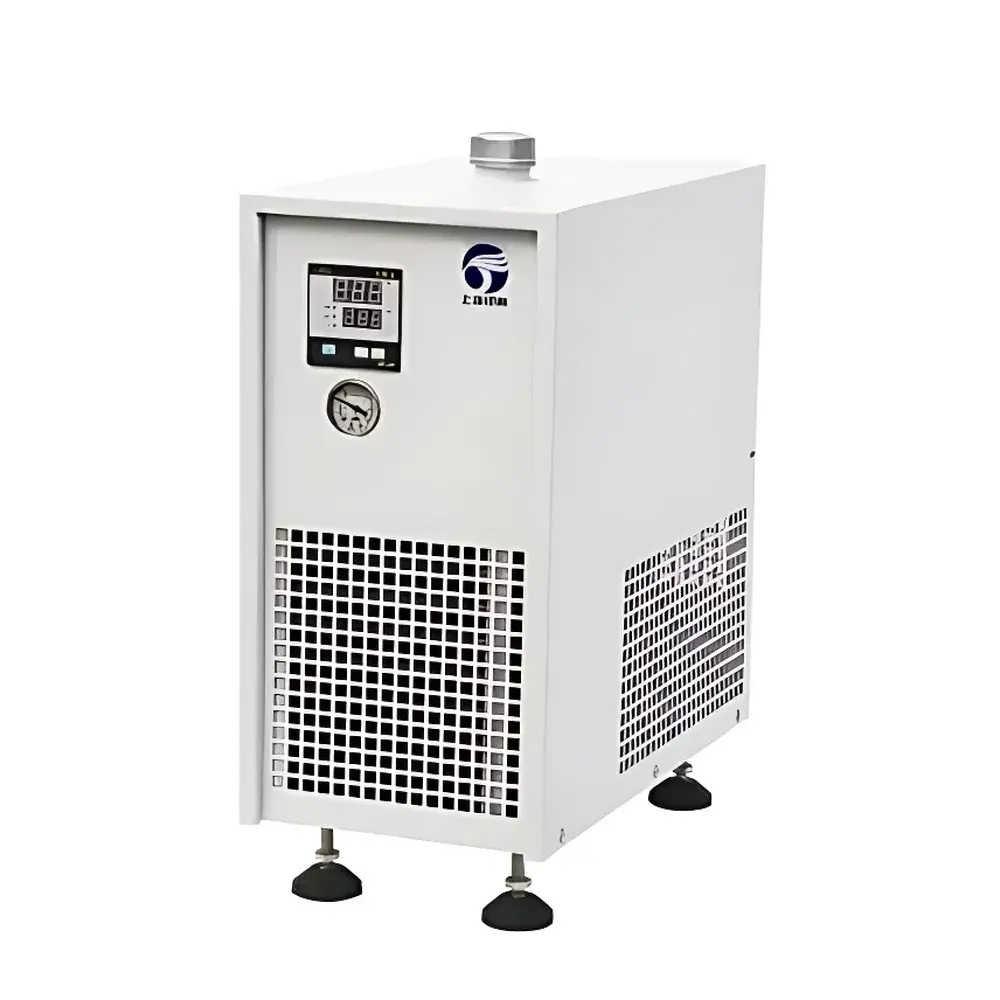
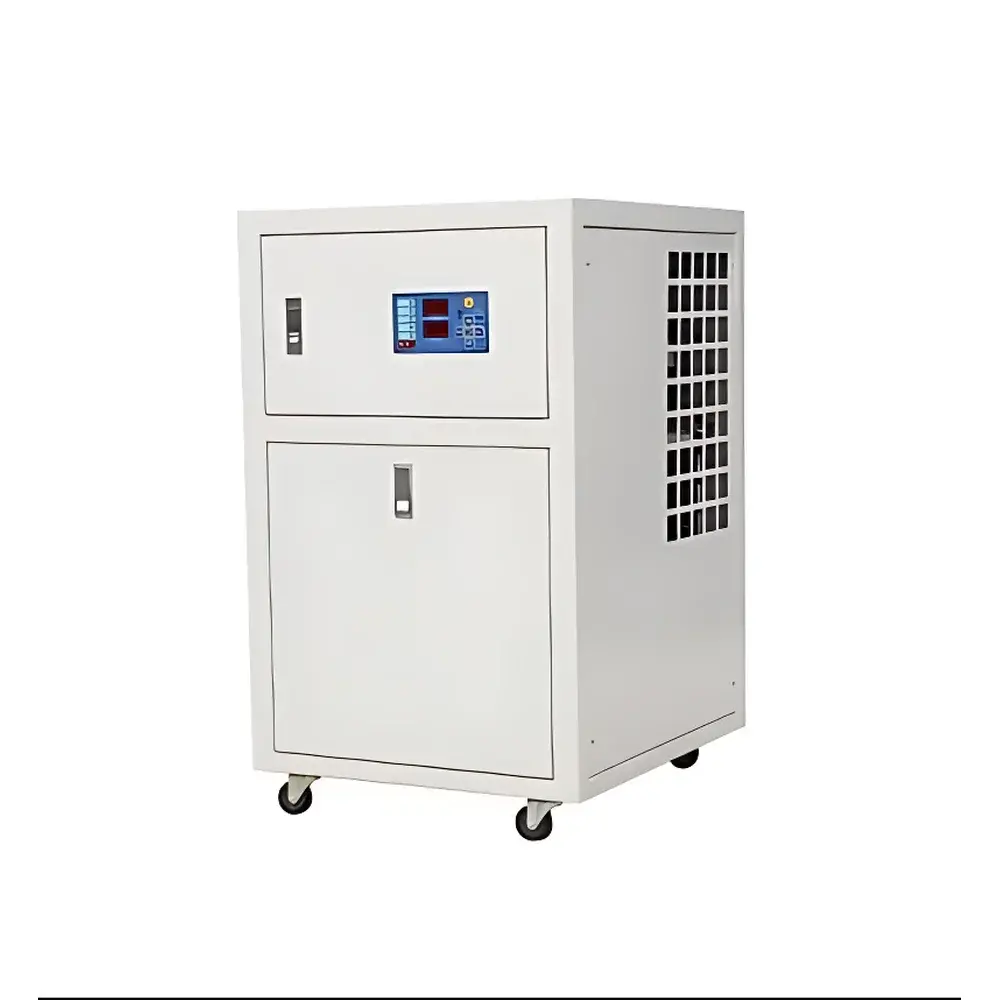
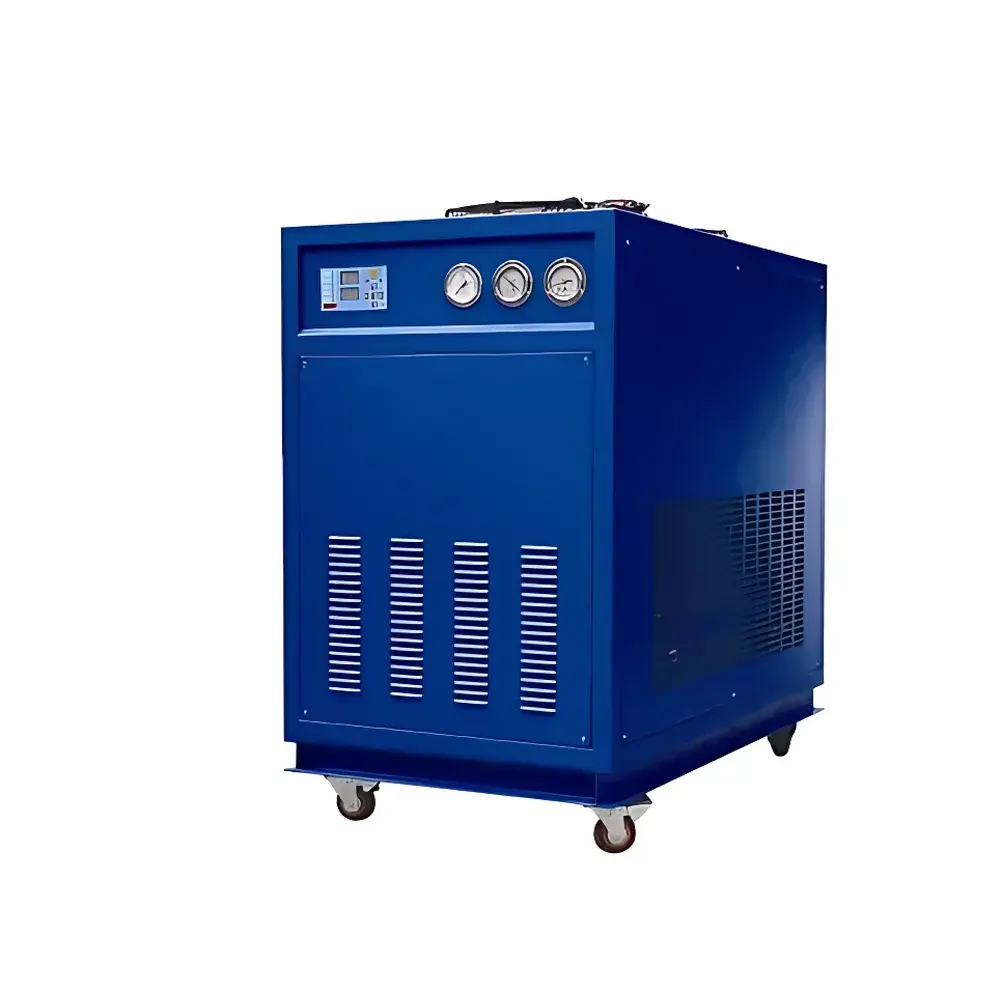
Tianfeng LS-2HP Integrated Circulating Chiller
| Brand | Tianfeng |
|---|---|
| Origin | Shanghai, China |
| Manufacturer Type | Direct Manufacturer |
| Equipment Type | Integrated Circulating Chiller |
| Cooling Method | Water-Cooled |
| Temperature Control Range | 0–10 °C |
| Cooling Capacity | 5.2 kW |
| Temperature Stability | ±0.1 °C |
| Circulating Pump Pressure | 2.0 bar |
| Flow Rate | 2 L/min |
| Reservoir Volume | 45 L |
| Operation Mode | Continuous Duty |
Overview
The Tianfeng LS-2HP Integrated Circulating Chiller is an engineered thermal management solution designed for precision temperature control in laboratory and industrial instrumentation requiring stable, low-temperature coolant circulation. Based on vapor-compression refrigeration cycle architecture with scroll compressor technology, it delivers consistent cooling performance across extended operating cycles. The unit maintains a tightly regulated bath temperature between 0 °C and 10 °C with a stability of ±0.1 °C—critical for applications where thermal drift directly impacts measurement integrity or process repeatability. Its integrated design eliminates external piping complexity while ensuring compact footprint (800 × 600 × 1065 mm), making it suitable for placement beneath fume hoods, adjacent to analytical instruments, or within constrained lab utility spaces. Unlike air-cooled chillers, its water-cooled condenser enables stable operation under ambient temperatures up to 35 °C, provided the facility’s cooling water supply meets inlet temperature (≤30 °C) and flow requirements.
Key Features
- High-efficiency scroll compressor from European OEM suppliers, delivering stable refrigeration output with low mechanical vibration and extended service life under continuous-duty operation.
- Stainless steel reservoir (45 L capacity) and circulation pump housing—resistant to corrosion from deionized water, glycol-water mixtures, or mild aqueous coolants commonly used in analytical instrumentation.
- Digital PID temperature controller with real-time display of outlet fluid temperature; optional RKC (Japan) controller available for enhanced setpoint resolution and ramp/soak programming.
- Integrated safety architecture: high/low pressure cut-off switches, phase failure protection, over-temperature alarm, flow loss detection, and automatic shutdown with fault code indication.
- Adjustable pump output: pressure up to 2.0 bar and flow rate of 2 L/min—sufficient to support multi-instrument daisy-chaining or high-backpressure applications such as laser cavity cooling or XRD goniometer thermal regulation.
- Compliance-ready construction: CE-marked electrical components (Siemens, Schneider, Omron), UL-listed refrigerant circuitry, and configurable audit trail logging when paired with optional data acquisition modules.
Sample Compatibility & Compliance
The LS-2HP chiller is compatible with a broad range of heat-generating laboratory instrumentation requiring closed-loop liquid cooling, including graphite furnace atomic absorption spectrometers (GFAAS), inductively coupled plasma optical emission spectrometers (ICP-OES), ICP-mass spectrometers (ICP-MS), X-ray fluorescence (XRF) analyzers, X-ray diffractometers (XRD), scanning electron microscopes (SEM), and transmission electron microscopes (TEM). Its 0–10 °C operating window aligns with manufacturer-specified coolant inlet requirements for most high-power RF generators, detector cryo-stages, and plasma torch cooling manifolds. From a regulatory standpoint, the system supports GLP and GMP environments through configurable event logging (power-on, setpoint change, alarm activation), user-accessible calibration records, and compatibility with 21 CFR Part 11-compliant software interfaces when integrated with validated LIMS or instrument control platforms.
Software & Data Management
While the base LS-2HP operates via front-panel interface, optional RS485/Modbus RTU or Ethernet/IP communication modules enable remote monitoring and control via laboratory network infrastructure. Integration with LabVIEW, MATLAB, or custom SCADA systems permits synchronized thermal management during time-resolved experiments—for instance, maintaining constant detector temperature during long-duration XRD scans or stabilizing laser diode junction temperature during confocal Raman acquisitions. All firmware versions are traceable; configuration parameters—including PID coefficients, alarm thresholds, and pump speed profiles—are stored in non-volatile memory and exportable for audit purposes. Calibration certificates for the integrated PT100 sensor are provided with each unit and may be re-verified per ISO/IEC 17025 protocols using NIST-traceable reference thermometers.
Applications
This chiller serves critical thermal regulation functions across multiple domains: In analytical chemistry labs, it ensures stable plasma torch operating temperature in ICP systems—minimizing spectral drift and improving elemental quantification reproducibility (per ASTM D511, ISO 11885). In materials characterization, it cools XRD detector arrays to reduce dark current noise and extends CCD lifetime. In semiconductor metrology labs, it regulates temperature of ellipsometry light sources and AFM scanner stages to suppress thermal expansion artifacts. Beyond research, it supports controlled cooling in pharmaceutical stability chambers (ICH Q1A), bioreactor jacket circuits, and cleanroom HVAC precooling loops—where precise sub-ambient temperature delivery is required without introducing condensation risks.
FAQ
What is the recommended coolant type for this chiller?
Deionized water is standard for most laboratory applications; 20–30% propylene glycol/water mixtures are acceptable for freeze protection down to –15 °C, provided system compatibility is confirmed.
Can the LS-2HP support multiple instruments simultaneously?
Yes—when configured with a manifold distribution panel and flow-balancing valves, it can serve up to three mid-power instruments (e.g., two ICP peripherals + one XRD detector) with individual temperature monitoring.
Is the unit compliant with international electrical safety standards?
It conforms to IEC 61000-6-3 (EMC emissions) and IEC 61000-6-2 (immunity), carries CE marking, and uses UL-recognized components throughout the power and refrigeration circuits.
How often does the system require preventive maintenance?
Compressor oil and refrigerant levels should be verified annually; condenser water-side strainers require quarterly inspection; PID controller calibration is recommended every 12 months per ISO/IEC 17025 guidelines.
Does the chiller include validation documentation for regulated environments?
Factory-supplied IQ/OQ documentation templates are provided; full qualification support—including PQ protocol development and execution—is available through Tianfeng’s global service team upon request.



