
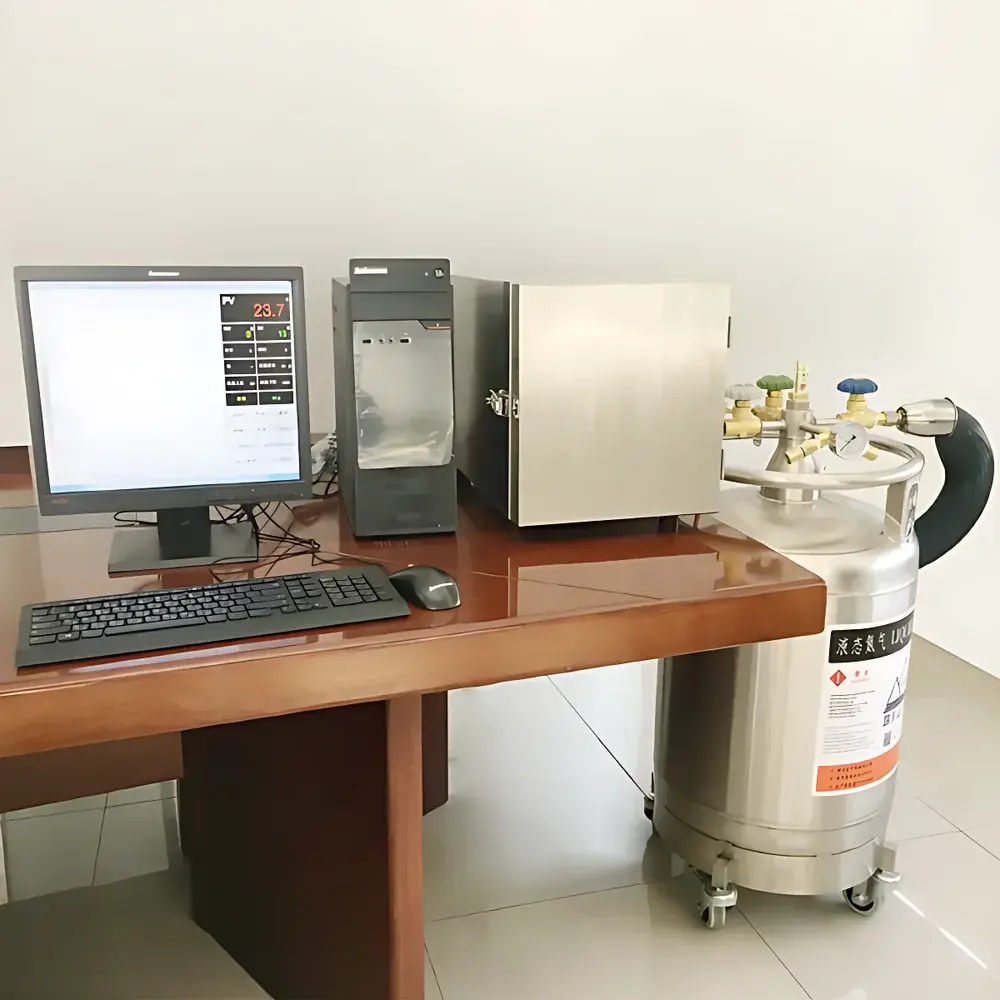
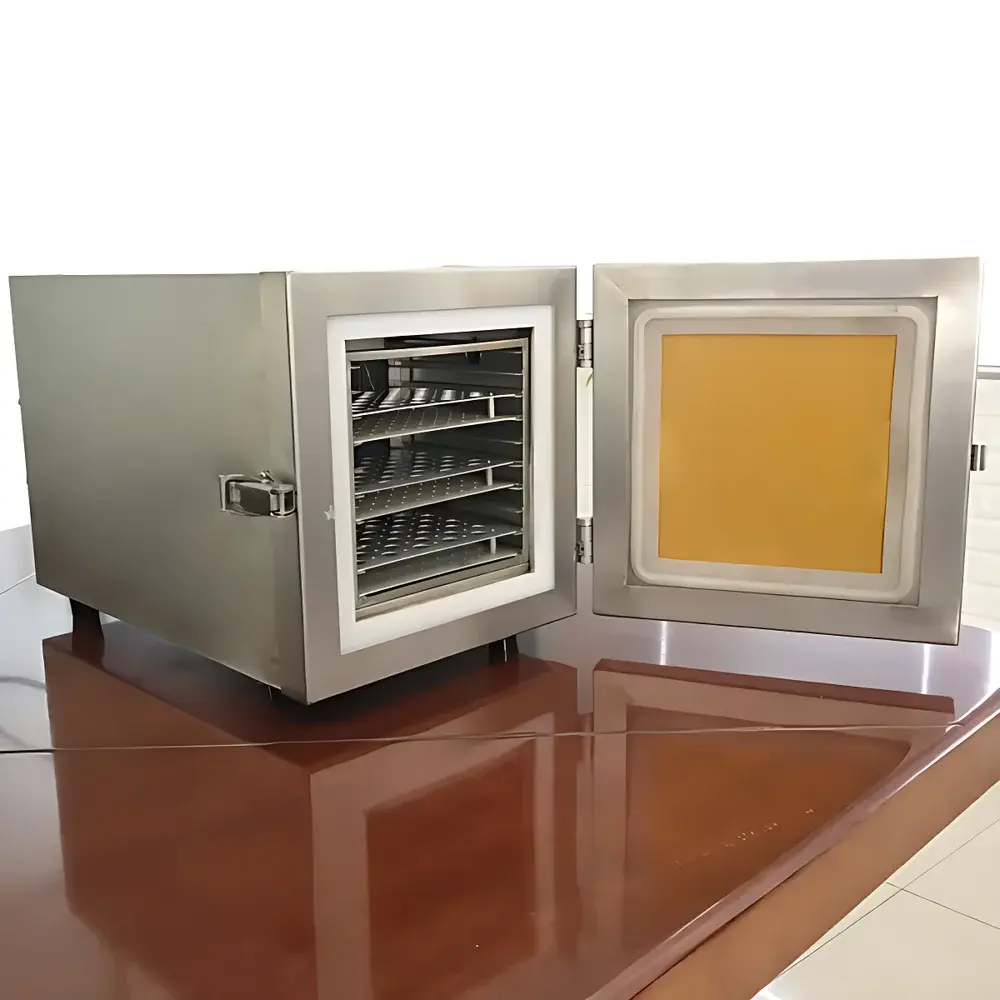
Tianfeng TF-PA Programmable Controlled-Rate Freezer
| Brand | Tianfeng |
|---|---|
| Model | TF-PA |
| Temperature Range | −110 °C to +40 °C |
| Temperature Accuracy | ±0.5 °C |
| Cooling Rate | 0.1–40 °C/min (adjustable) |
| Heating Rate | 0.1–30 °C/min (adjustable) |
| Chamber Dimensions | ≥200 × 200 × 200 mm |
| Sample Capacity | 160 cryovials or 8 blood bags |
| Construction | Fully stainless steel interior and exterior |
| Cryogen | Liquid nitrogen with integrated auto-pressurized 30 L dewar and pressure-regulated delivery system |
| Control Architecture | Embedded PC-based controller with dedicated cryopreservation software |
Overview
The Tianfeng TF-PA Programmable Controlled-Rate Freezer is an engineered solution for reproducible, biologically optimized cryopreservation of sensitive biological specimens. It operates on the principle of controlled-rate freezing (CRF), a thermodynamically grounded methodology that mitigates intracellular ice formation and osmotic stress by precisely regulating heat extraction during phase transition—particularly across the critical nucleation and latent heat release zone (typically −5 °C to −15 °C for aqueous biological systems). Unlike passive or static freezing methods, the TF-PA dynamically modulates liquid nitrogen flow in real time, synchronized with specimen thermal response, enabling user-defined cooling profiles that align with empirically validated cryobiological protocols. Designed for clinical and research laboratories engaged in hematopoietic stem cell banking, tissue banking, reproductive medicine, and regenerative therapeutics, the instrument meets foundational operational requirements for Good Laboratory Practice (GLP) and supports traceability frameworks compatible with ISO 20387:2018 (Biobanking) and AABB accreditation standards.
Key Features
- Microprocessor-controlled liquid nitrogen delivery system with closed-loop feedback based on dual-point chamber and sample temperature monitoring
- Adjustable cooling and heating rates spanning 0.1–40 °C/min and 0.1–30 °C/min respectively—enabling protocol adaptation for diverse cell types (e.g., PBMCs, MSCs, oocytes, corneal tissue)
- Stainless steel cryochamber (≥200 × 200 × 200 mm) with uniform thermal distribution verified per ASTM F2697–21 (Standard Practice for Validation of Controlled-Rate Freezers)
- Integrated 30-liter liquid nitrogen dewar with self-pressurizing regulator and precision pressure-stabilized valve assembly—eliminating external gas supply dependencies
- Real-time graphical interface displaying three independent temperature channels (chamber ambient, reference probe, and optional sample thermocouple), with overlayable cooling curves and rate vectors
- Programmable multi-segment freeze protocols—including hold steps, ramp transitions, and conditional triggers—stored in non-volatile memory with timestamped version control
Sample Compatibility & Compliance
The TF-PA accommodates standard cryogenic formats including 0.5–5.0 mL cryovials (up to 160 units), blood bags (up to 8 units), and custom fixtures for tissue strips or multi-well plates. Its thermal performance has been validated for use with primary human hematopoietic stem/progenitor cells (CD34+), mesenchymal stromal cells, pancreatic islets, and corneal endothelial sheets—each requiring distinct nucleation kinetics and devitrification thresholds. The system supports audit-ready documentation per FDA 21 CFR Part 11 when operated with enabled electronic signature and event-log archiving. All firmware and software revisions are version-tracked and comply with IEC 62304:2015 (Medical Device Software Lifecycle Processes), and mechanical design conforms to IEC 61010-1:2010 for laboratory equipment safety.
Software & Data Management
The embedded Windows-based application provides full lifecycle data governance: automatic generation of .csv and .tdms files containing time-stamped temperature, setpoint, LN₂ flow rate, and alarm status; configurable sampling intervals (1–60 seconds); and bidirectional file indexing via experiment ID, operator name, date, and protocol version. Curve analysis tools include dynamic zoom, derivative calculation (dT/dt), and phase-transition inflection point detection. Exported datasets retain metadata required for regulatory submission (e.g., IND/IDE dossiers). Software updates are delivered via secure HTTPS channel with cryptographic signature verification; legacy protocol libraries remain backward-compatible across firmware generations.
Applications
- Clinical-scale cryopreservation of autologous and allogeneic hematopoietic stem cells prior to transplantation
- Long-term storage of primary human tissues under ISO 20387-compliant biobanking conditions
- Development and validation of novel cryoprotectant formulations requiring precise thermal profiling
- Quality control freezing of reference standards in diagnostic assay development (e.g., flow cytometry controls)
- Preclinical evaluation of cryoinjury mechanisms in organotypic models and 3D bioprinted constructs
- Regulatory stability studies supporting MAAs for advanced therapy medicinal products (ATMPs)
FAQ
What temperature sensors are used, and where are they located?
The system employs calibrated PT100 sensors: one mounted in the chamber wall for ambient reference, one in a thermally isolated well for direct sample proximity monitoring (optional add-on), and one integrated into the LN₂ delivery manifold for feed-line thermal compensation.
Is remote monitoring or network integration supported?
Yes—the instrument features Ethernet (RJ45) and RS-232 interfaces. OPC UA server functionality is available as an optional module for integration into enterprise LIMS or MES platforms.
How is calibration maintained over time?
The system includes a built-in calibration verification routine using NIST-traceable reference points at −80 °C and +25 °C. Full sensor calibration is performed annually using certified dry-block calibrators per ISO/IEC 17025-accredited procedures.
Can the TF-PA be used for vitrification protocols?
While primarily designed for slow-rate freezing, the instrument supports rapid-cool “pre-vitrification” steps (up to 40 °C/min) to achieve target sub-zero temperatures prior to plunge into liquid nitrogen—serving as a staging module within hybrid cryopreservation workflows.
What documentation is provided for regulatory submissions?
A comprehensive DQ/IQ/OQ protocol package—including factory acceptance test reports, traceable calibration certificates, software validation summary, and risk analysis (ISO 14971)—is supplied with each unit.



