
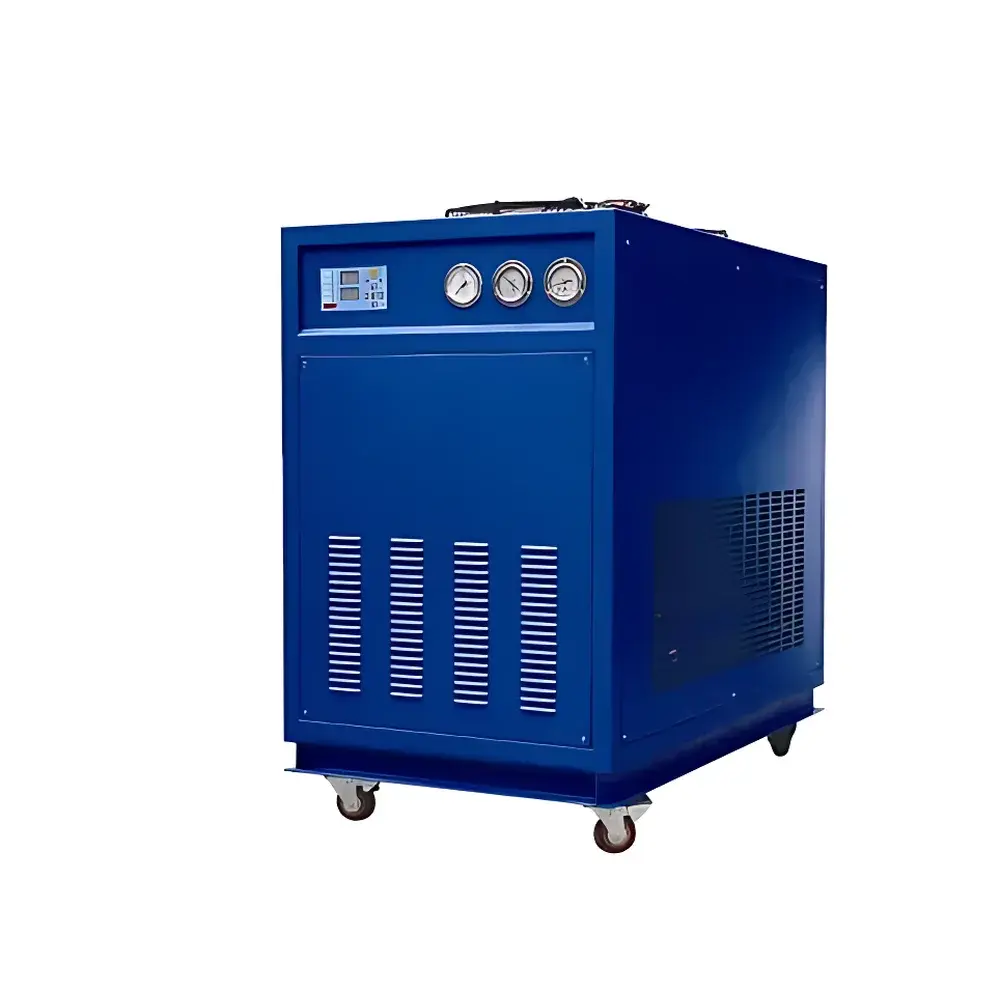
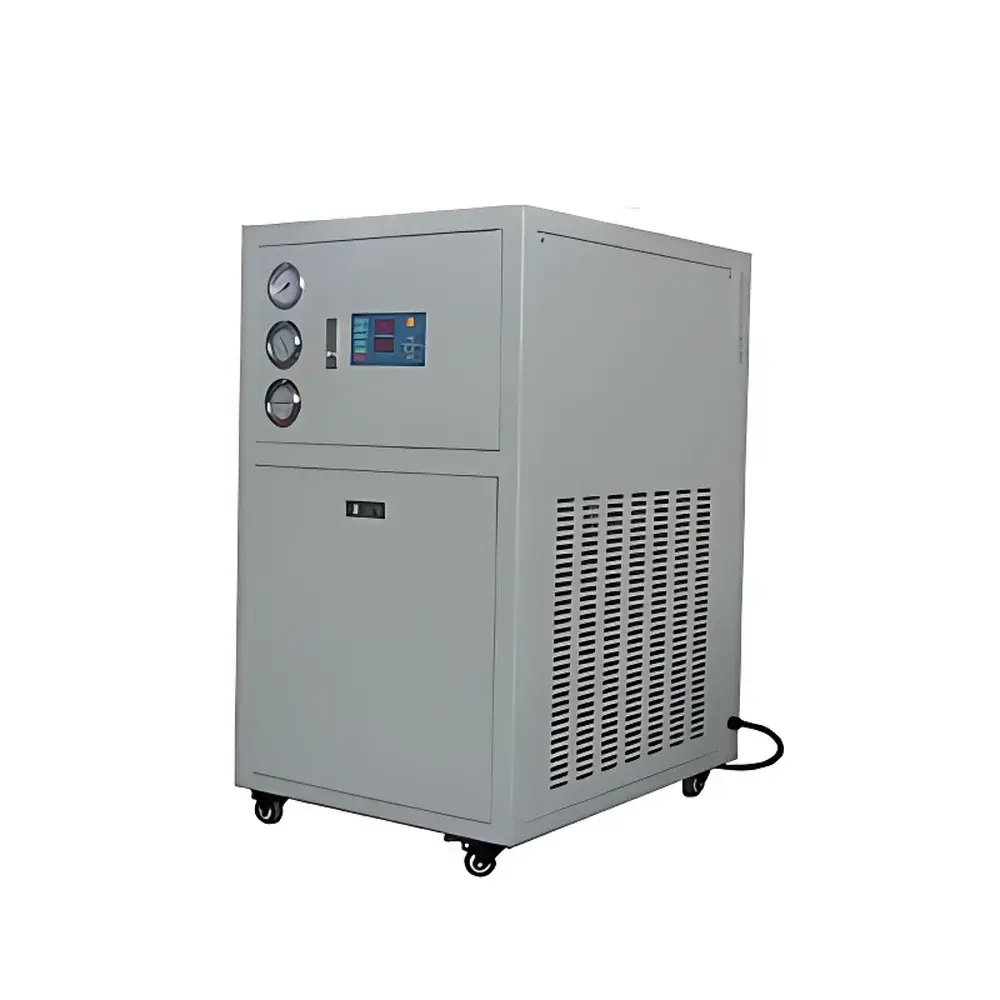
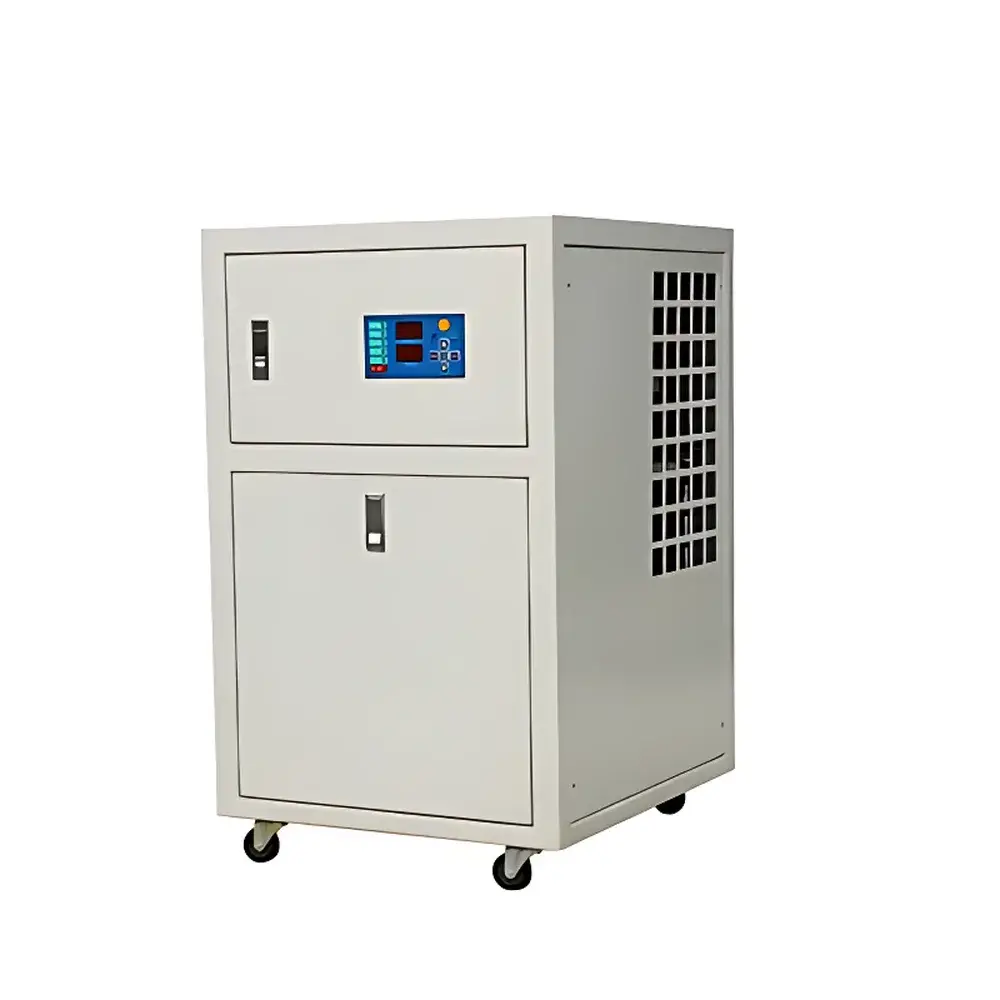
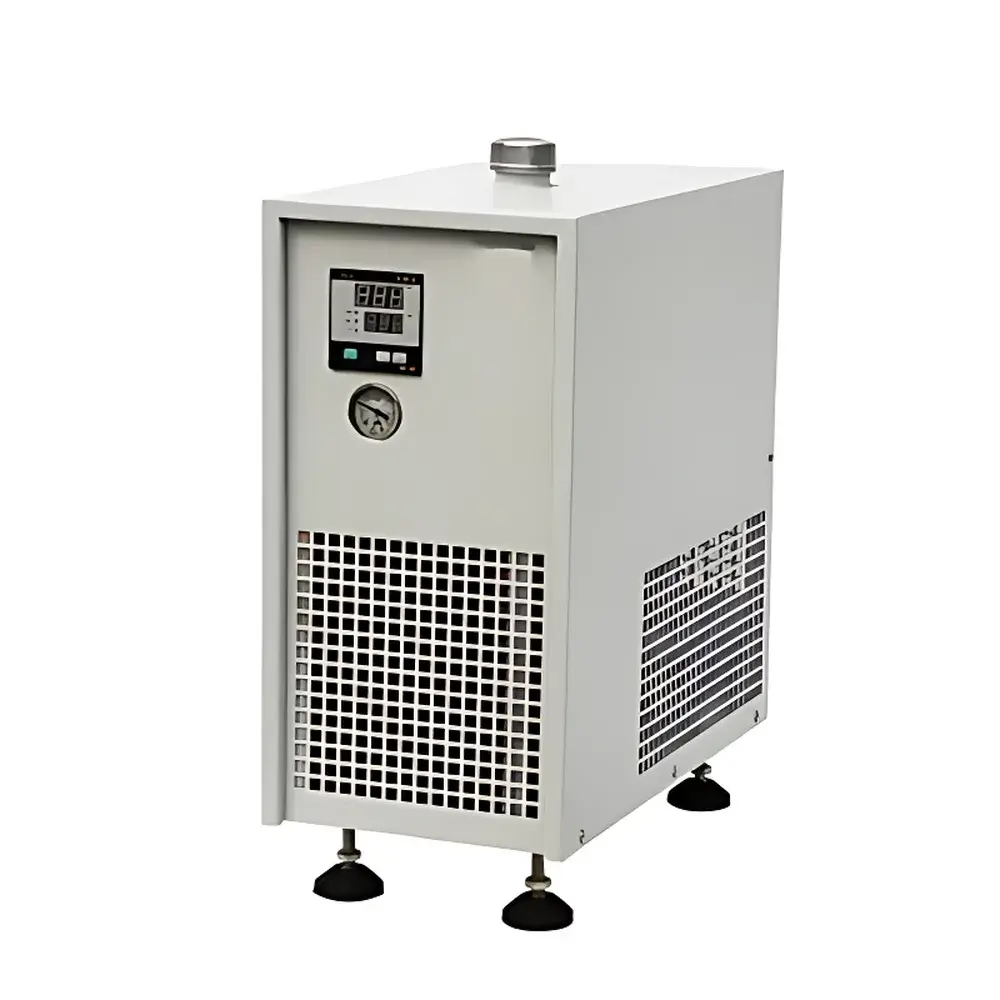
Tianfeng TF-LS-15000W Integrated Circulating Chiller
| Brand | Tianfeng |
|---|---|
| Origin | Shanghai, China |
| Manufacturer Type | Direct Manufacturer |
| Instrument Type | Integrated Unit |
| Cooling Method | Air-Cooled |
| Temperature Control Range | 0–50 °C |
| Refrigeration Capacity | 0.3–97.5 kW |
| Temperature Stability | ±0.1 °C |
| Circulation Pump Pressure | 0–2 bar |
| Circulation Flow Rate | 0–60 m³/h |
| Reservoir Volume | 5.5–500 L |
| Operating Mode | Continuous Duty |
Overview
The Tianfeng TF-LS-15000W Integrated Circulating Chiller is an industrial-grade, air-cooled refrigeration system engineered for precise thermal management of high-heat-load laboratory and production equipment. Based on validated vapor-compression thermodynamics, it employs a hermetic scroll compressor, R22 refrigerant (or R407C/R410A upon configuration), and a stainless-steel coil evaporator to deliver stable chilled water output across a wide operational envelope. Designed for continuous-duty applications, the unit maintains setpoint temperature within ±0.1 °C under dynamic load conditions—critical for instrumentation requiring thermal stability, such as ICP-OES, XRD, SEM/TEM, and graphite furnace AAS. Its compact monoblock architecture integrates refrigeration circuitry, circulation pump, expansion tank, PID controller, and safety monitoring into a single footprint, minimizing installation complexity and spatial demand in constrained lab environments.
Key Features
- Hermetic scroll compressor with high volumetric efficiency and low acoustic emission (<72 dB(A) at 1 m)
- Dual-mode temperature control: fixed-setpoint恒温 mode and adaptive intelligent modulation responsive to real-time load shifts
- Stainless-steel reservoir (300 L standard; configurable up to 500 L) with level sensor and anti-corrosion coating
- High-efficiency copper-tube/aluminum-fin condenser paired with low-noise external-rotor axial fans (15,000 m³/h airflow)
- Digital PID controller with LCD interface, adjustable hysteresis, and programmable ramp-soak profiles
- Comprehensive safety suite: high/low pressure cutout, compressor overheat protection, phase sequence & phase loss detection, flow fault alarm, and dry-run prevention
- Full stainless-steel wetted components (pump head, piping, heat exchanger) compatible with deionized water and inhibited glycol solutions
- Modular electrical architecture using Siemens, Schneider, or Omron contactors, relays, and overload protection devices
Sample Compatibility & Compliance
The TF-LS-15000W supports thermal stabilization of diverse analytical and manufacturing platforms including but not limited to: laser processing systems (cutting, welding, marking), vacuum deposition tools, plasma spectrometers (ICP-MS, ICP-OES), X-ray fluorescence (XRF) and diffraction (XRD) instruments, electron microscopy suites (SEM, TEM), and high-speed precision spindles. All units comply with ISO 9001:2015 quality management requirements and conform to IEC 61000-6-2 (immunity) and IEC 61000-6-4 (emission) electromagnetic compatibility standards. Electrical design meets IP54 ingress protection rating for indoor industrial use. Optional configurations support UL/cUL listing and CE marking per Machinery Directive 2006/42/EC and Low Voltage Directive 2014/35/EU.
Software & Data Management
While the base model features standalone analog/digital control, optional RS485 Modbus RTU or Ethernet TCP/IP interfaces enable integration into centralized facility monitoring systems (BMS/SCADA). Data logging capabilities include timestamped records of outlet temperature, flow rate, suction/discharge pressure, compressor run time, and alarm events—retained for ≥30 days onboard. Audit-trail functionality supports GLP/GMP-aligned laboratories when paired with validated third-party SCADA software compliant with FDA 21 CFR Part 11 requirements for electronic records and signatures. Remote diagnostics and parameter adjustment are supported via secure web interface (optional firmware upgrade).
Applications
- Laboratory Instrument Cooling: Maintains optimal operating temperature for XRF spectrometers, XRD goniometers, and high-resolution mass spectrometers where thermal drift directly impacts spectral resolution and detector linearity.
- Plastics Processing: Controls mold temperature in injection molding to reduce cycle time, minimize warpage and internal stress, and improve surface finish repeatability (ASTM D955, ISO 294).
- Metalworking & CNC: Stabilizes hydraulic oil and spindle bearing temperatures in machining centers and coordinate boring machines, mitigating thermal growth-induced dimensional error (ISO 230-3).
- Electronics Manufacturing: Regulates coolant temperature in ultrasonic cleaning baths to prevent solvent degradation and operator exposure, and ensures consistent etch rates in PCB fabrication lines.
- Pharmaceutical Production: Supports jacketed bioreactors and fermentation vessels by delivering tightly regulated cooling water per USP and Annex 1 GMP guidelines for sterile process control.
FAQ
What is the maximum allowable return water temperature?
For sustained compressor longevity and system reliability, inlet water temperature must not exceed 40 °C. Elevated return temperatures increase condensing pressure and reduce COP; continuous operation above this threshold voids warranty coverage.
Can the chiller operate with glycol-based coolant?
Yes—the system is compatible with aqueous ethylene or propylene glycol mixtures up to 30% concentration. Stainless-steel construction and EPDM seals ensure long-term chemical resistance. Glycol dilution requires recalibration of flow and temperature setpoints per ASHRAE Guideline 33-2022.
Is remote monitoring supported out-of-the-box?
Standard units include local digital display only. RS485 Modbus RTU communication module and web-server firmware are available as factory-installed options—contact engineering support for protocol documentation and integration schematics.
Does the unit meet regulatory requirements for pharmaceutical cleanroom environments?
The chiller itself is not classified for direct cleanroom placement (ISO Class 5–8), but its closed-loop design, non-shedding materials, and validation-ready data logging make it suitable for supporting critical utilities in adjacent mechanical rooms serving cGMP facilities.
What maintenance intervals are recommended?
Compressor oil analysis every 2,000 operating hours; condenser coil cleaning quarterly in dusty environments; refrigerant charge verification annually; full system performance validation per ISO 5149-2 every 24 months. Service logs must be retained for audit readiness.



