
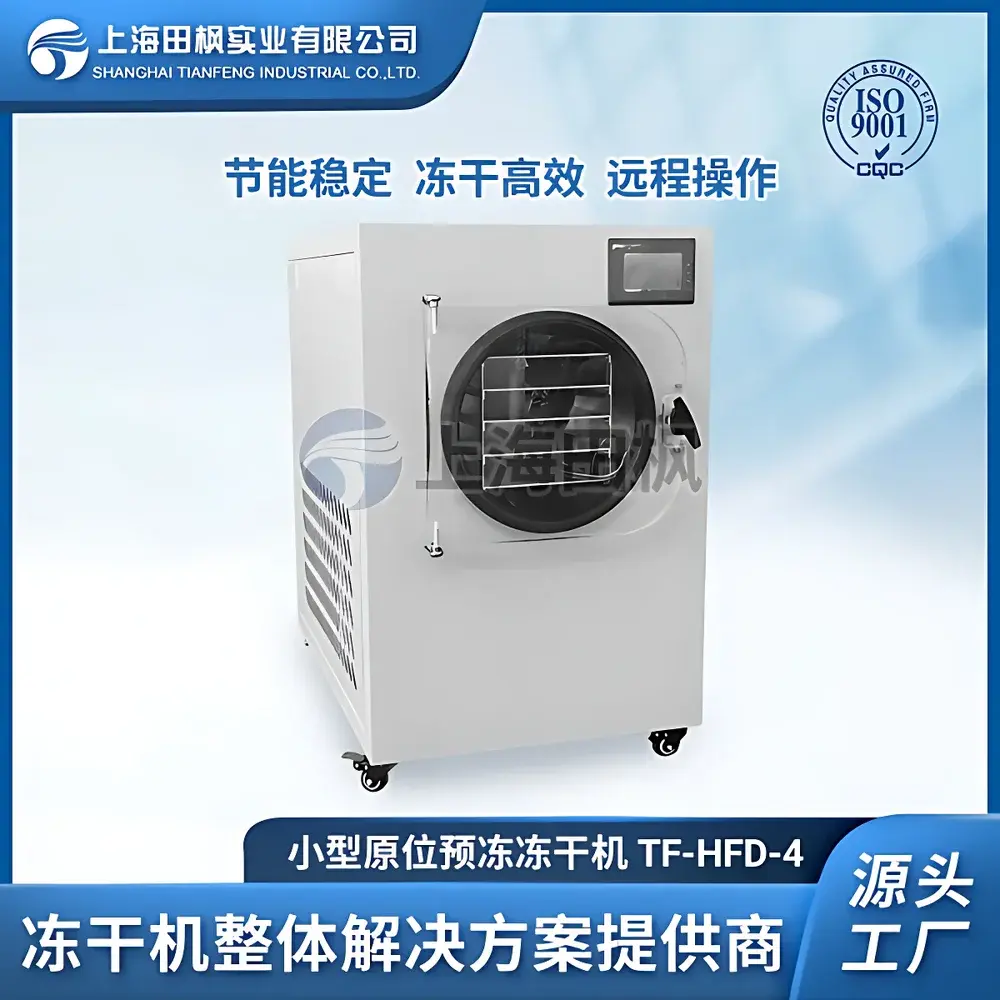
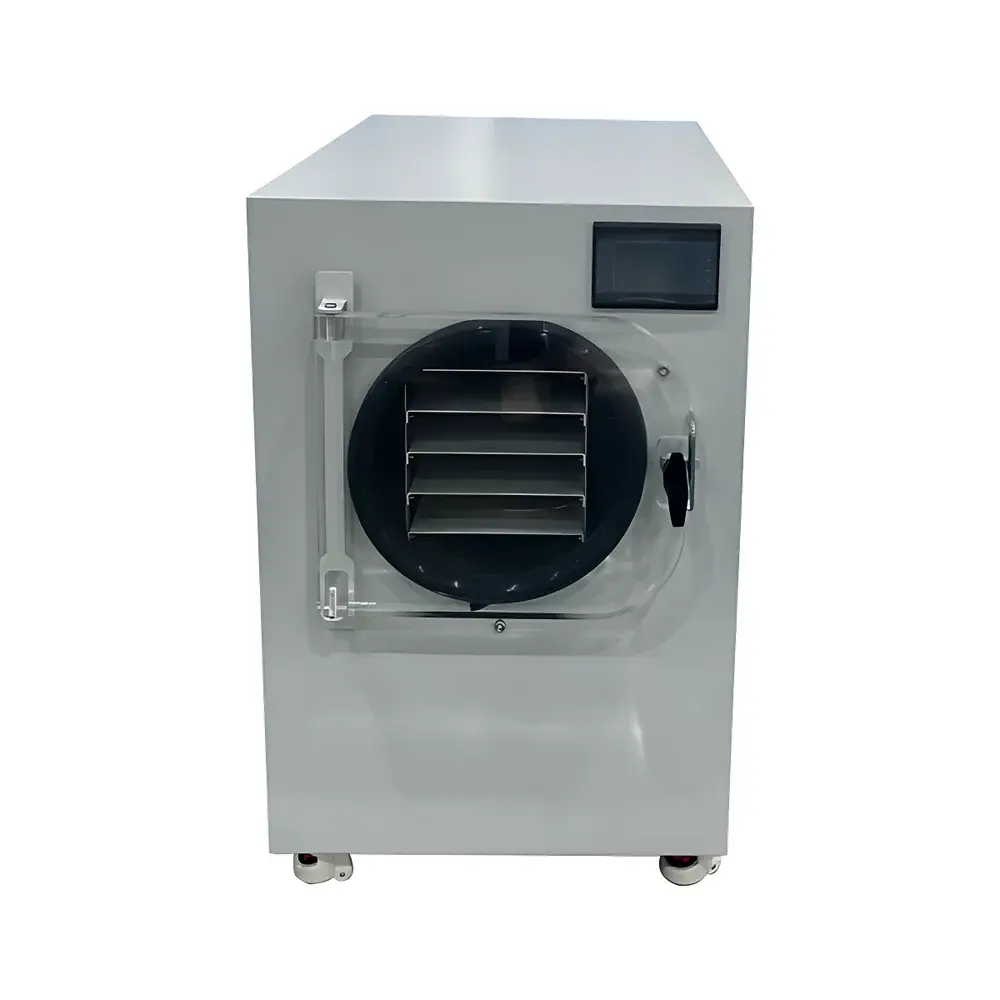
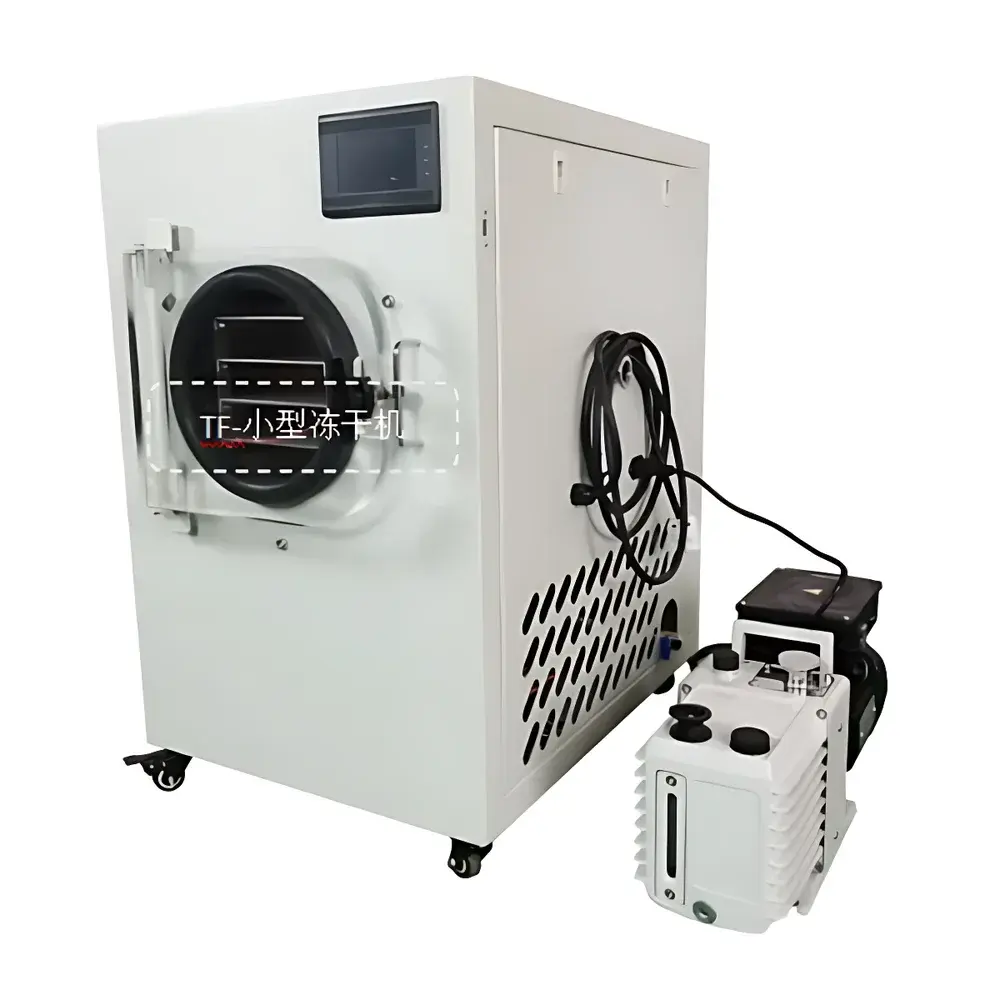
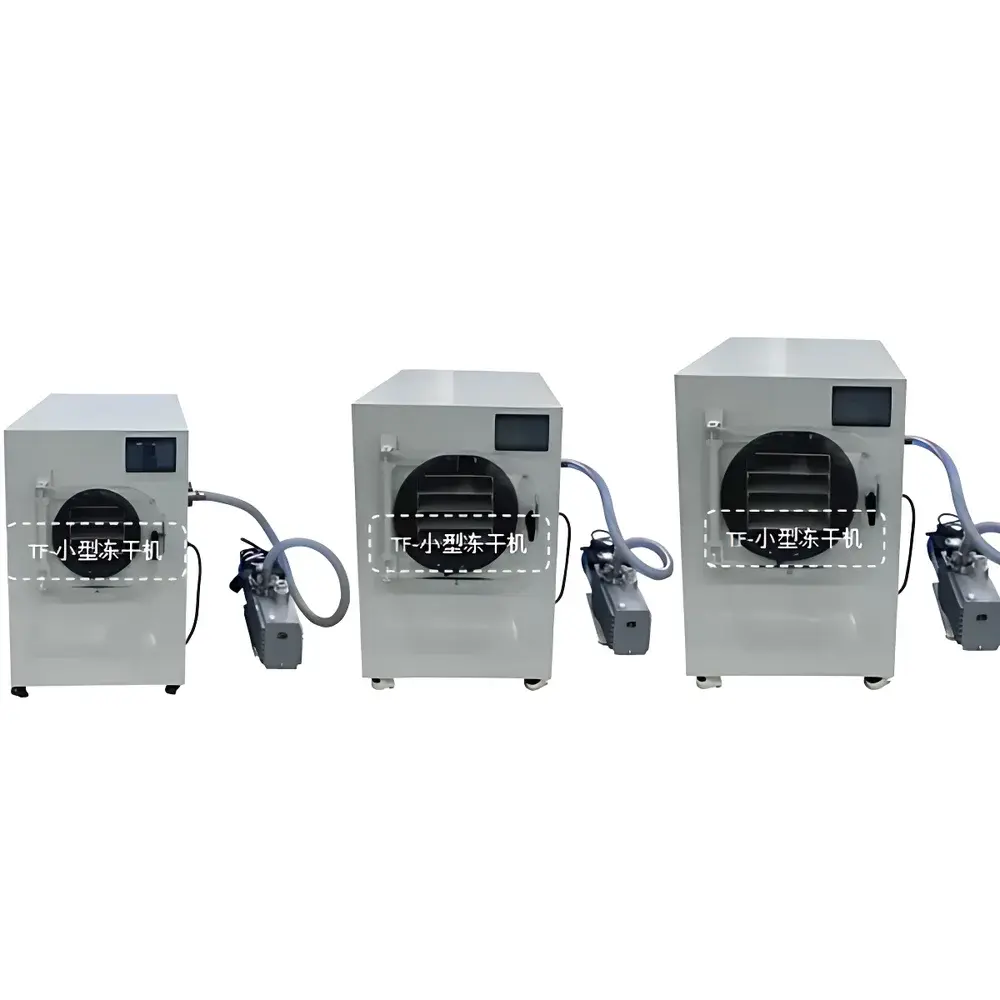
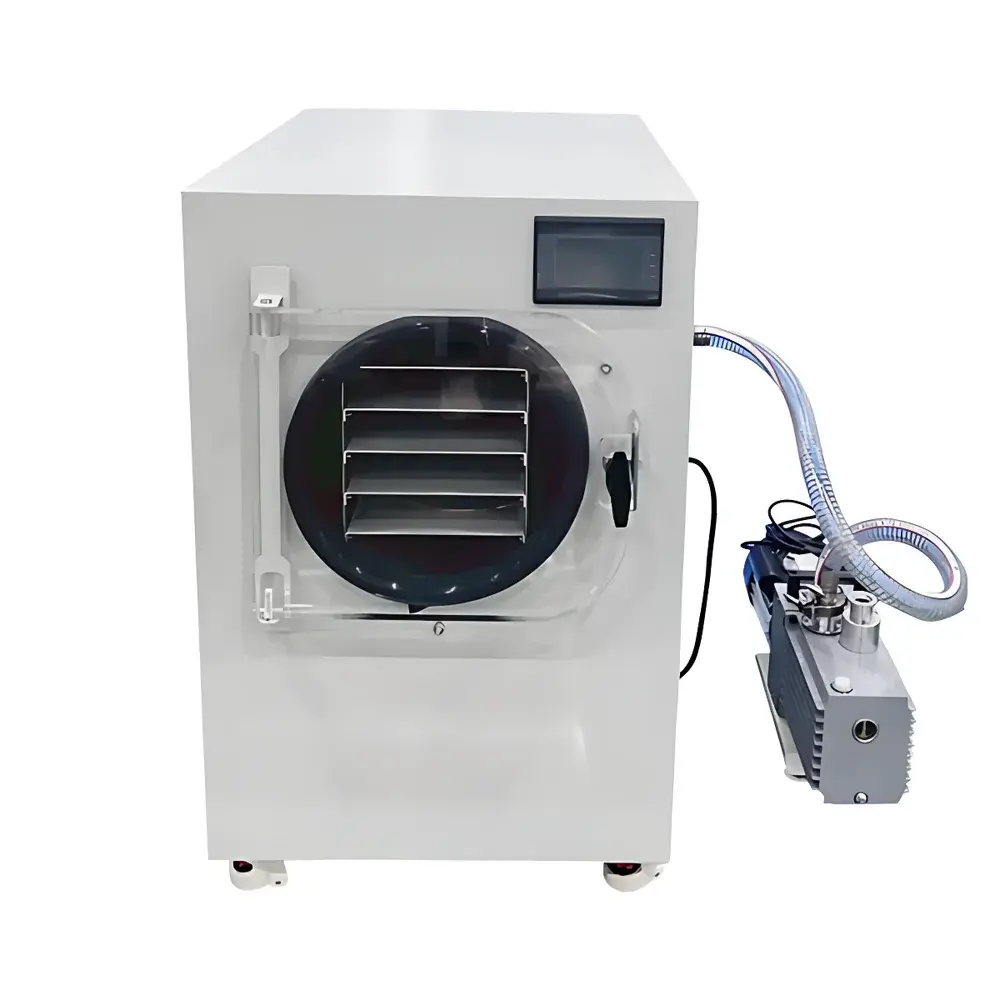
Tianfeng TF-HFD-4A In-Situ Laboratory Freeze Dryer
| Brand | Tianfeng |
|---|---|
| Origin | Shanghai, China |
| Manufacturer Type | Direct Manufacturer |
| Product Type | Standard Shelf-Type Freeze Dryer |
| Application Scope | Research & Development Laboratories |
| Freeze-Drying Area | 0.35 m² |
| Ultimate Vacuum | ≤10 Pa (empty chamber) |
| Condenser Temperature | ≤−65 °C |
| Water Capture Capacity | 6 kg/24 h |
| Condenser Dimensions | Not specified |
| Overall Dimensions (L×W×H) | 660 × 1000 × 1050 mm (excluding door panel and handles) |
| Shelf Tray Size | 195 × 445 × 20 mm |
| Power Supply | 220 V, 50 Hz |
| Rated Power | 2300 W |
| Construction Material | SUS304 Stainless Steel Chamber & Trays |
| Viewing Window | Transparent Acrylic Door |
| Control System | Touchscreen Interface with Real-Time Graphing |
| Compliance | Designed for GLP-aligned lab environments |
Overview
The Tianfeng TF-HFD-4A is an in-situ laboratory freeze dryer engineered for precision lyophilization of heat-sensitive biologicals, pharmaceutical intermediates, functional foods, herbal extracts, and nutraceuticals. It operates on the fundamental principle of sublimation—removing water from frozen samples under deep vacuum without passing through the liquid phase. This preserves structural integrity, enzymatic activity, volatile compounds, and bioactive constituents far more effectively than conventional thermal drying methods. The unit integrates a high-efficiency dual-stage refrigeration system capable of achieving and maintaining a condenser temperature of ≤−65 °C, enabling rapid ice capture and stable primary drying conditions. Its compact footprint (660 × 1000 × 1050 mm) and modular shelf architecture make it ideal for space-constrained R&D labs, pilot-scale formulation development, and quality control workflows requiring reproducible batch processing of up to 0.35 m² of sample surface area.
Key Features
- In-situ freezing and drying: Samples are frozen directly on stainless steel shelves inside the drying chamber—eliminating transfer steps, minimizing contamination risk, and ensuring consistent thermal history.
- SUS304 stainless steel chamber and trays: Corrosion-resistant, non-reactive, and compliant with ISO 14644-1 Class 8 cleanroom-compatible handling protocols.
- Full-visibility acrylic door: Enables real-time visual monitoring of ice sublimation, cake formation, and endpoint detection without breaking vacuum or interrupting the cycle.
- Intuitive touchscreen HMI: Supports multi-step program definition (freezing ramp rate, hold duration, primary drying temperature/pressure setpoints, secondary drying parameters), with live plotting of shelf temperature, chamber pressure, and condenser temperature.
- Energy-optimized refrigeration: Low-current compressor operation and intelligent thermal load management reduce power consumption to 2300 W nominal—consistent with ISO 50001-aligned lab energy efficiency targets.
- One-touch defrost function: Accelerated condenser defrosting with automatic thermal cutoff at preset thresholds (e.g., >−20 °C) prevents overheating and extends refrigerant system service life.
- Over-temperature and over-pressure safety interlocks: Hardware-level safeguards ensure immediate shutdown if condenser exceeds −40 °C or chamber vacuum degrades beyond 50 Pa during operation.
Sample Compatibility & Compliance
The TF-HFD-4A accommodates standard-format trays (195 × 445 × 20 mm) and is compatible with vials, serum bottles, petri dishes, and bulk-loaded containers within its 0.35 m² active drying area. It meets mechanical and operational requirements referenced in USP , ISO 22057 (freeze-drying equipment qualification), and ASTM F2375 (lyophilizer performance testing). While not pre-certified for GMP manufacturing, its data logging architecture—including timestamped event records, parameter change logs, and curve export in CSV format—supports 21 CFR Part 11-compliant validation when deployed with qualified third-party software and electronic signature protocols. All wetted surfaces are electropolished SUS304, facilitating cleaning verification per FDA guidance on equipment suitability for multi-product labs.
Software & Data Management
The embedded controller provides local storage of up to 100 complete freeze-drying cycles, each retaining full time-series data at 1-second resolution for shelf temperature, chamber pressure, condenser temperature, and system status flags. Export is supported via USB 2.0 to standard spreadsheet formats for downstream statistical analysis (e.g., PCA of drying kinetics, residual moisture correlation modeling). Optional Ethernet connectivity enables integration into centralized lab information management systems (LIMS) for automated metadata tagging (operator ID, sample ID, protocol version). Audit trails include user login/logout timestamps, parameter modification history, and alarm acknowledgment records—essential for GLP audits and internal SOP adherence.
Applications
This system serves diverse preclinical and translational research applications: stabilization of monoclonal antibody formulations prior to stability studies; preparation of reference standards for HPLC and LC-MS quantification; dehydration of probiotic cultures and enzyme powders without viability loss; preservation of botanical extracts for phytochemical profiling; and development of ready-to-reconstitute diagnostic reagents. Its ability to maintain ≤10 Pa vacuum throughout extended cycles ensures low residual moisture (<1.5% w/w typical for optimized protocols), critical for long-term chemical stability of oxidation-prone actives such as polyphenols and omega-3 fatty acids.
FAQ
What is the maximum batch capacity for this model?
With a freeze-drying area of 0.35 m² and standard tray dimensions (195 × 445 mm), the TF-HFD-4A typically processes 8–10 trays per cycle, accommodating up to ~2.5 L of aqueous solution (assuming 5–8 mm fill depth).
Does it support controlled ice nucleation?
No—the TF-HFD-4A does not include hardware-based ice nucleation control (e.g., vacuum-induced or ultrasound-assisted); nucleation occurs spontaneously during shelf cooling.
Can the system be validated per IQ/OQ/PQ protocols?
Yes—its repeatable thermal performance, documented sensor calibration points (Pt100 shelf sensors traceable to NIST standards), and deterministic pressure control enable full qualification when executed with vendor-supplied documentation and third-party metrology support.
Is remote monitoring available?
Remote viewing of real-time parameters is possible via optional Ethernet module and web-based dashboard; however, remote start/stop or parameter editing requires additional cybersecurity-hardened gateway configuration.
What maintenance intervals are recommended?
Oil change for the vacuum pump every 500 operating hours; refrigerant system inspection annually; door seal integrity check before each campaign; and condenser coil cleaning quarterly under continuous-use conditions.
Related Products



