
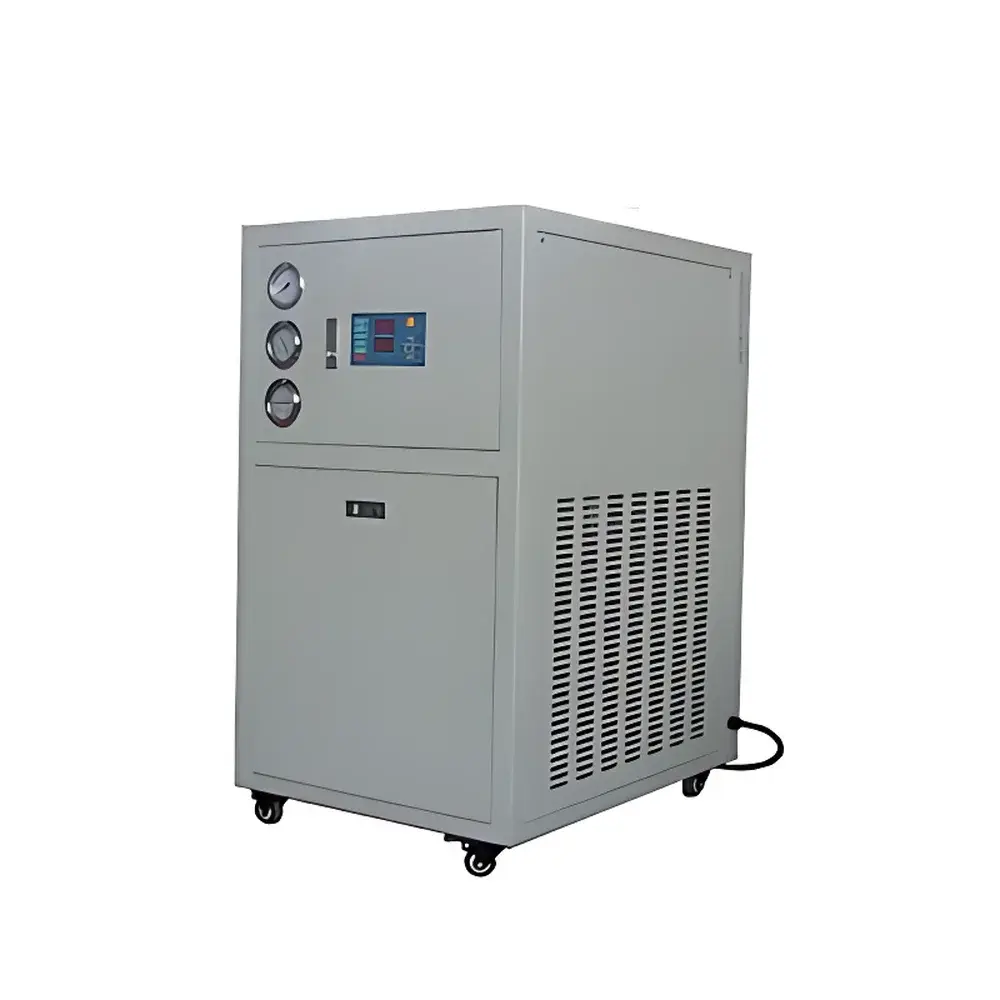
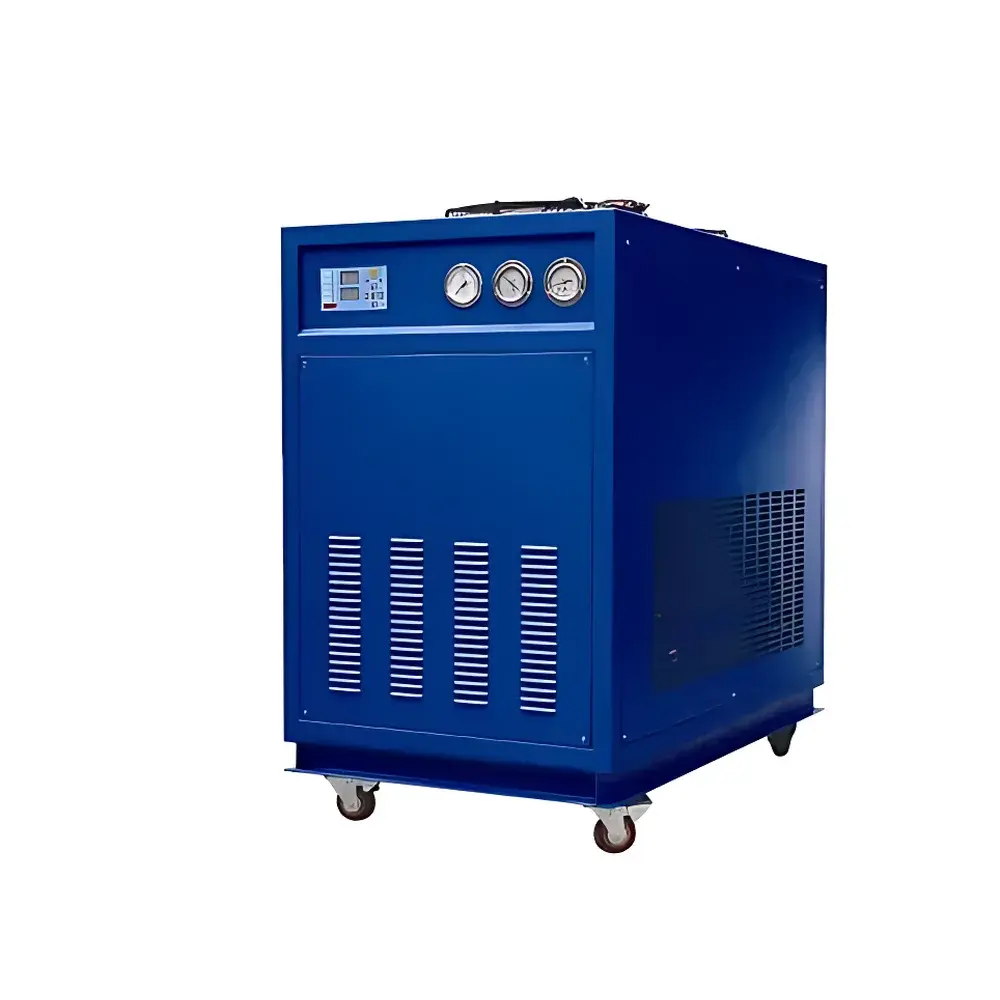
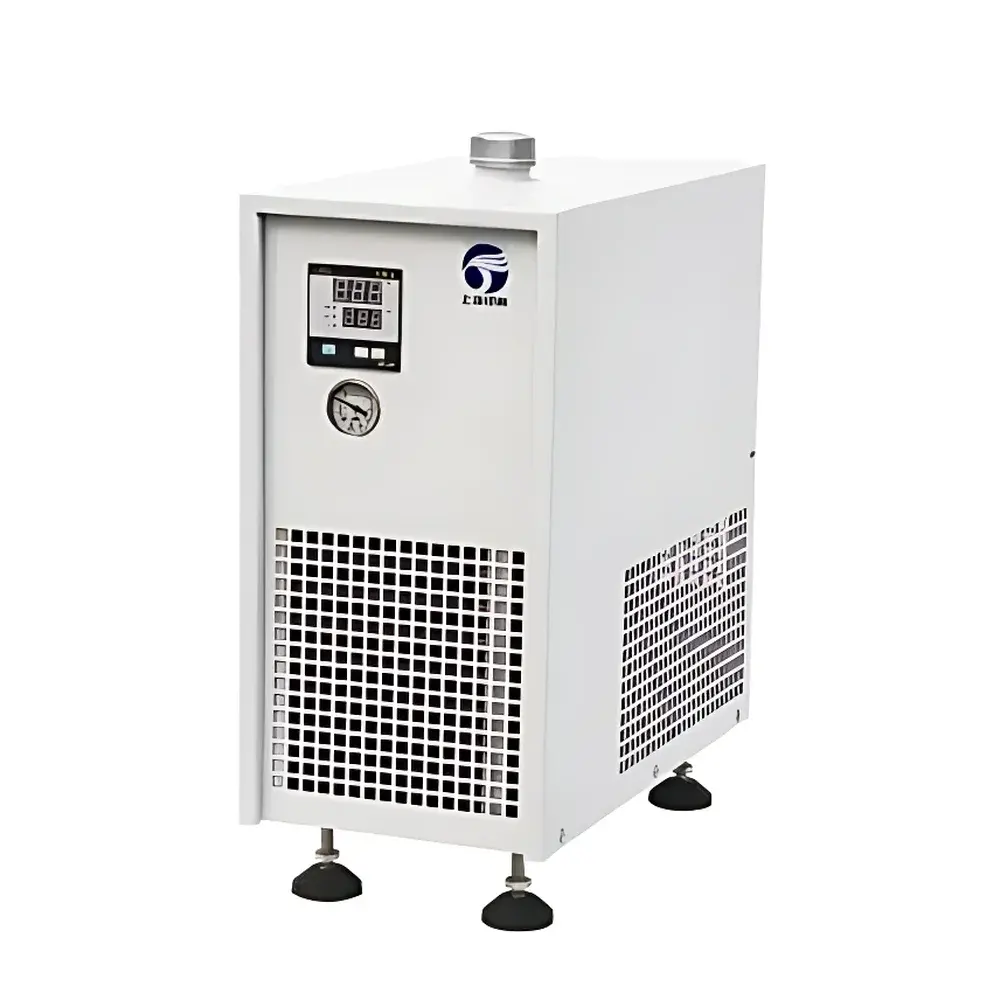
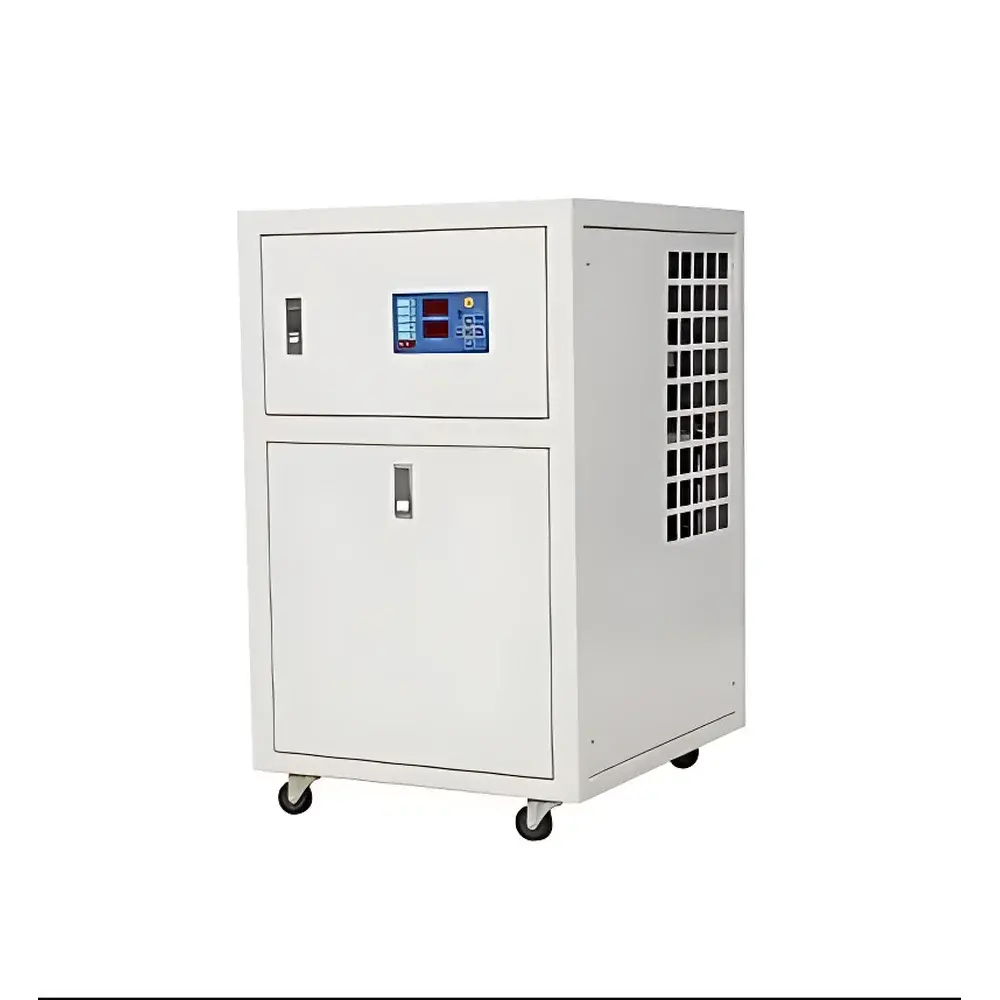
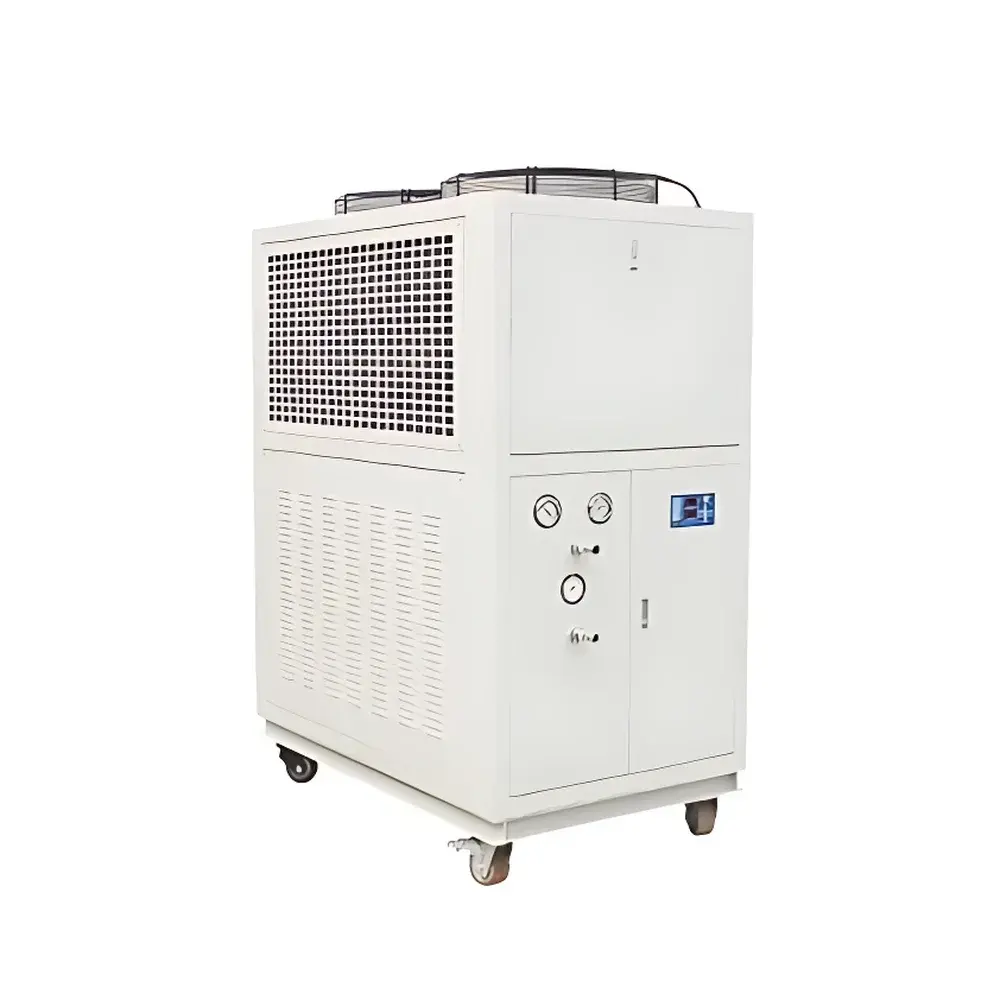
Tianfeng TF-LS-4HP Integrated Circulating Chiller
| Brand | Tianfeng |
|---|---|
| Origin | Shanghai, China |
| Manufacturer Type | Direct Manufacturer |
| Instrument Type | Integrated Circulating Chiller |
| Cooling Method | Water-Cooled |
| Refrigeration Capacity | 12.6 kW (10,836 kcal/h) |
| Temperature Stability | ±0.3°C |
| Water Tank Volume | 80 L |
| Circulating Pump Flow Rate | 0–60 L/min |
| Pump Pressure | 0–2 kgf/cm² |
| Input Power | 4.3 kW |
| Dimensions (L×W×H) | 1200 × 715 × 1105 mm |
| Power Supply | 220 V, 50 Hz |
| Safety Protections | Compressor overheat protection, overcurrent protection, high/low pressure protection, overtemperature protection |
| Construction | Stainless steel tank and pump |
| Temperature Display | Digital LED |
| Control System | PID-based microprocessor controller (optional RKC Japan controller) |
| Compressor | High-efficiency scroll compressor |
| Key Components | Imported expansion valve & solenoid valve (Italy/Germany), Schneider/Siemens/OMRON electrical components |
Overview
The Tianfeng TF-LS-4HP Integrated Circulating Chiller is a precision-engineered refrigeration system designed for stable, continuous thermal management of laboratory and industrial equipment requiring precise coolant temperature control. Operating on the vapor-compression refrigeration cycle, it utilizes a high-efficiency scroll compressor, copper-aluminum finned condenser with water-cooled heat rejection, and a PID-regulated circulation loop to maintain setpoint temperatures within ±0.3°C under dynamic load conditions. Unlike open-loop tap-water cooling, this closed-loop chiller eliminates dependency on municipal water quality, temperature fluctuations, and supply interruptions—critical for sensitive analytical instrumentation where thermal drift directly impacts measurement reproducibility. Its compact integrated architecture—housing refrigeration circuitry, stainless steel reservoir, variable-flow centrifugal pump, and digital control panel in a single footprint—optimizes floor space while ensuring mechanical rigidity and acoustic isolation suitable for shared lab environments.
Key Features
- Stainless steel water tank and pump assembly resistant to corrosion from deionized water, glycol mixtures, or mild chemical coolants
- Digital LED temperature display with real-time monitoring of inlet/outlet water temperature differential
- PID-based microprocessor controller enabling both constant-temperature and adaptive temperature-tracking modes; optional RKC (Japan) controller available for enhanced stability in GLP/GMP environments
- Variable-speed circulating pump delivering 0–60 L/min flow at adjustable pressure up to 2 kgf/cm², compatible with high-backpressure applications such as ESEM cooling stages or laser cavity manifolds
- Comprehensive safety suite: compressor overheat, overcurrent, high/low refrigerant pressure, and tank overtemperature cutoffs with relay alarm output for integration into facility monitoring systems
- CE-compliant electrical architecture featuring Schneider, Siemens, or OMRON contactors, relays, and circuit protection devices
- Acoustically damped enclosure achieving ≤65 dB(A) at 1 m—validated per ISO 3744 for laboratory noise-sensitive zones
Sample Compatibility & Compliance
The TF-LS-4HP supports thermal stabilization of instruments requiring coolant inlet temperatures between 5°C and 30°C, with recommended operating range of 7–15°C for optimal refrigerant efficiency and compressor longevity. It is routinely deployed with graphite furnace atomic absorption spectrometers (GFAAS), ICP-OES and ICP-MS plasma sources, X-ray fluorescence (XRF) and XRD diffractometers, SEM/TEM specimen stages, and high-power diode-pumped solid-state (DPSS) lasers. All wetted surfaces comply with ASTM A240 Type 304 stainless steel specifications. The unit meets ISO 9001:2015 manufacturing standards and conforms to IEC 61000-6-3 (EMC emission limits) and IEC 61000-6-2 (immunity requirements). For regulated laboratories, audit-ready operation logs—including temperature setpoint history, alarm timestamps, and runtime hours—can be exported via optional RS485 Modbus RTU interface, supporting FDA 21 CFR Part 11 data integrity principles when paired with validated SCADA software.
Software & Data Management
While the base configuration features standalone operation via front-panel keypad, the TF-LS-4HP supports optional communication modules for remote supervision. The RS485 port enables integration with LabVIEW, MATLAB, or custom Python-based monitoring platforms using standard Modbus RTU protocol (function codes 03/06). Logged parameters include real-time water temperature (inlet/outlet), pump speed %, compressor status, and fault code history. When configured with external data acquisition hardware, temperature stability metrics (e.g., standard deviation over 24 h) can be automatically calculated and archived in CSV or SQLite format. No proprietary cloud platform is required; all data remains on-premise unless explicitly routed through customer-approved IT infrastructure. Firmware updates are performed via USB flash drive following documented change control procedures compliant with ISO/IEC 17025 Clause 5.9.
Applications
This chiller serves critical thermal regulation functions across multiple laboratory domains: In elemental analysis, it maintains graphite tube furnace equilibrium during atomization cycles, minimizing thermal shock-induced memory effects in GFAAS. For plasma-based instruments, it stabilizes RF generator coolant loops to prevent frequency drift and signal noise in ICP-OES spectral acquisition. In electron microscopy, it cools detector cryo-shields and stage Peltier elements to reduce thermal drift during high-magnification imaging sessions. In laser spectroscopy labs, it manages heat load from CW or pulsed DPSS lasers, preserving beam pointing stability and wavelength accuracy. Beyond analytical use, it supports controlled cooling of vacuum deposition chambers, reaction calorimeters, and chromatographic column ovens—where consistent ΔT between coolant and process fluid directly determines experimental repeatability.
FAQ
What is the minimum allowable return water temperature?
The chiller is rated for return water temperatures up to 40°C. Sustained operation above this threshold increases discharge pressure and accelerates compressor oil degradation; we recommend maintaining return temperature ≤35°C for continuous duty.
Can this unit operate with 30% ethylene glycol solution?
Yes—the stainless steel reservoir, pump, and heat exchanger are compatible with aqueous glycol mixtures up to 40% concentration. Flow rate and refrigeration capacity will decrease by ~8–12% at 30% glycol; consult the derating curve in the technical manual.
Is the temperature controller compliant with GLP audit requirements?
The standard PID controller provides timestamped setpoint changes and alarm events. For full GLP traceability, specify the RKC controller option with password-protected parameter access, electronic signature logging, and configurable audit trail export.
What maintenance intervals are recommended?
Inspect condenser water connections and clean strainer monthly; verify refrigerant charge and electrical terminations quarterly; replace pump impeller and compressor oil per manufacturer’s service schedule (typically every 12,000 operating hours).
Does the unit support dry-run protection for the pump?
Yes—integrated flow sensor detects zero-flow conditions and triggers automatic shutdown within 3 seconds to prevent pump cavitation damage.
Related Products



