
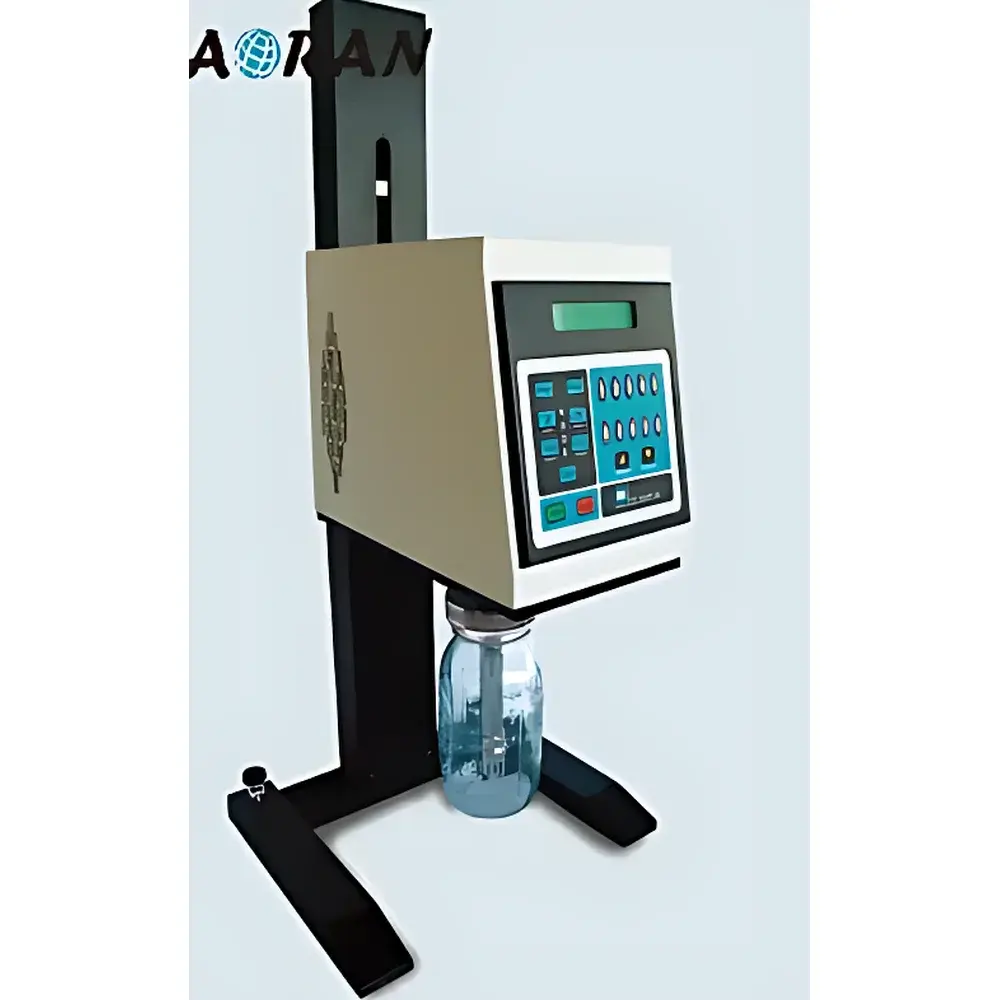
PRO PC-Series High-Power Programmable Benchtop Homogenizer
| Brand | PRO |
|---|---|
| Origin | USA |
| Model | PC-Series |
| Instrument Type | Benchtop Homogenizer |
| Instrument Category | Adjustable High-Speed Disperser |
| Sample Volume Capacity | 0.03–30,000 mL |
| Output Power | 1305 W |
| Speed Range | 0–23,000 rpm |
| Rotor Diameter Options | 5–59 mm (including 5, 7, 10, 20, 30, 37, 43, 59 mm) |
| Rotor Material | 316 Stainless Steel & PTFE |
| Programmable Cycles | Up to 23 |
| Interface | RS-232 |
| Compliance | Suitable for GLP/GMP environments with audit-trail-capable software logging |
Overview
The PRO PC-Series High-Power Programmable Benchtop Homogenizer is an engineered solution for high-shear mechanical homogenization, emulsification, dispersion, and mixing of diverse liquid and semi-liquid samples in research laboratories, quality control facilities, and pilot-scale production environments. Based on rotor-stator shear principle—where rapid rotation of a precision-machined rotor within a fixed stator generates intense hydrodynamic cavitation, turbulent flow, and localized high-shear gradients—the system delivers consistent particle size reduction and phase stabilization across viscosities up to 50,000 mPa·s. Its 1305 W brushless motor provides exceptional torque at low speeds and sustained rotational stability at maximum 23,000 rpm, enabling reproducible processing of volumes ranging from 30 mL to 30 L without reconfiguration.
Key Features
- High-power 1305 W brushless motor ensures stable torque delivery across the full speed range (0–23,000 rpm), minimizing thermal drift and speed fluctuation during extended operation.
- Programmable protocol engine supports up to 23 sequential cycles, each independently configurable for target speed, dwell time, and inter-cycle pause duration—enabling complex multi-step homogenization routines for cell lysis, nanoparticle dispersion, or emulsion optimization.
- Modular rotor-stator assembly features automatic engagement/disengagement mechanism, allowing tool-free rotor exchange in under 15 seconds; all rotors are constructed from electropolished 316 stainless steel and chemically resistant PTFE components.
- Full sterilization compatibility: rotors withstand autoclaving (121 °C, 2 bar, 20 min), dry-heat sterilization (180 °C, 2 h), flame sterilization, and immersion in validated chemical disinfectants (e.g., 70% ethanol, 0.5% sodium hypochlorite).
- Optional hermetically sealed homogenizing chamber minimizes aerosol generation and cross-contamination risk—critical for biosafety Level 2 (BSL-2) workflows and ISO 14644-1 Class 5 cleanroom integration.
- RS-232 interface enables bidirectional communication with external PCs; included software provides real-time parameter monitoring, event logging, and export of timestamped operational records compliant with FDA 21 CFR Part 11 requirements when configured with electronic signatures and audit trails.
Sample Compatibility & Compliance
The PC-Series accommodates heterogeneous sample matrices including mammalian tissue suspensions, bacterial lysates, polymer solutions, oil-in-water emulsions, ceramic slurries, and pharmaceutical suspensions. Its wide rotor diameter spectrum (5–59 mm) permits precise shear rate matching—from gentle homogenization of fragile organelles using a 5 mm micro-rotor (shear rate ≈ 1.2 × 10⁵ s⁻¹ at 20,000 rpm) to aggressive dispersion of abrasive particulates using a 59 mm industrial rotor (shear rate ≈ 1.8 × 10⁴ s⁻¹ at 8,000 rpm). The system conforms to ASTM D4290 (Standard Practice for High-Shear Mixing of Liquid Systems) and supports method validation per USP <729> (Light Scattering Measurements of Subvisible Particles) and ISO 13320:2020 (Laser Diffraction Particle Size Analysis). All firmware and software logs maintain GLP-compliant metadata: operator ID, timestamp, parameter set, actual speed/torque trace, and error flags.
Software & Data Management
The bundled PC-Control Suite v3.2 runs on Windows 10/11 and supports local or networked deployment. It provides protocol library management, live graphical display of speed/torque/time curves, and automated report generation in PDF or CSV format. Audit trail functionality records every user action—including parameter modification, cycle initiation, and firmware update—with immutable timestamps and digital signature fields. Exported datasets include raw serial data streams with millisecond-resolution timing, facilitating third-party statistical process control (SPC) integration via OPC UA or REST API adapters (available as optional module).
Applications
- Biopharmaceutical development: scalable lysis of CHO and HEK293 cells prior to protein purification; preparation of lipid nanoparticle (LNP) formulations for mRNA delivery.
- Food & beverage QA/QC: homogenization of dairy emulsions, viscosity standardization of sauces, and microbial suspension uniformity testing per ISO 6887-1.
- Materials science: deagglomeration of carbon nanotubes in epoxy resins; dispersion of quantum dots in polymer matrices for optoelectronic device fabrication.
- Clinical diagnostics: standardized preparation of whole-blood lysates for cfDNA extraction; homogenization of FFPE tissue sections prior to nucleic acid isolation.
- Environmental testing: extraction of microplastics from sediment cores; homogenization of biofilm samples for metagenomic sequencing library prep.
FAQ
What regulatory standards does the PC-Series support for audit-ready documentation?
The system’s software architecture supports ALCOA+ principles (Attributable, Legible, Contemporaneous, Original, Accurate) and may be validated for 21 CFR Part 11 compliance when deployed with Windows Group Policy–managed user authentication and encrypted database logging.
Can the homogenizer operate continuously for >60 minutes at maximum speed?
Yes—thermal management includes dual-stage forced-air cooling and real-time motor temperature feedback; continuous operation at 23,000 rpm is rated for ≥90 minutes under nominal load (20,000 cP glycerol/water mix, 10 L volume).
Is rotor calibration required before use?
No routine calibration is needed; rotor geometry is factory-certified per ISO 17025-accredited dimensional metrology, and speed accuracy is maintained within ±0.5% of setpoint across the operating range via closed-loop encoder feedback.
How is maintenance tracked and scheduled?
The embedded service counter logs cumulative operating hours and thermal stress cycles; users receive configurable email alerts at predefined intervals (e.g., every 500 hrs) prompting inspection of rotor-stator clearance and bearing preload.
Are replacement rotors supplied with individual traceable certificates?
Yes—each rotor ships with a Certificate of Conformance (CoC) listing batch number, material test reports (ASTM A276 for 316 SS), and surface roughness verification (Ra ≤ 0.4 µm per ISO 4287).



