
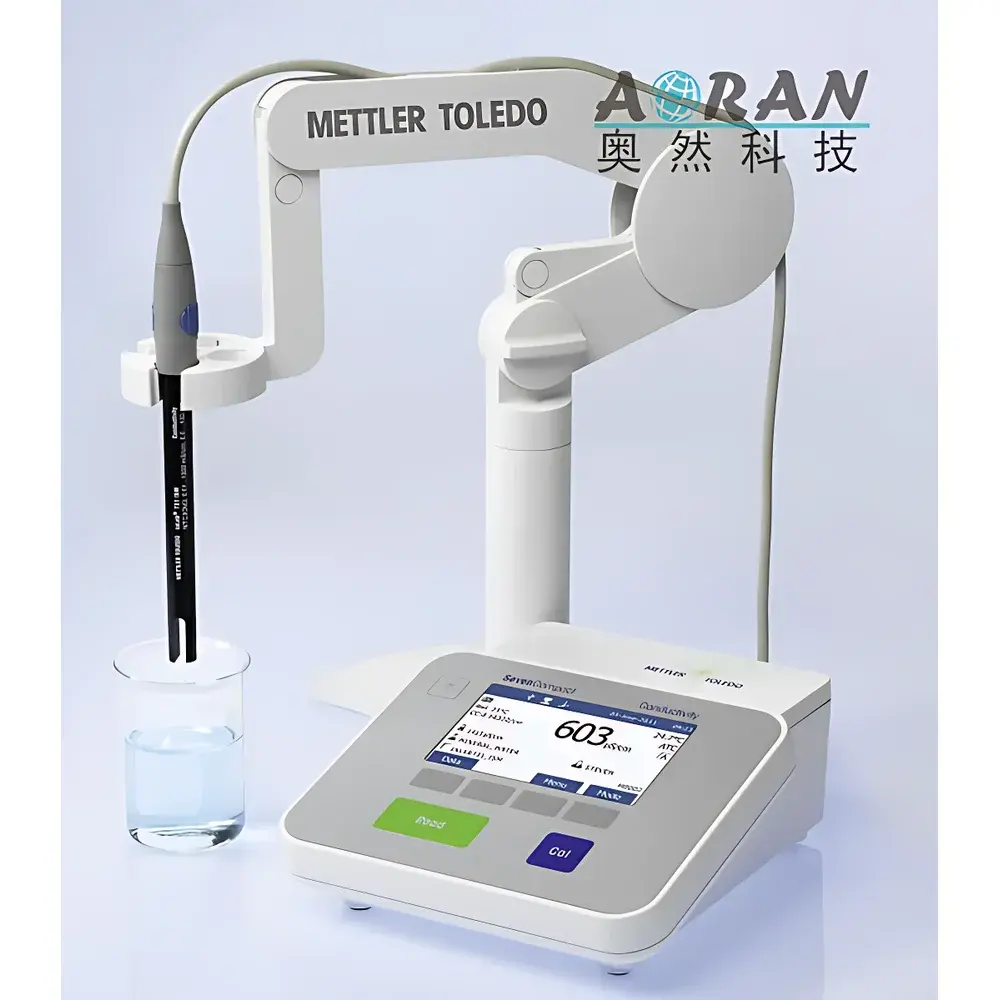
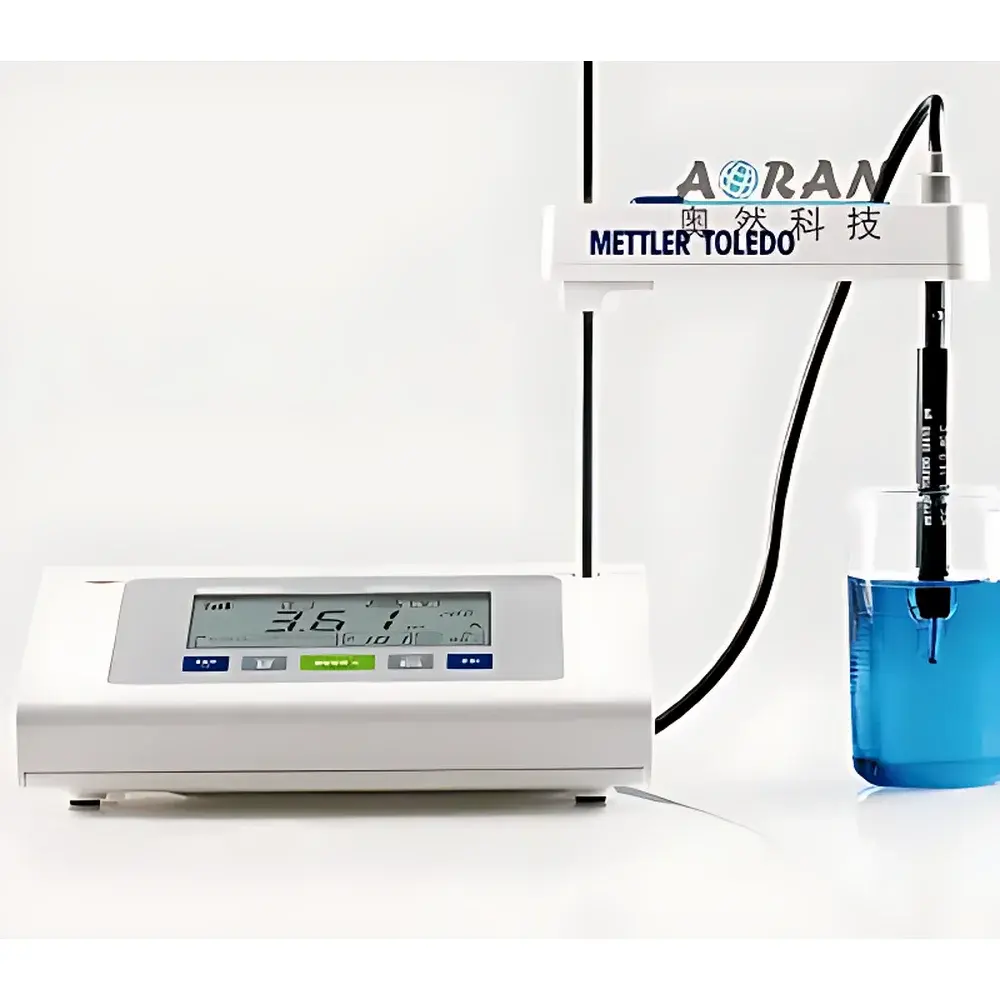
METTLER TOLEDO FE28 and S210-K Benchtop pH Meters
| Brand | METTLER TOLEDO |
|---|---|
| Origin | Switzerland |
| Model | FE28 / S210-K |
| Instrument Type | Benchtop |
| Parameter Types | Dual (pH + mV/ORP) |
| pH Range | −2.00–16.00 pH (FE28) / −2.000–20.000 pH (S210-K) |
| pH Resolution | 0.01 pH (FE28) / 0.001–0.1 pH selectable (S210-K) |
| pH Accuracy | ±0.01 pH (FE28) / ±0.002 pH (S210-K) |
| mV Range | ±2000 mV (FE28) / ±2000.0 mV (S210-K) |
| mV Resolution | 1 mV (FE28) / 0.1 or 1 mV selectable (S210-K) |
| mV Accuracy | ±1 mV (FE28) / ±0.2 mV (S210-K) |
| Temperature Range | −5 to 105 °C (FE28, manual/auto) / −30.0 to 130.0 °C (S210-K, manual) |
| Temperature Accuracy | ±0.1 °C (S210-K) |
| Calibration Points | Up to 5-point pH calibration |
| Buffer Recognition | Automatic (NIST, DIN, JIS, ISO, METTLER TOLEDO standard buffers) |
| Data Storage | 200 measurement records |
| Connectivity | RS232 and USB |
| Electrode Interface | Standard BNC (FE28) / ISM-enabled Smart Socket (S210-K) |
| Temperature Compensation | Automatic and manual |
| Compliance | Designed for GLP/GMP environments |
Overview
The METTLER TOLEDO FE28 and S210-K are precision benchtop pH meters engineered for routine and advanced electrochemical analysis in quality control laboratories, academic research settings, and regulated industrial environments. Both instruments operate on the fundamental principle of potentiometric measurement: they detect the potential difference between a pH-sensitive glass electrode and a stable reference electrode immersed in an aqueous sample, converting this voltage into a pH value via the Nernst equation. The FE28 serves as an entry-level platform optimized for reliability and intuitive operation—ideal for teaching labs and high-throughput QC workflows requiring rapid, repeatable pH and redox (ORP) determinations. In contrast, the S210-K represents the professional-tier variant, integrating Intelligent Sensor Management (ISM) technology, a 4.3-inch color touchscreen interface, and enhanced metrological performance—including ±0.002 pH accuracy and selectable 0.001 pH resolution—to meet stringent method validation requirements in pharmaceutical, food, and environmental testing.
Key Features
- Automatic buffer recognition across multiple international standards (NIST, DIN, JIS, ISO, and METTLER TOLEDO proprietary buffers), eliminating manual buffer selection errors during calibration.
- Auto-endpoint detection with real-time stability assessment ensures consistent reading capture without operator intervention—critical for reducing inter-user variability in regulated settings.
- ISM-enabled electrode interface (S210-K only): stores electrode history, calibration data, and sensor diagnostics directly on the probe chip, enabling traceable, plug-and-play operation and automatic application of the most recent calibration parameters.
- Dual-parameter capability: simultaneous measurement of pH and mV/ORP, with full support for ion concentration determination via standard addition or calibration curve methods (S210-K).
- Flexible temperature compensation: automatic (using integrated Pt1000 or external NTC probe) or manual input, with extended operational range up to 130.0 °C (S210-K) for high-temperature process monitoring.
- uFocus™ display mode (S210-K): dynamically highlights critical parameters—such as current pH, temperature, electrode status, and calibration due date—reducing cognitive load during multi-step analytical protocols.
Sample Compatibility & Compliance
These meters accommodate a broad spectrum of aqueous and mildly aggressive samples, including buffered solutions, cell culture media, fermentation broths, wastewater effluents, and pharmaceutical formulations. Electrode compatibility includes standard BNC-based sensors (FE28) and ISM-capable electrodes such as the InLab® Expert Pro, which features a robust double-junction design and ceramic junction optimized for low-conductivity or protein-rich matrices. Both models comply with international metrological frameworks: calibration traceability aligns with ISO/IEC 17025 requirements when performed using certified reference materials, and instrument functionality supports Good Laboratory Practice (GLP) and Good Manufacturing Practice (GMP) documentation needs—including timestamped, user-identifiable data logs and exportable CSV reports. When integrated with METTLER TOLEDO LabX software, the S210-K fulfills electronic record and signature requirements under FDA 21 CFR Part 11.
Software & Data Management
The FE28 supports basic data export via RS232 or USB to spreadsheet applications, retaining timestamps, operator IDs (via manual entry), and calibration metadata for each stored record (up to 200 entries). The S210-K extends this capability through native LabX connectivity: enabling real-time data streaming, centralized instrument management, automated report generation with digital signatures, and full audit trail functionality—including modification history, user access logs, and calibration event tracking. All measurements include embedded environmental context: temperature, electrode impedance, slope (%), offset (mV), and buffer identification—ensuring full method transparency and facilitating root-cause analysis during out-of-specification investigations.
Applications
- Pharmaceutical manufacturing: pH verification of bulk drug substances, excipient solutions, and final product formulations per USP and EP 2.2.3 guidelines.
- Food & beverage QA/QC: titratable acidity monitoring in dairy products, juice pH profiling, and shelf-life stability testing.
- Environmental compliance: wastewater pH screening per EPA Method 150.1 and ASTM D1293; soil extract analysis following ISO 10390.
- Academic instruction: hands-on electrochemistry training covering Nernstian behavior, liquid junction potentials, and calibration uncertainty estimation.
- Biotechnology: real-time pH monitoring during upstream bioprocessing and downstream purification steps where precise acid/base dosing is critical.
FAQ
What calibration buffers are supported?
Both models automatically recognize buffers conforming to NIST, DIN, JIS, ISO, and METTLER TOLEDO specifications. Users may select calibration sequence order (e.g., acidic → neutral → basic) and define custom buffer values if required.
Can the FE28 or S210-K measure non-aqueous samples?
Direct measurement in non-aqueous solvents is not recommended due to unstable reference junction potentials and altered activity coefficients; however, specialized electrodes (e.g., InLab® Science Non-Aqueous) may be used with appropriate method validation and liquid junction correction protocols.
Is temperature compensation mandatory for accurate pH readings?
Yes—pH is temperature-dependent due to shifts in the Nernst slope and sample activity. Automatic temperature compensation (ATC) using a built-in or external probe is strongly advised for all quantitative work; manual TC is acceptable only when sample temperature is precisely controlled and documented.
How does ISM improve measurement traceability?
ISM embeds sensor-specific metadata—including serial number, calibration history, slope/offset values, and usage hours—into the electrode’s memory chip. This information is automatically loaded upon connection, ensuring that every measurement references the correct, most recent calibration state and supporting full instrument qualification per ICH Q2(R2) and ISO/IEC 17025.
Are firmware updates available, and how are they applied?
Firmware upgrades are distributed via METTLER TOLEDO’s official support portal and installed using a USB drive or direct LabX network push—ensuring continued compliance with evolving regulatory expectations and adding new features such as expanded buffer libraries or enhanced data security protocols.
Related Products





