
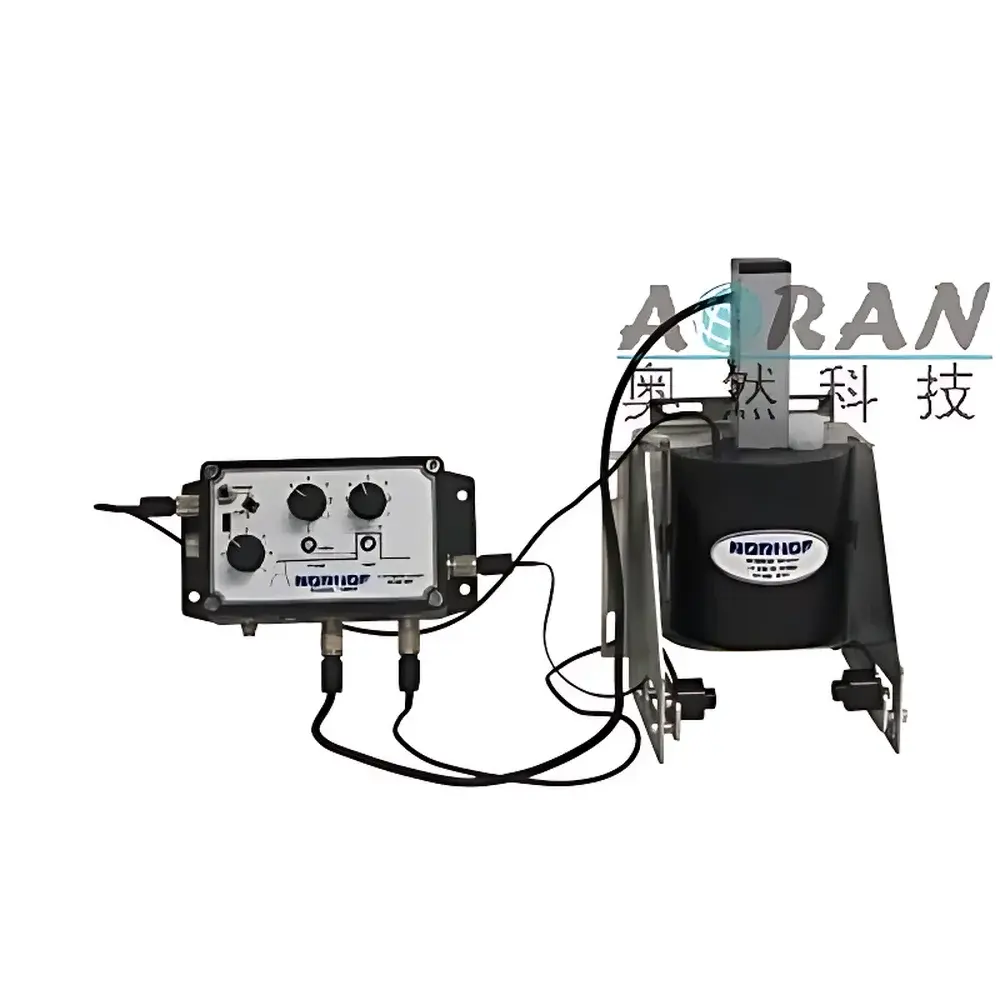
Norhof 301 Fully Automated Liquid Nitrogen Micro-Dispensing System
| Brand | Norhof |
|---|---|
| Origin | Netherlands |
| Model | 301 |
| Supply Pressure | <20 mbar |
| Dispensing Volume Range | 0.08–0.5 mL (with 1.5 mm orifice) |
| Static Evaporation Rate | 2 L/day |
| Power Supply | 115/230 V AC or 12 V AC/DC |
| Average Power Consumption | 10 W (up to 50 W during dispensing) |
| Compatible LN₂ Tanks | 50 L or 100 L (diameter: 500 mm |
| height | 875 mm / 1235 mm |
| empty/full weight | 17/57.5 kg or 32/113 kg) |
| Interface | PC connectivity for real-time monitoring and data logging |
| Safety Features | Mechanical overpressure relief valve, freeze alarm, sensor failure alert, cryogenic-level sensor (optional) |
Overview
The Norhof 301 Fully Automated Liquid Nitrogen Micro-Dispensing System is an engineered solution for precise, repeatable, and operator-safe delivery of liquid nitrogen in low-temperature life science workflows. Designed around a pressure-driven, valveless dispensing architecture, the system operates under ultra-low backpressure (<20 mbar), eliminating splashing, vibration, acoustic noise, and thermal perturbation during transfer. Unlike conventional solenoid-valve-based systems, the 301 leverages passive flow control modulated by infrared presence detection and programmable dwell timing—ensuring consistent volumetric delivery without mechanical wear or heat ingress from actuation components. Its core function supports continuous cryogenic supply to analytical instruments (e.g., DSC units requiring 24/7 cooling), high-throughput biobanking operations, and automated sample vitrification protocols where thermal stability, dose reproducibility, and operator safety are critical. The system integrates seamlessly with Norhof’s 611-series LN₂ supply units (50 L or 100 L dewars), forming a closed-loop, low-evaporation-rate infrastructure compliant with ISO 20417 (medical device labeling) and aligned with GLP-compliant laboratory infrastructure requirements.
Key Features
- Valveless dispensing mechanism minimizes heat leak and eliminates moving parts subject to cryogenic fatigue or ice-induced failure
- Infrared object detection triggers precise timing control—adjustable delay and open duration ensure accurate volume delivery per container
- Ultra-low operating pressure (<20 mbar) prevents turbulence, splashing, and nitrogen loss during dispensing
- Static evaporation rate of only 2 L/day enables extended unattended operation and reduced LN₂ consumption
- Modular design allows direct integration with Norhof 611-series supply tanks (50 L or 100 L); no external compressor or pressurization system required
- Single-unit architecture—no separate control cabinet—reduces footprint, simplifies validation, and improves electromagnetic compatibility (EMC) in sensitive lab environments
- PC interface supports real-time monitoring, event logging, and audit-trail generation compatible with FDA 21 CFR Part 11 requirements when paired with validated software
Sample Compatibility & Compliance
The Norhof 301 accommodates standard cryovials (1.0–2.0 mL), cryo-tubes, multi-well plates, and custom containers equipped with reflective or opaque bottoms detectable by its IR sensor array. It supports both manual single-batch operation and fully automated conveyor-coupled dispensing at up to 80 units per minute. All wetted materials comply with USP Class VI biocompatibility standards and are certified oxygen-clean for cryogenic service. The system meets CE marking requirements under the EU Machinery Directive 2006/42/EC and PED 2014/68/EU for low-pressure equipment. Optional accessories—including cryo-level sensors, freeze alarms, and mechanical overpressure relief valves—enable configuration to meet ISO 13485 quality management system requirements for medical device manufacturing environments.
Software & Data Management
The embedded controller provides configurable dispensing parameters (volume, delay, dwell time) via front-panel keypad or RS-232/USB interface. When connected to a host PC, the system streams timestamped event logs—including dispense count, duration, detected container presence, and fault codes—to CSV or SQLite databases. Audit trail functionality records user login sessions, parameter changes, and alarm acknowledgments—supporting traceability in regulated environments. Data export formats conform to ASTM E2500-13 (standard guide for specification, design, and verification of pharmaceutical and biopharmaceutical manufacturing systems), facilitating integration into LIMS or MES platforms. No proprietary runtime environment is required; communication uses open ASCII command protocol.
Applications
- Continuous 24-hour cooling for differential scanning calorimeters (DSC), ensuring baseline stability and thermal calibration integrity
- Automated cryopreservation workflows in biobanks and cell therapy manufacturing facilities (aligned with ISBER Best Practices and FACT-JACIE standards)
- High-throughput sample preparation for cryo-electron microscopy grid freezing
- Controlled LN₂ top-up in ultra-low temperature freezers (-150°C range) to maintain setpoint stability without manual intervention
- Research applications requiring precise thermal shock dosing in developmental biology or plant cryoprotocol optimization
FAQ
What is the minimum and maximum dispensing volume per cycle?
The system delivers 0.08–0.5 mL per dispense using the standard 1.5 mm orifice; alternative orifices may be specified for specialized volume ranges.
Does the system require external pressurization or gas supply?
No—operation relies solely on the natural vapor pressure of liquid nitrogen stored in the integrated 50 L or 100 L dewar; no external nitrogen gas or compressor is needed.
Can dispensing parameters be locked to prevent unauthorized modification?
Yes—password-protected parameter groups and role-based access control are supported via PC-connected configuration software.
Is the system suitable for GMP-regulated environments?
When deployed with optional audit-trail logging, electronic signatures, and IQ/OQ documentation packages (available upon request), it supports compliance with EU Annex 11 and FDA 21 CFR Part 11.
What maintenance intervals are recommended?
Annual verification of IR sensor alignment, orifice integrity, and pressure decay testing is advised; no scheduled lubrication or valve servicing is required due to the valveless architecture.
Related Products






