
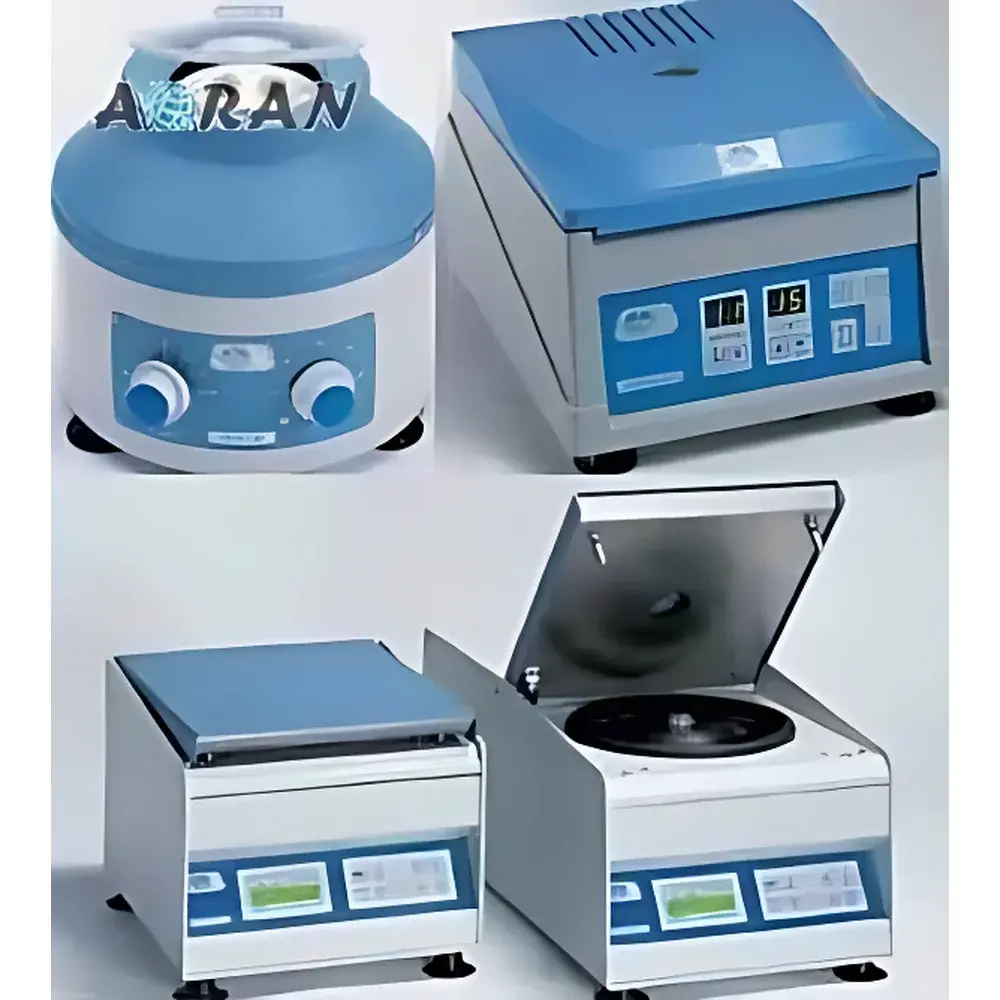
Selecta Cencom / Centrolit II / Centro-8 / Mixtasel Series Benchtop Centrifuges
| Brand | Selecta |
|---|---|
| Origin | Spain |
| Equipment Type | Benchtop Centrifuge |
| Cooling Function | Refrigerated (select models) |
| Rotational Speed Range | 4,400–18,000 rpm |
| Max RCF | 28,979 × g |
| Rotor Types | Fixed-angle (including hematocrit), horizontal swing-out, and adapter-compatible configurations |
| Sample Capacity | Up to 30 × 2.0 mL, 6 × 100 mL, or 4 × 200 mL (model-dependent) |
| Application Class | Biomolecular separation (nucleic acids, proteins, organelles, viruses) |
| Compliance | Designed for GLP-compliant laboratories |
Overview
The Selecta Cencom, Centrolit II, Centro-8, and Mixtasel series represent a family of precision-engineered benchtop centrifuges developed in Spain for routine and advanced biomolecular separation tasks. These instruments operate on the principle of sedimentation under controlled centrifugal force—utilizing rotational acceleration to separate particles based on density, size, and shape within heterogeneous liquid samples. Each model is purpose-built for distinct operational envelopes: the Cencom serves low-speed applications such as cell pelleting and basic serum separation; the Centrolit II delivers high-speed performance ideal for subcellular fractionation; the Centro-8 bridges mid-range throughput and versatility; while the Mixtasel and refrigerated variants (Microfriger-BL, Medifriger-BL-S) support temperature-sensitive protocols including nucleic acid purification, enzyme isolation, and viral particle concentration. All units feature brushless DC motors, microprocessor-based speed/RCF control, and real-time rotor identification via mechanical coding—ensuring consistent torque delivery and minimizing thermal drift during extended runs.
Key Features
- Brushless DC motor with closed-loop speed regulation for long-term stability and minimal maintenance
- Programmable run time (1 sec to 99 min 59 sec) and automatic rotor recognition to prevent mismatched configurations
- Integrated imbalance detection system that halts operation upon detecting ≥5 g mass asymmetry
- Electromechanical lid lock with dual-sensor verification compliant with IEC 61010-2-020
- Refrigerated models (Microfriger-BL, Medifriger-BL-S) maintain sample temperature between –20 °C and +40 °C with ±1 °C accuracy over full speed range
- Corrosion-resistant aluminum alloy rotor chambers and stainless-steel rotor bodies certified to ISO 13485 manufacturing standards
- Optional USB data export (CSV format) for audit-ready run logs including date/time stamp, speed, RCF, temperature, and rotor ID
Sample Compatibility & Compliance
These centrifuges accommodate standard laboratory consumables—including polypropylene and polycarbonate tubes (0.2 mL to 200 mL), hematocrit capillaries, and microplates—with rotor-specific adapters supporting ISO-standard tube dimensions. All fixed-angle rotors are validated for use with common reagents (e.g., phenol-chloroform, guanidinium thiocyanate, sucrose gradients) without degradation. The instrument architecture supports Good Laboratory Practice (GLP) and Good Manufacturing Practice (GMP) workflows: electronic log files retain tamper-proof timestamps, and refrigerated units comply with FDA 21 CFR Part 11 requirements when paired with validated software. Rotors undergo annual certification per ASTM F2119-22 guidelines for fatigue life and residual stress evaluation.
Software & Data Management
While standalone operation requires no PC interface, optional firmware upgrades enable connectivity via USB 2.0 to Windows-based systems running Selecta CentriControl v3.x software. This application provides remote parameter configuration, batch protocol storage (up to 99 user-defined programs), real-time graphical monitoring of speed, temperature, and elapsed time, and automated report generation compliant with ISO/IEC 17025 documentation frameworks. Audit trails include operator ID (via optional RFID badge reader), calibration history, and error event logging—all exportable in PDF or CSV for internal QA review or regulatory submission.
Applications
- Purification of plasmid DNA, genomic DNA, and RNA from bacterial, mammalian, and plant lysates
- Isolation of mitochondria, lysosomes, and synaptic vesicles via differential centrifugation protocols
- Clarification of cell culture supernatants prior to HPLC or ELISA analysis
- Concentration of bacteriophages, lentiviral vectors, and exosomes using ultracentrifugation-capable rotors
- Routine clinical hematology: hematocrit determination, serum/plasma separation, and PBMC isolation
- Quality control testing of colloidal suspensions, nanoparticle dispersions, and vaccine formulations
FAQ
Are all Selecta centrifuges compatible with third-party rotors?
No—only Selecta-certified rotors with embedded mechanical codes are recognized by the control system. Non-coded rotors will not initiate operation.
What is the maximum allowable imbalance tolerance before automatic shutdown?
The system detects and halts operation at ≥5 g mass difference across opposing positions in symmetric rotors.
Do refrigerated models maintain set temperature at maximum speed?
Yes—Microfriger-BL and Medifriger-BL-S units sustain ±1 °C deviation from setpoint across their full speed range (0–18,000 rpm).
Is rotor lifetime tracking supported?
Each rotor carries a unique serial number; cumulative run hours and max-speed cycles are logged automatically and accessible via USB export.
Can these centrifuges be integrated into LIMS environments?
Via optional CentriControl software, raw run data (including timestamps, RCF, temperature, rotor ID) exports in CSV format for direct ingestion into LIMS or ELN platforms.
Related Products



