
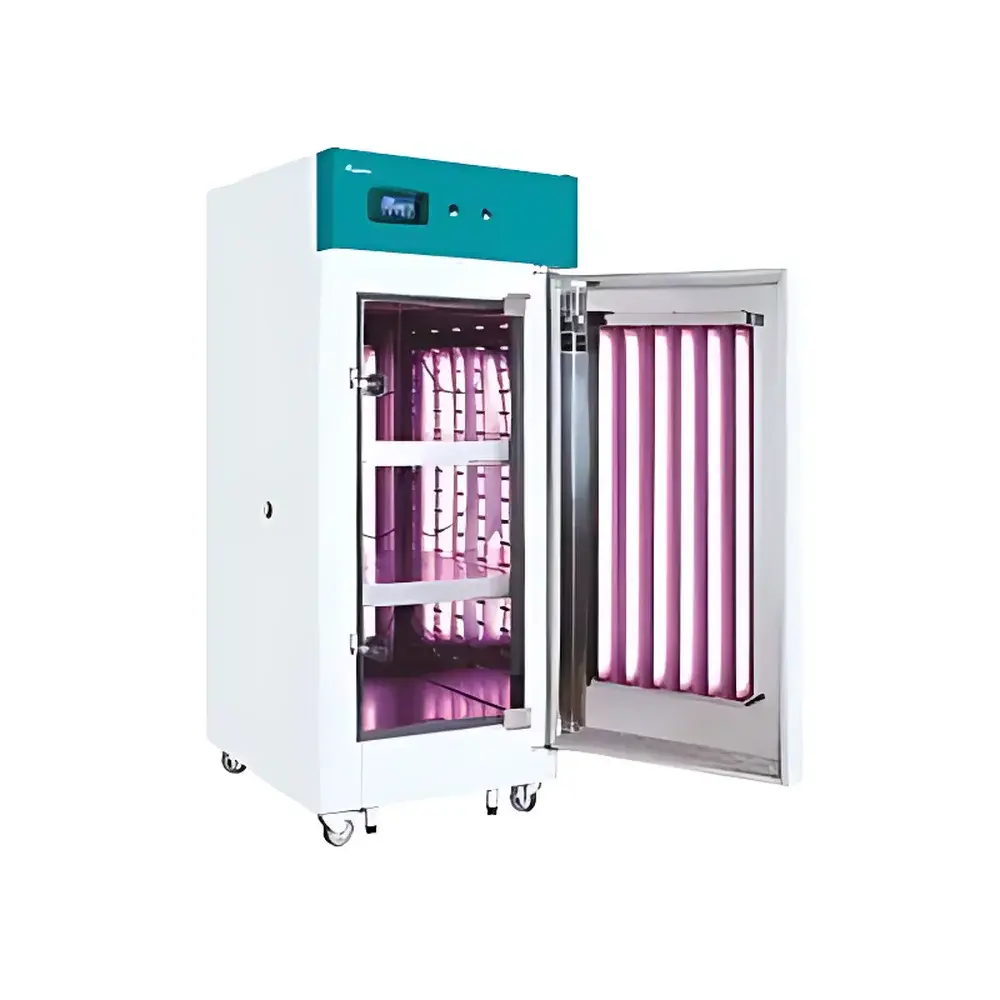
Equitec EGCHS Series High-Performance Forced-Air Plant Growth Chamber
| Brand | Equitec |
|---|---|
| Origin | Spain |
| Model | EGCHS |
| Temperature Range | 4–60 °C |
| Humidity Control (HR models) | 20–90 % RH (±3 % RH) |
| Temperature Uniformity | ±1.5 °C at 27 °C, ±1.0 °C at 45 °C |
| Temperature Stability | ±0.75 °C at 27 °C, ±0.5 °C at 40 °C |
| Illumination | Programmable photoperiod with sunrise/sunset simulation (380–720 nm LED options available) |
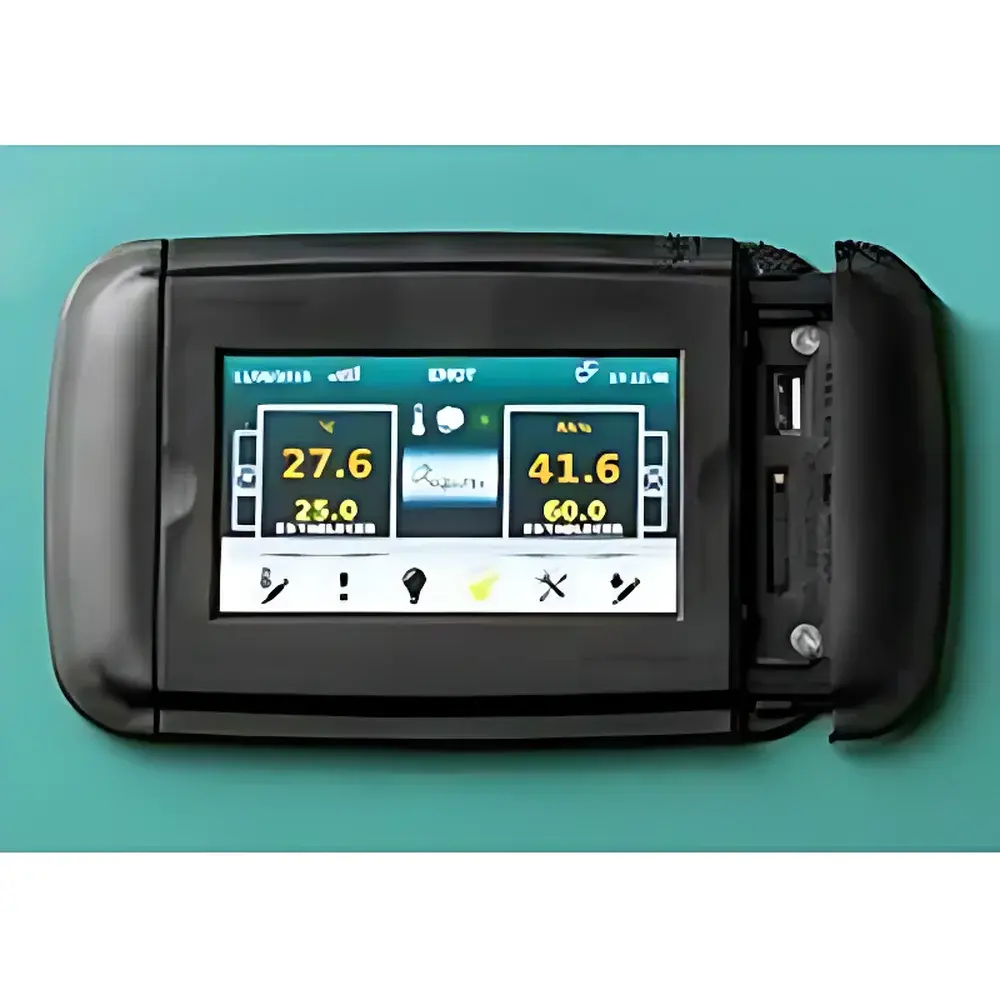
| Controller | 4.3″ or 7″ TFT color touchscreen (4000-series), with integrated data logger (1-year storage @ 30-s intervals), MODBUS RS485, Ethernet/WiFi, GSM alarm interface (optional), USB/SD card export, GLP-compliant audit trail |
Overview
The Equitec EGCHS Series is a high-precision, forced-air plant growth chamber engineered for reproducible environmental simulation in academic, agricultural, and pharmaceutical research laboratories. Designed around a robust dual-wall insulated enclosure with microprocessor-controlled air circulation, the system maintains tightly regulated temperature, humidity (HR models), and spectral illumination across wide operational ranges. Its core architecture employs active convection—rather than passive diffusion—to ensure rapid equilibration and exceptional spatial uniformity throughout the working volume. The chamber operates on the principle of closed-loop feedback control: Pt1000 and 4–20 mA humidity sensors continuously feed real-time data to the 4000-series controller, which dynamically modulates refrigeration, heating, humidification (via ultrasonic, centrifugal, or steam generators), and dehumidification (via condensation-based drying) to sustain user-defined setpoints. This enables precise replication of diurnal cycles—including programmable ramping for sunrise/sunset transitions—and supports long-term phenotyping, seed germination studies, stress response assays, and controlled-environment physiology under ISO 17025-aligned conditions.
Key Features
- Forced-air convection system with adjustable airflow distribution for optimal thermal and hygric homogeneity
- Dual-stage compressor cooling and PTC heating for stable operation from +4 °C to +60 °C (−10 °C to +60 °C with optional low-temp configuration)
- Humidity control (EGCHS-HR models): 20–90 % RH, ±3 % RH accuracy within +19–40 °C ambient range; supported by high-stability capacitive RH sensors and configurable humidifiers
- Programmable 7-day lighting cycles with intensity ramping; compatible with full-spectrum white LEDs (380–720 nm) and optional narrow-band configurations
- 4.3″ or 7″ TFT color touchscreen interface with intuitive graphical navigation, multilingual support (English, Spanish, German, French), and password-protected administrative access
- Integrated data logger storing timestamped temperature, humidity, and illumination data at user-selectable intervals (default: 30 seconds); onboard memory retains up to 1 year of continuous records
- Comprehensive alarm architecture: audible/visual alerts for temperature/humidity excursions, power failure, sensor fault, compressor overload, door open, and communication loss
- Redundant safety systems including independent overtemperature cut-off thermostat and self-diagnostic firmware with manual test routines (lamp, buzzer, voltage/current monitoring)
Sample Compatibility & Compliance
The EGCHS chamber accommodates diverse biological specimens—from Arabidopsis thaliana seedlings and tissue cultures to mature crop seedlings and small-scale hydroponic trays—within standardized internal dimensions ranging from 270 L (EGCHS 301 2S) to 2200 L (EGCHS 2201). All interior surfaces are constructed from electropolished stainless steel (AISI 304), ensuring corrosion resistance, ease of decontamination, and compatibility with ethanol, hydrogen peroxide vapor, and UV-C sterilization protocols. The system meets IEC 61000-6-3 (EMC emissions) and IEC 61000-6-2 (immunity) standards. Optional configurations support GLP and GMP workflows via audit-trail-enabled software logging, electronic signatures, and 21 CFR Part 11–compliant data integrity features when paired with Equitec’s validated PC analysis suite. Humidity and temperature performance validation follows ASTM E2798 and ISO 15270 methodologies.
Software & Data Management
Data acquisition and remote supervision are enabled through the native 4000-series controller firmware and optional Equitec Connect™ software. The embedded controller logs all process variables with millisecond-level timestamp resolution and stores metadata (user ID, event type, parameter change history) in non-volatile memory. Raw data exports via USB or SD card generate CSV files compatible with MATLAB, Python (Pandas), and statistical packages such as JMP or GraphPad Prism. For networked environments, MODBUS TCP/IP or WiFi modules allow integration into centralized building management systems (BMS) or LIMS platforms. The optional GSM module transmits SMS alerts to up to four preconfigured numbers upon critical fault detection. All firmware updates are digitally signed and delivered via secure HTTPS channels. Remote firmware diagnostics and configuration backup/restore functions are accessible through encrypted web interfaces.
Applications
- Photoperiod-controlled plant phenotyping and circadian rhythm studies
- Seed viability and germination rate standardization (ISTA-compliant protocols)
- Abiotic stress modeling (drought, heat, cold, high-light exposure)
- Controlled-environment agriculture (CEA) R&D and cultivar screening
- Microbial culture under defined light-humidity-temperature regimes
- Pre-clinical botanical drug stability testing per ICH Q1A(R3)
- Educational laboratory instruction in plant physiology and environmental biology
FAQ
What is the minimum achievable humidity level, and how is low-RH operation maintained at sub-zero temperatures?
The standard air-drying system achieves ≤15 % RH at +4 °C. At sub-zero setpoints, dehumidification relies on frost-free condensation combined with heated air recirculation; optional desiccant modules extend low-RH capability down to 5 % RH across the full temperature range.
Can the EGCHS be validated for ISO/IEC 17025 accreditation?
Yes—Equitec provides IQ/OQ documentation templates, sensor calibration certificates traceable to NIST standards, and uncertainty budgets for temperature (±0.3 °C k=2) and humidity (±1.5 % RH k=2) measurements. On-site qualification support is available through certified field service engineers.
Is remote monitoring possible without local IT infrastructure?
GSM-enabled units operate independently of LAN/WiFi: they use embedded SIM cards to transmit alarms and periodic status reports via cellular networks, requiring only standard mobile coverage.
How does the system handle power interruptions?
A rechargeable backup battery sustains data logging for ≥48 hours (72-hour option available); all setpoint programs, alarm states, and historical buffers remain intact during outages. Automatic resumption occurs upon power restoration without manual reinitialization.
Are third-party sensors supported for extended environmental monitoring?
Yes—the RS485 MODBUS interface and analog input ports (Pt1000, Pt100, NTC, 4–20 mA) permit integration of external CO₂, PAR, or soil moisture sensors. Configuration is performed directly via the touchscreen or exported configuration files.





