
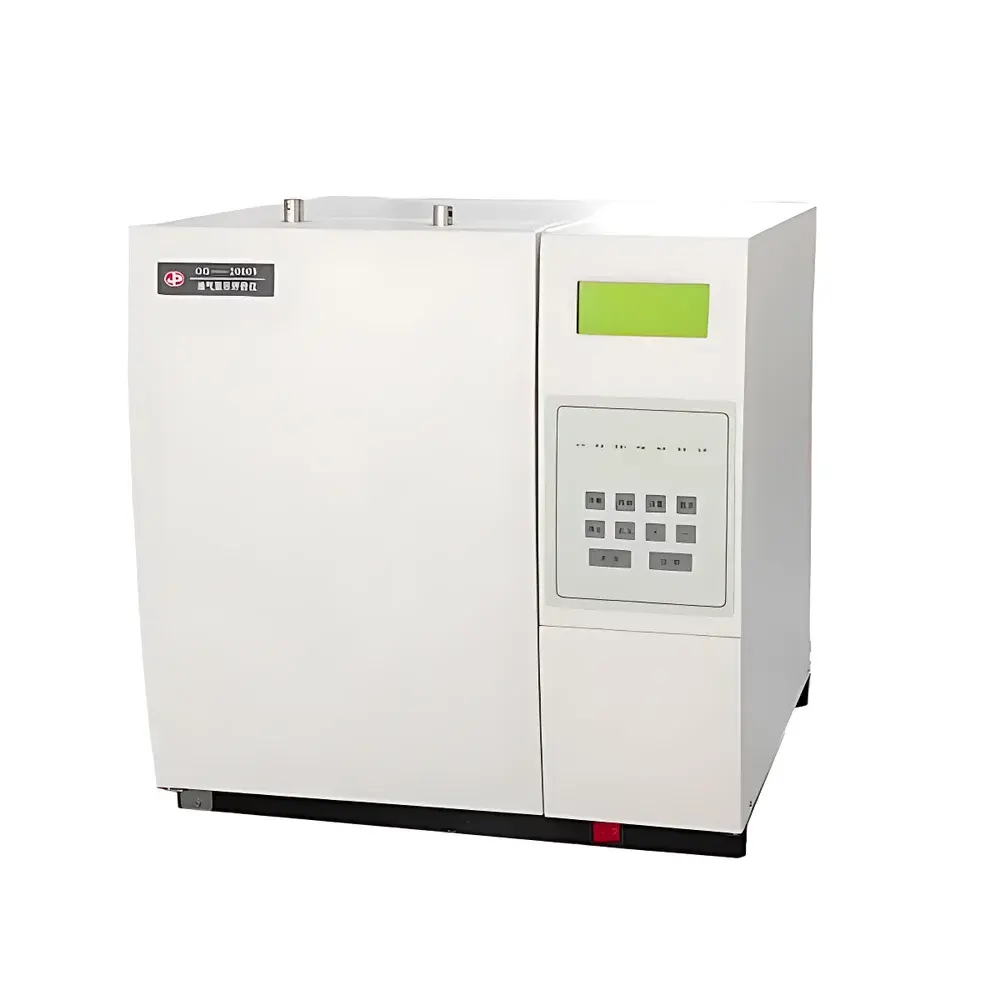
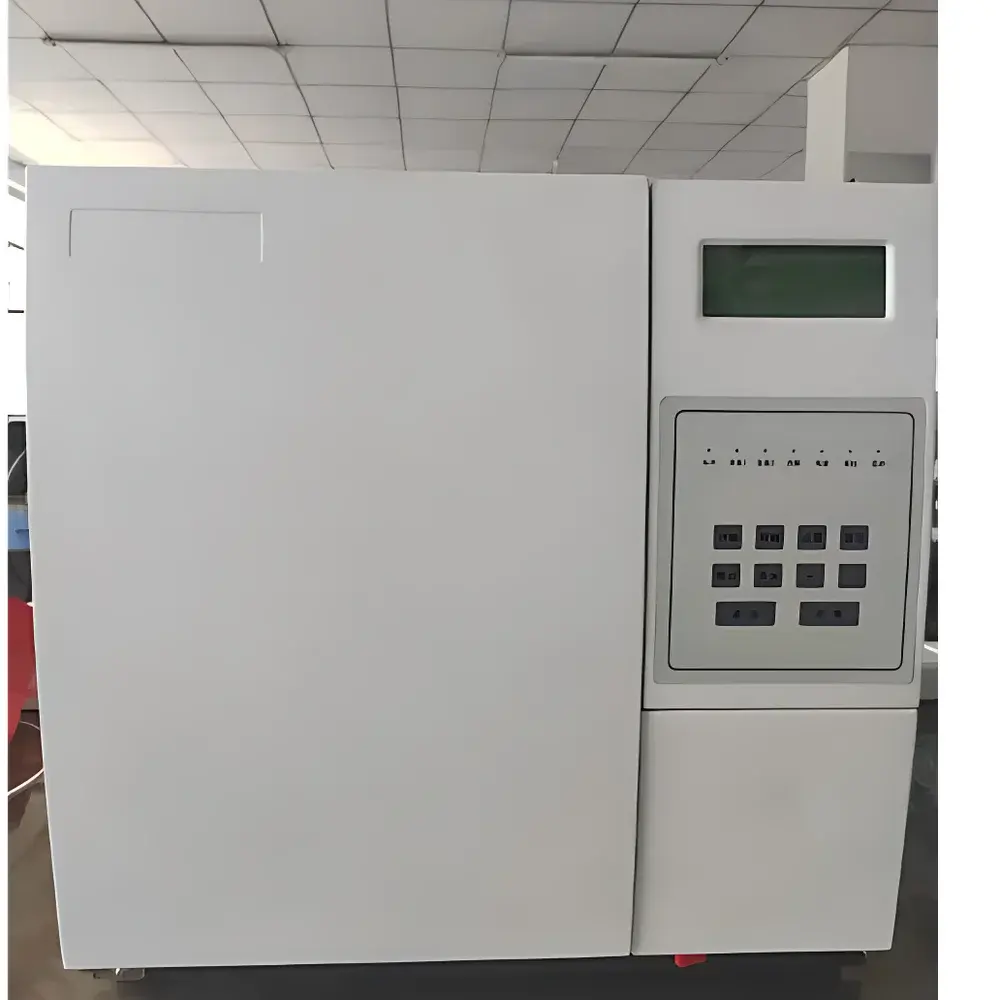
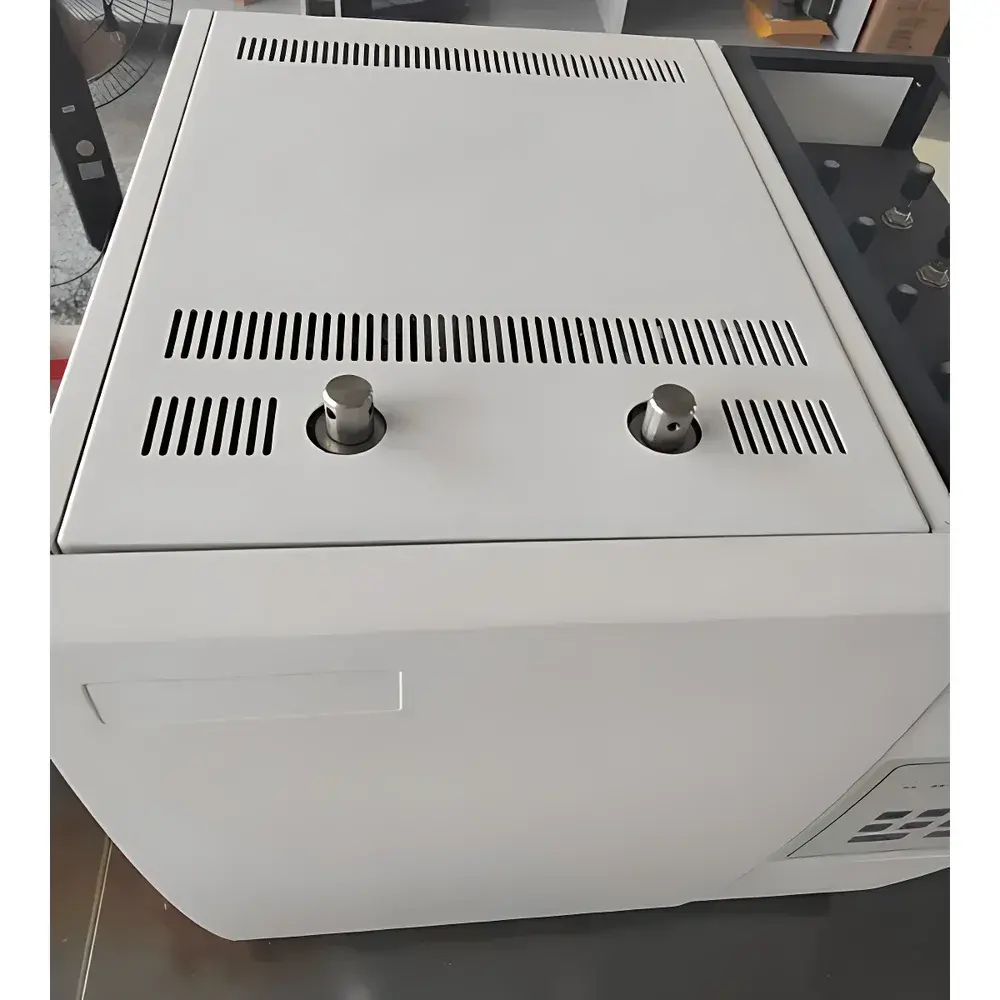
Shandong JINPU OG-2000V Geochemical Rock-Eval Analyzer with Integrated Pyrolysis and Residual Carbon Measurement
| Brand | JINPU |
|---|---|
| Origin | Shandong, China |
| Model | OG-2000V |
| Instrument Type | Online Gas Chromatograph for Geochemical Rock-Eval Analysis |
| Detector | Dual Flame Ionization Detector (FID) |
| Minimum Hydrocarbon Detection | 0.001 mg HC/g rock |
| Baseline Drift | < 0.1 mV/30 min |
| Linear Range | 10⁶ |
| FID Temperature Control Accuracy | 360 ± 0.5 °C |
| Pyrolysis Furnace Control Accuracy | 600 ± 0.5 °C |
| Oxidation Furnace Control Accuracy | 600 ± 0.5 °C |
| Programmable Temperature Ramp Cycles | 4 (source rock, reservoir rock, thermal simulation, user-defined) |
| Ramp Linearity Deviation | < 0.5 °C/min |
| Total Analysis Time (Pyrolysis + Organic Carbon) | 14.5 min |
| Interface | USB 2.0 |
| Software Compatibility | Windows 98/2000/XP |
| Compliance | Designed for ASTM D7260, ISO 10303-21 (indirect), and petroleum geochemistry lab workflows aligned with API RP 44 & AAPG guidelines |
Overview
The Shandong JINPU OG-2000V Geochemical Rock-Eval Analyzer is a dedicated online gas chromatographic system engineered for quantitative organic geochemical evaluation of sedimentary rocks in petroleum exploration laboratories. It implements a modified Rock-Eval™ methodology based on programmed pyrolysis coupled with catalytic oxidation, followed by high-sensitivity hydrocarbon detection via dual flame ionization detectors (FIDs). Unlike conventional standalone GC systems, the OG-2000V integrates thermal desorption, pyrolysis (S1, S2, Tmax), residual carbon (RC) measurement, and free hydrocarbon (S0) quantification into a single, unified hardware platform. Its architecture follows the principles of controlled-temperature pyrolysis (CTP) and evolved gas analysis (EGA), enabling reproducible determination of kerogen type, thermal maturity, and hydrocarbon generation potential—key parameters required for basin modeling, source rock assessment, and well-log calibration.
Key Features
- Integrated single-cylinder pyrolysis module eliminates positional variability during crucible insertion, ensuring sub-0.5 °C reproducibility in Tmax determination—a critical parameter for vitrinite reflectance equivalence and kinetic modeling.
- Dual-FID detection system optimized for hydrocarbon response (C1–C12), delivering a linear dynamic range of 10⁶ and minimum detectable hydrocarbon mass of 0.001 mg HC/g rock under standard operating conditions.
- High-precision temperature control across three independent zones: FID (360 ± 0.5 °C), pyrolysis furnace (600 ± 0.5 °C), and oxidation furnace (600 ± 0.5 °C), verified per ASTM E2554 calibration protocols.
- Forced-air rapid cooling subsystem reduces total cycle time to 14.5 minutes for full S0–S1–S2–RC analysis, supporting throughput of >50 samples per 8-hour shift in routine QC environments.
- Modular electronics design featuring two highly integrated PCBs—eliminating solid-state relays and minimizing inter-board cabling—enhances long-term reliability and simplifies field maintenance without specialized tools or detector disassembly.
- Real-time digital temperature display for all thermal zones, including actual measured values (not setpoints only), enabling traceable thermal validation and GLP-compliant recordkeeping.
- USB 2.0 native interface ensures plug-and-play compatibility with modern laboratory PCs; no additional DAQ cards or proprietary interface modules required.
Sample Compatibility & Compliance
The OG-2000V accepts standard 10 mm diameter ceramic crucibles containing 50–100 mg of crushed, dried, and homogenized rock powder. It supports both marine and terrestrial kerogen types (I–IV), carbonate-rich shales, and low-maturity coals. Sample preparation follows ASTM D7260-17 (Standard Practice for Determination of Total Organic Carbon in Sedimentary Rocks) and internal SOPs consistent with ISO/IEC 17025:2017 requirements for testing laboratories. While not certified to IEC 61000-6-3 or UL 61010-1 out-of-the-box, its electrical architecture meets Class A EMC emission limits for laboratory environments. Data acquisition and reporting workflows are compatible with audit-trail-enabled LIMS integration when paired with validated third-party software extensions.
Software & Data Management
The instrument is supplied with JINPU GeoEval v3.x—Windows-native application software supporting Windows 98 through Windows XP (32-bit). The GUI provides real-time chromatogram visualization, peak integration using tangent skim baseline correction, and automated calculation of key geochemical parameters: S0, S1, S2, Tmax, PI, OI, HI, and RC. Interpretive templates include stratigraphic hydrocarbon facies classification, water-flooded zone identification, and pseudo-Van Krevelen diagrams. Raw signal data (.dat) and processed reports (.xls) are exportable in ASCII format. Though natively non-21 CFR Part 11 compliant, the software permits manual electronic signature logging and supports external timestamping via NTP-synchronized host systems for GLP-aligned documentation.
Applications
- Source rock characterization in conventional and unconventional petroleum systems (e.g., Bakken, Eagle Ford, Ordos Basin shales)
- Thermal maturity assessment using Tmax–HI crossplots and kinetic modeling input generation
- Quality control of core and cuttings samples during drilling operations
- Calibration of wireline log-derived TOC models (e.g., ΔLogR, Passey method)
- Reservoir continuity evaluation through lateral S2/RC ratio mapping
- Geochemical screening for CO2-EOR candidate formations
FAQ
What sample size is required for accurate S2 quantification?
Typical analysis uses 60–80 mg of powdered rock sample loaded into a standardized alumina crucible. Precision improves when sample heterogeneity is minimized via jet milling and quartering prior to loading.
Is the OG-2000V suitable for analyzing carbonate-rich samples?
Yes—its oxidation furnace operates at 600 °C with Ni-based catalyst, enabling complete combustion of carbonate-bound carbon without interference in RC measurement; however, pre-treatment with dilute HCl may be recommended for high-CaCO3 matrices.
Can the instrument be upgraded to support ASTM D7260-compliant TOC mode?
The existing hardware architecture supports TOC measurement via acidification–purge–oxidation sequence; implementation requires firmware update and optional acid-delivery module (JINPU part #OG-TOC-KIT), validated per ASTM D7260 Annex A2.
Does the system include built-in calibration verification protocols?
Yes—daily performance checks include FID response verification using n-decane standard (0.1–10 µg), thermal ramp linearity test using NiCr/NiAl thermocouples, and baseline stability monitoring over 30-minute idle period.
What maintenance intervals are recommended for the dual-FID system?
FID nozzle cleaning every 200 injections; jet replacement every 1,000 runs; ceramic igniter inspection quarterly; and annual full-system leak check using helium sniffer per ASTM D3612 Section 7.3.





