
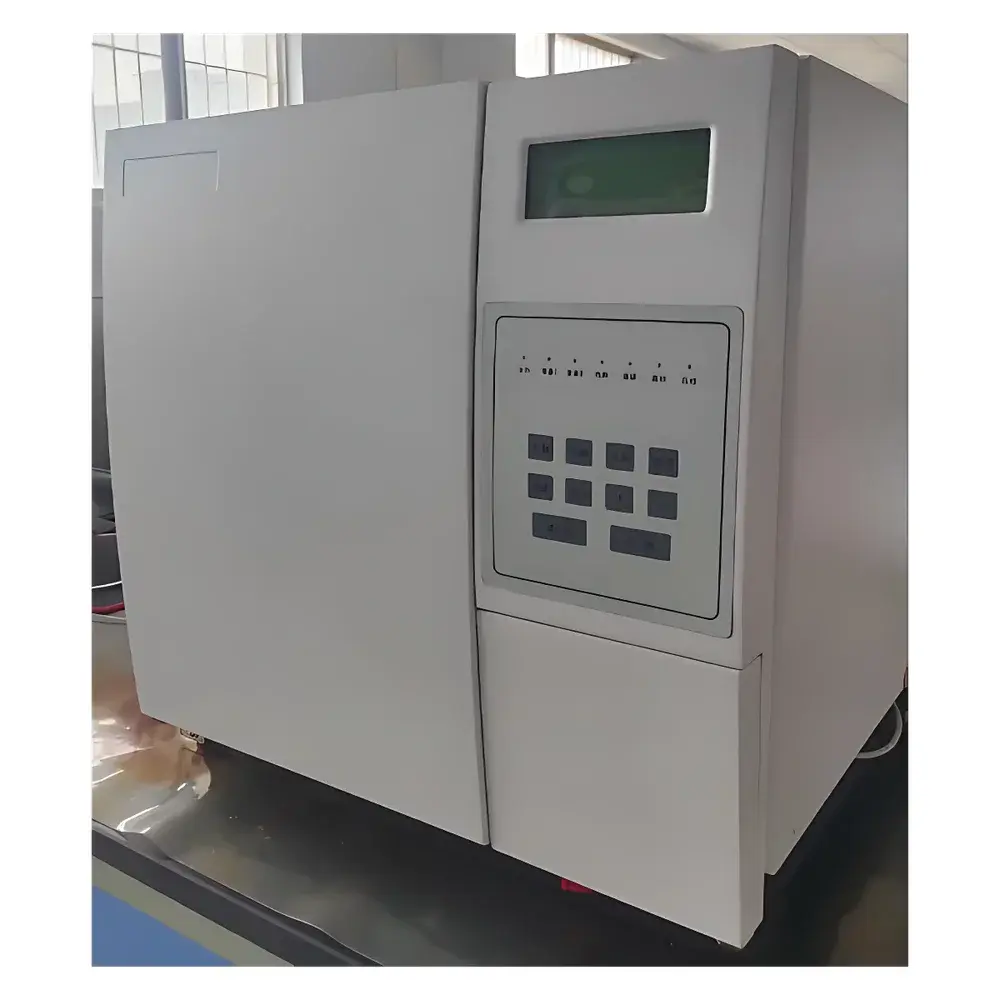
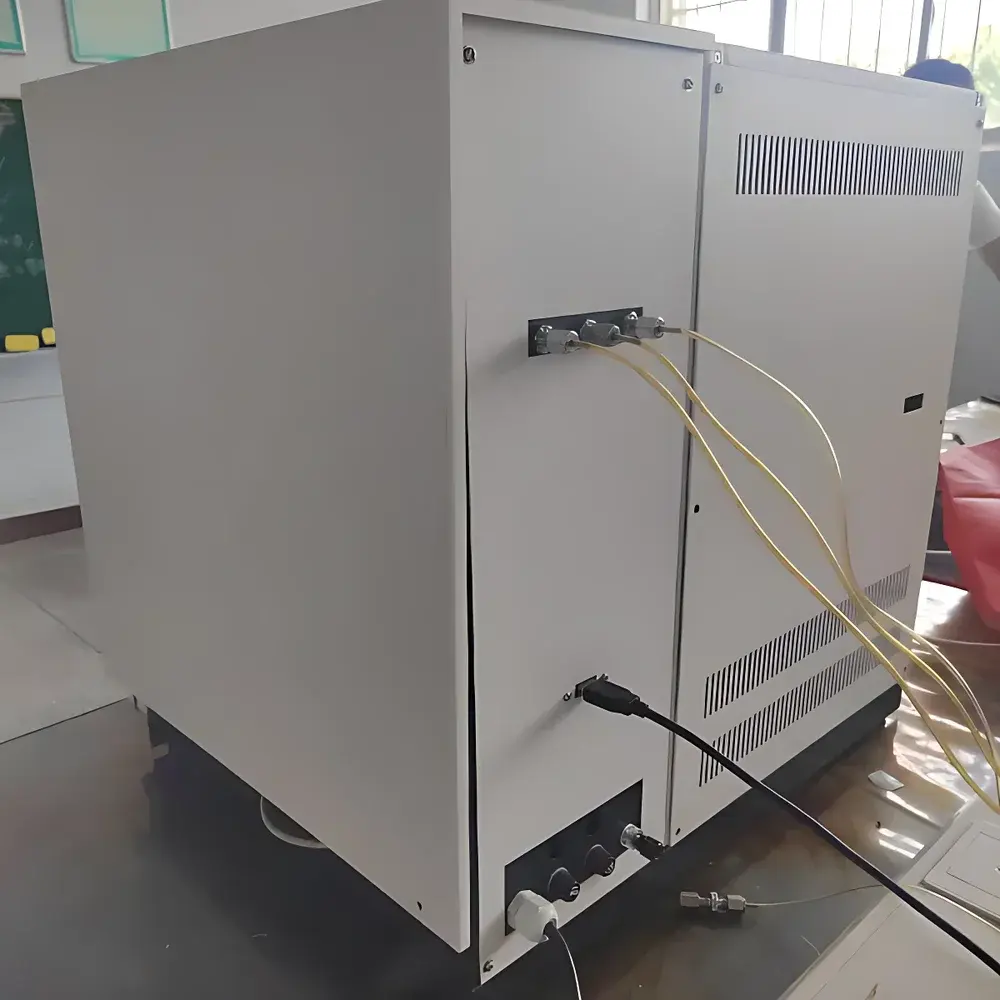
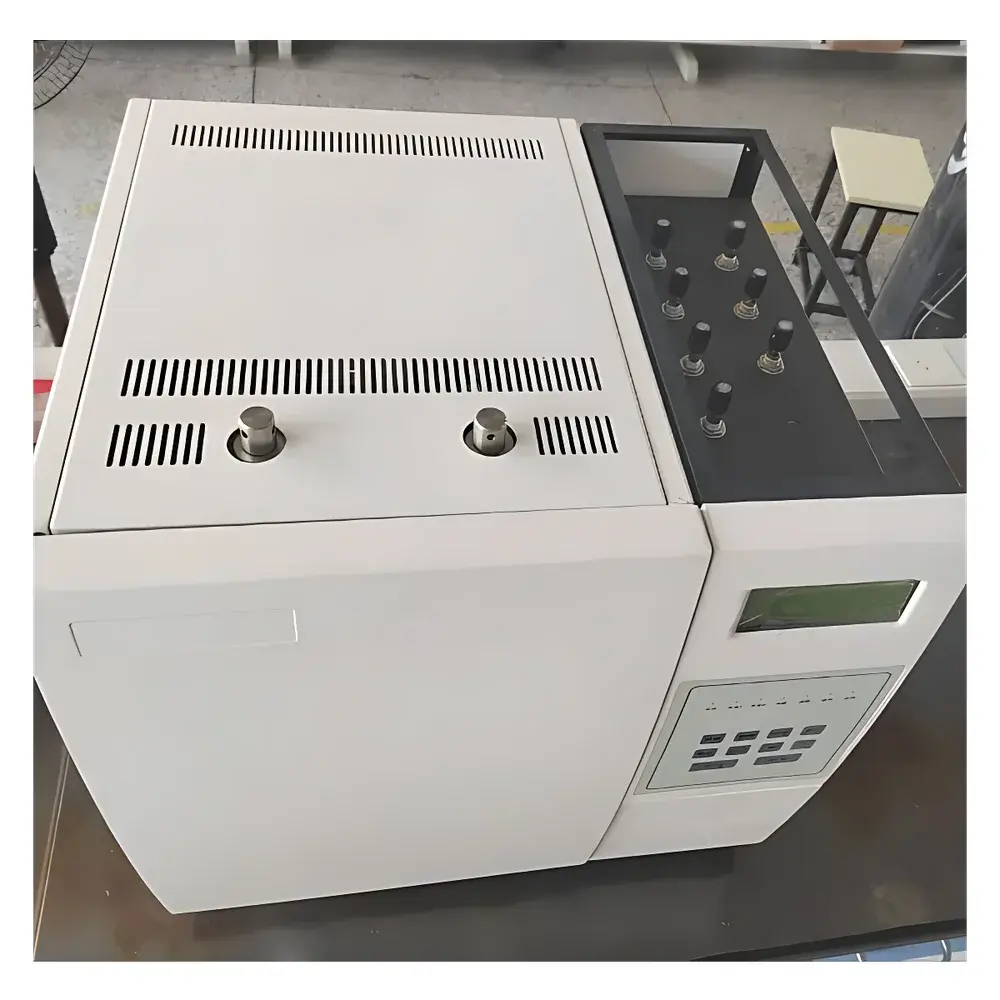
Golden Promise OG-2000V-A Thermal Desorption System for Geochemical Hydrocarbon Evaluation
| Brand | Golden Promise |
|---|---|
| Model | OG-2000V-A |
| Detector Type | Dual Flame Ionization Detector (FID) |
| Minimum Hydrocarbon Detection | 0.001 mg HC/g rock |
| Baseline Drift | < 0.1 mV / 30 min |
| Linear Dynamic Range | 10⁶ |
| FID Temperature Control Accuracy | 360 ± 0.5 °C |
| Pyrolysis Furnace Control Accuracy | 600 ± 0.5 °C |
| Oxidation Furnace Control Accuracy | 600 ± 0.5 °C |
| Programmable Temperature Ramp Profiles | 4 (Source Rock, Reservoir Rock, Thermal Simulation, User-Defined) |
| Ramp Linearity Deviation | < 0.5 °C/min |
| Total Analysis Time (Pyrolysis + Residual Carbon) | 14.5 min |
| Data Interface | USB 2.0 |
| Software Compatibility | Windows 98/2000/XP |
| Compliance | Designed for ASTM D7260, ISO 10303-21 (AP210) data exchange conventions, GLP-compliant audit trail support via software logging |
Overview
The Golden Promise OG-2000V-A Thermal Desorption System is a dedicated geochemical instrumentation platform engineered for quantitative evaluation of hydrocarbon potential in sedimentary rock samples. It integrates controlled pyrolysis, residual carbon oxidation, and high-sensitivity flame ionization detection (FID) within a single, thermally isolated architecture. Unlike conventional standalone pyrolyzers or discrete carbon analyzers, the OG-2000V-A implements a unified thermal desorption workflow—where sequential heating stages (S0–S2 pyrolysis and Tmax determination, followed by CO2-generating oxidation at 600 °C) are executed under precisely regulated gas flow and temperature conditions. The system operates on the principle of controlled thermal degradation: organic matter in crushed rock samples is volatilized and cracked in an inert atmosphere (N2), with evolved hydrocarbons quantified in real time by dual FID detectors. This enables derivation of key geochemical parameters including S0, S1, S2, Tmax, and residual carbon (RC), which collectively inform kerogen typing, maturity assessment, and generative potential modeling per established petroleum system analysis protocols.
Key Features
- Single-cylinder sample introduction mechanism eliminates positional variability during crucible insertion—ensuring sub-0.5 °C repeatability in Tmax measurement across >1000 consecutive analyses.
- Minimalist pneumatic architecture: only two 2-position, 5-port solenoid valves govern full sample transfer, carrier gas switching, and detector purging—reducing failure points and maintenance intervals.
- Shared sample rod design between pyrolysis and total organic carbon (TOC) modules eliminates redundant thermal sensors and internal heaters, eliminating rod-related gas leakage and thermal calibration drift.
- Electromechanical six-port valve actuation via programmable stepper motor enables deterministic, software-triggered gas routing—eliminating reliance on pressure-dependent passive valves or manual reconfiguration.
- Dual FID configuration provides redundancy and cross-validation capability; each detector features ultra-low-noise microcurrent amplification (resolution ≤10 fA) and supports signal outputs up to 2000 mV without saturation.
- Integrated forced-air cooling system reduces post-pyrolysis furnace cooldown time by >65%, enabling complete S0–S2–RC cycle execution in 14.5 minutes—meeting throughput requirements for regional basin screening workflows.
- Real-time, multi-point temperature telemetry displays actual furnace, FID, and oxidation zone temperatures—not just setpoints—supporting traceable thermal validation per ISO/IEC 17025 calibration documentation standards.
Sample Compatibility & Compliance
The OG-2000V-A accepts standard 10–20 mg powdered rock specimens loaded into quartz or ceramic crucibles (Ø 6 mm × 12 mm). It is validated for use with marine shale, lacustrine mudstone, carbonate-rich source rocks, and thermally altered reservoir cuttings. All thermal zones meet ASTM D7260-19 Annex A1 specifications for pyrolytic hydrocarbon release profiling. The instrument’s electrical architecture complies with IEC 61000-6-3 (EMC emission limits) and IEC 61010-1 (safety requirements for laboratory equipment). Software-generated reports include timestamped raw chromatograms, integrated peak areas, derived geochemical indices, and operator ID—structured to satisfy GLP audit requirements and facilitate 21 CFR Part 11–aligned electronic record retention when deployed with validated LIMS integration.
Software & Data Management
The proprietary GeoEval™ v4.x acquisition and interpretation suite runs natively on Windows platforms (98 through 10) and supports USB-native device enumeration without driver installation. It provides synchronized control of temperature ramps, valve sequencing, and FID data acquisition at 10 Hz sampling rate. Interpretation modules include automated S2 peak deconvolution, HI/OI crossplots, Van Krevelen diagrams, and water-flooded zone discrimination algorithms based on S0/S1 ratio thresholds and RC suppression patterns. All processing steps are logged with immutable timestamps, user credentials, and parameter versioning—enabling full forensic reconstruction of analytical decisions. Export formats include CSV, XML (ISO 10303-21 AP210 compliant), and PDF reports with embedded digital signatures.
Applications
- Quantitative kerogen typing (Types I–IV) via hydrogen index (HI) and oxygen index (OI) calculation from S2 and RC-derived values.
- Maturity assessment using Tmax and production index (PI = S0/(S0+S1+S2))—correlated to vitrinite reflectance equivalents (Ro%) using calibrated regional equations.
- Hydrocarbon generation potential estimation (mg HC/g rock) for basin modeling input.
- Reservoir quality screening via S0/S1 ratios indicative of free oil presence versus retained bitumen.
- Water-flooding impact evaluation through progressive S0 suppression and anomalous RC elevation in producing intervals.
- Thermal simulation studies (e.g., hydrous pyrolysis analogs) using custom ramp profiles with extended hold times at intermediate temperatures.
FAQ
What sample preparation is required prior to analysis?
Crushed rock samples must be dried at 60 °C for 24 hours, ground to ≤80 mesh, and homogenized. No acid treatment is needed unless carbonate interference is suspected—verified via XRD or calcimeter screening.
Can the OG-2000V-A be integrated into an existing LIMS environment?
Yes—via configurable ODBC-compliant database export or REST API endpoints provided in GeoEval™ v4.3+, supporting automated ingestion of raw signals, processed indices, and QC metrics.
Is calibration traceable to NIST standards?
Instrument response is calibrated using certified hydrocarbon standards (n-C10 to n-C36 alkanes in mineral oil matrix) traceable to NIST SRM 2779; temperature calibration verified with ITS-90 reference thermocouples.
Does the system support unattended batch operation?
Up to 48 samples can be queued via autosampler-compatible carousel interface (optional add-on); each run executes full pyrolysis–oxidation sequence with automatic baseline reset and detector re-ignition.
What maintenance intervals are recommended for the FID system?
FID jet cleaning and collector electrode polishing every 200 runs; nickel catalyst replacement every 1,000 analyses; annual full thermal calibration verification with external reference thermometers.




