
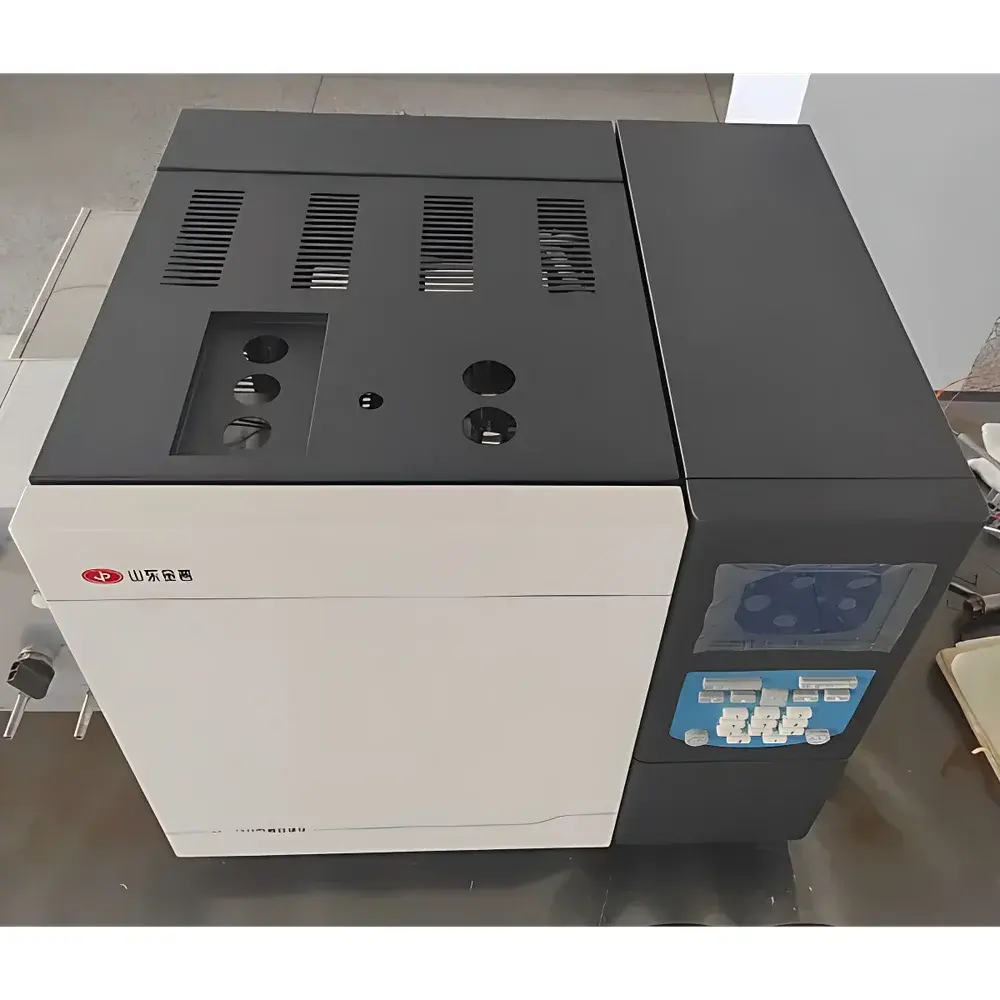
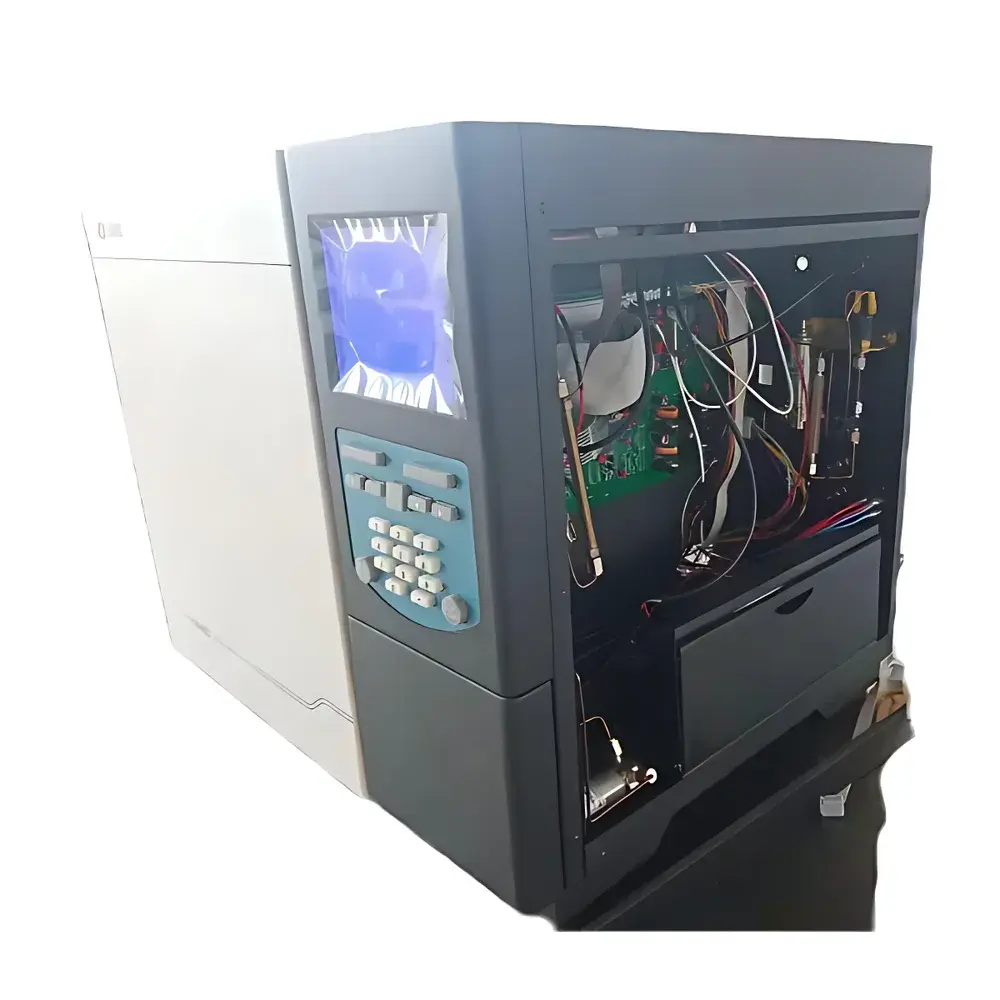
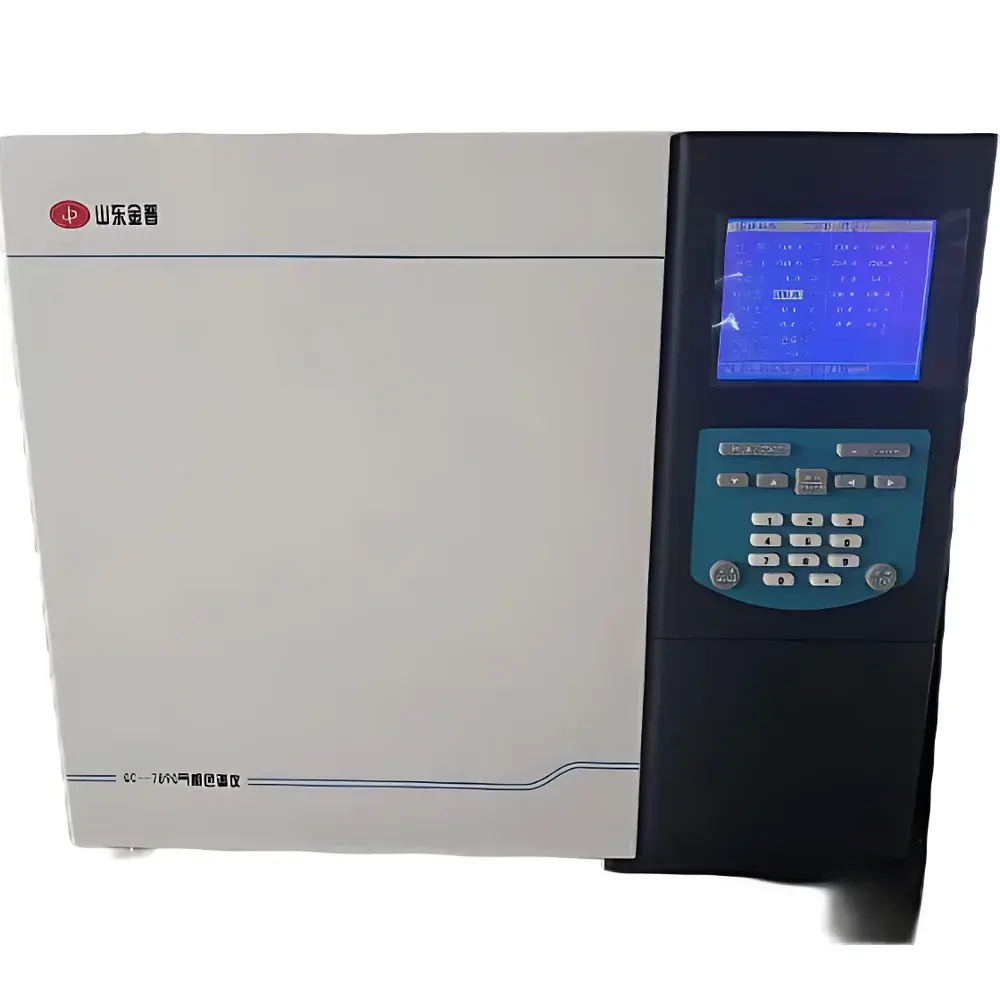
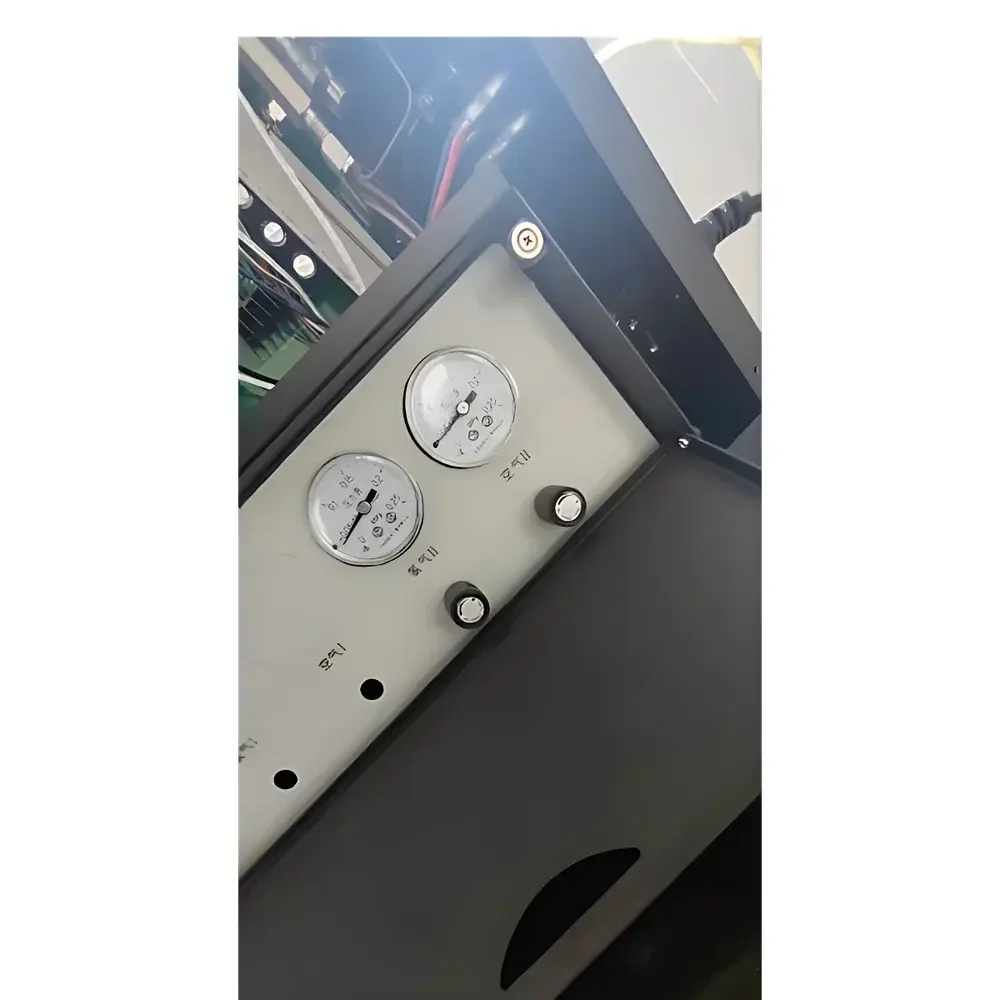
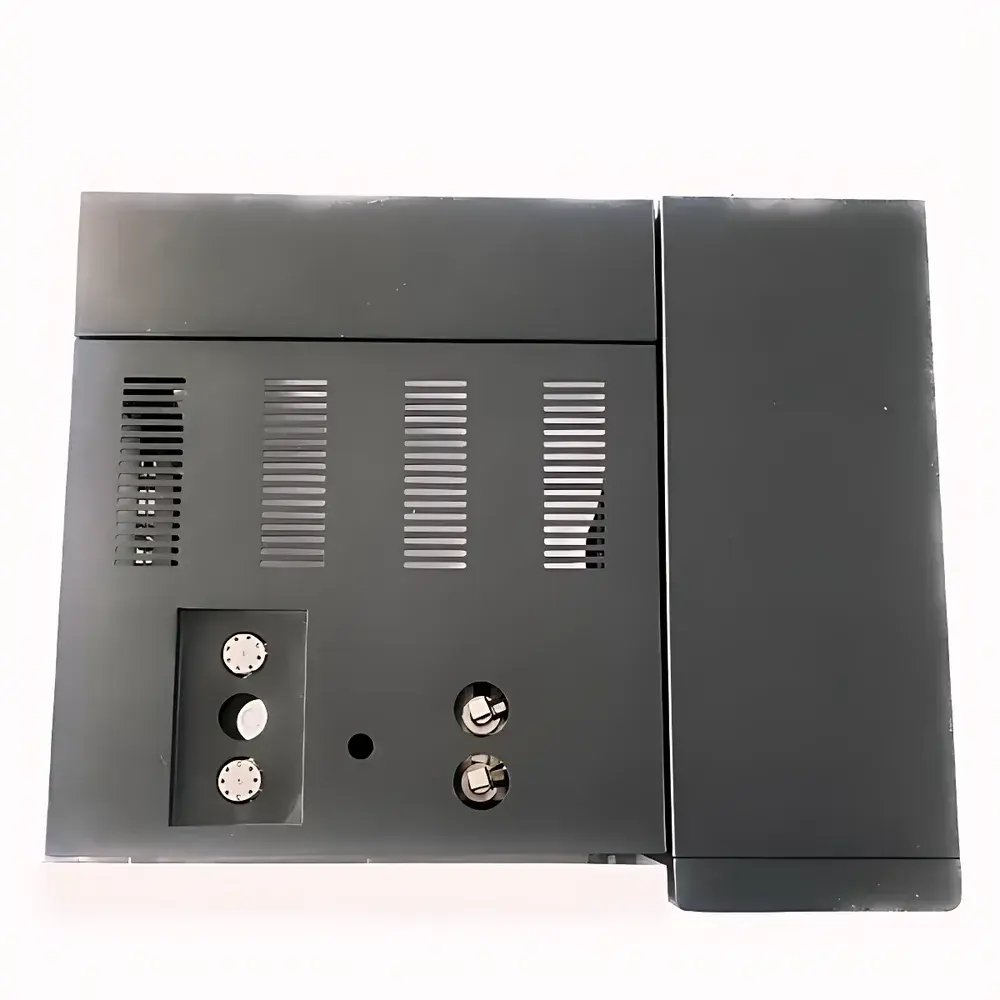
Jinpu GC-7890SD Transformer Oil-Specific Gas Chromatograph
| Brand | Jinpu |
|---|---|
| Origin | Shandong, China |
| Model | GC-7890SD |
| Instrument Type | Laboratory Gas Chromatograph |
| Application Field | Power Industry Dedicated |
| Oven Temperature Range | Ambient + 5°C to 420°C |
| Oven Ramp Rate | 0.1–40°C/min |
| Oven Cool-down | 450°C to 50°C in ~6 min |
| Carrier Gas Flow Range & Control | 0–1200 mL/min (7-program segments) |
| Carrier Gas Pressure Range & Control | 0–970 kPa |
| Injector Max Operating Temperature | 450°C |
| Injector Pressure Setting Range | 0–970 kPa |
| Injector Total Flow Setting Range | 0–1200 mL/min |
Overview
The Jinpu GC-7890SD Transformer Oil-Specific Gas Chromatograph is a dedicated analytical system engineered for precise quantification of dissolved gases in insulating mineral oils used in power transformers and high-voltage equipment. It operates on the principle of gas chromatography with dual detection—thermal conductivity detection (TCD) for permanent gases (H₂, O₂, N₂) and flame ionization detection (FID) for hydrocarbons (CH₄, C₂H₂, C₂H₄, C₂H₆, CO, CO₂)—enhanced by an integrated nickel catalyst methanizer for optimized CO/CO₂ response. Designed explicitly to meet the stringent requirements of international and national standards—including ASTM D3612 (Standard Test Method for Analysis of Gases Dissolved in Electrical Insulating Oil), IEC 60567 (Guidelines for the sampling and analysis of gases in oil-filled electrical equipment), and Chinese standards GB/T 7252–2019 and DL/T 722–2014—the GC-7890SD delivers reproducible, trace-level gas profiling essential for predictive maintenance, fault diagnosis, and condition-based asset management in utility substations and generation facilities.
Key Features
- Dual-detector architecture: High-sensitivity TCD (S ≥ 3000 mV·mL/mg on n-hexadecane) and low-noise FID (detection limit ≤ 3 × 10⁻¹² g/s on n-C₁₆) configured for simultaneous analysis of H₂, O₂, N₂, CO, CO₂, CH₄, C₂H₄, C₂H₆, and C₂H₂ in a single injection.
- Advanced temperature control: Programmable oven with 7-stage ramp capability, precision ±0.1°C stability (at constant setpoint), and rapid cool-down (450°C → 50°C in ≈6 min), enabling high-throughput routine analysis without thermal memory effects.
- Robust carrier gas management: Digital pressure and flow control across 0–970 kPa and 0–1200 mL/min ranges, supporting helium, hydrogen, or nitrogen carrier gases with <1% flow stability—critical for retention time reproducibility and method transferability.
- High-temperature injector: Capable of operation up to 450°C with independent pressure/flow programming, ensuring complete volatilization of viscous transformer oil extracts and minimizing carryover.
- Optimized column configuration: Dual packed or capillary columns pre-selected for transformer oil matrix separation—designed to resolve critical pairs including C₂H₄/C₂H₆ and CO/CO₂ under standardized temperature programs per GB/T 7252.
Sample Compatibility & Compliance
The GC-7890SD is validated for use with degassed transformer oil samples prepared via vacuum extraction, headspace equilibration, or mechanical shaking (compatible with standard ASTM D3612 Type A/B/C protocols). Its hardware and software workflows align with regulatory expectations for data integrity in electric utility environments: full audit trail support, electronic signature capability, and 21 CFR Part 11–compliant data handling when deployed with optional secure user authentication modules. All calibration, integration, and reporting functions comply with ISO/IEC 17025:2017 requirements for testing laboratories, and diagnostic algorithms implement the Duval Triangle, Rogers Ratios, and IEC 60599–based fault classification logic—ensuring interoperability with SCADA-integrated asset health platforms.
Software & Data Management
The instrument is operated via Jinpu Power Industry Chromatography Workstation—a Windows-based application built on a 24-bit USB data acquisition engine (±2 V input range, 1 µV resolution). Key capabilities include: automated interference-triggered acquisition; device-centric sample registration with hierarchical asset tagging (e.g., substation ID, transformer serial number); customizable reporting templates compliant with utility internal QA forms and regulatory submissions; real-time baseline correction and spectral stitching; and longitudinal trend visualization of dissolved gas concentrations across multiple sampling events. The software supports GLP/GMP-aligned operation with full electronic record retention, version-controlled method storage, and configurable alarm thresholds for individual gas species—enabling seamless integration into enterprise CMMS or EAM systems.
Applications
- Early detection of incipient faults: Partial discharge (H₂), thermal degradation (>700°C, C₂H₂), low-energy arcing (C₂H₂ + H₂), and cellulose overheating (CO + CO₂).
- Transformer health assessment: Trend analysis of key gas ratios (C₂H₂/C₂H₄, CH₄/H₂, C₂H₄/C₂H₆) per IEC 60599 and IEEE C57.104 guidelines.
- Insulating oil quality verification: Quantification of air ingress (O₂/N₂), moisture-related oxidation products (CO), and aging byproducts (CO₂).
- Factory acceptance testing (FAT) and commissioning: Pre-energization baseline profiling per IEEE Std C57.127.
- Regulatory compliance reporting: Generation of auditable DGA reports for provincial grid dispatch centers and national energy regulators.
FAQ
What gas species can the GC-7890SD quantify simultaneously in one run?
Hydrogen (H₂), oxygen (O₂), nitrogen (N₂), methane (CH₄), acetylene (C₂H₂), ethylene (C₂H₄), ethane (C₂H₆), carbon monoxide (CO), and carbon dioxide (CO₂)—all resolved and quantified in a single injection using TCD/FID dual detection and nickel catalysis.
Does the system support automated calibration verification?
Yes—the workstation includes scheduled calibration check routines with reference gas injections, automatic response factor recalculation, and drift compensation logs aligned with ISO/IEC 17025 clause 7.7 requirements.
Is the GC-7890SD compatible with existing LIMS or SCADA infrastructure?
It exports ASCII and XML-formatted results with configurable field mapping; optional OPC UA or Modbus TCP gateways enable direct integration into plant-level monitoring systems.
What is the minimum detectable concentration for acetylene (C₂H₂)?
≤ 0.1 µL/L (v/v) under standard ASTM D3612 extraction and injection conditions—validated using certified multi-component DGA standard gases traceable to NIST SRM 2722.
Can the instrument operate unattended overnight for batch analysis?
Yes—equipped with autosampler-ready interfaces and robust thermal management, it supports fully automated sequence runs including column bake-out, detector stabilization, and report generation without operator intervention.





