
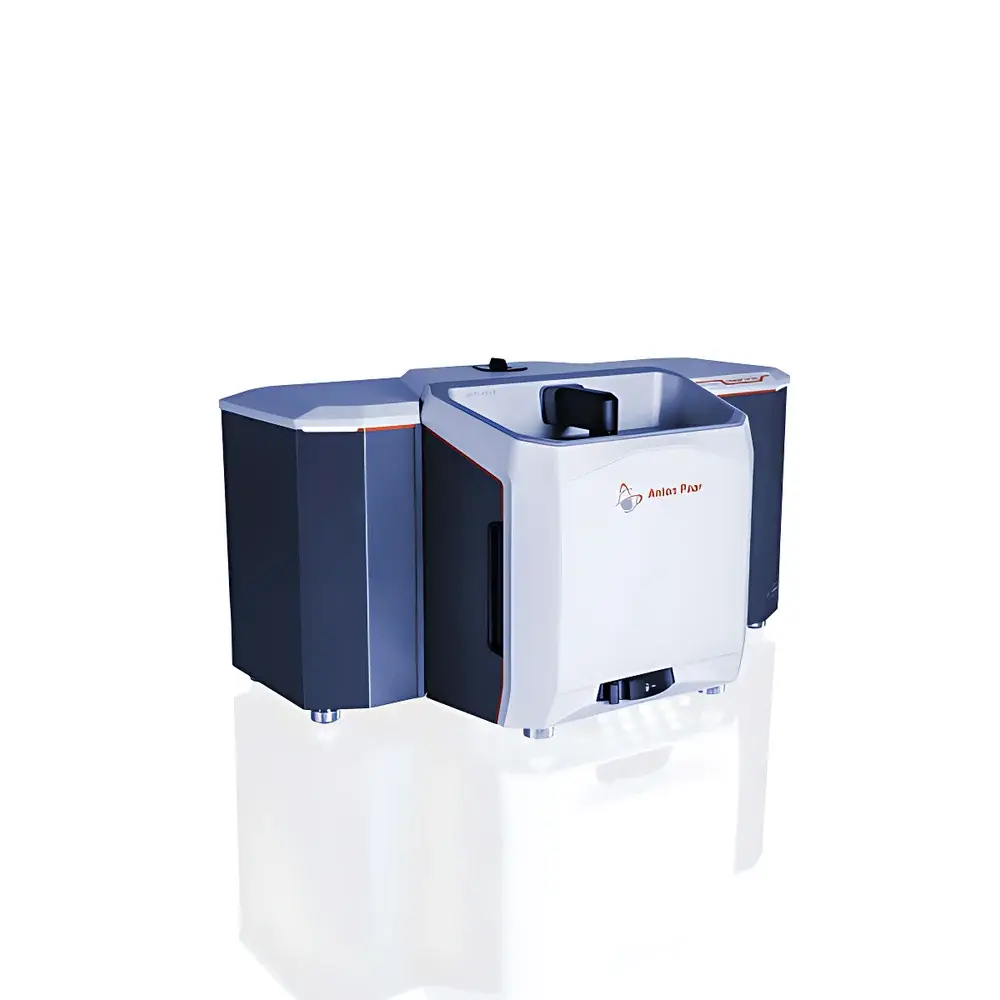
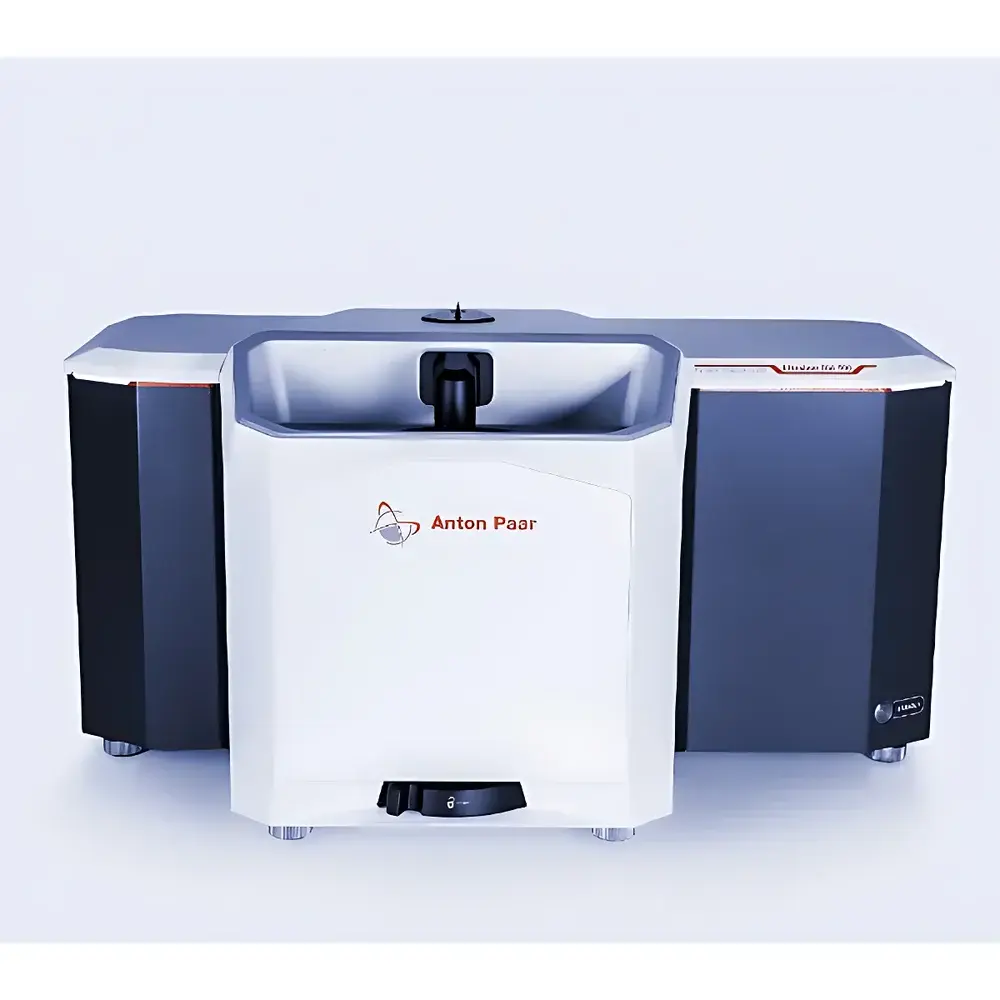
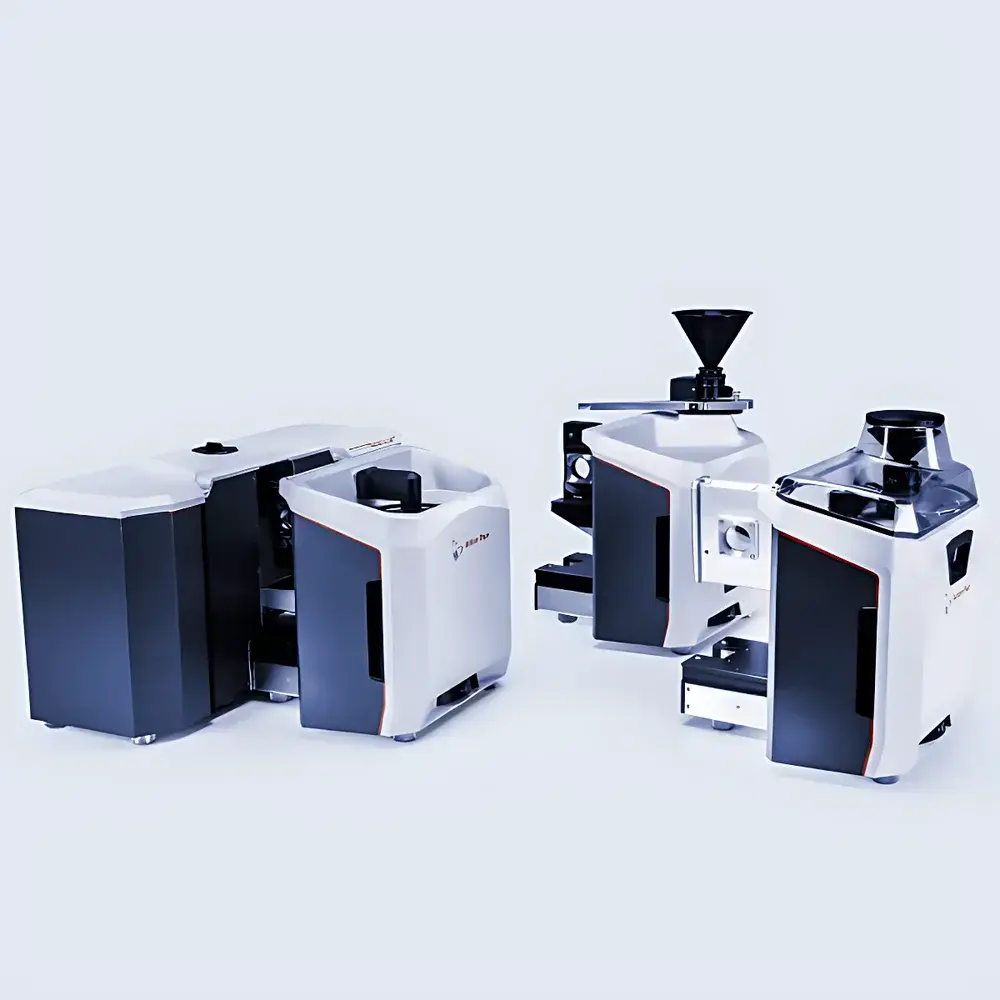
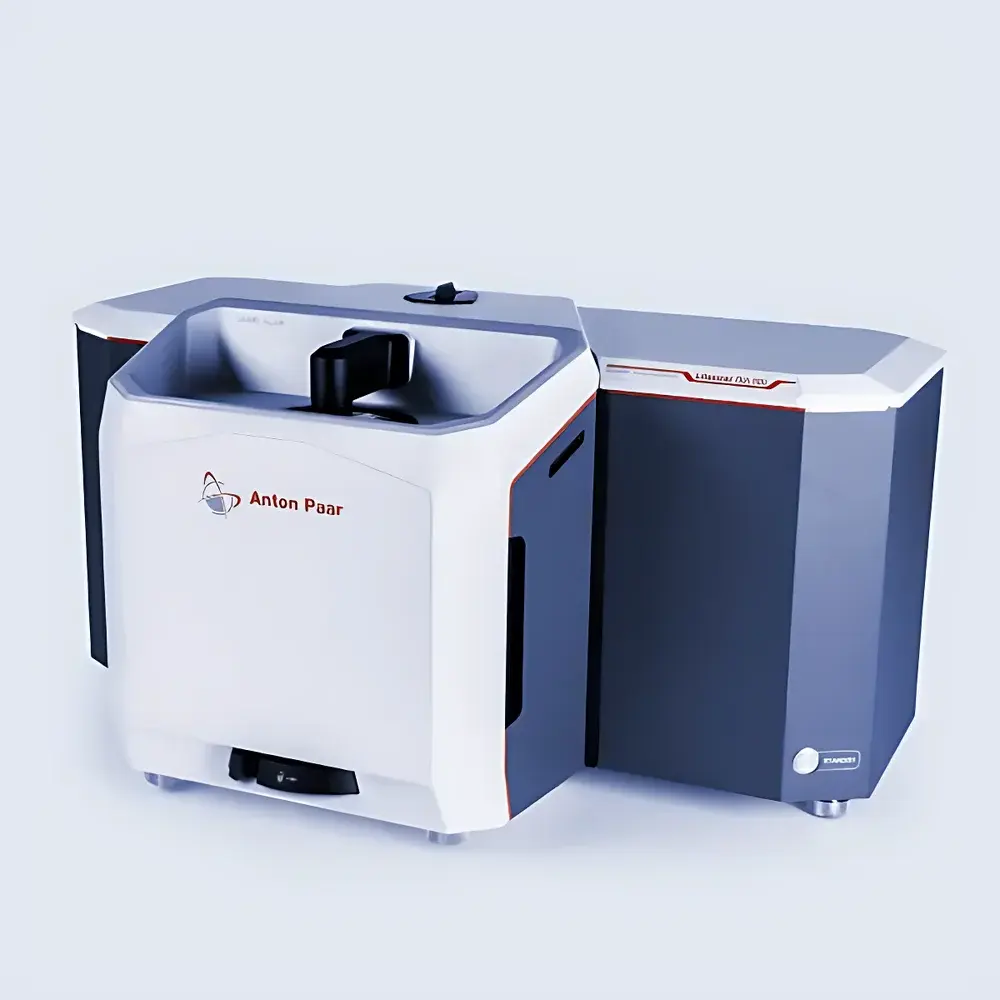
Anton Paar Litesizer DIA Series Dynamic Image-Based Particle Size and Shape Analyzer
| Brand | Anton Paar |
|---|---|
| Origin | Austria |
| Manufacturer Type | Original Equipment Manufacturer (OEM) |
| Import Status | Imported |
| Model | Litesizer DIA Series |
| Measurement Principle | Dynamic Image Analysis (DIA) |
| Measurement Range | 0.5 µm to 16,000 µm (dependent on dispersion mode and magnification) |
| Camera Resolution | 5 MPix (2448 × 2048 pixels) with pixel sizes of 0.5 µm / 0.8 µm / 10 µm (model-dependent) |
| Dispersion Modes | Wet dispersion (liquid carrier + optional ultrasonication), dry dispersion (compressed air jet), free-fall dispersion (gravity-driven) |
| Shape & Size Parameters | Feret min/max, projected area-equivalent diameter, length, geodesic length (for fibers), Legendre ellipse major/minor axes, aspect ratio, ellipticity, irregularity, elongation, circularity, shape factor, compactness, convexity, solidity — all compliant with ISO 9276-6:2023 |
| Data Acquisition Rate | Up to 220 fps (Litesizer DIA 700, 5 MPix) |
| Optical Magnification | 0.3×, 1×, and 6× (DIA 700) |
| Interface | 1 × 10 GbE, 1 × USB-A 3.0 |
| Dimensions (H×W×D) | 400 mm × 790 mm × 290 mm |
| Weight | 41 kg |
| Power Supply | 100–240 V ±10%, 50/60 Hz |
| Compressed Air | 5–10 bar (72–145 psi) |
| Liquid Supply Pressure | ≤8 bar (116 psi) |
Overview
The Anton Paar Litesizer DIA Series is a high-performance dynamic image-based particle size and shape analyzer engineered for precision, reproducibility, and regulatory readiness in industrial quality control and R&D laboratories. Unlike static imaging systems or laser diffraction instruments, the Litesizer DIA applies real-time dynamic image analysis (DIA) — capturing particles in motion across three physically distinct dispersion environments: wet suspension flow, dry pneumatic jet, and gravity-driven free fall. This enables statistically robust characterization of heterogeneous particulate systems without assumptions about particle sphericity or optical properties. The system complies with ISO 9276-6:2023 for shape descriptor definitions and supports traceable, audit-ready measurement workflows aligned with GLP and GMP requirements. Its modular architecture eliminates mechanical reconfiguration — switching between dispersion modes requires no tooling, tubing, or cable rewiring, reducing downtime and operator-induced variability.
Key Features
- Triple-dispersion modularity: Integrated wet dispersion unit (with optional ultrasonication and recirculation), dry dispersion module (precision-controlled compressed air jet), and free-fall chamber — all accessible via software-triggered hardware actuation.
- Multi-magnification optical path: Motorized objective turret with calibrated magnifications (0.3×, 1×, 6× on DIA 700; 0.3×, 4× on DIA 500; 0.3× only on DIA 100), enabling seamless coverage from sub-micron fines to coarse granules up to 16 mm.
- High-speed imaging engine: 5 MPix CMOS sensor (2448 × 2048) operating at up to 220 frames per second (DIA 700), delivering >100,000 validated particle images per minute under optimal conditions.
- Pixel-calibrated resolution: System-level calibration ensures true spatial resolution — 0.5 µm/pixel (DIA 700), 0.8 µm/pixel (DIA 500), or 10 µm/pixel (DIA 100) — traceable to NIST-traceable standards and verified per ISO/IEC 17025 procedures.
- Automated acquisition optimization: Real-time feedback adjusts frame rate, illumination intensity, and feed rate based on particle concentration and velocity — minimizing motion blur and ensuring statistically representative sampling.
- Regulatory-compliant software architecture: Full 21 CFR Part 11 compliance with electronic signatures, role-based access control, immutable audit trails, and instrument configuration history logging.
Sample Compatibility & Compliance
The Litesizer DIA accommodates diverse sample types — catalysts, pharmaceutical excipients, metal powders, mineral ores, polymer granules, and fibrous biomaterials — without requiring chemical modification or dilution beyond standard dispersion protocols. Wet dispersion supports aqueous and organic media (e.g., isopropanol, cyclohexane) with integrated sonication (up to 100 W) and programmable dwell time. Dry dispersion uses regulated compressed air (5–10 bar) to de-agglomerate cohesive powders while preserving primary particle integrity. Free-fall mode is optimized for fragile, friable, or electrostatically charged materials where fluid shear or gas impact must be avoided. All shape descriptors — including geodesic length for fibers, Legendre ellipse parameters, and convexity — are mathematically defined and implemented per ISO 9276-6:2023 Annex A. The system’s firmware and software are validated per ICH Q2(R2) and support IQ/OQ/PQ documentation packages for laboratory qualification.
Software & Data Management
Litesizer DIA operates exclusively via the unified Anton Paar ParticleSize software platform — a Windows-based application built on .NET Framework with SQLite and PostgreSQL backend options. It provides synchronized multi-parameter reporting: number-, surface-, and volume-weighted distributions; bivariate scatter plots (e.g., circularity vs. aspect ratio); outlier detection (e.g., oversized fragments or agglomerates); and batch-to-batch statistical comparison using ANOVA or multivariate control charts. Raw image datasets (TIFF/RAW) are stored with full metadata (timestamp, dispersion mode, magnification, exposure, calibration ID). Export formats include CSV, PDF, XML (ASTM E2921-compliant), and direct integration with LIMS via ASTM E1482 or HL7 interfaces. Audit trails record every user action, parameter change, and calibration event with digital signature and timestamp — fully compliant with FDA 21 CFR Part 11 and EU Annex 11.
Applications
- Catalyst development: Quantifying pore accessibility proxies via shape anisotropy and surface roughness metrics; detecting attrition fragments post-fluidized-bed testing.
- Pharmaceutical solid dosage: Verifying granule sphericity and flowability predictors (circularity, convexity, aspect ratio); identifying needle-like impurities in API crystallization batches.
- Advanced ceramics: Monitoring green-body packing density through compactness and solidity trends; correlating elongation with sintering shrinkage behavior.
- Battery materials: Characterizing cathode precursor morphology (e.g., Ni-rich NMC secondary particles) to predict electrode homogeneity and Li-ion diffusion pathways.
- Food & agriculture: Assessing starch granule integrity after extrusion; quantifying fiber alignment in plant-based meat analogs.
- Geotechnical engineering: Classifying crushed rock fines by angularity and convexity to predict asphalt binder adhesion performance.
FAQ
Does the Litesizer DIA require user calibration before each measurement?
No. The system performs automated optical and geometric calibration during startup using embedded reference targets. User-initiated calibration is only required after hardware service or lens replacement, and is guided step-by-step within the software.
Can it distinguish overlapping or touching particles in wet dispersion mode?
Yes. Advanced segmentation algorithms apply watershed separation combined with contrast-gradient edge detection and shadow suppression. Validation studies per ISO/IEC 17025 confirm >92% accuracy for particles with <15% overlap area under standard suspension concentrations.
Is the free-fall module suitable for nanoparticles?
No. Free-fall is intended for particles ≥8,000 µm where aerodynamic drag is negligible. Nanoparticles (<1 µm) require wet dispersion with surfactant stabilization and ultrasonication — supported by the integrated liquid module.
How does the system handle highly reflective or transparent particles?
The LED illumination system offers adjustable intensity, polarization filters, and coaxial/diffuse lighting modes. Software includes adaptive thresholding and local contrast enhancement to maintain segmentation fidelity across refractive index extremes (e.g., TiO₂ vs. silica gel).
What validation documentation is provided for regulatory submissions?
Anton Paar supplies a complete validation toolkit: IQ/OQ protocols, 21 CFR Part 11 compliance statement, ISO 9276-6 implementation report, uncertainty budget per GUM (JCGM 100:2008), and third-party verification reports from accredited metrology labs.



