
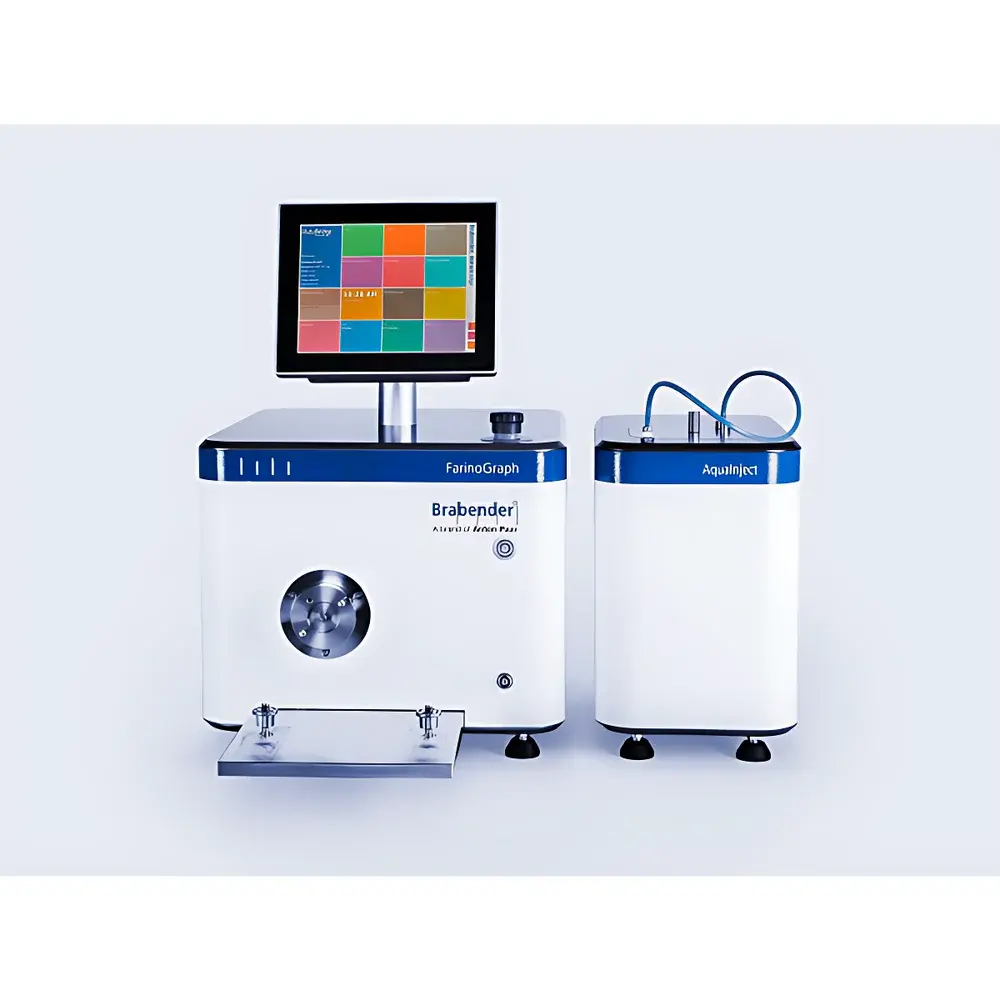
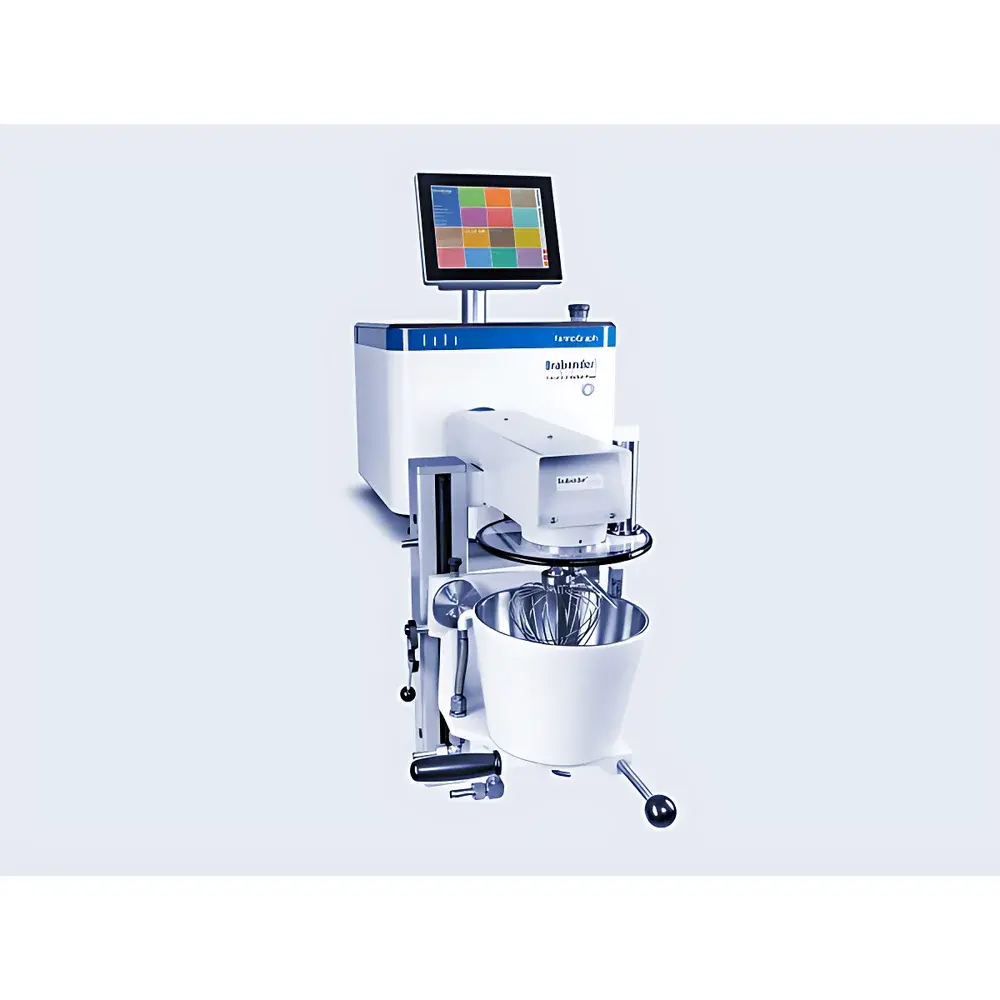
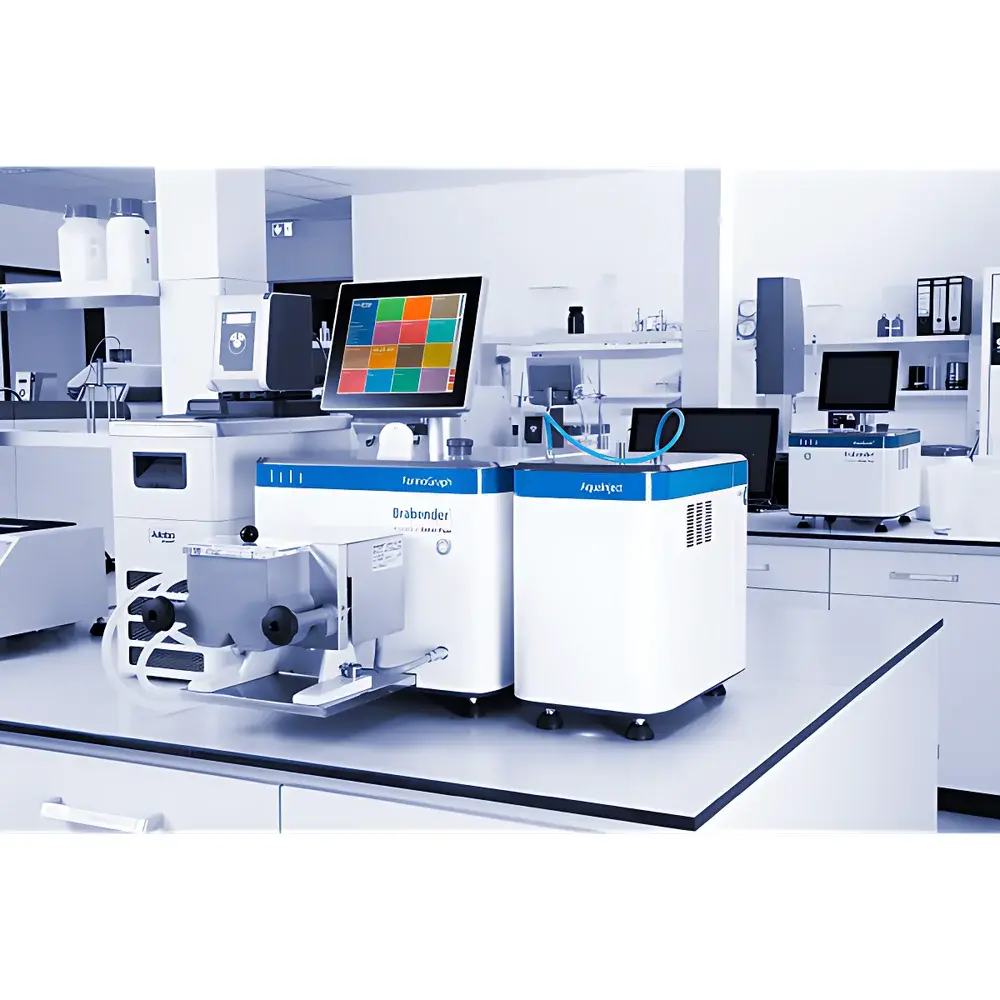
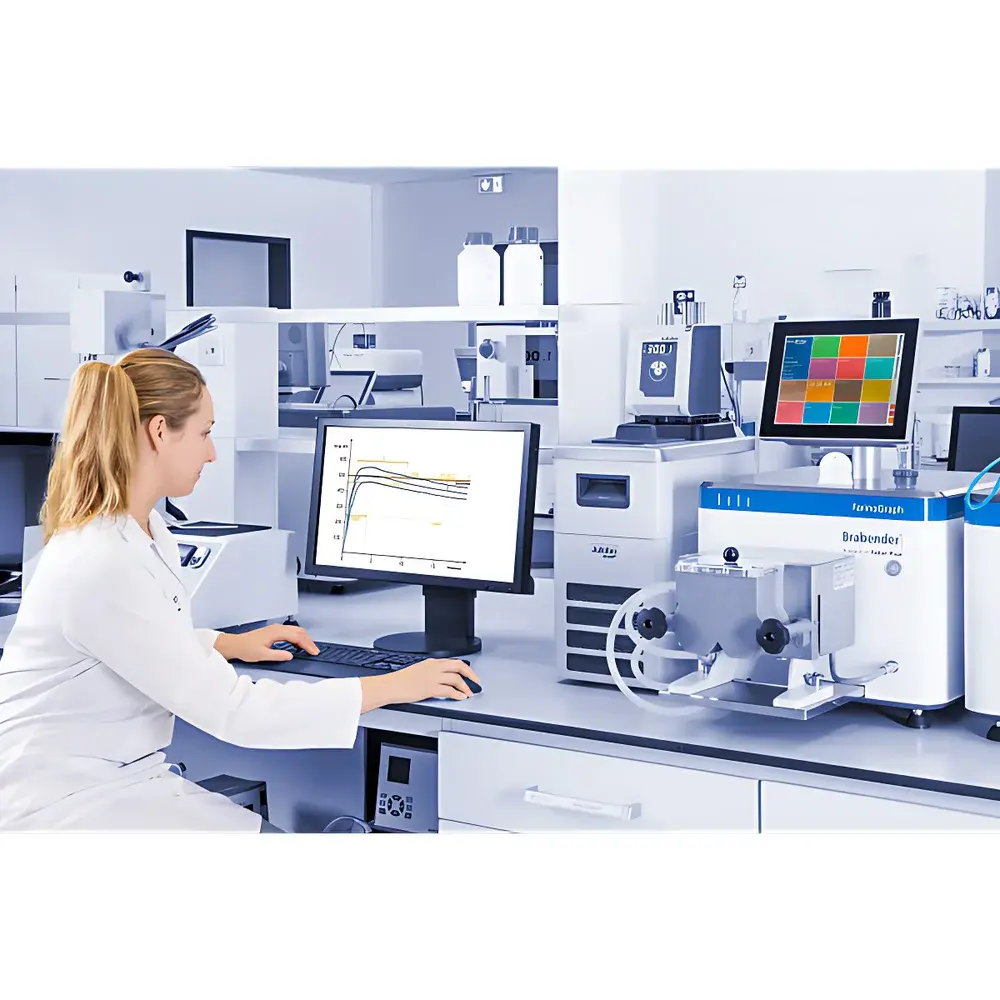
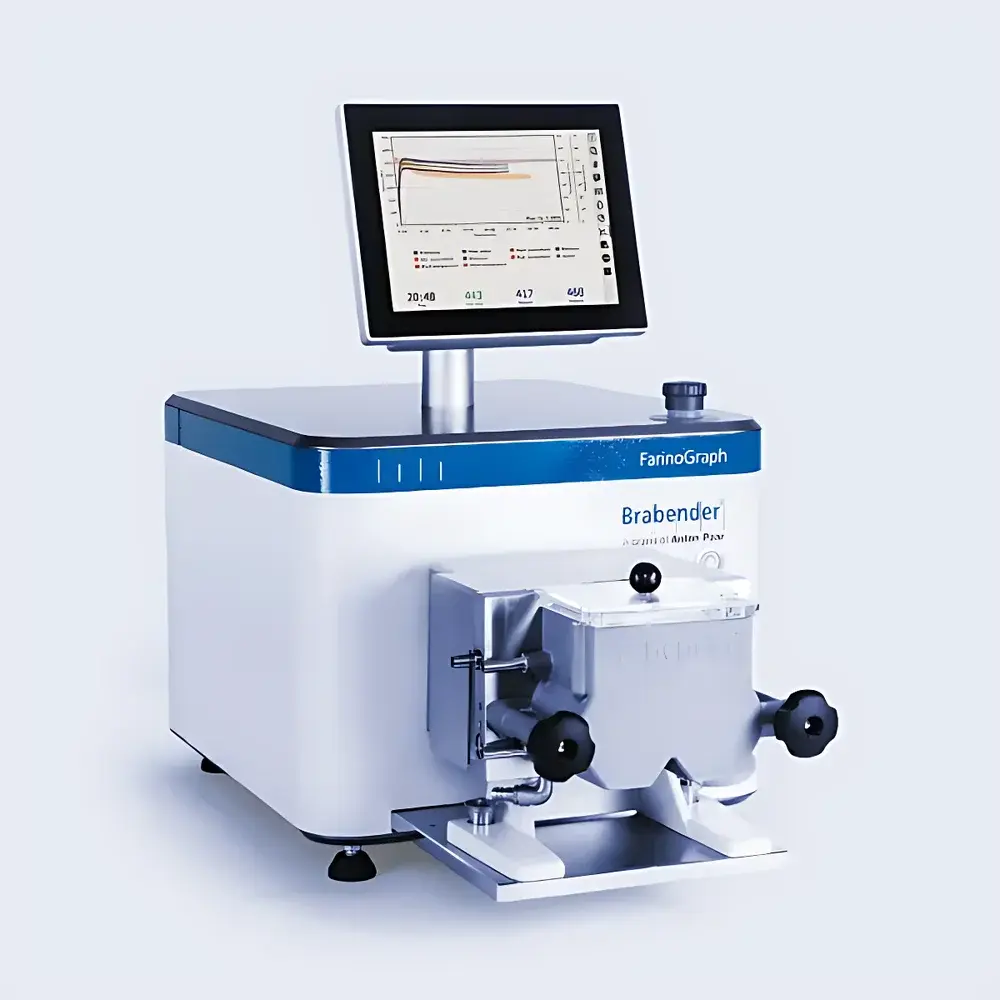
Anton Paar Brabender FarinoGraph Farinograph
| Brand | Anton Paar Brabender |
|---|---|
| Origin | Germany |
| Model | FarinoGraph |
| Weight (without S300 mixer) | 56 kg |
| Weight (with S300 mixer) | 74 kg |
| Dimensions (W × H × D) | 430 mm × 630 mm × 740 mm |
| Torque | 28 N·m |
| Speed Range | 0–200 rpm |
| Power Supply | 230 V (184–264 V) + N + PE / 50–60 Hz / 4.3 A / 1 kW or 115 V (88–126 V) + PE / 50–60 Hz / 8.7 A / 1 kW |
| Interfaces | 4 × USB, 1 × HDMI, 2 × LAN |
Overview
The Anton Paar Brabender FarinoGraph is a precision farinograph instrument engineered for standardized assessment of wheat flour rheology and water absorption behavior. Operating on the principle of controlled torque measurement during dough mixing, it quantifies the resistance of a flour-water mixture to mechanical shear under defined temperature, speed, and hydration conditions. This enables objective determination of critical functional parameters—including Water Absorption (WA), Dough Development Time (DDT), Dough Stability (S), Degree of Softening (DS), and Farinograph Quality Number (FQN)—all expressed in the globally recognized Brabender Unit (BU) or Farinograph Unit (FU). As a cornerstone instrument in cereal science laboratories, the FarinoGraph delivers reproducible, traceable data aligned with internationally harmonized methodologies established by ICC (International Association for Cereal Science and Technology), AACCI (American Association of Cereal Chemists International), and ISO (ISO 5530-1:2022). Its integration into the Anton Paar portfolio following the 2023 acquisition of Brabender reinforces global service infrastructure, calibration traceability, and long-term hardware/software support—ensuring continuity for users across milling, baking R&D, grain breeding, and quality assurance departments.
Key Features
- Compliance with ICC Standard Method No. 115/1, AACCI Method 54-21, and ISO 5530-1:2022 for flour farinographic analysis
- High-torque (28 N·m), brushless DC motor drive ensuring stable rotational performance across full speed range (0–200 rpm)
- Modular mixer system supporting multiple sample sizes: 10 g (miniature mixer for breeding trials), 50 g (standard research), and 300 g (S300 mixer for industrial-scale simulation)
- AquaInject automated water dosing module enabling precise, programmable titration with ±0.1 mL accuracy and real-time feedback control
- Integrated thermal management maintaining constant bowl temperature (±0.5 °C) during extended mixing cycles
- Robust stainless-steel mixing bowl and impeller design optimized for wear resistance and cleaning validation under GLP environments
Sample Compatibility & Compliance
The FarinoGraph accommodates a broad spectrum of cereal-based materials beyond standard wheat flour—including durum semolina, rye flour, whole grain blends, gluten-free formulations, and modified starches—provided they exhibit sufficient viscoelastic response within the instrument’s torque detection range. All measurements adhere to strict procedural requirements defined in regulatory frameworks governing food quality control. Data integrity meets FDA 21 CFR Part 11 requirements through MetaBridge’s audit trail functionality, electronic signature capability, and role-based access control. The system supports IQ/OQ documentation packages for GMP-compliant installations and is routinely validated against reference flours certified by ICC Reference Laboratory Network. Traceability extends to raw material sourcing, environmental conditions (ambient temperature/humidity logging), and operator identity—all embedded in metadata per measurement record.
Software & Data Management
MetaBridge, the web-native software platform, serves as the central hub for instrument control, data visualization, and analytical reporting. Hosted on an embedded Linux OS, it operates via any modern browser—eliminating client-side installation and enabling remote access from desktops, tablets, or smartphones. Core capabilities include real-time curve overlay, multi-curve correlation analysis using built-in statistical engines, and customizable evaluation point definition via EvaluationEditor plugin. AI-assisted curve prediction reduces average measurement time by up to 50% without compromising endpoint accuracy. Automated titration termination logic ensures consistent stopping criteria based on user-defined FQN thresholds or viscosity inflection points. Export options include CSV, PDF, and XML formats compatible with LIMS (e.g., LabWare, Thermo Fisher SampleManager) and ERP systems (e.g., SAP QM, Oracle Quality). All raw torque-time datasets are stored with SHA-256 checksums to guarantee immutability and forensic readiness during audits.
Applications
- Flour mill quality assurance: Routine monitoring of incoming wheat lots and finished flour batches against contractual specifications
- Bakery R&D: Optimization of dough formulation, enzyme addition levels, and fermentation protocols
- Grain breeding programs: High-throughput screening of progeny lines for milling yield and baking performance traits
- Regulatory compliance testing: Submission-ready reports for certification bodies (e.g., USDA-FAS, EU Flour Regulations EC No. 152/2009)
- Academic research: Fundamental studies on starch gelatinization kinetics, protein network formation, and hydration dynamics
- Ingredient supplier qualification: Objective benchmarking of alternative flours (e.g., ancient grains, legume composites) against wheat baselines
FAQ
What standards does the FarinoGraph comply with?
The instrument fully implements ICC 115/1, AACCI 54-21, and ISO 5530-1:2022. Calibration and verification procedures follow ISO/IEC 17025 guidelines.
Can the FarinoGraph be integrated into an existing LIMS environment?
Yes—MetaBridge supports HL7, ASTM E1384, and custom REST API integrations for bidirectional data exchange with major LIMS platforms.
Is training and application support available globally?
Anton Paar provides factory-certified training courses, on-site installation qualification, and 24/7 technical assistance via regional Application Specialists in over 110 countries.
How is measurement repeatability ensured across different operators and labs?
Standardized mixer geometry, torque transducer calibration traceable to PTB (Physikalisch-Technische Bundesanstalt), and SOP-enforced MetaBridge workflows minimize inter-operator variability.
Does the system support method transfer between legacy Brabender instruments and the Anton Paar FarinoGraph?
Yes—MetaBridge includes backward-compatible import filters for historical .far and .bdf files, along with cross-platform curve alignment tools for longitudinal trend analysis.






