
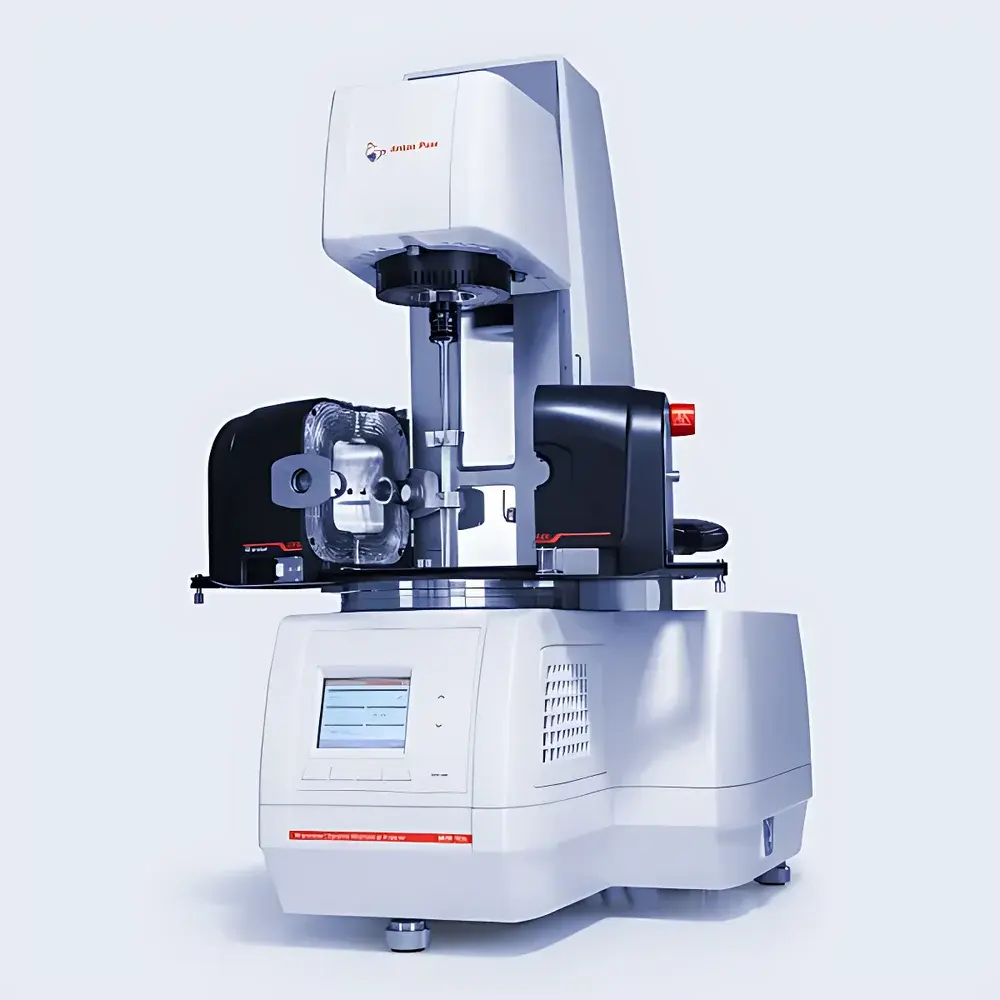
Anton Paar MCR 703 MultiDrive Dynamic Mechanical Analyzer
| Brand | Anton Paar |
|---|---|
| Origin | Austria |
| Manufacturer Type | Original Equipment Manufacturer (OEM) |
| Country of Origin | Imported |
| Model | MCR 703 MultiDrive |
| Instrument Type | Dynamic Mechanical Analyzer (DMA/DMTA) |
| Temperature Range | −160 °C to +1000 °C |
| Frequency Range | 2 × 10⁻⁸ Hz to 200 Hz |
Overview
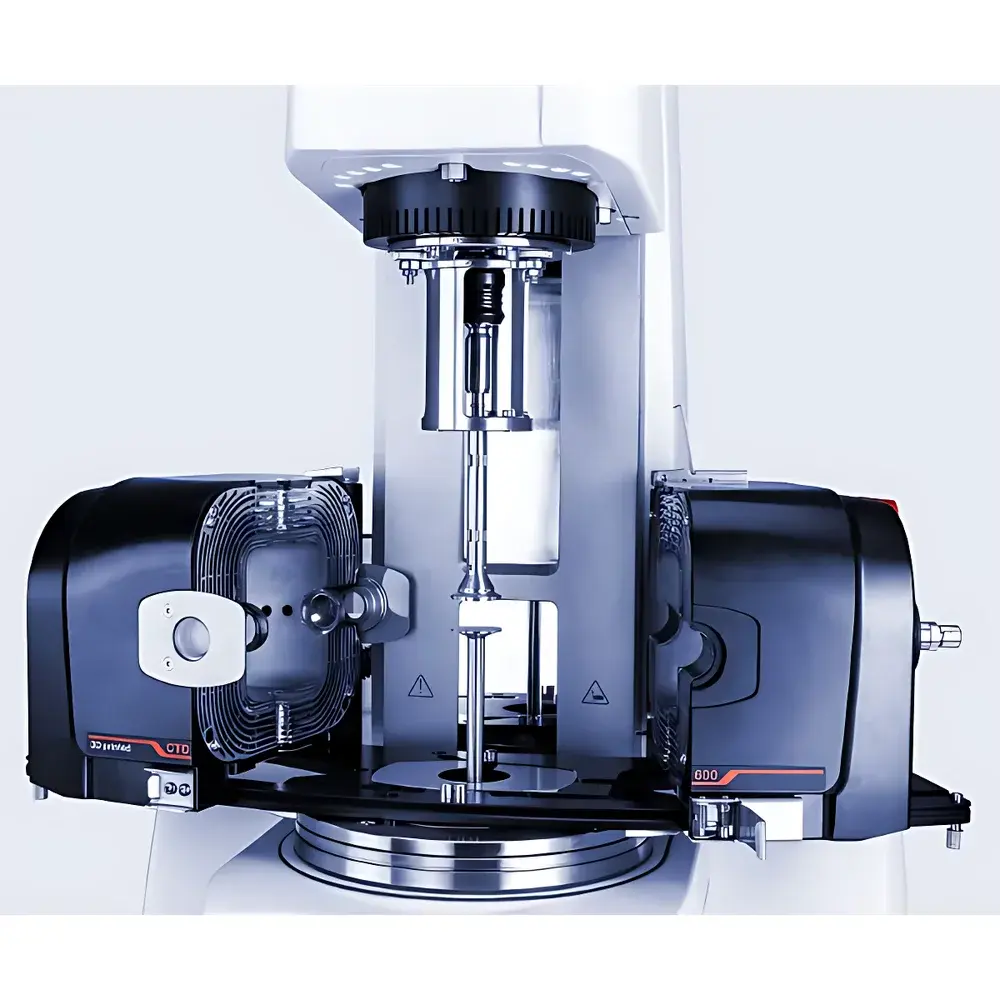
The Anton Paar MCR 703 MultiDrive is a high-precision, modular dynamic mechanical analyzer engineered for advanced viscoelastic characterization across extreme thermal and mechanical conditions. Unlike conventional rotational rheometers, the MCR 703 MultiDrive integrates dual electromagnetic (EC) motor–torque sensor units with air-bearing support, enabling simultaneous operation in coupled or decoupled configurations—specifically Coupled Motor–Transducer (CMT) and Separated Motor–Transducer (SMT) modes. This architecture permits true strain control (TruStrain®), real-time torque resolution down to 0.05 nNm, and sub-nanoradian angular displacement detection via high-resolution optical encoders. Its core measurement principle combines oscillatory stress/strain-controlled DMA with linear actuation for tensile, bending, compression, and torsional deformation analysis—making it uniquely capable of multi-axis, multi-mode mechanical spectroscopy under programmable thermal environments from cryogenic (−160 °C) to ultra-high temperature (+1000 °C). The system adheres to ISO 6721 (Plastics — Determination of dynamic mechanical properties), ASTM D4065 (Standard Practice for Plastics: Dynamic Mechanical Properties), and supports GLP-compliant data traceability through integrated audit trails.
Key Features
- Dual EC motor–torque sensor architecture with precision porous carbon air bearings for zero friction and long-term stability
- Configurable CMT and SMT operational modes for optimal fidelity in transient measurements (e.g., stress relaxation, start-up shear) and wide-frequency oscillatory sweeps (2 × 10⁻⁸–200 Hz)
- Reverse-motion mode: Enables fixed neutral plane generation within samples—critical for in situ structural observation (e.g., coupled confocal microscopy) and ultra-high Hencky strain (>8) tensile testing using UXF fixtures
- Integrated linear actuator for DMA in tension, three-point bending, cantilever, and compression geometries; combined with upper rotary drive for axial–torsional coupled DMA to determine Poisson’s ratio and anisotropic orientation effects
- Full Toolmaster® auto-recognition of >200 compatible measuring systems, temperature controllers (Peltier, liquid nitrogen, furnace), and accessories—including powder rheology, tribology, and universal testing modules
- Active motor thermal management and glovebox-compatible electronics enclosure for inert-atmosphere operation (N₂, Ar) during hazardous or oxidation-sensitive high-temperature experiments
Sample Compatibility & Compliance
The MCR 703 MultiDrive accommodates diverse sample geometries—including thin films, fibers, rectangular bars, cylindrical rods, and bulk polymers—across all standard DMA modes. Its open-frame design (especially the MCR 703 Space MultiDrive variant) provides unobstructed access for integration with external instrumentation such as Raman spectrometers, X-ray scattering stages, or environmental chambers. All firmware and software comply with FDA 21 CFR Part 11 requirements for electronic records and signatures when configured with audit trail, user access control, and electronic signature modules. Calibration protocols follow ISO/IEC 17025 guidelines, and thermal accuracy is certified per DIN EN 60584-2 for thermocouple-based temperature control systems.
Software & Data Management
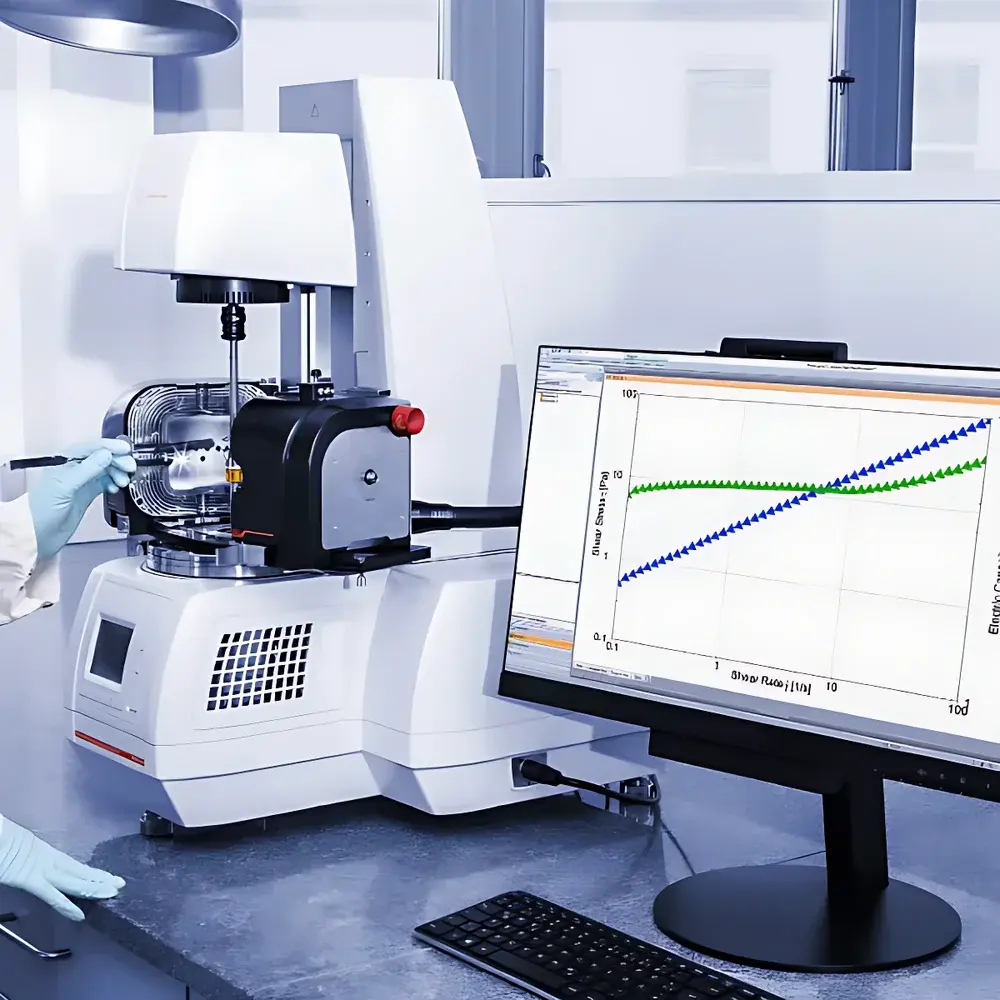
Controlled exclusively via RheoCompass® software, the platform delivers unified workflow management—from method definition and real-time parameter monitoring to automated post-processing and reporting. RheoCompass supports script-based automation (Python API), batch processing of multi-condition datasets, and export of time–temperature superposition (TTS) master curves compliant with ASTM D6987. Raw torque, normal force, displacement, and temperature data are stored in vendor-neutral HDF5 format with embedded metadata (sample ID, operator, instrument configuration, calibration history). Audit trails log all user actions—including parameter modifications, calibration events, and file exports—with timestamps and digital signatures to satisfy GMP/GLP documentation requirements.
Applications
- Viscoelastic mapping of thermosets, thermoplastics, elastomers, and biopolymers across glass transition, crystallization, and decomposition regimes
- Structure–property relationships in nanocomposites and filled rubbers via coupled DMA–microscopy or DMA–Rheo-Raman
- High-strain-rate tensile failure analysis of fiber-reinforced composites using reverse-motion tensile geometry
- Time-dependent mechanical behavior of pharmaceutical amorphous solid dispersions under accelerated aging conditions
- Anisotropic modulus profiling in extruded or electrospun materials via axial–torsional DMA
- Thermo-mechanical fatigue evaluation of aerospace alloys and ceramic matrix composites up to 1000 °C
FAQ
Is the MCR 703 MultiDrive suitable for both rotational rheology and dynamic mechanical analysis?
Yes—it functions as a hybrid platform: rotational modes (CMT/SMT) for traditional rheological characterization, and linear/torsional actuation modes for full-spectrum DMA across tensile, bending, compression, and torsion geometries.
What distinguishes the MCR 703 MultiDrive from the MCR 703 Space MultiDrive?
The Space variant features a minimized footprint (300 mm width) and maximized open workspace beneath and beside the instrument—optimized for integration with external analytical tools and large-sample fixtures.
Can the system perform measurements under inert or reactive gas atmospheres?
Yes—the electronics enclosure is separable and rated for installation inside gloveboxes; temperature-controlled chambers support N₂, Ar, or controlled O₂ environments up to 1000 °C.
Does the instrument support automated calibration and verification procedures?
Yes—Toolmaster® enables automatic identification and configuration of all connected transducers and fixtures; TruRate® and TruStrain® technologies provide continuous in situ verification of torque, angle, and normal force performance.
How is data integrity ensured for regulated laboratory environments?
RheoCompass® supports 21 CFR Part 11 compliance with role-based access control, electronic signatures, immutable audit logs, and secure HDF5 data storage with cryptographic hashing.



