
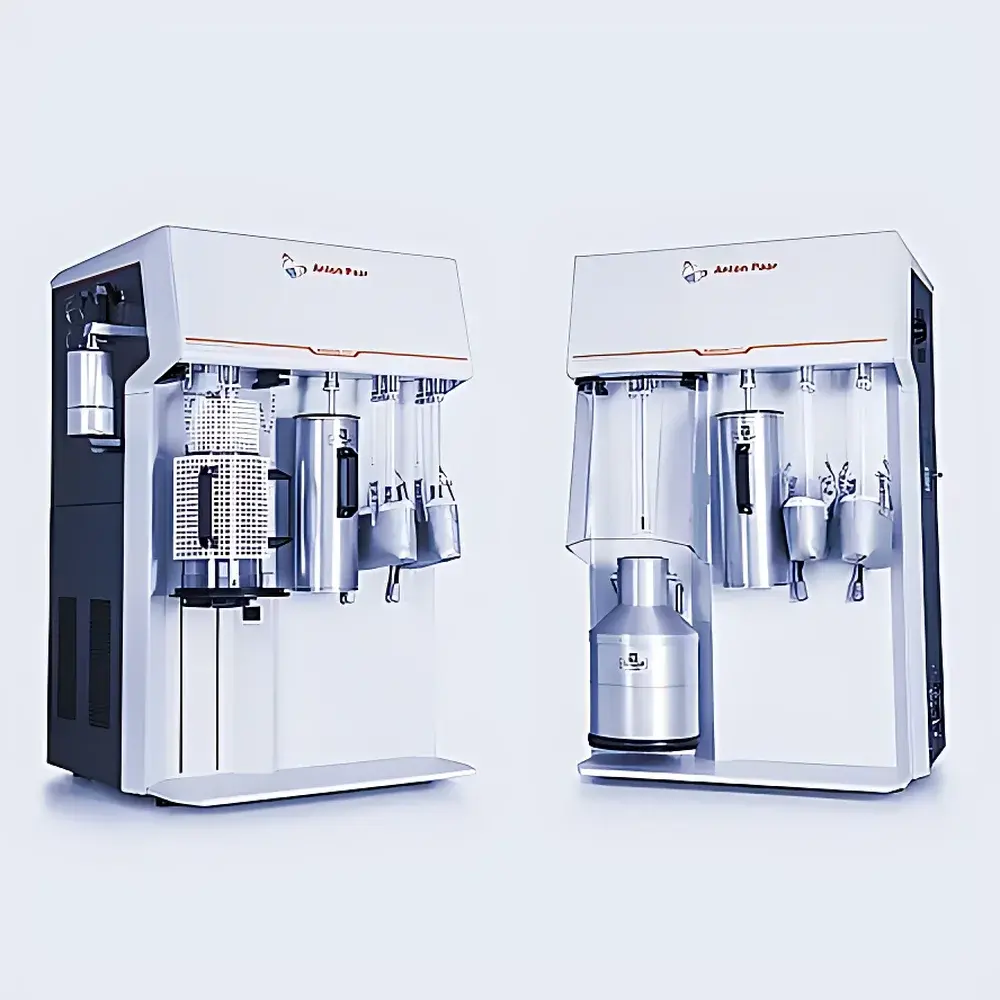
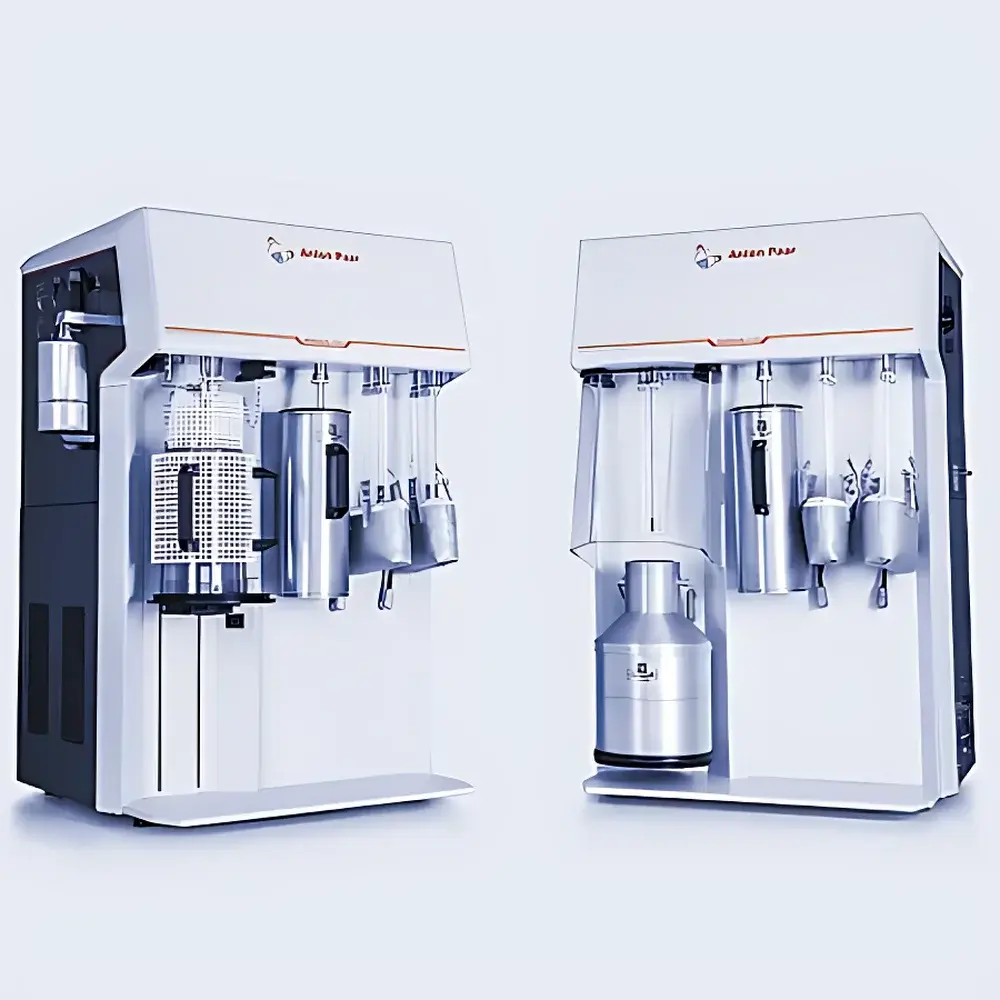
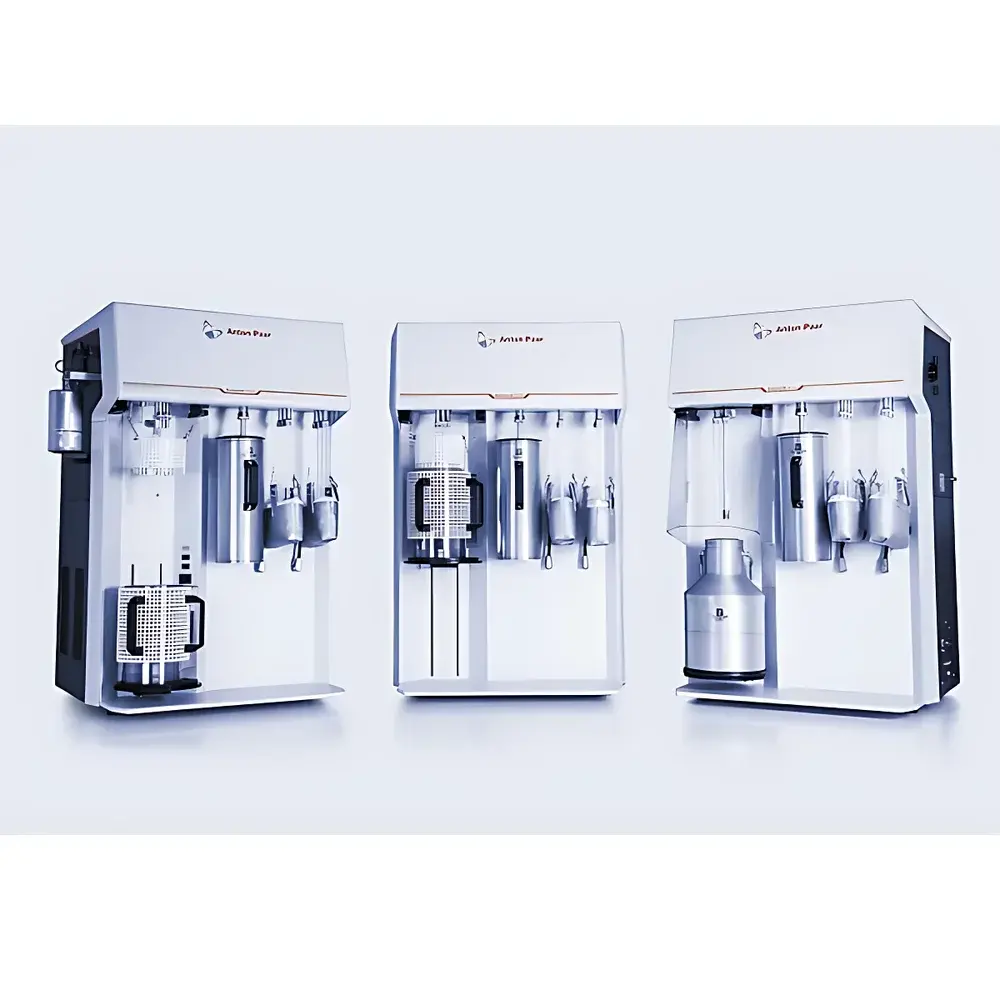
Anton Paar Autosorb 6200 Automated Chemisorption Analyzer
| Brand | Anton Paar |
|---|---|
| Origin | USA |
| Manufacturer Type | Original Equipment Manufacturer (OEM) |
| Origin Category | Imported |
| Model | Autosorb 6200 |
| Instrument Type | Chemisorption Analyzer |
| Measurement Principle | Volumetric Vacuum Method (Physical & Chemical Adsorption), Dynamic Flow Method (Optional for Chemisorption) |
| Gas Inlet Ports | 6 |
| Maximum Heating Temperature | 1100 °C |
| Isothermal Stability | ±1 °C |
| Heating Ramp Rate | 1–50 °C/min |
| Pressure Range | 2×10⁻⁵ to 1100 Torr (2.6×10⁻⁸ to 0.997 p/p₀ for N₂ at 77 K) |
| Analytical Capabilities | Temperature-Programmed Reduction (TPR), Temperature-Programmed Oxidation (TPO), Temperature-Programmed Desorption (TPD), Pulse Titration |
| Detection Options | Integrated TCD, Optional Mass Spectrometer (MS), Optional Vapor Generator |
| Sample Stations | 1–3 Independent Physical Adsorption Stations + 1 Dedicated Chemisorption Station + 1 Dedicated p₀ Station |
| TruZone Active Liquid-Level Control | Yes |
| PowderProtect Anti-Dust System | Yes |
| Dewar Duration | >90 h (LN₂) |
| Integrated Degassing Stations | 6 (2 independently heated to 450 °C) |
| Cryosync Compatibility | Optional |
| Vapor Source | Optional |
| Cold Trap | Integrated |
Overview
The Anton Paar Autosorb 6200 Automated Chemisorption Analyzer is a high-precision, modular gas sorption platform engineered for rigorous catalyst and porous material characterization in academic research laboratories and industrial R&D environments. It operates on the volumetric vacuum method—compliant with ISO 9277, ASTM D3663, and IUPAC recommendations—for both physical adsorption (physisorption) and chemical adsorption (chemisorption) measurements. Its dual-mode architecture supports static (equilibrium) and dynamic (flow-based) chemisorption analysis, enabling quantitative determination of active metal surface area, dispersion, reducibility, oxidation states, and adsorption/desorption energetics. The system integrates a high-vacuum stainless-steel manifold with pneumatically actuated valves, delivering 38% improved vacuum integrity over legacy designs—critical for achieving reproducible sub-10⁻⁷ p/p₀ measurements at 77 K. With its TruZone active liquid-level control, the Autosorb 6200 maintains constant cold-zone volume during extended isotherms, eliminating thermal drift artifacts common in conventional cryostatic systems.
Key Features
- Modular station architecture: Configurable with 1–3 independent physisorption stations plus one dedicated chemisorption station and one p₀ reference station—enabling concurrent multi-condition experiments (e.g., simultaneous BET, TPR, and pulse H₂ titration).
- Ultra-high vacuum performance: Base pressure down to 2×10⁻⁵ Torr (2.6×10⁻⁸ p/p₀ for N₂ at 77 K) with XR-resolution pressure transducers (1×10⁻⁶ Torr sensitivity) for low-pressure isotherm acquisition.
- Thermal control precision: Dual-zone heating (up to 450 °C for degassing; up to 1100 °C for TPR/TPO) with PID-regulated ramp rates from 1 to 50 °C/min and isothermal stability of ±1 °C over 35–50 °C ambient range.
- PowderProtect sample handling: Patented inert-gas purge and mechanical stabilization system prevents dust migration during evacuation and heating—essential for fragile catalysts and nanomaterials.
- Integrated 6-station degassing module: Two independently controlled heating zones support programmable multi-step thermal treatment under vacuum or flowing gas, with real-time pressure monitoring and feedback-controlled heating profiles.
- Expandable detection ecosystem: Standard TCD detector; optional integration of quadrupole mass spectrometer (QMS) for evolved gas analysis (EGA), vapor generator for reactive probe molecules (NH₃, C₃H₆O, pyridine), and cryosync-enabled automated LN₂ refilling.
Sample Compatibility & Compliance
The Autosorb 6200 accommodates a broad spectrum of solid catalysts, supported metals, metal oxides, zeolites, MOFs, carbons, and functionalized nanoparticles. Its chemically inert stainless-steel flow path and configurable gas handling permit use with N₂, Ar, Kr, CO₂, H₂, CH₄, C₂H₆, C₃H₈, C₆H₆, C₈H₁₀, NH₃, pyridine, and acetone—subject to instrument configuration and safety interlocks. All measurement protocols adhere to GLP-compliant data acquisition standards, with full audit trail capability per FDA 21 CFR Part 11 when paired with Anton Paar’s Quantachrome-compatible software suite. Calibration traceability follows NIST-certified standards for pressure, temperature, and gas purity. The system meets ISO/IEC 17025 requirements for testing laboratory competence when operated within validated SOPs.
Software & Data Management
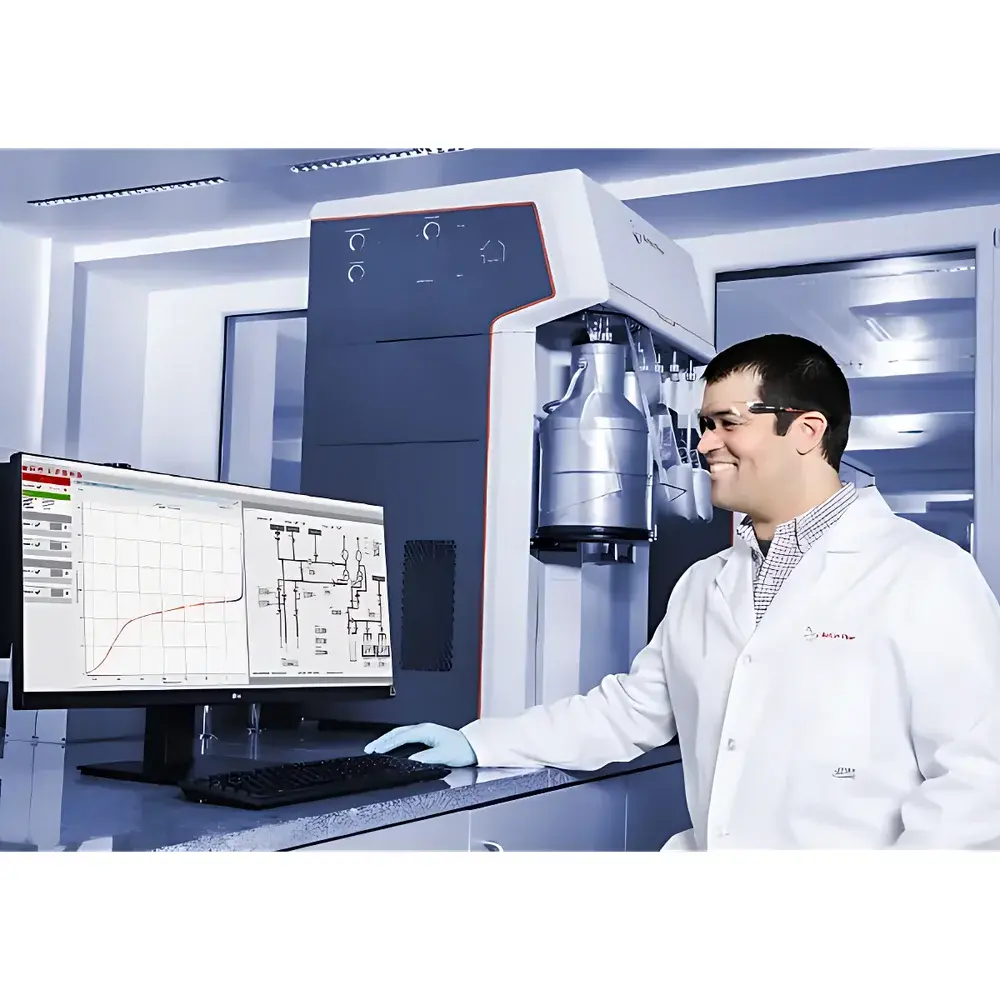
Control and analysis are executed via Anton Paar’s proprietary ASiQ software—designed for ISO 17025-aligned workflows. The interface supports fully automated method scripting, including multi-step degassing, equilibration, dosing, and desorption sequences. Raw pressure, temperature, and flow data are timestamped and stored in vendor-neutral HDF5 format. Built-in analysis modules include BET surface area (single- and multi-point), Langmuir active site density, t-plot micropore volume, BJH/KJS mesopore distribution, DFT/NLDFT kernel fitting (with library of >300 model surfaces), and quantitative TPR/TPO peak deconvolution using Gaussian/Lorentzian fitting with baseline correction. All reports generate PDF exports with embedded metadata, digital signatures, and version-controlled method parameters—fully compliant with electronic record retention policies.
Applications
- Quantification of metal dispersion and active surface area (e.g., H₂ chemisorption on Pt/Al₂O₃, CO on Ni/SiO₂) with detection limits as low as 0.03 m² (0.003 m²/g for Pt at 313 K).
- Redox behavior mapping via TPR/TPO: Identification of reduction onset temperatures, stoichiometric oxygen uptake, and phase transformation thresholds in transition metal oxides.
- Acid–base site characterization: NH₃-TPD for Brønsted/Lewis acidity profiling; pyridine-FTIR coupling for site-type discrimination.
- Pore structure analysis across 0.35–500 nm diameter range: From ultramicroporous carbons (CO₂ at 273 K) to hierarchical mesoporous silicas (N₂ at 77 K).
- In situ and operando-ready configurations: Compatible with external furnace enclosures, IR cells, and synchrotron beamlines for time-resolved structural–functional correlation.
FAQ
Can the Autosorb 6200 perform both physisorption and chemisorption in a single run?
Yes—its modular station design allows simultaneous operation: one station can acquire a N₂ isotherm while another conducts TPR, and a third performs pulse H₂ titration—all under independent temperature and gas control.
What vacuum level is required for accurate micropore analysis below 0.5 nm?
For reliable DFT modeling of sub-0.4 nm pores, the system achieves 2.6×10⁻⁸ p/p₀ (N₂, 77 K) using XR-resolution transducers and TruZone stabilization—meeting IUPAC recommendations for ultramicroporous materials.
Is the software compliant with 21 CFR Part 11 for regulated environments?
Yes—when deployed with user authentication, electronic signatures, and audit-trail logging enabled, ASiQ satisfies FDA 21 CFR Part 11 requirements for electronic records and signatures.
How does PowderProtect improve data reproducibility for fine powders?
By suppressing particle entrainment during rapid pressure changes, PowderProtect eliminates spurious pressure transients that distort monolayer formation—particularly critical for low-surface-area catalysts (<1 m²/g).
Can the 1100 °C furnace be used for TPD of strongly bound species?
Yes—the high-temperature furnace supports TPD experiments up to 1100 °C with programmable ramp control and integrated thermocouple feedback, enabling decomposition studies of refractory surface complexes.



