
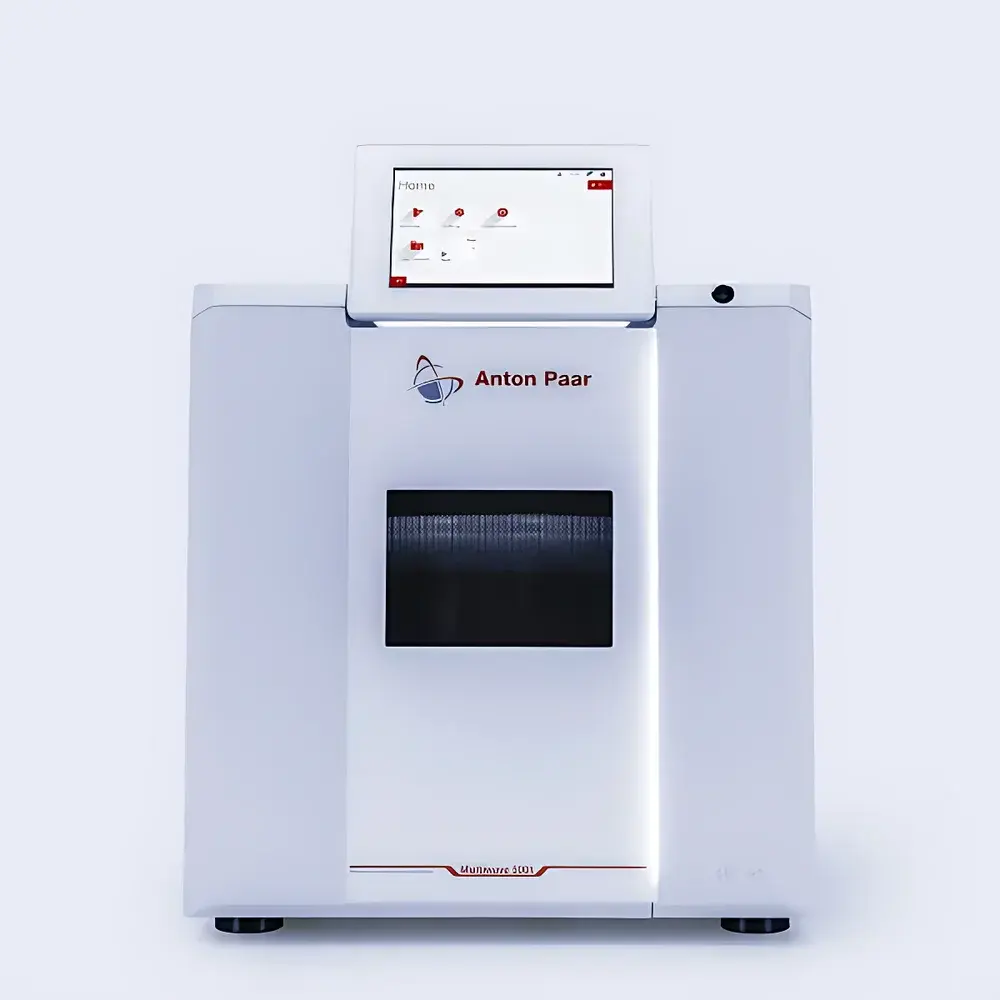
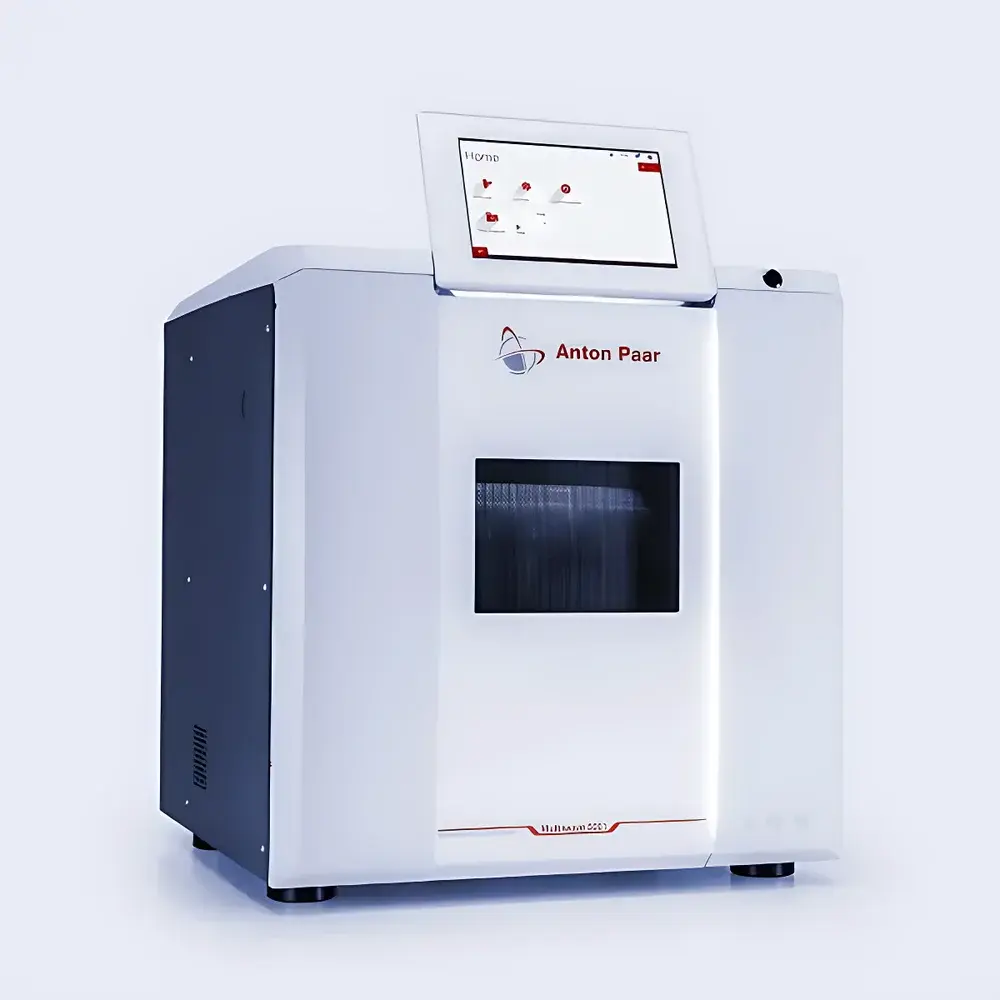
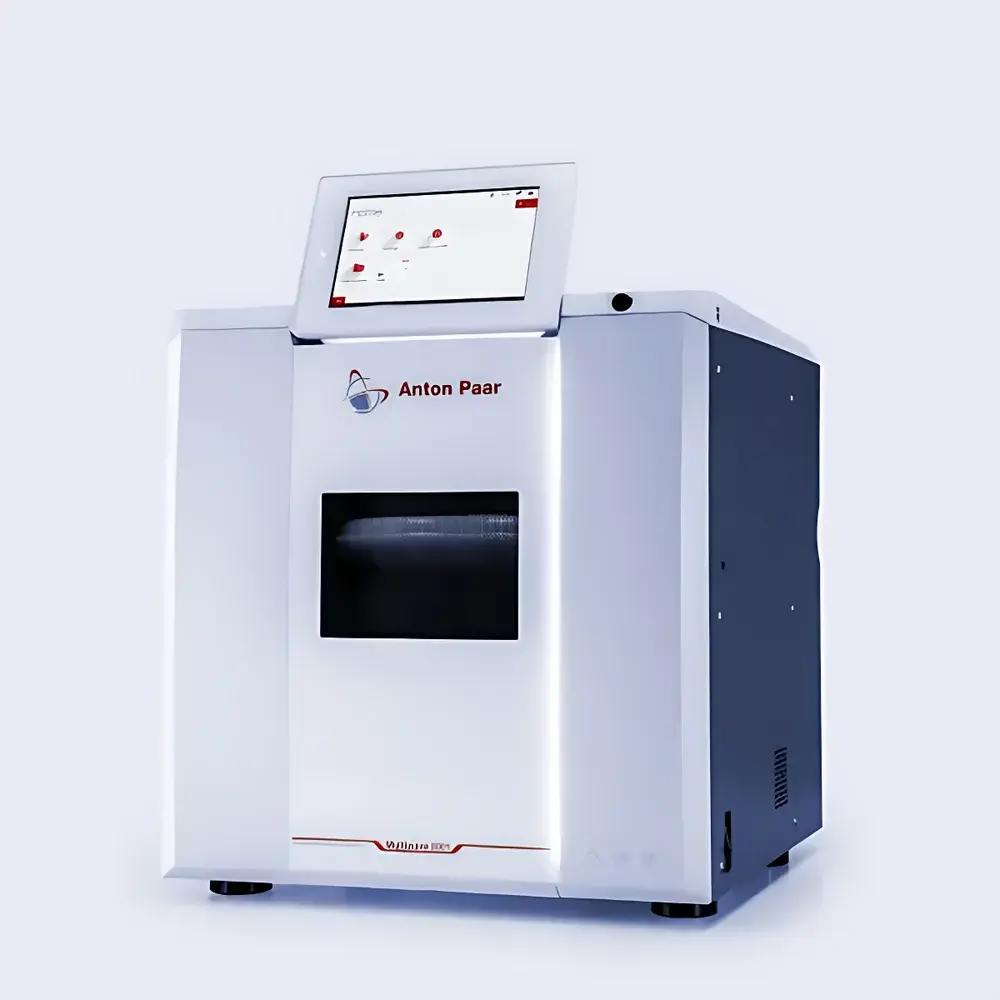
Anton Paar Multiwave 5001CN Microwave Digestion Platform
| Brand | Anton Paar |
|---|---|
| Origin | Austria |
| Manufacturer Type | Original Equipment Manufacturer (OEM) |
| Product Category | Imported Instrument |
| Model | Multiwave 5001CN |
| Cavity Class | Industrial-Grade |
| Batch Capacity | 96 samples |
| Microwave Source | Dual Magnetron |
| Max Temperature | 300 °C |
| Max Pressure | 100 bar |
Overview
The Anton Paar Multiwave 5001CN is an industrial-grade microwave digestion platform engineered for high-throughput, reproducible sample preparation in regulated and research-intensive laboratories. Built upon Anton Paar’s five-decade legacy in microwave-assisted chemistry, the system implements controlled microwave energy coupling via dual magnetron technology to ensure uniform field distribution and precise thermal management across all reaction positions. It operates on the principle of closed-vessel microwave-assisted acid digestion—where microwave irradiation rapidly heats pressurized acidic reagents (e.g., HNO₃, HF, HCl, H₂O₂) in sealed vessels, accelerating oxidative decomposition of organic matrices and mineral dissolution of inorganic lattices. Designed specifically for the Chinese market with localized hardware integration, firmware language support, and regulatory alignment, the Multiwave 5001CN maintains full technical equivalence with its global Multiwave 5001 counterpart while meeting regional service, calibration, and documentation requirements.
Key Features
- Industrial-grade cavity with reinforced stainless-steel construction and electromagnetic shielding for long-term operational stability under continuous high-power cycling.
- Dual independent magnetron system (2 × 1400 W nominal output) enabling dynamic power modulation and improved field homogeneity—even at maximum load (96 vessels).
- SmartVent reaction tube technology: pressure-activated venting mechanism that safely releases excess vapor above predefined thresholds without compromising vessel integrity or analytical reproducibility.
- SmartTemp 2.02 internal fiber-optic temperature sensing—providing real-time, position-resolved temperature feedback from up to 16 individual reaction sites simultaneously.
- Intelligent pressure monitoring and control across all vessels using piezoresistive transducers; integrated overpressure detection triggers automatic power reduction and active cooling response.
- Comprehensive safety architecture compliant with IEC 61000-4-3 (EMC), IEC 61010-1 (safety), and EN 62471 (photobiological safety); includes redundant door interlocks, pressure rupture discs, and thermal cut-offs.
Sample Compatibility & Compliance
The Multiwave 5001CN supports a full suite of Anton Paar-certified rotors—including 24HVT, 41HVT, 20SVT, 8 NXF/NXQ, and 64MG5—enabling method flexibility across diverse sample classes. Vessels are constructed from high-purity PTFE-TFM (with optional quartz liners for HF-resistant applications), rated for sustained operation at 300 °C and 100 bar. The platform accommodates routine matrices (biological tissues, soils, wastewater per EPA Methods 3050B/3051A/3052), challenging materials (polymers, ceramics, alloys, petrochemicals), and trace-level analyses (≤20 mg solid mass). All digestion protocols adhere to ISO 11885, ASTM D5511, USP <231>, and China’s HJ 680-2013 and HJ 832-2017 standards. System validation documentation supports GLP/GMP audit readiness and FDA 21 CFR Part 11-compliant electronic records when paired with Anton Paar’s MAS software.
Software & Data Management
Controlled via Anton Paar’s MAS (Microwave Automation Software) v5.x, the Multiwave 5001CN delivers role-based user access, method library management, and full audit trail functionality—including operator ID, timestamped parameter changes, run logs, and sensor data export in CSV/Excel format. Software modules support method development wizards, kinetic profiling, and automated ramp-hold-cool sequences. Data integrity safeguards include electronic signatures, password-protected method locking, and tamper-evident log files—all aligned with ALCOA+ principles. Remote diagnostics and firmware updates are supported via secure HTTPS connection; no cloud storage or third-party telemetry is enabled by default.
Applications
- Environmental testing labs performing heavy metal quantification (As, Cd, Cr, Pb, Hg) in soils, sediments, and sludges per ISO 17294-2 and GB/T 17141-1997.
- Food safety laboratories conducting multi-element analysis (Ca, Fe, Zn, Se) in infant formula, dairy, and plant-based products under GB 5009.268-2016.
- Pharmaceutical QC units executing residual catalyst screening (Pd, Pt, Rh) in APIs per ICH Q2(R2) guidelines.
- Materials science facilities digesting refractory oxides (Al₂O₃, SiO₂), rare-earth magnets, and composite polymers prior to ICP-MS/OES analysis.
- Academic and contract research organizations developing novel microwave-assisted synthesis protocols requiring precise T/P control and inert atmosphere compatibility (via optional gas purge module).
FAQ
Is the Multiwave 5001CN compatible with legacy Multiwave rotor accessories?
Yes—the system maintains backward compatibility with Multiwave 16-position rotors and all certified consumables from previous generations (Multiwave PRO, Multiwave GO), provided firmware is updated to v5.3 or later.
Does the instrument support hydrogen fluoride (HF) digestion?
Yes—NXF and NXQ rotors feature PTFE-TFM/Quartz hybrid construction validated for HF-containing mixtures up to 300 °C and 100 bar; standard TFM-only vessels are not recommended for prolonged HF exposure.
What safety certifications does the Multiwave 5001CN hold for use in accredited laboratories?
It carries CE marking, meets IEC 61010-1 Ed.3 for laboratory equipment safety, and complies with China’s CCC certification requirements (CNCA-C09-01:2023); full test reports are available upon request for accreditation submissions.
Can temperature and pressure data be exported in real time during a run?
Yes—MAS software enables live streaming of all sensor outputs (temperature, pressure, power) to external SCADA or LIMS systems via TCP/IP or OPC UA protocols, with configurable sampling intervals down to 1 second.
How is calibration verified for temperature and pressure sensors?
Anton Paar provides factory-traceable calibration certificates for all fiber-optic probes and pressure transducers; on-site verification kits (NIST-traceable reference thermometers and dead-weight testers) are available as optional accessories.



