
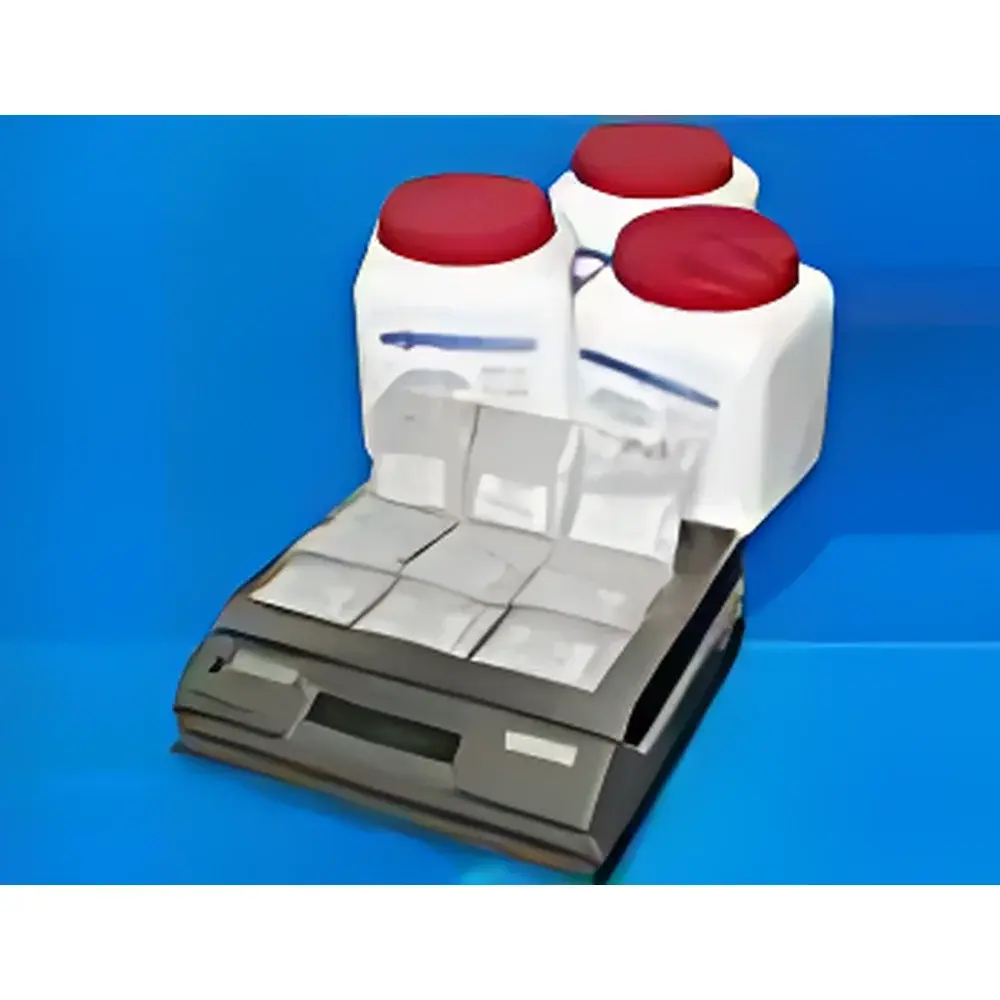
Rocklabs ROCKLABS Certified Reference Materials for Fire Assay (Pt, Pd, Au, Ag)
| Brand | Rocklabs |
|---|---|
| Origin | New Zealand |
| Product Type | Certified Reference Material (CRM) |
| Matrix Types | Oxide, Sulphide, Siliceous |
| Certified Elements | Pt (0.456–4.749 ppm), Pd (0.563–5.918 ppm), Au (0.0798–30.49 ppm), Ag (60.2–153.9 ppm) |
| Uncertainty | 95% confidence intervals reported for all certified values |
| Blank Levels | Au < 0.002 ppm |
| Packaging | 2.5 kg jars, 30 g & 50 g sachets (varies by material) |
| Certification | ISO/IEC 17034-accredited, recognized by IAG (International Association of Geoanalysts) |
Overview
Rocklabs Certified Reference Materials (CRMs) for fire assay are rigorously characterized geochemical standards engineered to support accurate, traceable, and reproducible precious metal analysis in commercial laboratories, mining operations, and geological survey institutions. These CRMs are specifically designed for use in the fire assay–atomic absorption spectroscopy (AAS) or fire assay–inductively coupled plasma mass spectrometry (ICP-MS) workflows—core methodologies mandated by ASTM E1332, ISO 11094, and USP for gold, platinum, and palladium quantification in ores, concentrates, and metallurgical products. Each material is prepared from homogenized natural matrices—including oxide, sulphide, and siliceous lithologies—and undergoes multi-laboratory collaborative certification under ISO/IEC 17034 requirements. Certified values for Pt, Pd, Au, and Ag are assigned with expanded uncertainties at 95% confidence level, enabling robust uncertainty budgeting per ISO/IEC 17025:2017 Clause 7.6.2.
Key Features
- ISO/IEC 17034-accredited certification with full traceability to SI units via NIST-traceable calibration protocols
- Comprehensive matrix coverage: oxide (low-sulphur, high-stability), sulphide (3–10% S, simulating refractory ore behavior), and siliceous (low-interference, low-sulphur) variants
- Wide dynamic range for gold: certified concentrations span 0.0798 ppm to 30.49 ppm—covering exploration-grade assays through refinery feedstock verification
- Ultra-low blank levels: AuBlank30 and AuBlank31 certified at <0.003 ppm and <0.002 ppm respectively, essential for detecting sub-ppb anomalies in exploration samples
- Stable physical form: low hygroscopicity ensures consistent mass integrity during storage and weighing; certified moisture content <0.1% w/w
- Batch-specific Certificates of Analysis (CoA) accessible online via Rocklabs’ RM Portal using unique lot ID—each CoA includes homogeneity testing data, stability assessment, and uncertainty breakdown per analyte
Sample Compatibility & Compliance
These CRMs are validated for compatibility with standard fire assay cupellation procedures (ASTM D1318, ISO 11094) and fusion flux systems (e.g., litharge–borax–sodium carbonate blends). Sulphide matrices (e.g., SP49, SQ44, SF30) replicate real-world sample behavior during lead collection, including sulphur-induced slag viscosity effects and potential precious metal losses due to incomplete oxidation. Oxide materials (e.g., OxQ75, OxF65) serve as ideal controls for method validation and instrument calibration across AAS, ICP-OES, and ICP-MS platforms. All CRMs comply with GLP and GMP documentation requirements: CoAs include audit trails for preparation, homogenization, subsampling, and interlaboratory testing—fully supporting FDA 21 CFR Part 11 electronic record compliance when integrated with LIMS-based QA/QC workflows.
Software & Data Management
Rocklabs provides digital access to all CRM documentation through its secure Reference Material Portal. Users retrieve batch-specific CoAs, homogeneity reports, and stability studies using a unique alphanumeric lot identifier printed on each jar or sachet label. The portal supports PDF export with embedded digital signatures compliant with ISO/IEC 17034 Annex C. For laboratory information management system (LIMS) integration, Rocklabs supplies structured metadata files (CSV/JSON) containing certified values, uncertainty components, matrix composition, and expiry dates—enabling automated import into QA dashboards and statistical process control (SPC) modules. All uncertainty budgets conform to GUM (JCGM 100:2008) methodology, facilitating metrological traceability audits.
Applications
- Method validation and verification per ISO/IEC 17025:2017 Clause 7.2.2 for fire assay–AAS and fire assay–ICP-MS procedures
- Internal quality control (IQC) and proficiency testing (PT) in accredited mineral assay labs
- Calibration curve verification across multi-point ranges (e.g., OxA71–OxP76 series for low-to-mid Au concentrations)
- Blank correction and detection limit verification using AuBlank30/AuBlank31
- Matrix-matched calibration for sulphide-rich samples where spectral interference or volatility losses may occur
- Inter-laboratory comparison programs coordinated by IAG, AGSO, or national geological surveys
FAQ
Are these materials certified to ISO/IEC 17034?
Yes. All Rocklabs CRMs for fire assay are produced and certified under an ISO/IEC 17034-accredited program administered by Measurement Standards Laboratory (MSL) New Zealand.
Can I use sulphide CRMs for oxide-dominant sample types?
Sulphide CRMs are intended for method validation with sulphide matrices. For oxide samples, use oxide-certified materials (e.g., OxQ75, OxF65) to avoid matrix mismatch errors in recovery calculations.
How frequently are new batches certified?
Rocklabs certifies new production batches biannually, with full homogeneity and stability retesting performed prior to release. Lot-specific CoAs reflect the most recent interlaboratory study date.
Is there a minimum order quantity for sachet-packaged CRMs?
Sachet formats (30 g and 50 g) are available for single-batch QC use; no minimum order applies. Bulk jars (2.5 kg) require formal quotation and are subject to lead-time scheduling.
Do these CRMs support FDA 21 CFR Part 11 compliance?
Yes—when used within a validated LIMS environment, Rocklabs’ digitally signed CoAs and audit-trail-enabled portal satisfy electronic record and signature requirements for regulated pharmaceutical and metallurgical QA environments.



