
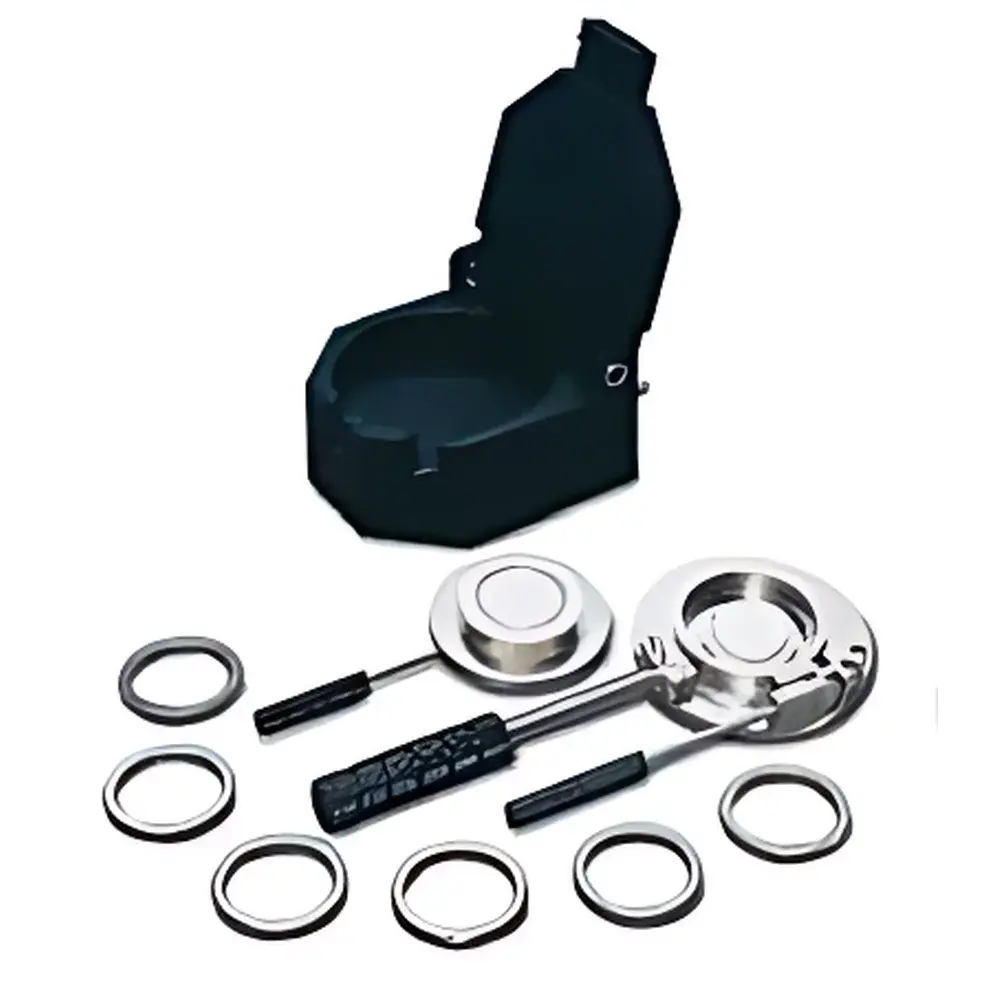
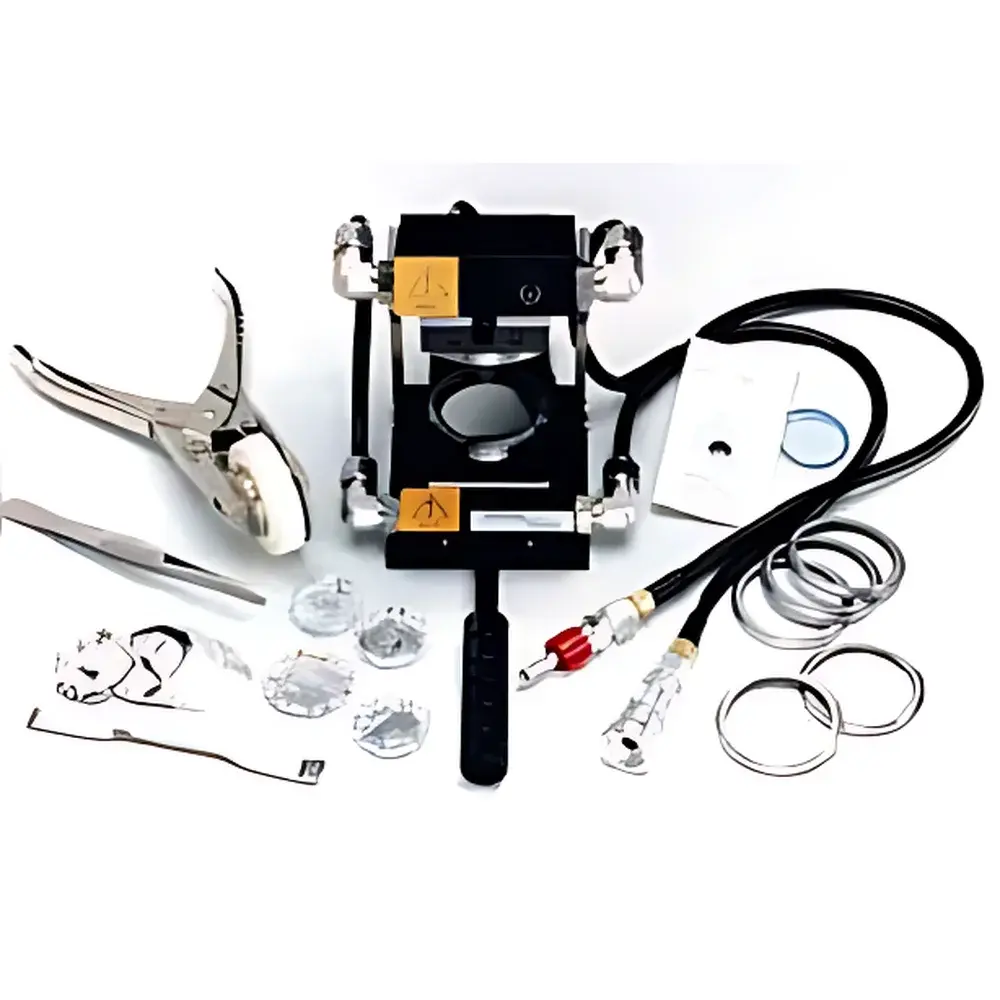
Specac Atlas Film Press System
| Brand | Specac |
|---|---|
| Origin | United Kingdom |
| Model | Atlas |
| Max Operating Temperature | 300 °C or 400 °C |
| Adjustable Film Thickness | 15, 25, 50, 100, 250, 500 µm |
| Sample Diameter | 29 mm |
| Configuration Options | Standalone press unit (15631/15800) or integrated press + manual 15-ton hydraulic press (15633/15810) |
| Compliance | Designed for ASTM E1252, ISO 18381, and USP <1118> FTIR sample preparation |
Overview
The Specac Atlas Film Press System is a precision-engineered thermal compression device designed specifically for the reproducible preparation of uniform, solvent-free polymer and thermoplastic films for Fourier Transform Infrared (FTIR) spectroscopy. Operating on the principle of controlled heat and uniaxial pressure, the system enables consistent film formation through melt-compression—eliminating the need for hazardous solvents, casting artifacts, or time-consuming evaporation steps. Unlike solvent-cast methods, which introduce variability due to solvent volatility, residual traces, or uneven drying, the Atlas system delivers films with tightly controlled thickness, minimal thermal degradation, and high optical homogeneity—critical prerequisites for quantitative spectral analysis and library matching. Its dual-temperature capability (300 °C and 400 °C variants) accommodates a broad range of thermoplastic materials, including polyethylene (PE), polypropylene (PP), polyvinyl chloride (PVC), polytetrafluoroethylene (PTFE), and high-melting-point engineering polymers such as polyetherimide (PEI) and polyphenylene sulfide (PPS). The system integrates seamlessly into regulated laboratory environments, supporting GLP-compliant workflows where traceability, repeatability, and documentation integrity are mandatory.
Key Features
- Thermally stable heated platens with ±1 °C temperature uniformity across the 29 mm active area, ensuring homogeneous melt flow and minimized thermal gradients.
- Calibrated, micrometer-adjustable gap control enabling precise film thickness selection from 15 µm to 500 µm in discrete, repeatable increments.
- Robust stainless-steel construction with ceramic-insulated heating elements, rated for continuous operation at up to 400 °C with low thermal mass for rapid ramp/soak cycles.
- Dual configuration flexibility: standalone film press units (models 15631 and 15800) or fully integrated systems combining the press with a 15-ton manual hydraulic press (models 15633 and 15810) for high-pressure consolidation of viscous or filled polymers.
- Integrated digital temperature controller with programmable ramp rates, dwell times, and over-temperature cut-off—fully compatible with external data loggers for 21 CFR Part 11–compliant audit trails.
Sample Compatibility & Compliance
The Atlas Film Press accommodates solid polymer pellets, granules, flakes, and pre-dried powders—ideal for quality control of incoming raw materials, batch-to-batch consistency verification, and R&D screening of copolymer composition or additive dispersion. It complies with key international standards governing FTIR sample preparation, including ASTM E1252 (“Standard Practice for General Techniques for Qualitative Infrared Analysis”), ISO 18381:2015 (“Plastics — Determination of carbonyl index by infrared spectrophotometry”), and USP (“Infrared Absorption Spectrophotometry”). All configurations meet mechanical safety requirements per EN 61000-6-2 (EMC immunity) and EN 61000-6-3 (EMC emission), and are CE-marked for use within the European Economic Area. Documentation packages include factory calibration certificates, material-of-construction declarations, and full electrical safety test reports.
Software & Data Management
While the Atlas Film Press operates as a hardware-only instrument without embedded firmware or touchscreen interface, its temperature controller supports analog (0–10 V) and digital (RS-232/RS-485) outputs for integration into centralized lab management systems (LIMS) or electronic lab notebooks (ELN). Users may configure automated logging of setpoint, actual temperature, dwell duration, and cycle count via third-party SCADA or LabVIEW-based acquisition platforms. For regulated environments, the system supports 21 CFR Part 11–compliant electronic signatures when paired with validated software solutions that enforce user authentication, audit trail generation, and data integrity controls. Specac provides technical documentation—including SOP templates, IQ/OQ protocols, and maintenance logs—for seamless validation under GMP/GLP frameworks.
Applications
- Quantitative analysis of oxidation products (e.g., carbonyl index) in polyolefins exposed to accelerated aging conditions.
- Identification and discrimination of polymer blends (e.g., PE/PP, ABS/PC) based on characteristic band ratios and peak shifts in transmission mode.
- Characterization of plasticizer migration, filler dispersion, and crystallinity changes in medical-grade thermoplastics.
- Preparation of reference films for calibrating ATR accessories and validating instrument performance per ASTM E1421.
- Supporting regulatory submissions requiring documented, reproducible sample preparation methodology—particularly in pharmaceutical packaging and biomedical device testing.
FAQ
What is the maximum recommended operating temperature for the Atlas 15631 system?
The Atlas 15631 is rated for continuous operation up to 300 °C. Exceeding this limit may compromise heater longevity and thermal stability.
Can the Atlas system prepare films from filled or reinforced polymers?
Yes—when configured with the optional 15-ton manual press (model 15633 or 15810), it achieves sufficient consolidation pressure to produce optically clear films from glass-filled nylon, carbon-black-loaded elastomers, and mineral-filled polypropylene.
Is calibration traceable to national standards?
Each unit ships with a UKAS-accredited calibration certificate for temperature measurement, traceable to NPL (National Physical Laboratory) standards.
How does the Atlas ensure film thickness reproducibility across multiple users?
Micrometer-based gap setting eliminates operator-dependent variables; combined with fixed platen geometry and calibrated load application, inter-operator CV remains below 2.3% for 100 µm films (n = 20, per internal validation report).
Are replacement parts and service support available globally?
Specac maintains an authorized service network across North America, EMEA, and APAC, with spare parts inventory held for minimum 10-year post-manufacture support.
Related Products





