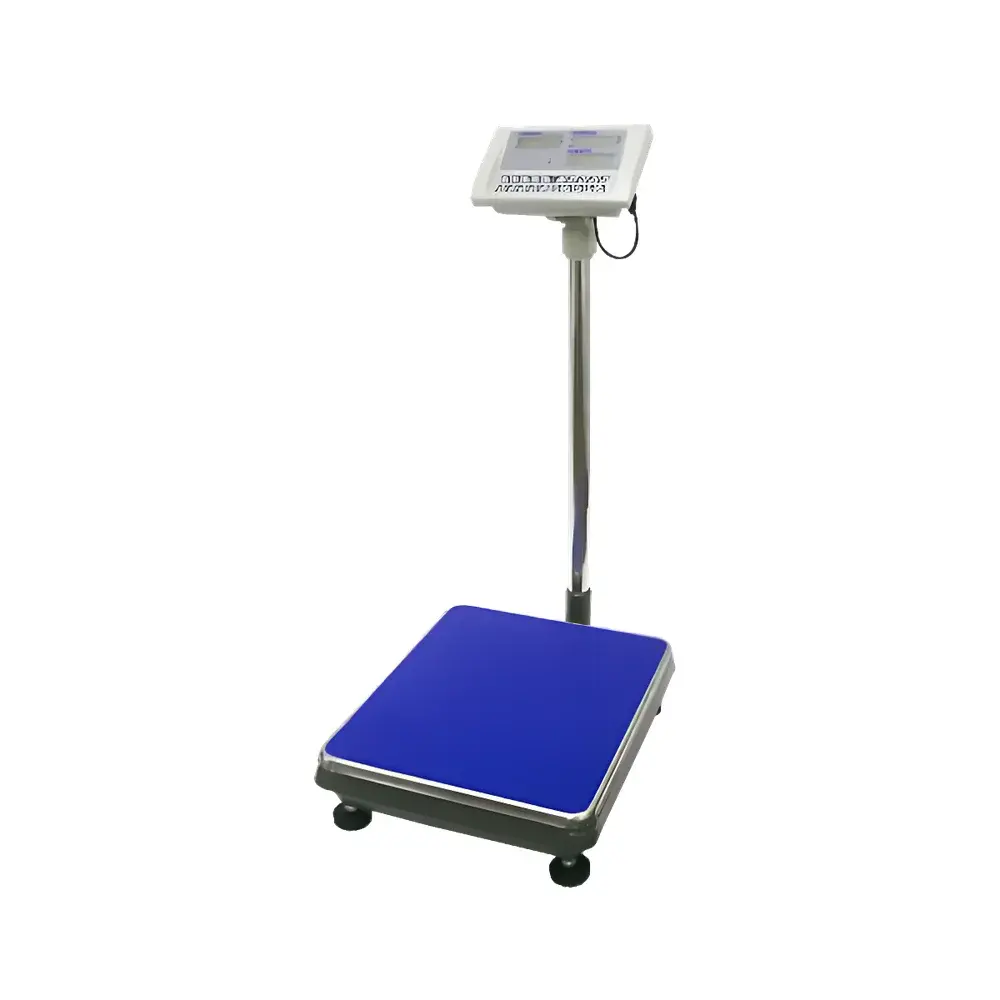
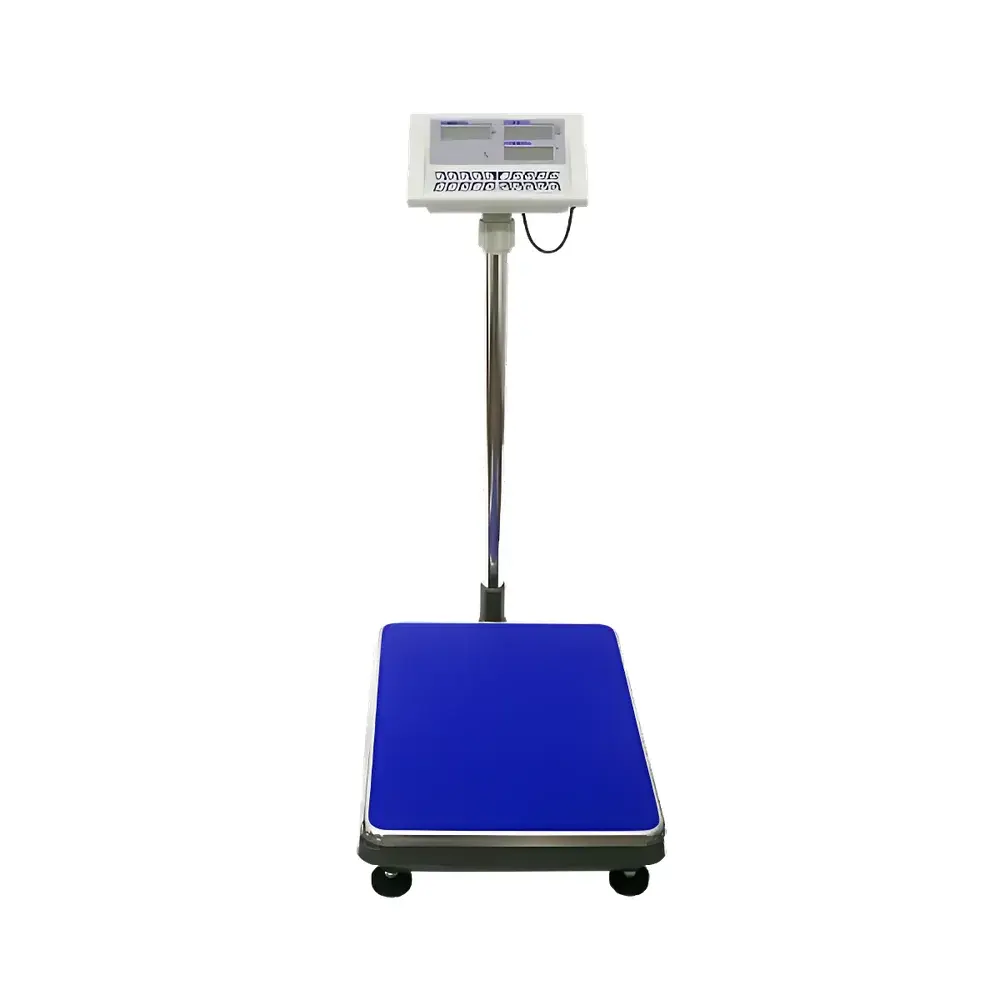
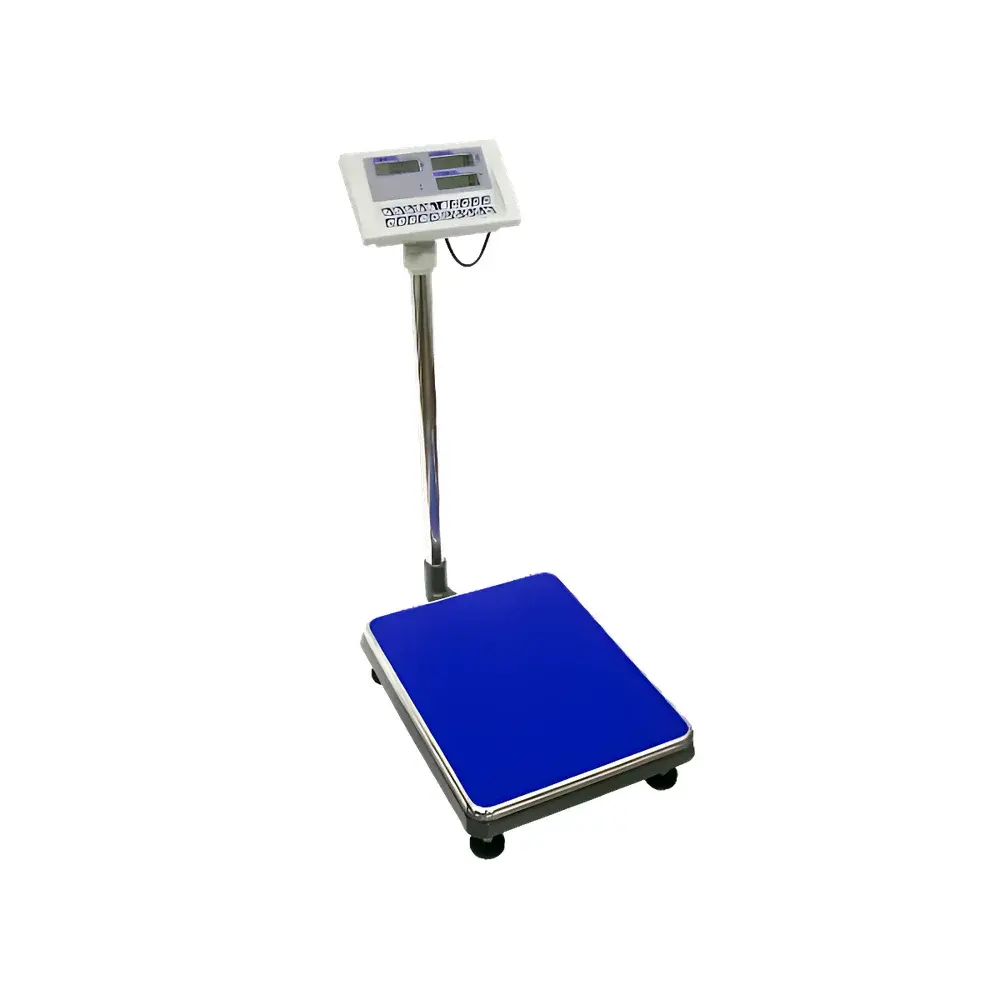
SUNNY HENGPING MP100KC Counting Balance
| Brand | SUNNY HENGPING INSTRUMENT |
|---|---|
| Origin | Shanghai, China |
| Manufacturer Type | Direct Manufacturer |
| Product Category | Domestic (China-made) |
| Model | MP100KC |
| Instrument Type | Counting Balance |
| Maximum Capacity | 100 g |
| Readability | 0.01 g |
| Accuracy | ±0.01 g (repeatability) |
| Calibration Method | External calibration |
| Display | Triple LCD window (count, unit weight, total weight) |
| Power Supply | AC/DC dual-mode with built-in rechargeable backup battery |
| Interface | RS232 standard output |
| Unit Conversion | Multiple units (g, oz, ct, etc.) |
| Pan Dimensions | 450 × 650 mm |
| Overall Dimensions (L×W×H) | 412 × 670 × 1010 mm |
| Net Weight | 19.5 kg |
| Gross Weight | 21 kg |
| Packaging Dimensions (L×W×H) | 500 × 900 × 200 mm |
Overview
The SUNNY HENGPING MP100KC Counting Balance is an industrial-grade precision counting instrument engineered for high-volume production environments, quality control laboratories, and warehouse inventory management systems where rapid, reliable piece-counting of small-to-medium components is required. It operates on the fundamental principle of mass-based counting: by first determining the average unit weight of a representative sample (e.g., screws, washers, electronic connectors, or pharmaceutical tablets), the balance calculates the total quantity in a bulk load via real-time division of total measured mass by the stored unit weight. This method eliminates manual tallying while maintaining traceable metrological integrity under ISO/IEC 17025-aligned weighing practices. Designed for stability on non-vibrating industrial surfaces, its robust cast-aluminum base and reinforced stainless-steel weighing pan support consistent performance across shifts and ambient temperature fluctuations typical in factory-floor settings.
Key Features
- Triple independent LCD display windows showing real-time count, unit weight (in g), and gross weight—enabling simultaneous verification without menu navigation.
- 0.01 g readability with ±0.01 g repeatability ensures statistical confidence in counts of parts weighing ≥0.1 g, meeting common requirements for automotive fasteners, SMT components, and medical device subassemblies.
- External calibration capability using certified weights supports compliance with internal QA protocols and external audits per ISO 9001 and ISO/IEC 17025.
- RS232 serial interface enables direct data logging to PCs, PLCs, or MES systems; compatible with standard terminal emulators and custom LabVIEW or Python-based acquisition scripts.
- AC/DC dual-power architecture with integrated rechargeable battery provides uninterrupted operation during brief power outages or mobile deployment in staging areas.
- Backlit LCD enhances legibility under low-light warehouse conditions or in cleanroom anterooms where overhead lighting may be restricted.
- Multi-unit conversion (grams, ounces, carats, pounds) simplifies integration into global supply chains with mixed-unit documentation standards.
Sample Compatibility & Compliance
The MP100KC accommodates heterogeneous part geometries—including irregularly shaped metal stampings, plastic housings, and coated substrates—provided the unit weight falls within its validated range (≥0.1 g recommended for ≤1% counting uncertainty). Its large 450 × 650 mm stainless-steel pan minimizes edge-loading errors and supports trays or shallow bins for bulk handling. The balance complies with OIML R76-1 (2017) for non-automatic weighing instruments and meets electromagnetic compatibility (EMC) requirements per EN 61326-1:2013. While not certified for hazardous locations, it is suitable for general-purpose Class 10,000 cleanrooms when operated with appropriate static-dissipative mats and grounding procedures.
Software & Data Management
No proprietary software is bundled; however, the RS232 interface outputs ASCII-formatted data streams (e.g., “COUNT=1247|UNIT_WT=0.824|GROSS=1027.32”) at user-configurable baud rates (9600–115200). This facilitates seamless ingestion into SQL databases, Excel via Power Query, or LIMS platforms supporting serial data ingestion. Audit trails can be established externally through timestamped log files, satisfying basic GLP documentation needs. For regulated environments requiring 21 CFR Part 11 compliance, third-party middleware (e.g., LabArchives, Benchling) may be deployed to manage electronic signatures and data integrity controls.
Applications
- Electronics manufacturing: Counting surface-mount resistors, capacitors, and IC trays prior to reflow soldering.
- Automotive Tier-1 suppliers: Verifying quantities of brake caliper pins, gaskets, and sensor housings before kitting.
- Pharmaceutical secondary packaging: Confirming tablet counts in blister cards or vials during line clearance checks.
- Metal fabrication shops: Managing inventory of nuts, bolts, and rivets across multiple SKUs with minimal operator training.
- Educational labs: Teaching metrology fundamentals including statistical sampling, measurement uncertainty, and calibration traceability.
FAQ
What is the minimum recommended unit weight for accurate counting?
For ≤1% relative uncertainty, the average unit weight should be ≥0.1 g. Lower values increase susceptibility to air currents and mechanical noise.
Does the MP100KC support internal calibration?
No—it requires external calibration using Class M2 or better certified weights, as specified in its operating manual.
Can the RS232 output be configured for automatic data transmission on stabilization?
Yes—via programmable trigger modes (e.g., “transmit after stable signal >2 sec”) using standard AT-style command sets.
Is the balance suitable for use in a humid environment?
It is rated IP42 (dust-protected, drip-resistant); prolonged exposure to condensation or washdown conditions is not advised.
How often should external calibration be performed?
Per ISO 9001 Clause 7.1.5.2, calibration frequency must be risk-assessed; typical practice is daily pre-shift verification with a check weight, plus full calibration weekly or after relocation.