
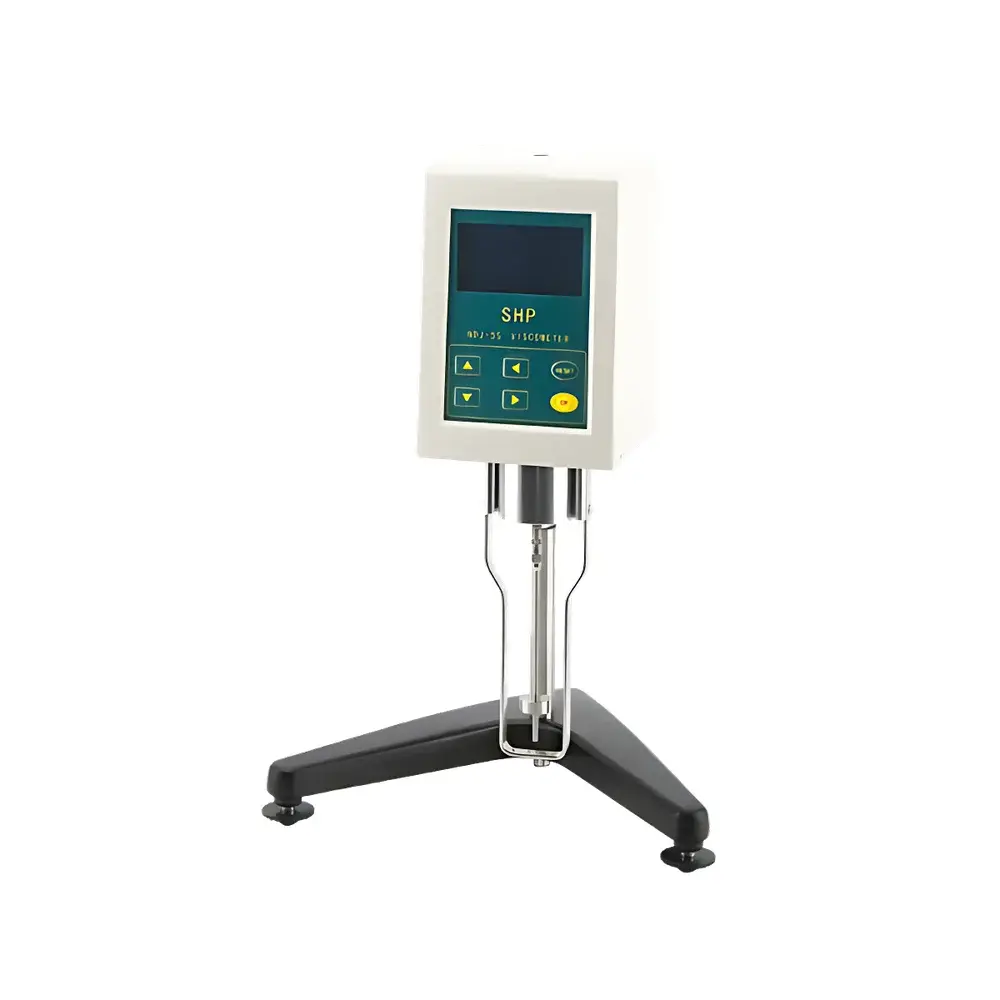
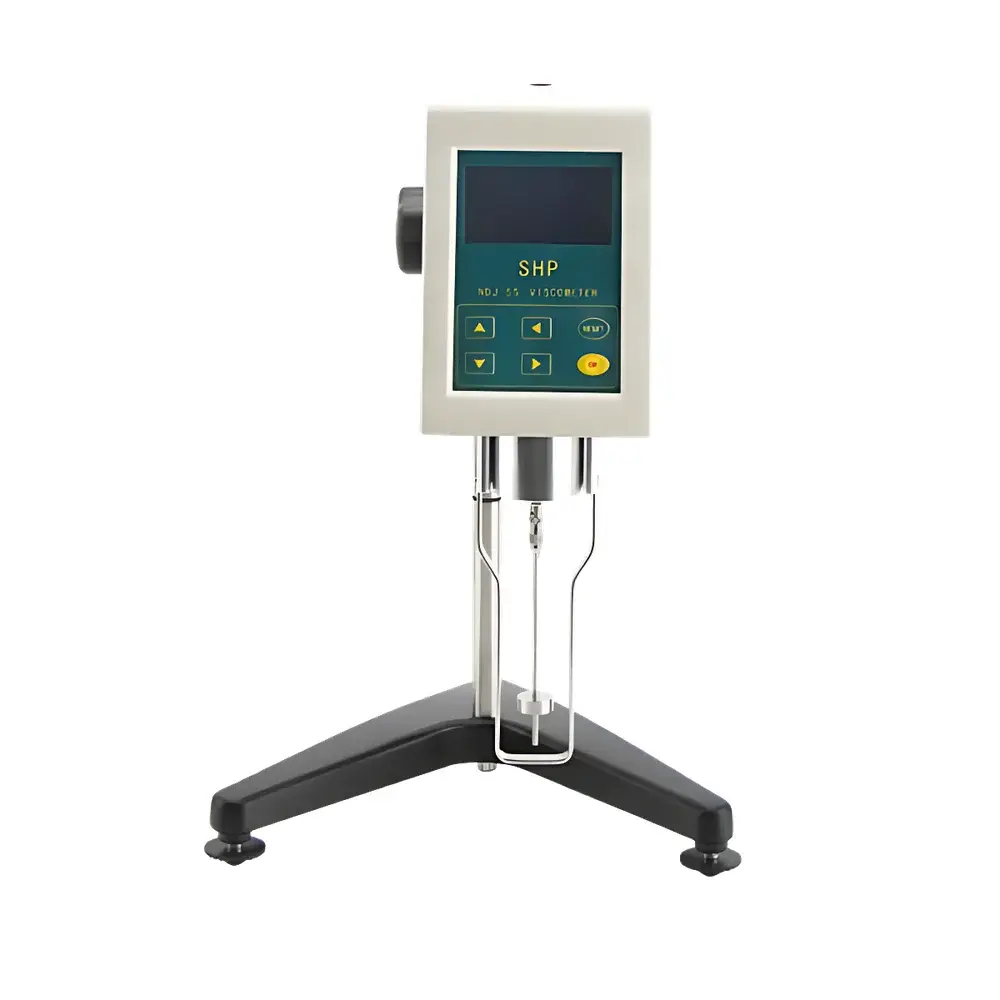
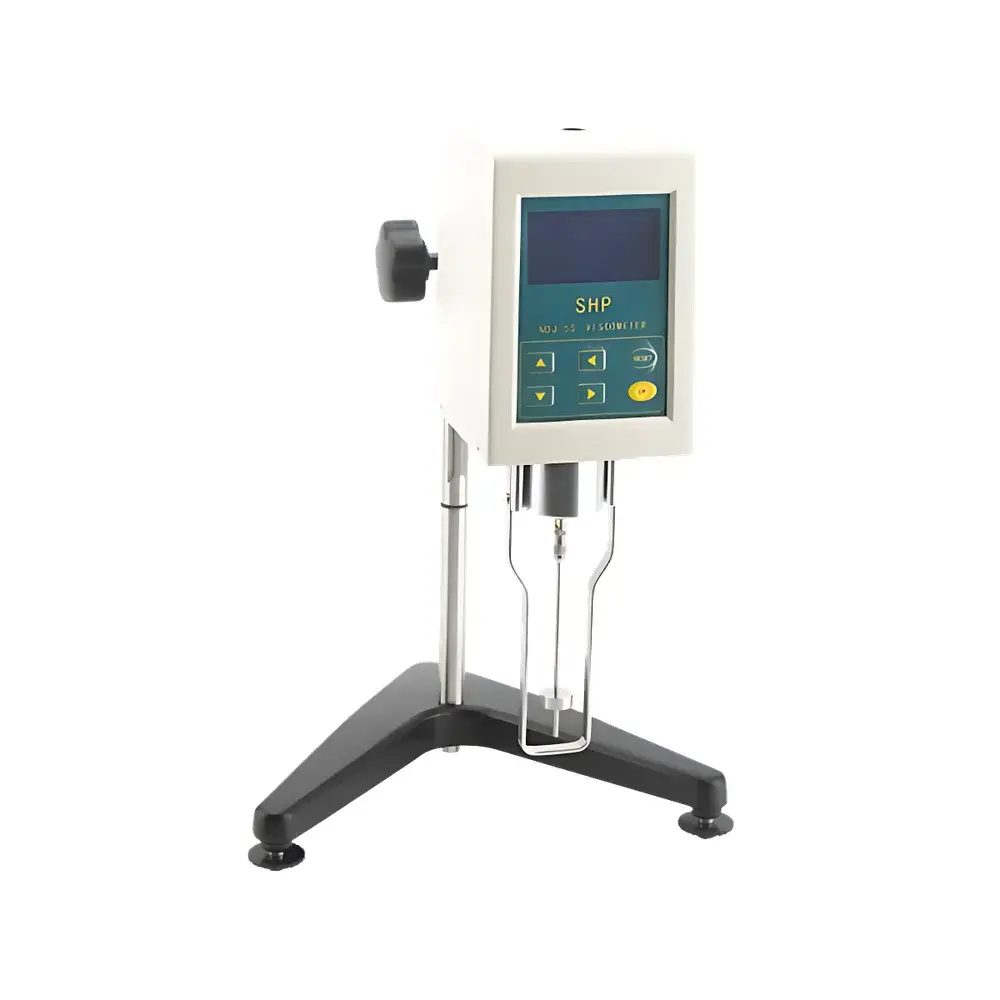
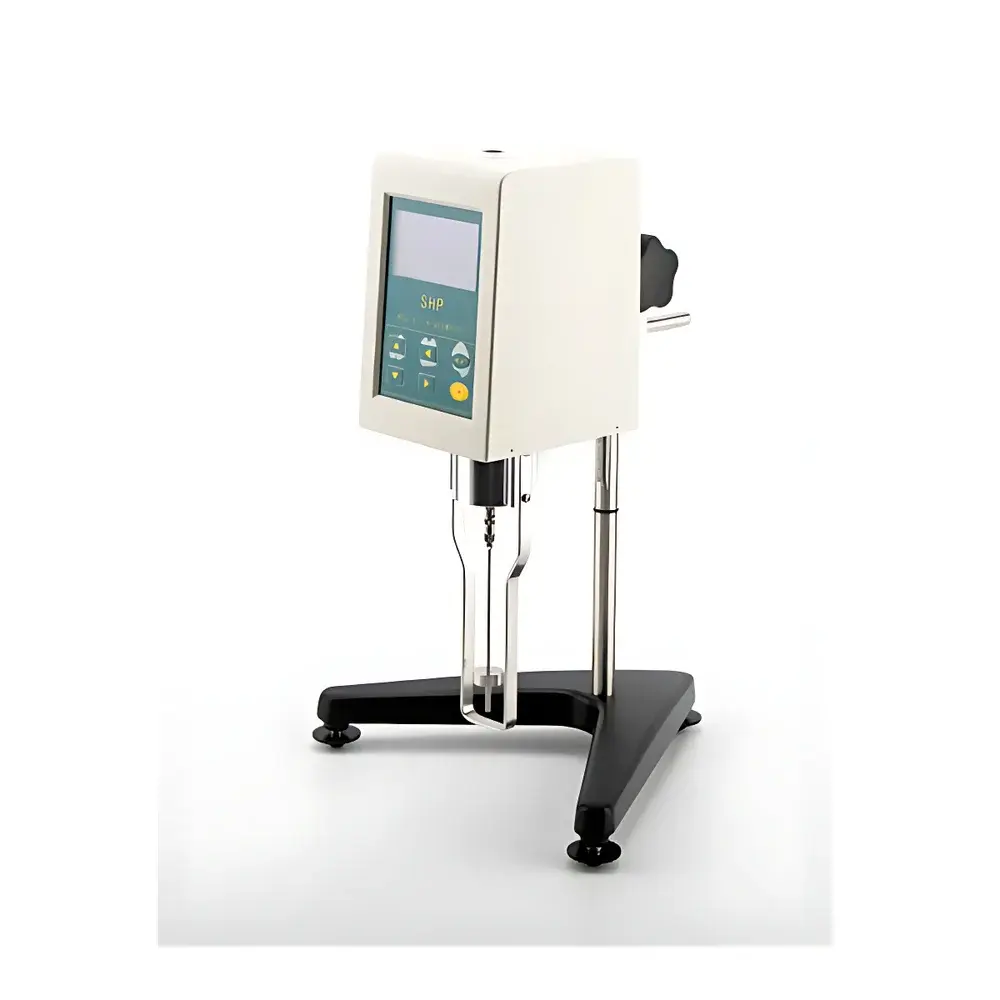
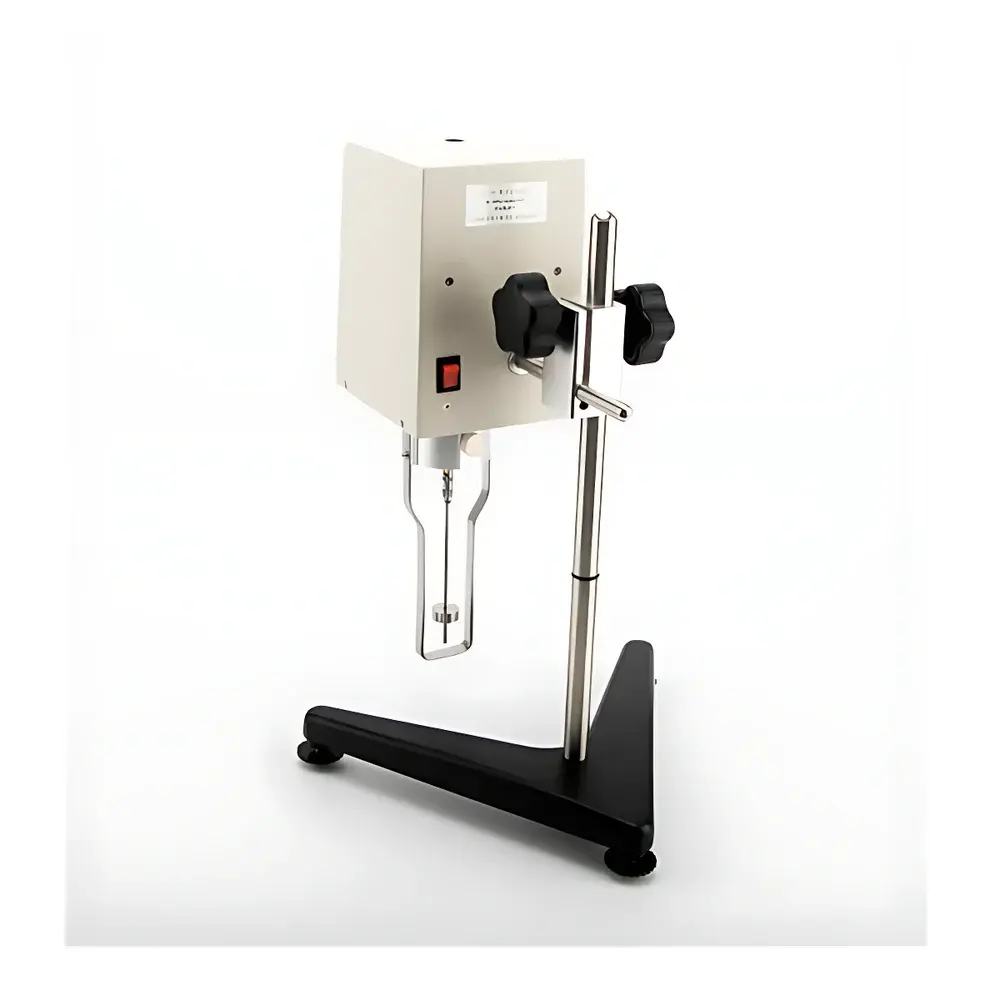
SOPTOP SNB Series Digital Rotational Viscometer
| Brand | SOPTOP |
|---|---|
| Model | SNB |
| Type | Benchtop Rotational Viscometer |
| Measurement Principle | Couette Flow Rheometry |
| Viscosity Range | 10–1,000,000 mPa·s |
| Speed Options | 6/12/30/60 rpm |
| Standard Spindles | #1–#4 (optional #0 spindle available) |
| Accuracy (Newtonian fluids) | ±2% |
| Power Input | 110–240 V AC, 50/60 Hz |
| Dimensions | 275 × 265 × 445 mm |
| Compliance | Designed for GLP-compliant routine QC environments |
| Sample Temperature | Ambient (20–25 °C recommended) |
Overview
The SOPTOP SNB Series Digital Rotational Viscometer is a benchtop instrument engineered for precision measurement of dynamic (absolute) viscosity in Newtonian and mildly non-Newtonian fluids under controlled shear conditions. Based on the classical Couette flow principle—where torque exerted on a rotating spindle immersed in a fluid is directly proportional to its shear viscosity—the SNB delivers repeatable, traceable viscosity data across a broad dynamic range (10–1,000,000 mPa·s). Its design targets laboratories requiring regulatory-ready performance without complexity: fixed-speed operation eliminates variable-shear-rate ambiguity common in ramp-based systems, making it especially suitable for batch release testing, incoming raw material verification, and stability monitoring in pharmaceutical, food, coatings, and adhesive manufacturing. Unlike capillary or falling-ball viscometers, the SNB provides direct SI-unit output (mPa·s), eliminating empirical calibration dependencies.
Key Features
- Benchtop fixed-speed rotational architecture with four preset shear rates (6, 12, 30, 60 rpm), ensuring consistent test protocols and inter-laboratory comparability.
- Digital torque sensing and microprocessor-controlled DC motor deliver ±2% accuracy for Newtonian liquids per ISO 2555 and ASTM D2196 standards.
- Wide-input power supply (110–240 V AC, 50/60 Hz) enables stable operation across global laboratory infrastructures without external voltage regulators.
- Integrated dual-language (English/Chinese) LCD interface supports multilingual lab personnel while maintaining full parameter visibility during measurement.
- Interchangeable spindles (#1–#4 standard; optional #0 spindle for ultra-low-viscosity fluids down to 10 mPa·s) allow method scalability across diverse sample matrices.
- Rugged aluminum alloy housing and vibration-damped base minimize mechanical drift during extended runs, enhancing long-term measurement reproducibility.
Sample Compatibility & Compliance
The SNB accommodates samples ranging from low-viscosity solvents (e.g., ethanol, acetone) to highly structured pastes (e.g., tomato concentrate, epoxy resins), provided they remain homogeneous during spindle immersion and rotation. Minimum sample volume is 20 mL for standard spindles; use of the optional #0 spindle reduces this to 10 mL. The instrument operates at ambient temperature (20–25 °C typical), and users are advised to precondition samples thermally before testing to mitigate thermal gradient-induced errors. While not equipped with Peltier temperature control, the SNB’s design aligns with Good Laboratory Practice (GLP) documentation requirements: all measurements are timestamped, spindle/speed selection is logged, and manual entry fields support analyst ID and batch number annotation. It meets essential electrical safety standards (IEC 61010-1) and supports audit-ready workflows compliant with FDA 21 CFR Part 11 when paired with validated electronic lab notebook (ELN) integration.
Software & Data Management
The SNB operates as a standalone instrument with no proprietary software dependency. All viscosity values, spindle ID, rotational speed, and real-time torque readings are displayed and retained on-device for immediate review. Data export is achieved via RS-232 serial interface (cable included), enabling direct transmission to spreadsheet applications or LIMS platforms. Optional PC software (SOPTOP ViscoLink™, sold separately) provides automated report generation—including statistical summaries (mean, SD, CV%), pass/fail flagging against user-defined specification limits—and CSV/PDF export with embedded metadata (date, operator, instrument ID). Audit trail functionality records all parameter changes and measurement events with tamper-resistant timestamps, satisfying basic GMP documentation expectations for routine quality control labs.
Applications
- Pharmaceutical: Kinematic consistency testing of suspensions, ointments, and syrups per USP ; viscosity verification of excipient blends prior to tableting.
- Food & Beverage: Quality control of sauces, dressings, dairy products, and plant-based alternatives; shelf-life stability assessment through periodic viscosity trending.
- Paints & Coatings: Flow behavior evaluation of latex emulsions, alkyd resins, and pigment dispersions to ensure sprayability and film formation.
- Adhesives & Sealants: Batch-to-batch verification of acrylic, silicone, and polyurethane formulations to guarantee open time and bond strength predictability.
- Chemical Manufacturing: In-process monitoring of polymer solutions, surfactant micellar systems, and catalyst slurries during synthesis and purification.
FAQ
What viscosity standards are recommended for daily calibration verification?
NIST-traceable silicone oil standards (e.g., Cannon N4, N10, N100) are recommended for routine verification. Calibration should be performed at least once per shift when used in regulated environments.
Can the SNB measure yield stress or thixotropy?
No. As a fixed-speed rotational viscometer, the SNB does not support controlled shear stress ramping or time-dependent recovery protocols required for yield stress or thixotropic index determination.
Is the #0 spindle necessary for all low-viscosity applications?
The #0 spindle extends measurable range to 10 mPa·s but requires precise geometry alignment and strict temperature control. For most aqueous solutions above 50 mPa·s, standard #1 spindle is sufficient and more robust.
How does line voltage fluctuation affect measurement stability?
The built-in wide-range switching power supply and closed-loop motor controller eliminate sensitivity to ±10% input voltage variation, ensuring torque stability independent of local grid conditions.
Does the instrument support ASTM D1084 or ISO 3219 compliance?
Yes—when operated per defined spindle/speed combinations and calibrated with certified reference oils, the SNB satisfies the procedural requirements of both ASTM D1084 (adhesives) and ISO 3219 (polymer solutions), though final compliance depends on lab-specific validation protocols.



