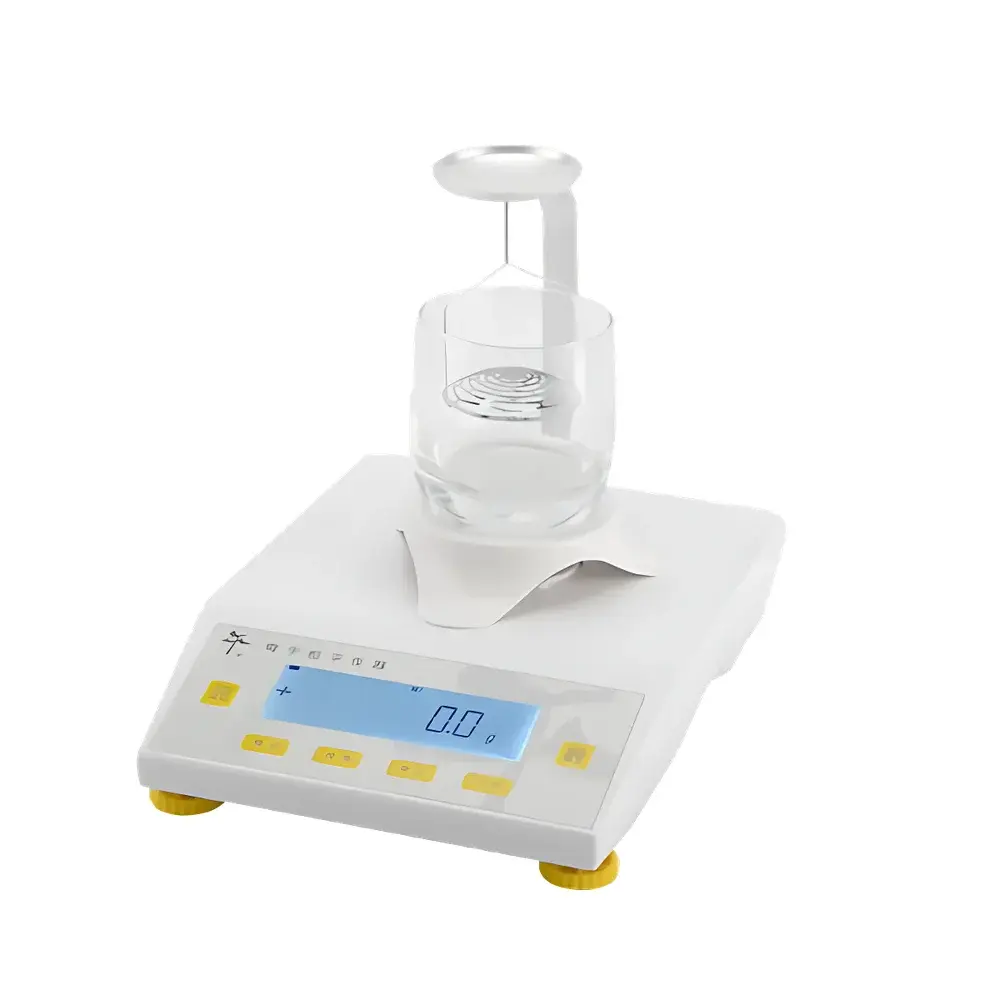
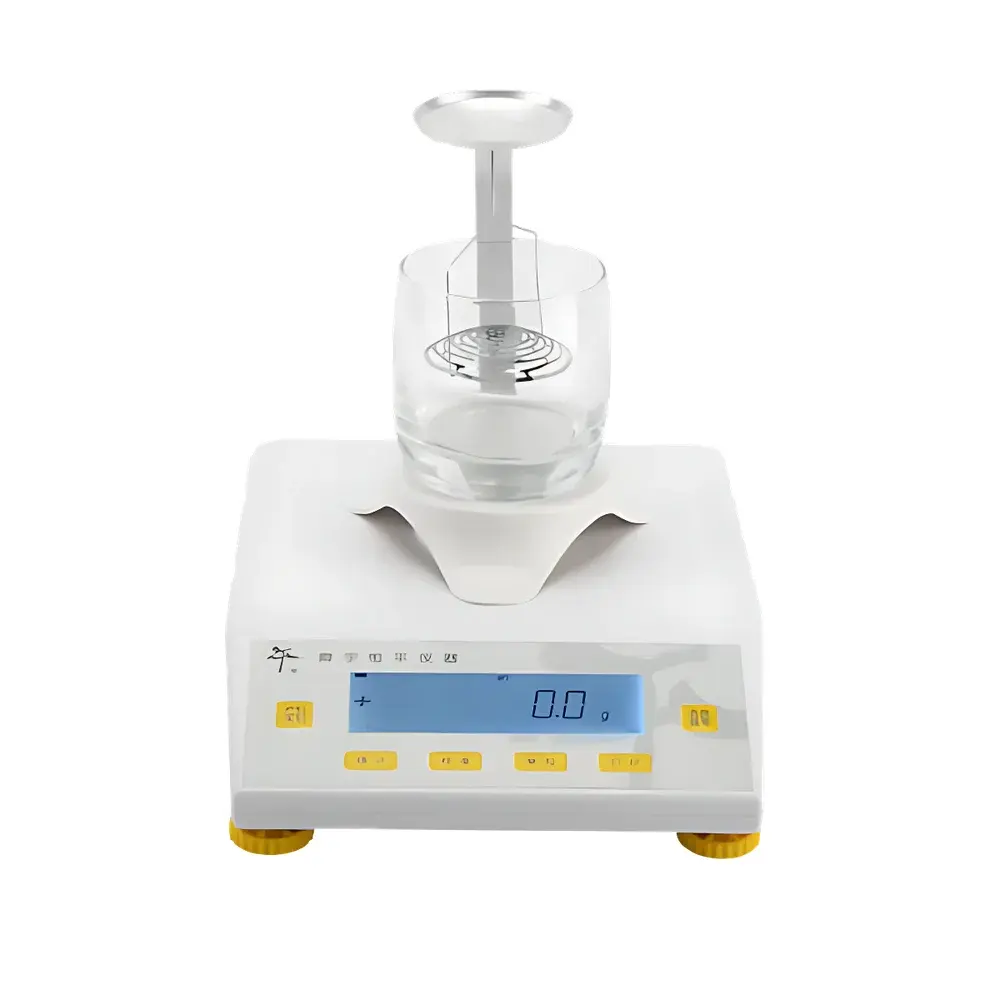
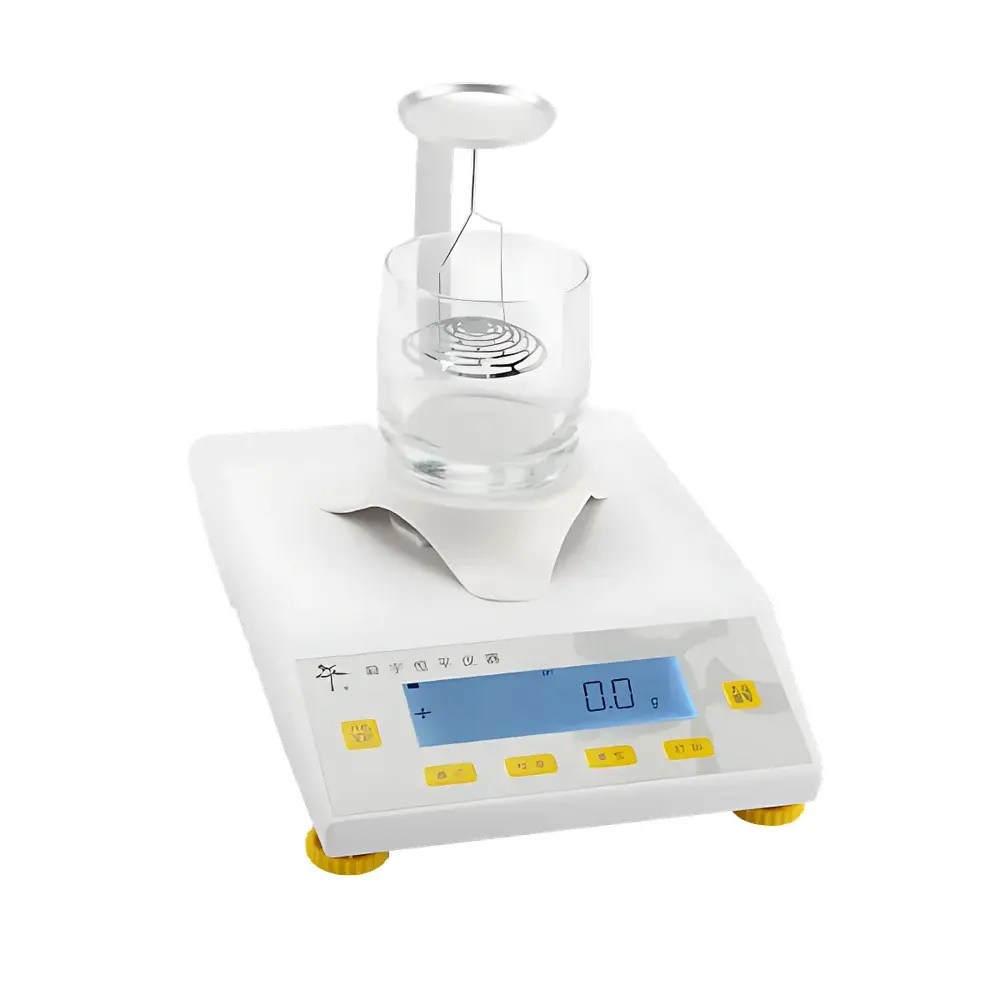
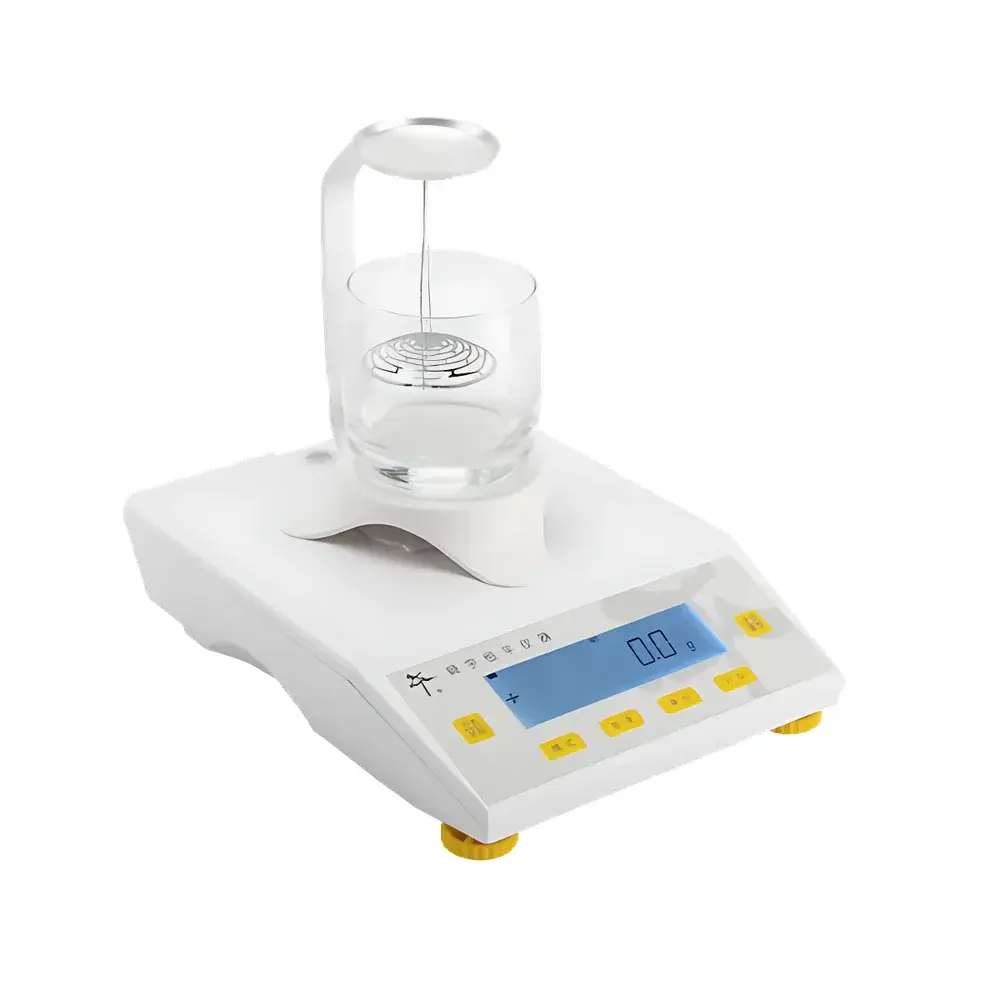
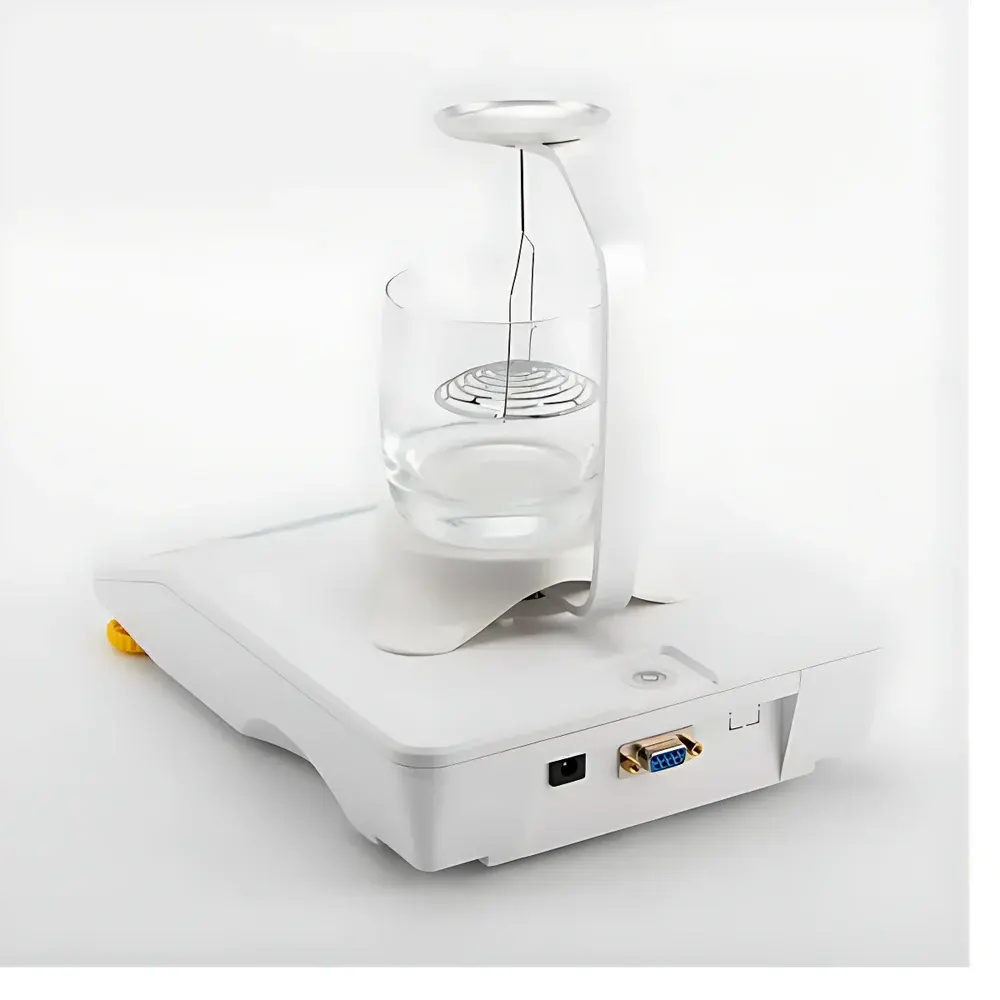
SUNNY HENGPING MP Series Electronic Density Balance
| Brand | SUNNY HENGPING INSTRUMENT |
|---|---|
| Origin | Shanghai, China |
| Manufacturer Type | Direct Manufacturer |
| Product Category | Domestic (China-made) |
| Model | MP Series (MP3002J / MP4002J / MP5002J) |
| Measuring Range | 300 g / 400 g / 500 g |
| Readability | 0.01 g |
| Repeatability | ±0.01 g |
| Linearity | ±0.02 g |
| Calibration Method | External calibration |
| Standard Calibration Weights | 200 g / 200 g / 500 g |
| Density Measurement Types | Solids (standard, non-standard, floating), Liquids (with sinker kit) |
| Minimum Sample Mass in Air | ≥0.25 g |
| Minimum Buoyant Force in Water | ≤ −0.125 g |
| Net Weight | 1.6 kg |
| Gross Weight | 1.8 kg |
| Dimensions (L×W×H) | 190 × 250 × 250 mm |
| Packaging Dimensions (L×W×H) | 560 × 300 × 210 mm |
| Interface | RS232 |
Overview
The SUNNY HENGPING MP Series Electronic Density Balance is a precision laboratory instrument engineered for rapid, direct density determination of solid and liquid samples using the Archimedean principle. Unlike conventional analytical balances requiring manual calculation or third-party software, this system integrates a high-stability weighing mechanism with a dedicated density measurement module—enabling real-time density readout in g/cm³ to two decimal places. The balance operates on dual-mass measurement: first acquiring the sample’s mass in air, then its apparent mass when fully immersed in a reference fluid (typically distilled water at 23 °C). From these two values—and optionally, temperature-compensated fluid density—the instrument computes true material density without user intervention. Designed for routine QC labs and R&D environments, the MP Series complies with foundational metrological requirements outlined in ISO 1183-1 (plastics), ASTM D792 (density and specific gravity of plastics), and ISO 2737 (rubber density testing), ensuring traceable, repeatable results across industrial material characterization workflows.
Key Features
- Direct digital density readout (g/cm³) with automatic calculation—eliminates manual error-prone arithmetic and unit conversion.
- Three model variants (MP3002J, MP4002J, MP5002J) covering 300 g, 400 g, and 500 g maximum capacities—each calibrated to ±0.01 g repeatability and ±0.02 g linearity per JIS B 7721 and OIML R76 standards.
- Full aluminum die-cast base structure dampens low-frequency mechanical vibrations—critical for stable readings in shared lab spaces or near HVAC systems.
- Dual-mode density measurement: supports standard solids (sinker method), irregular/non-wetting solids (via auxiliary fixtures), floating solids (e.g., foams, expanded polymers), and liquids (using supplied stainless-steel sinker and overflow vessel).
- External calibration capability with certified weights (200 g or 500 g, depending on model)—fully compliant with GLP documentation requirements for audit-ready calibration records.
- RS232 serial interface enables seamless integration with LIMS or custom data acquisition platforms; supports ASCII-based output with configurable delimiters and auto-transmit triggers.
Sample Compatibility & Compliance
The MP Series accommodates diverse physical forms and surface characteristics common in industrial materials testing. Solid samples include granules (plastic resins, metal powders), molded parts (injection-molded polymers, sintered alloys), porous media (ceramics, graphite electrodes), and hygroscopic specimens (cellulose derivatives, food powders)—provided minimum air mass exceeds 0.25 g and buoyant force in water reaches at least −0.125 g. For liquids, viscosity limits are governed by sinker immersion dynamics; fluids up to ~500 mPa·s (e.g., glycerol–water mixtures, silicone oils) yield reliable results when temperature is stabilized within ±0.5 °C. All models meet CE marking requirements for electromagnetic compatibility (EMC Directive 2014/30/EU) and low-voltage safety (LVD Directive 2014/35/EU). While not FDA 21 CFR Part 11–certified out-of-the-box, the RS232 interface permits integration with validated electronic record systems supporting audit trails, electronic signatures, and data integrity controls required under GMP/GLP frameworks.
Software & Data Management
No proprietary software is bundled; instead, the MP Series relies on industry-standard serial communication protocols compatible with widely deployed lab informatics tools—including LabWare LIMS, Thermo Fisher SampleManager, and open-source platforms such as Python-based PySerial scripts or Node-RED automation flows. Each measurement cycle outputs timestamped ASCII strings containing air mass, immersed mass, calculated density, temperature flag (if external probe connected), and status code (e.g., “OK”, “UNDER_MASS”, “OVER_BUOYANCY”). Users may configure transmission frequency, carriage-return/line-feed termination, and field separators via front-panel menu or terminal command. For regulated environments, laboratories implement validation protocols verifying data fidelity across 10,000+ consecutive transmissions—confirming zero packet loss and deterministic parsing behavior under sustained load.
Applications
- Quality control of polymer pellets and compounded resins in extrusion and injection molding facilities—verifying batch consistency against ISO 1183-1 density specifications.
- Density grading of sintered metal components (e.g., tungsten carbide, stainless steel PM parts) to assess porosity and green density prior to final heat treatment.
- Raw material verification in rubber compounding—distinguishing natural rubber (≈0.91 g/cm³) from synthetic alternatives (e.g., SBR ≈0.94 g/cm³) without destructive testing.
- Formulation monitoring of liquid cosmetics and pharmaceutical suspensions—tracking density shifts indicative of emulsion breakdown or solvent evaporation.
- Educational use in university materials science labs—demonstrating Archimedes’ principle, thermal expansion effects on fluid density, and uncertainty propagation in multi-step measurements.
FAQ
Does the MP Series support internal calibration?
No—calibration is exclusively external, using class M2 or better certified weights traceable to national metrology institutes. Internal calibration mechanisms are omitted to preserve long-term stability and reduce drift susceptibility.
Can I measure foam or cork without special fixtures?
Yes—floating-body mode allows direct density determination of low-density solids (ρ < 1.0 g/cm³) using the included auxiliary platform and weighted submersion rod, eliminating need for adhesives or encapsulation.
Is temperature compensation built-in?
The balance itself does not include an integrated temperature sensor; however, it accepts optional external PT100 probes (sold separately) to feed real-time water bath temperature into density algorithms per ISO 1183 Annex B.
What maintenance is required for long-term accuracy?
Annual verification against certified reference masses and periodic cleaning of the weighing pan and sinker with ethanol (avoiding abrasive solvents) are sufficient. No lubrication or internal adjustment is necessary under normal operating conditions.