
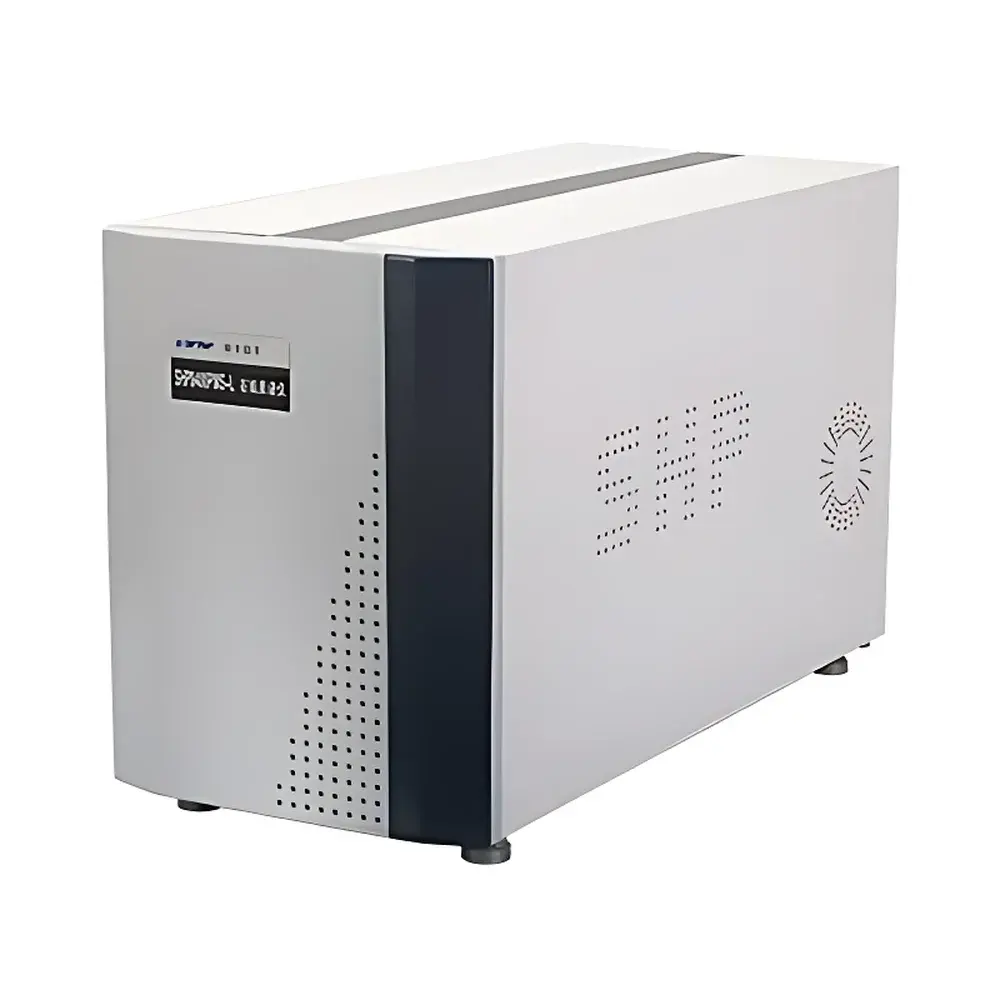
Sunny Hengping SHP8400PMS-LD Differential Electrochemical Mass Spectrometer for Direct Alcohol Fuel Cells
| Brand | Sunny Hengping Instrument |
|---|---|
| Origin | Shanghai, China |
| Manufacturer Type | Original Equipment Manufacturer (OEM) |
| Product Origin | Domestic (China) |
| Model | SHP8400PMS-LD |
| Pricing | Available Upon Request |
Overview
The Sunny Hengping SHP8400PMS-LD is a purpose-engineered differential electrochemical mass spectrometer (DEMS) system designed for real-time, in situ gas-phase analysis during electrochemical operation of direct alcohol fuel cells (DAFCs), including methanol and ethanol variants, as well as proton exchange membrane (PEM) hydrogen–oxygen fuel cells. It integrates an electrochemical half-cell or full-cell test station with a high-sensitivity online quadrupole mass spectrometer via a temperature-controlled capillary inlet interface. The system operates on the principle of coupling controlled-potential electrochemistry with electron ionization (EI) mass spectrometry: volatile reaction products—such as CO₂, formaldehyde, acetaldehyde, formic acid, unreacted methanol/ethanol, H₂, O₂, and trace aldehydes—are continuously sampled from the electrochemical cell headspace, transferred through a heated fused-silica capillary, vaporized in a precisely regulated evaporation chamber, and swept into the mass spectrometer’s ion source using ultra-high-purity helium carrier gas. This configuration enables quantitative tracking of faradaic gas evolution rates with millisecond-level temporal resolution, supporting mechanistic studies of reaction pathways, catalyst poisoning, crossover effects, and electrode degradation under operational conditions.
Key Features
- Integrated capillary sampling interface comprising fused-silica capillary, compact evaporation chamber (low dead volume design), precision PID-controlled heating system (operable up to 200 °C), high-stability helium carrier gas delivery, and dedicated fore-vacuum pumping stage.
- Optimized evaporation chamber geometry minimizes residence time and inter-sample mixing, preserving temporal fidelity of transient gas signals during potentiodynamic or galvanostatic sweeps.
- Dual-mode detection system: switchable Faraday cup for high-concentration species (e.g., CO₂, CH₃OH) and electron multiplier for trace volatiles (e.g., HCHO, CH₃CHO), both referenced to the same mass axis and calibrated against certified gas standards.
- EI ion source equipped with thoriated-iridium filament—engineered for extended lifetime under humid, oxidizing, and reducing sample environments typical of DAFC anode effluents.
- Quadrupole mass analyzer with unit mass resolution (m/Δm ≥ 500) across m/z 1–100, optimized for rapid scanning (≤ 100 ms per full scan) and selected-ion monitoring (SIM) modes.
- Rugged, modular architecture compliant with laboratory-scale electrochemical testing setups—including compatibility with standard rotating disk electrodes (RDE), membrane electrode assemblies (MEA), and custom flow cells.
Sample Compatibility & Compliance
The SHP8400PMS-LD supports aqueous and non-aqueous electrolyte systems, including acidic (e.g., 0.5 M H₂SO₄), alkaline (e.g., 1 M KOH), and polymer electrolyte environments. It accommodates liquid-fed and vapor-fed DAFC configurations, as well as PEM-based H₂/O₂ cells. All wetted materials—including capillary, evaporation chamber, and gas lines—are chemically inert (stainless steel 316L, fused silica, Kalrez® seals) to prevent catalytic decomposition or adsorption artifacts. The system adheres to ISO/IEC 17025 principles for analytical instrument validation and supports GLP-compliant data acquisition when paired with audit-trail-enabled software. While not pre-certified for FDA 21 CFR Part 11, its data logging architecture permits implementation of electronic signature and user-access controls required for regulated QC/QA workflows.
Software & Data Management
The proprietary DEMS control and analysis software provides synchronized acquisition of electrochemical signals (potentiostat/galvanostat output) and mass spectral data (ion current vs. time/mass). It supports real-time background subtraction, isotopic correction (e.g., for ¹³CO₂ interference), calibration curve generation using multi-point gas standards, and stoichiometric faradaic efficiency calculation per detected ion. Raw data are stored in vendor-neutral HDF5 format, enabling interoperability with MATLAB, Python (via h5py), and third-party electrochemical analysis platforms such as Thales or EC-Lab. All acquisition parameters, calibration records, and operator metadata are embedded in file headers to satisfy traceability requirements for method development and technology transfer.
Applications
- Mechanistic investigation of C₁–C₂ alcohol oxidation pathways on Pt-, Pd-, and Ni-based catalysts.
- Quantification of methanol crossover in DMFC membranes and evaluation of barrier layer efficacy.
- In situ monitoring of CO formation and oxidative stripping during anode potential cycling.
- Time-resolved analysis of intermediate accumulation (e.g., adsorbed CO, formaldehyde) during start-up/shutdown transients.
- Correlation of gas evolution profiles with electrochemical impedance spectroscopy (EIS) and cyclic voltammetry (CV) datasets.
- Accelerated stress testing (AST) of catalyst layers under variable humidity, temperature, and fuel concentration conditions.
FAQ
What electrochemical techniques are compatible with the SHP8400PMS-LD?
Cyclic voltammetry, linear sweep voltammetry, chronoamperometry, chronopotentiometry, and electrochemical impedance spectroscopy—all synchronized with mass spectral acquisition at user-defined temporal resolution.
Can the system detect non-volatile intermediates or dissolved species?
No. The SHP8400PMS-LD detects only volatile and semi-volatile species that partition into the gas phase above the electrochemical cell; it does not perform liquid-phase analysis or hyphenated LC-MS coupling.
Is helium the only permissible carrier gas?
Helium is strongly recommended due to its inertness, optimal ionization characteristics in EI mode, and compatibility with quadrupole transmission efficiency; nitrogen or argon may be used for specific diagnostic purposes but require recalibration and reduce sensitivity.
How is system sensitivity validated?
Sensitivity is verified using certified gas mixtures (e.g., 10 ppm CO₂ in He) introduced via a calibrated leak valve; typical detection limits for CO₂ are ≤ 50 ppt (v/v) under optimized SIM conditions with 1-second dwell time.
Does the system support automated long-term stability testing?
Yes—software scripting enables unattended 72+ hour acquisition with periodic auto-calibration, pressure stabilization checks, and filament current monitoring to ensure signal integrity across extended experiments.






