
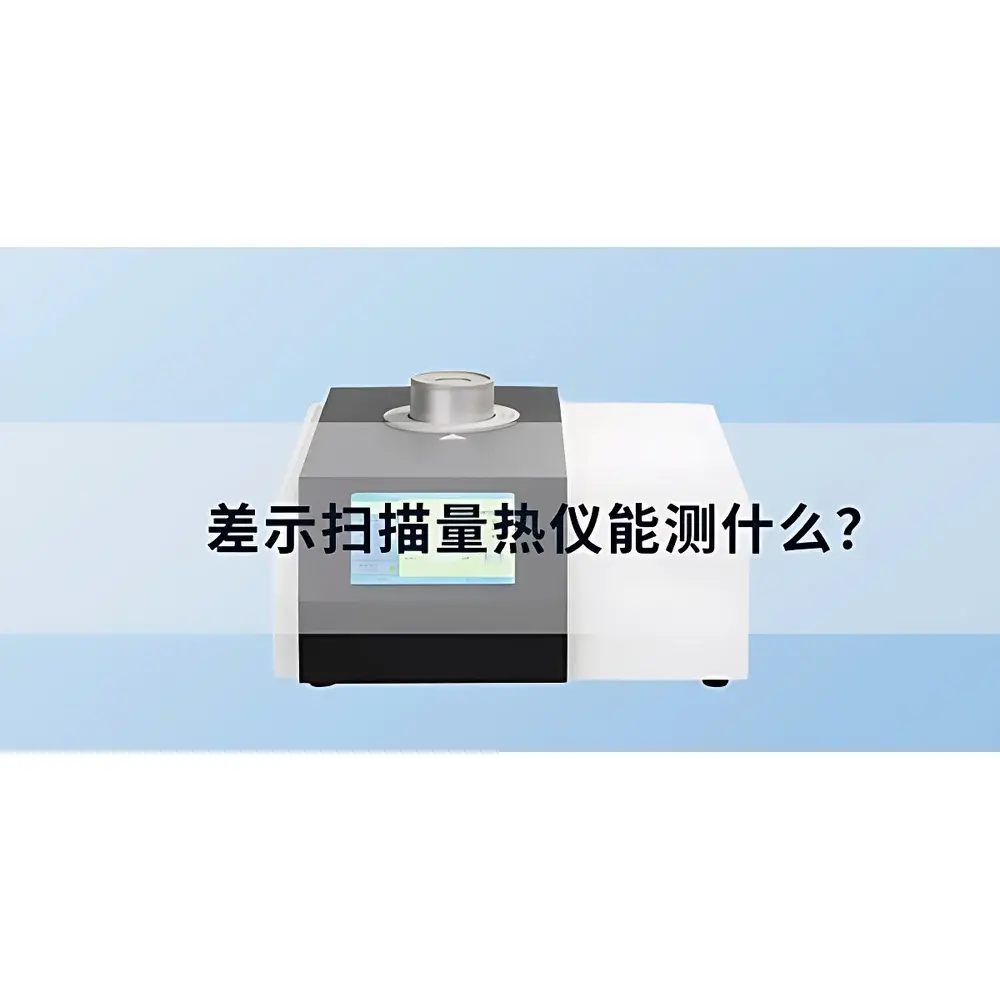
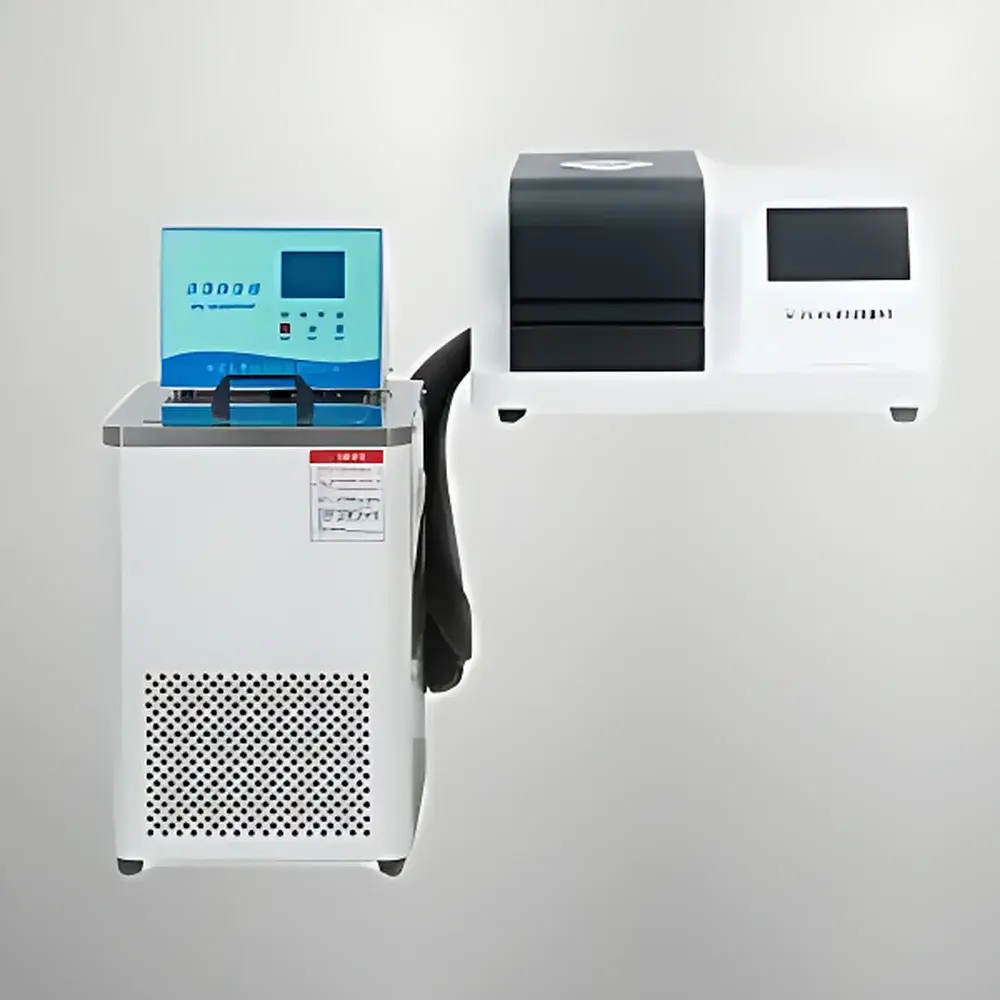
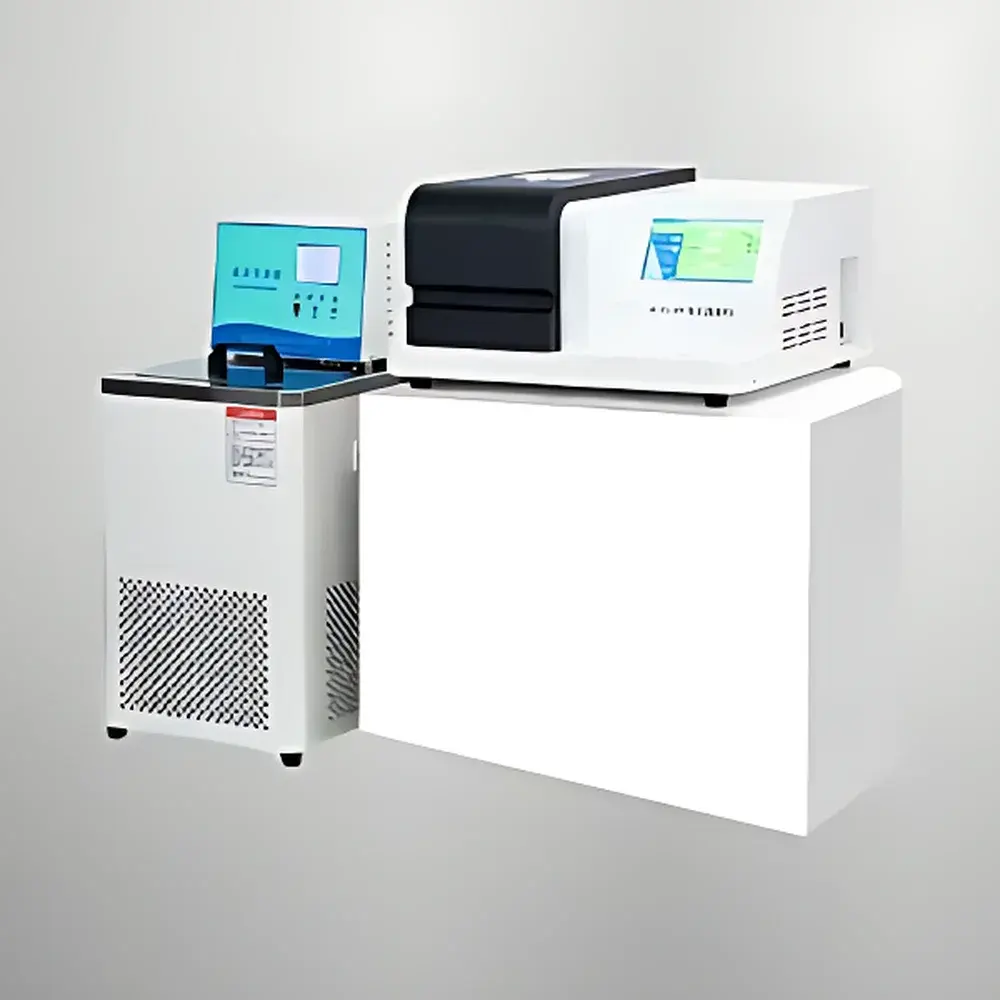
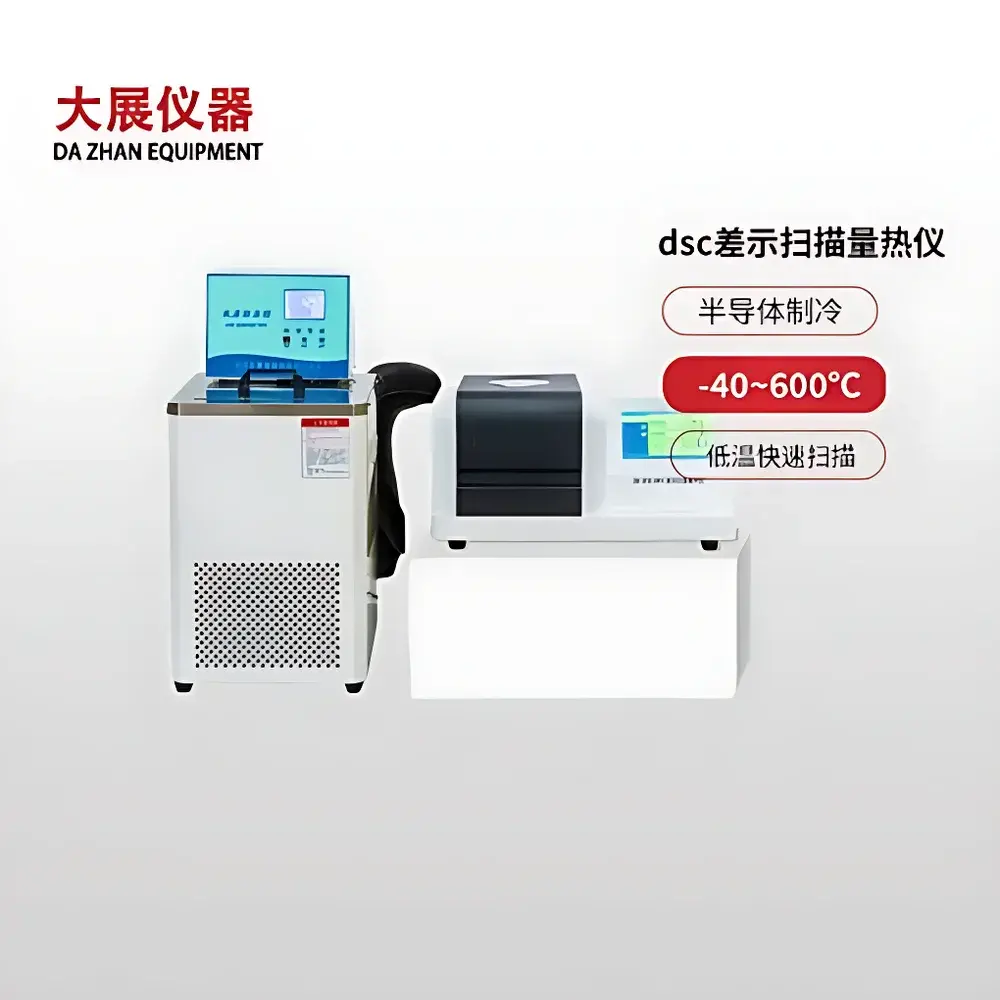
Nanjing Dazhan DZ-DSC300C Low-Temperature Differential Scanning Calorimeter
| Brand | Nanjing Dazhan |
|---|---|
| Origin | Jiangsu, China |
| Manufacturer Type | Direct Manufacturer |
| Model | DZ-DSC300C |
| Sample Capacity | Single-sample |
| Instrument Type | Differential Scanning Calorimeter (DSC) |
| Temperature Range | −40 to 600 °C |
| Temperature Accuracy | ±0.001 °C |
| Temperature Precision | ±0.001 °C |
| Temperature Stability | ±0.1 °C |
| Heating/Cooling Rate | 0.1–100 K/min |
| DSC Signal Range | 0 to ±600 mW |
| DSC Sensitivity | 0.001 mW |
| DSC Resolution | 0.01 µW |
| Temperature Resolution | 0.01 °C |
| Atmosphere Control | Dual automatic gas switching (N₂, O₂, Ar, etc.), plus dedicated purge/protect gas inlet |
| Gas Flow Range | 0–300 mL/min |
| Max Gas Pressure | ≤5 MPa |
| Control Interface | 7-inch 24-bit color LCD touchscreen + USB 2.0 interface with auto-reconnect capability |
| Calibration Standards Included | Indium, Tin, Lead |
Overview
The Nanjing Dazhan DZ-DSC300C Low-Temperature Differential Scanning Calorimeter is a precision thermal analysis instrument engineered for high-sensitivity measurement of heat flow differences between a sample and inert reference under controlled temperature programs. Based on the heat-flux DSC principle, it quantifies endothermic and exothermic transitions—including glass transition (Tg), melting (Tm), crystallization (Tc), solid-solid phase changes, oxidative induction time (OIT), oxidative induction temperature (OITT), and cure kinetics—across a broad operational range from −40 °C to 600 °C. Its integrated semiconductor cooling module enables rapid, reproducible sub-ambient cooling without liquid nitrogen, supporting low-temperature polymer characterization, pharmaceutical stability assessment, and battery electrolyte thermal safety evaluation. The instrument employs a robust all-metal furnace architecture with optimized thermal symmetry, delivering superior baseline stability and long-term signal reproducibility essential for regulatory-compliant thermal profiling.
Key Features
- High-resolution thermal control: PID-based intelligent temperature regulation with ±0.001 °C accuracy and ±0.1 °C stability over extended runs.
- Wide dynamic scanning capability: Programmable heating and cooling rates from 0.1 to 100 K/min, with independent rate control for both directions and customizable multi-segment temperature ramps (up to six segments).
- Dual-gas automated atmosphere management: Electromechanically actuated dual-gas manifold with <5 s switching time and <30 s stabilization; includes dedicated protective gas channel for oxygen-sensitive applications.
- Industrial-grade human-machine interface: 7-inch full-color LCD touchscreen (24-bit depth) with intuitive graphical navigation, real-time curve overlay, and on-device data review—no PC dependency required for basic operation.
- Enhanced signal fidelity: DSC measurement range of 0 to ±600 mW with 0.01 µW resolution and 0.001 mW sensitivity, supported by low-noise analog front-end and digital filtering algorithms.
- Reliable connectivity: Standard USB 2.0 interface featuring automatic reconnection protocol—ensuring uninterrupted data acquisition during transient host system events or power cycling.
Sample Compatibility & Compliance
The DZ-DSC300C accommodates standard aluminum, gold-plated aluminum, and hermetic stainless-steel crucibles (20–50 µL capacity), enabling analysis of solids, powders, films, gels, and small-volume liquids. It supports ASTM E794 (melting point), ASTM D3418 (Tg, Tm, ΔH), ISO 11357 series (polymer thermal behavior), and USP (thermal analysis in pharmaceutical development). While not pre-certified for 21 CFR Part 11, its firmware architecture supports audit-trail-enabled software configurations compliant with GLP/GMP environments when deployed with validated third-party acquisition platforms. Factory-supplied calibration standards (indium, tin, lead) allow user-performed temperature and enthalpy verification per ISO 13321 and ASTM E967.
Software & Data Management
Data acquisition and analysis are performed via optional Windows-compatible software (v5.x or later), offering real-time baseline correction, peak deconvolution, kinetic modeling (e.g., Ozawa-Flynn-Wall, Kissinger), and multi-curve comparative reporting. Raw data export is available in ASCII (.txt), CSV, and universal .QXD formats compatible with MATLAB, OriginLab, and JMP. All measurements include embedded metadata (operator ID, timestamp, gas flow settings, ramp parameters), supporting traceability requirements. Optional report templates align with ISO/IEC 17025 documentation structures, including uncertainty estimation per GUM guidelines where applicable.
Applications
- Thermal characterization of thermoplastics and thermosets: Quantification of Tg, cold crystallization, melt enthalpy, and degree of cure using isoconversional methods.
- Oxidative stability testing: Determination of OIT and OITT in polyolefins per ASTM D3895, critical for cable insulation and packaging material qualification.
- Pharmaceutical solid-state analysis: Detection of polymorphic transitions, hydrate/dehydrate events, and excipient compatibility screening under controlled humidity-compatible purge gas conditions.
- Battery materials R&D: Evaluation of electrolyte decomposition onset, cathode/anode thermal runaway thresholds, and SEI layer formation energetics.
- Food science: Measurement of starch gelatinization, fat crystallization kinetics, and moisture-induced phase changes in freeze-dried matrices.
FAQ
What cooling method does the DZ-DSC300C use, and what is its lowest operating temperature?
The instrument utilizes a Peltier-based semiconductor cooling system, achieving a verified minimum operating temperature of −40 °C without cryogenic fluids.
Is the DZ-DSC300C compliant with FDA 21 CFR Part 11 out of the box?
No—Part 11 compliance requires validated software configuration, electronic signatures, and audit-trail implementation, which are achievable through authorized third-party software integration but not inherent to the base hardware/firmware.
Can the instrument perform simultaneous heating and cooling rate calibration?
Yes—calibration protocols for both heating and cooling rates are supported using certified reference materials (e.g., indium for heating, zinc for cooling), with rate verification traceable to NIST-traceable standards.
What crucible types are recommended for reactive samples such as lithium-containing compounds?
Hermetically sealed stainless-steel crucibles with pressure-rated lids are recommended; aluminum crucibles are suitable for routine polymer and pharmaceutical analyses under inert purge.
Does the system support custom atmosphere sequences, such as O₂ → N₂ → O₂ transitions during a single run?
Yes—the dual-gas controller allows programmable, timed gas-switching events within a defined temperature segment, enabling oxidation-reduction cycling studies relevant to catalyst and corrosion research.



