
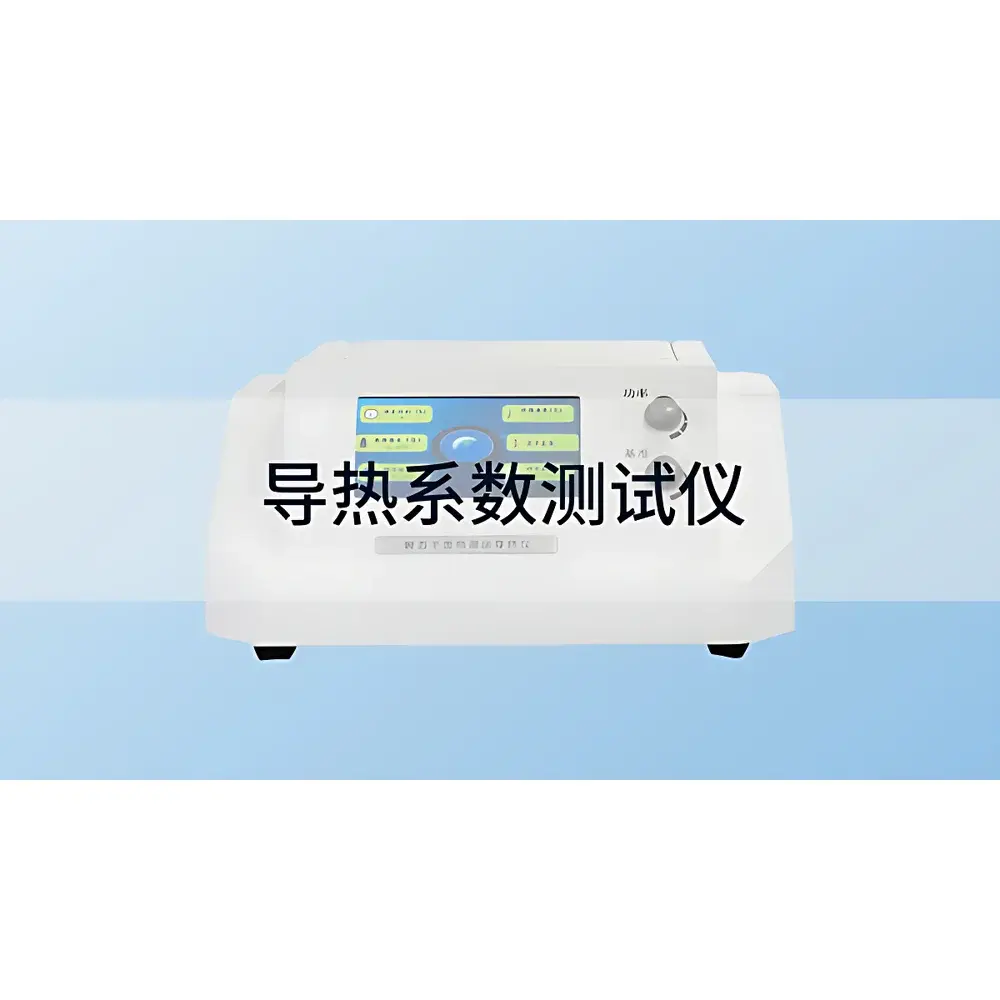
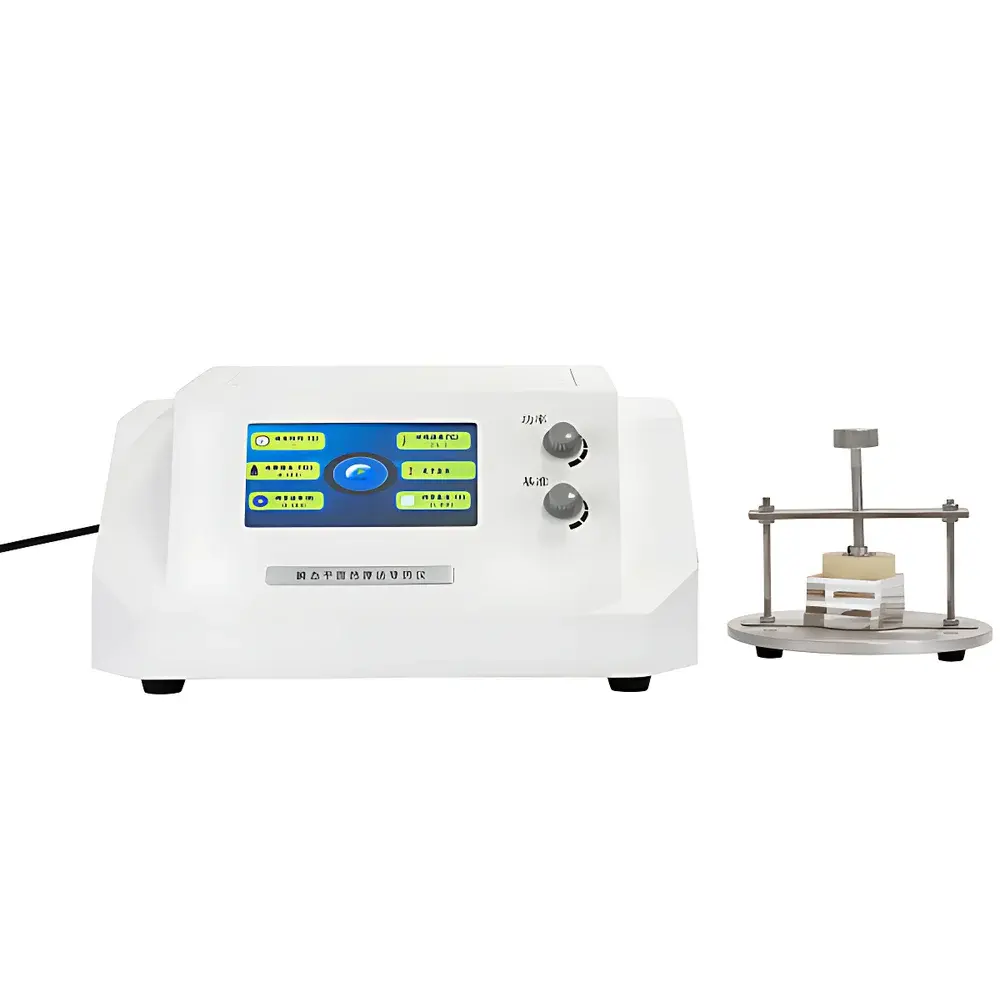
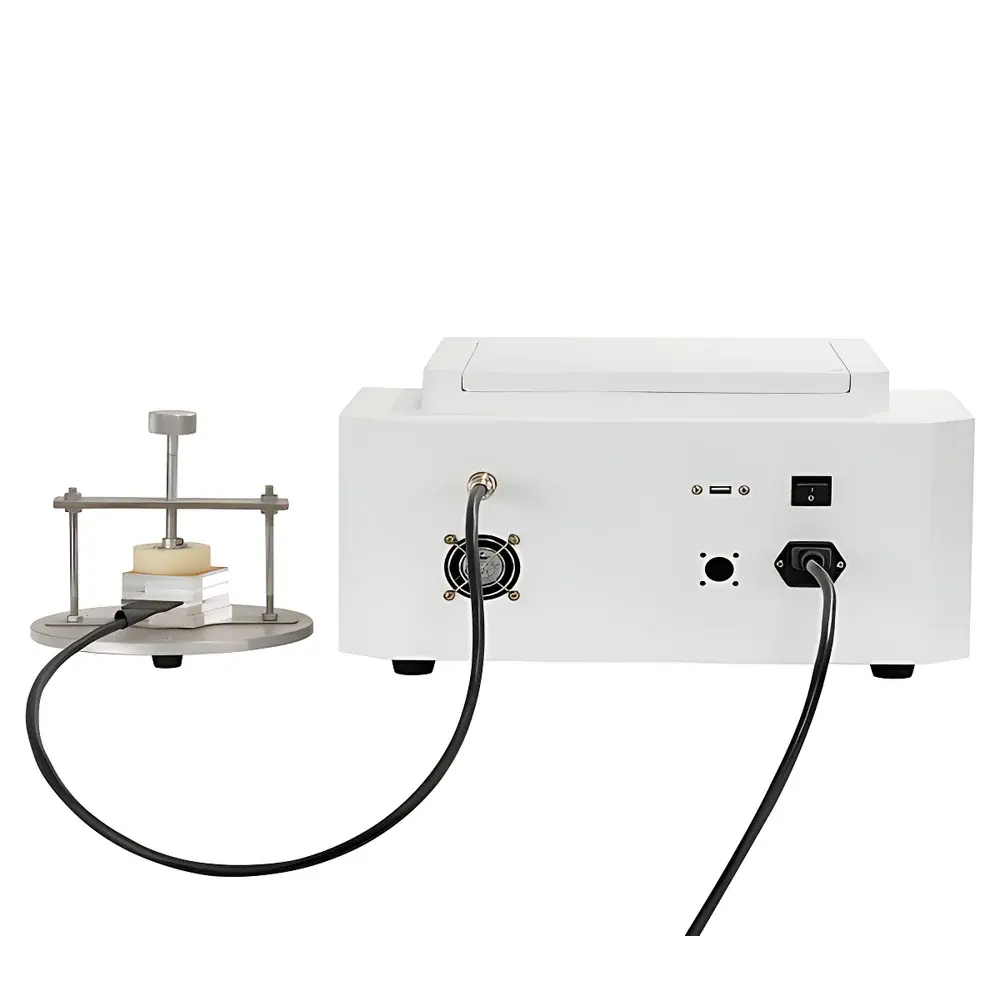
Nanjing Dazhan DZDR-S Transient Plane Source (TPS) Thermal Conductivity Analyzer
| Brand | Nanjing Dazhan |
|---|---|
| Origin | Jiangsu, China |
| Manufacturer Type | Manufacturer |
| Product Category | Domestic |
| Model | DZDR-S |
| Instrument Principle | Transient Plane Source (TPS) Method |
| Sample Throughput | Multiple samples per session |
| Test Environment | Ambient temperature (RT to 130 °C) |
| Thermal Conductivity Range | 0.0001–300 W/(m·K) |
| Accuracy | ±3% |
| Repeatability | ≤3% |
| Dimensions (L×W×H) | 440 × 390 × 220 mm |
| Sample Forms | Gels, liquids, powders, coatings, thin films, bulk solids, foams, composites |
| Probe Options | 7.5 mm, 15 mm, and 50 mm diameter probes (standard and customizable) |
| Measurement Time | 5–160 s |
| Power Supply | AC 220 V, <500 W |
| Minimum Sample Dimensions | ≥7.5×7.5×3.75 mm (for 7.5 mm probe), ≥15×15×7.5 mm (for 15 mm probe), ≥50×50×7.5 mm (for 50 mm probe) |
| Optional Accessories | Powder test cell, liquid test cup, custom probe fixtures |
Overview
The Nanjing Dazhan DZDR-S Transient Plane Source (TPS) Thermal Conductivity Analyzer is a precision instrument engineered for rapid, non-destructive, and absolute measurement of thermal conductivity and thermal diffusivity across a broad spectrum of solid, semi-solid, and liquid materials. Based on the internationally standardized transient plane source method (ISO 22007-2:2015), the system employs a dual-function sensor—acting simultaneously as both a heat source and a resistance thermometer—that is sandwiched between two identical sample halves (or placed on a single thick sample). A short-duration electrical pulse heats the sensor, and the resulting time-dependent temperature rise is recorded with microsecond resolution. Thermal conductivity is derived directly from the slope of the logarithmic temperature-time curve during the early transient phase, eliminating the need for calibration standards or assumptions about material homogeneity. This first-principle approach ensures traceable, reproducible results under ambient to moderately elevated temperatures (RT to 130 °C), making the DZDR-S suitable for R&D labs, QC/QA departments in advanced materials manufacturing, and academic thermal transport studies.
Key Features
- True TPS methodology compliant with ISO 22007-2, enabling direct, absolute measurement without reference materials
- Three interchangeable probe diameters (7.5 mm, 15 mm, 50 mm) optimized for diverse sample geometries and thermal effusivity ranges
- ARM-based embedded control system with real-time signal processing, delivering high computational throughput and deterministic timing control
- High-resolution analog-to-digital conversion using imported data acquisition ICs, ensuring sub-millikelvin temperature resolution and low-noise signal fidelity
- Integrated 7-inch capacitive touchscreen HMI with intuitive workflow navigation, multilingual UI support (English default), and context-sensitive operation prompts
- Modular hardware architecture supporting optional accessories: standardized powder test cell with compression fixture, sealed liquid test cup with thermal equilibration chamber, and custom probe adapters for irregular or anisotropic specimens
- Low-power design (<500 W) with active thermal stabilization of electronics, minimizing self-heating artifacts and enabling extended unattended operation
Sample Compatibility & Compliance
The DZDR-S accommodates heterogeneous and complex morphologies without requiring extensive sample preparation: rigid solids (metals, ceramics, composites), flexible sheets (polymers, laminates, insulation foams), soft solids (gels, pastes, elastomers), granular media (ceramic powders, metal oxides), suspensions, and Newtonian/non-Newtonian liquids. Coatings and thin films (>100 µm thickness) can be measured using substrate-supported configurations. All probe-sample interfaces are designed to minimize contact resistance via controlled pressure application and thermally conductive interface paste compatibility. The instrument meets electromagnetic compatibility requirements per IEC 61326-1 and supports GLP-compliant operation through audit-trail-enabled software logging (user actions, calibration events, measurement parameters, raw sensor traces). While not FDA-certified as standalone medical device hardware, its data output structure conforms to 21 CFR Part 11 readiness when deployed with validated third-party LIMS integration.
Software & Data Management
The proprietary DZDR Control Suite (v4.x) runs on Windows OS and provides full instrument orchestration, real-time visualization of temperature transients, automated curve fitting using Levenberg-Marquardt nonlinear regression, and uncertainty propagation analysis per GUM (JCGM 100:2008). Raw data (time, voltage, temperature) are stored in HDF5 format with embedded metadata (probe ID, sample ID, ambient conditions, operator stamp). Export options include CSV, Excel, PDF reports with configurable templates (ASTM C177, ISO 22007-2, internal QA forms), and direct SQL database push for enterprise-level data warehousing. Batch processing mode enables unattended sequential testing of up to 99 samples with auto-generated pass/fail flags based on user-defined tolerance bands.
Applications
- Quality assurance of thermal interface materials (TIMs), phase-change materials (PCMs), and battery electrode slurries
- Thermal property mapping of additive-manufactured metal and polymer parts for process validation
- Development of low-conductivity aerogels, vacuum insulation panels (VIPs), and fire-retardant composites
- Characterization of geological core samples, refractory bricks, and ceramic matrix composites in energy and aerospace sectors
- Academic research into phonon transport mechanisms in nanocomposites, 2D materials, and thermoelectric alloys
- Regulatory documentation for building insulation certification (e.g., EN 12667, ASTM C518) and electronic packaging qualification
FAQ
What standards does the DZDR-S comply with?
It implements the transient plane source method per ISO 22007-2:2015 and supports measurement protocols aligned with ASTM D5470 (for TIMs) and EN 12667 (for building materials).
Can it measure anisotropic materials?
Yes—by orienting the probe normal to principal axes and using directional sample mounting fixtures; tensor analysis requires multi-orientation measurements and post-processing.
Is calibration required before each test?
No—TPS is an absolute method. System verification is performed periodically using certified reference materials (e.g., NIST SRM 1470a) to confirm long-term stability.
What sample preparation is needed for powders?
Powders must be compacted into cylindrical pellets at defined density (using the supplied press) or tested in the optional containment cell with controlled packing pressure and interfacial grease.
Does the software support automated report generation for ISO/IEC 17025 accreditation?
Yes—the reporting module includes configurable uncertainty budgets, technician/operator signatures, equipment calibration status, and environmental monitoring logs required for accredited lab audits.
Related Products



