
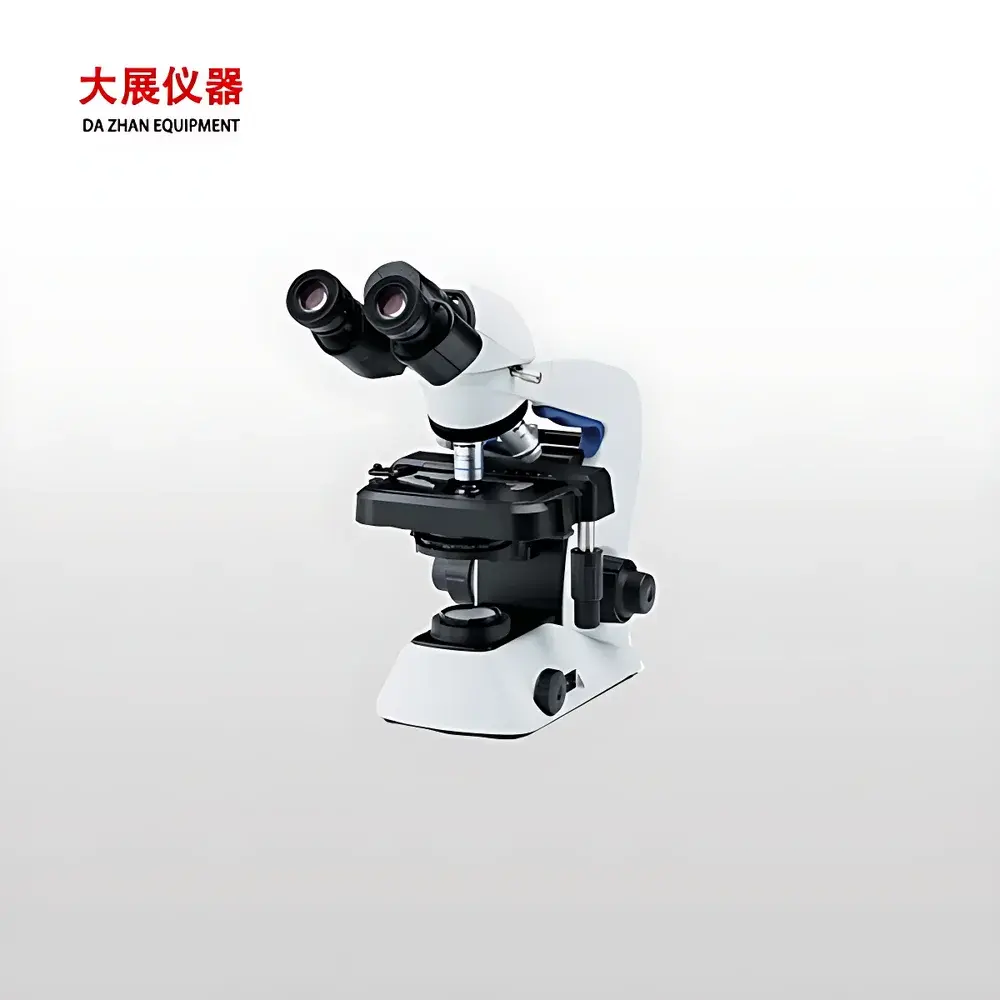
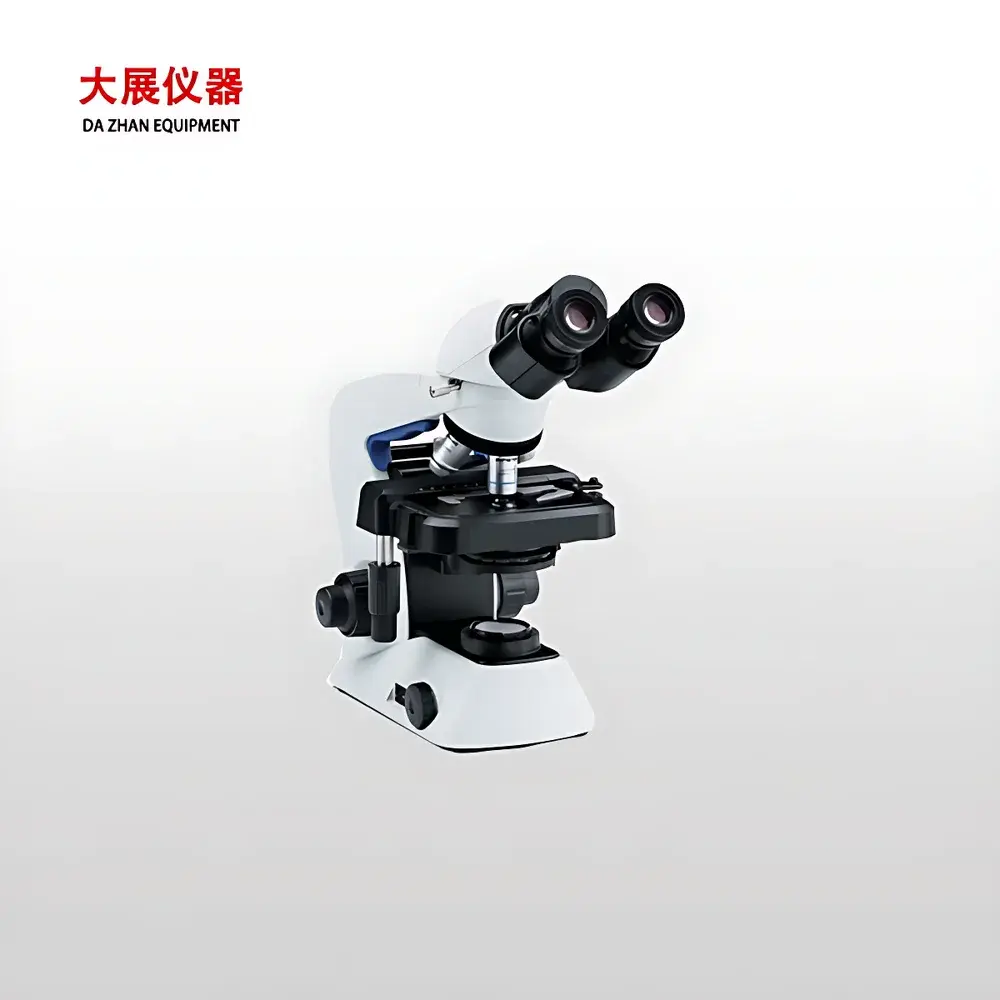
Nanjing Dazhan DZ3600 Carbon Black Dispersion Analyzer
| Brand | Nanjing Dazhan |
|---|---|
| Origin | Jiangsu, China |
| Manufacturer Type | Direct Manufacturer |
| Country of Origin | China |
| Model | DZ3600 |
| Price Range | USD 2,800 – 7,000 |
| Detection Range | 1 µm – 10 mm |
| Imaging Resolution | 2592 × 1944 (5 MP CCD camera) |
| Optical Magnification | 4×, 10×, 40×, 100× |
| Illumination Angle | 30° |
| Adjustable Image Sizes | 640×480, 1024×768, 2048×1536, 2592×1944 |
| Power Supply | 220 V / 2 A / 50 Hz |
| Compliant Standards | GB/T 18251–2000, GB/T 6030–2006, GB/T 2951.41 |
Overview
The Nanjing Dazhan DZ3600 Carbon Black Dispersion Analyzer is a dedicated image-based metrology system engineered for quantitative assessment of carbon black dispersion quality in polymer and elastomer matrices. It operates on the principle of high-resolution optical microscopy coupled with automated digital image analysis—leveraging standardized illumination geometry (30° oblique incident light) and calibrated magnification to resolve agglomerates across a dynamic range from 1 µm to 10 mm. Unlike qualitative visual grading methods, the DZ3600 delivers traceable, repeatable metrics—including equivalent diameter, aspect ratio, circularity, rectangularity, perimeter, area, and spatial distribution density—enabling direct correlation between microstructural dispersion state and bulk material performance (e.g., tensile strength, electrical resistivity, UV stability, and aging resistance). Designed specifically for R&D laboratories, QC departments, and process engineering teams in rubber, plastic, and cable manufacturing, the system supports regulatory-aligned workflows compliant with international testing protocols.
Key Features
- Modular hardware architecture supporting interchangeable microscope objectives (4×, 10×, 40×, 100×) and optional motorized XY stage for unattended multi-field scanning
- USB 2.0–compatible 5-megapixel CCD imaging module with adjustable resolution presets (640×480 to 2592×1944) and real-time exposure control
- Automated particle segmentation and classification engine using adaptive thresholding and morphological filtering optimized for carbon black contrast against polymer/rubber backgrounds
- Preconfigured analysis modules aligned with GB/T 18251–2000 (polyolefin pipes/fittings), GB/T 6030–2006 (rubber & silica–carbon black composites), and GB/T 2951.41 (cable insulation materials)
- Batch processing capability with audit-trail logging: timestamped image capture, parameter settings, operator ID, and version-stamped analysis results
- Cross-platform software compatibility (Windows XP, Windows 7, Windows 10) with configurable report templates supporting CSV, PDF, and XML export
- Calibration traceability via NIST-traceable stage micrometers and certified reference slides for pixel-to-µm conversion validation
Sample Compatibility & Compliance
The DZ3600 accommodates cross-sectioned specimens prepared by cryo-microtomy or ultramicrotomy (typical thickness: 1–5 µm for rubber; 5–20 µm for polyolefins), mounted on standard glass slides. It is validated for use with thermoplastic polyolefins (PE, PP), vulcanized rubber compounds (NR, SBR, EPDM), and filled elastomer blends containing carbon black (N110–N990 series) and/or precipitated silica. All measurement procedures conform to the geometric and statistical requirements defined in GB/T 18251–2000 (equivalent to ISO 18553:2002) and GB/T 6030–2006 (aligned with ASTM D7721–14 for rapid comparative evaluation). The system supports GLP-compliant documentation practices, including electronic signature fields, revision-controlled SOP templates, and data integrity safeguards per FDA 21 CFR Part 11 principles where locally implemented.
Software & Data Management
The proprietary DZ3600 Analysis Suite provides a deterministic, non-proprietary workflow—from raw image ingestion to statistically weighted dispersion index generation. Each analysis session generates a structured metadata file (.xml) containing instrument configuration, calibration status, user credentials, and full image stack. Statistical outputs include aggregate histograms (size distribution), scatter plots (circularity vs. area), and spatial autocorrelation maps (agglomerate clustering index). Reports adhere to ISO/IEC 17025–recommended formatting, with embedded uncertainty estimates derived from repeated field-of-view sampling (n ≥ 10). Data export supports integration with LIMS platforms via ODBC drivers and conforms to ASTM E1447–22 for analytical data interchange.
Applications
- Quantifying dispersion degradation during extrusion, calendering, or injection molding process development
- Validating masterbatch homogeneity prior to compound formulation
- Correlating dispersion metrics with mechanical test outcomes (e.g., elongation at break, tear strength) per ISO 37 and ISO 34-1
- Supporting root-cause analysis of premature failure in automotive rubber components or pressure-rated PE pipes
- Enabling DOE-driven optimization of mixing parameters (rotor speed, temperature, time) in internal mixers
- Generating technical dossiers for regulatory submissions under REACH Annex XVII or RoHS compliance verification
FAQ
What sample preparation methods are recommended for optimal DZ3600 performance?
Cryo-ultramicrotomy at –120°C is preferred for rubber; microtome sectioning at room temperature suffices for rigid polyolefins. Sections must be free of knife marks, compression artifacts, and surface contamination.
Can the DZ3600 analyze mixed fillers (e.g., carbon black + silica)?
Yes—dual-phase segmentation is supported via differential contrast enhancement and user-defined intensity thresholds, provided filler refractive indices differ sufficiently under 30° illumination.
Is third-party microscope integration possible?
The system accepts any C-mount–compatible microscope with manual or motorized focus; however, Nanjing Dazhan-certified optical paths ensure alignment with GB-standard illumination geometry and magnification fidelity.
How is measurement repeatability verified?
Repeatability is assessed per GB/T 18251–2000 Annex B: five independent operators perform three replicate measurements on the same slide; CV ≤ 8% is required for acceptance.
Does the software support multi-user permission levels?
Yes—administrator, analyst, and reviewer roles enforce segregation of duties, with password-protected access to calibration tools, method editing, and report finalization functions.






