
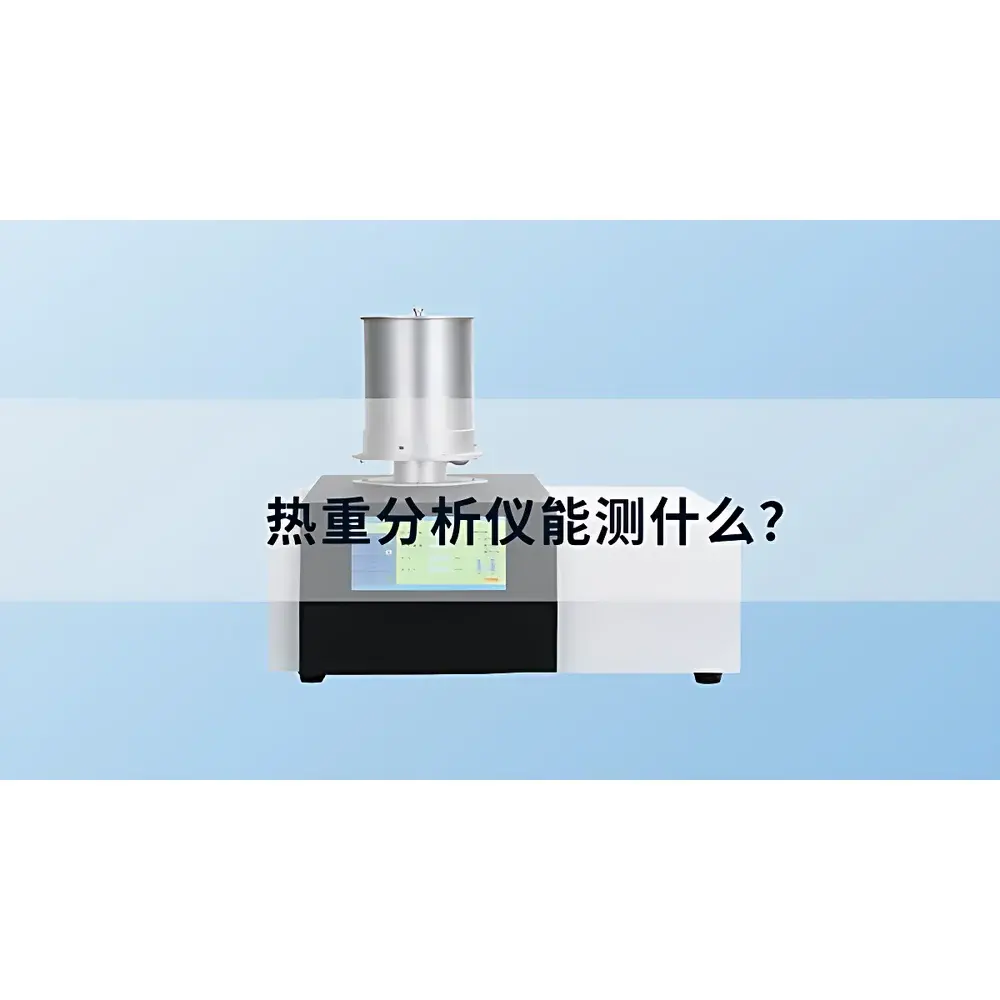
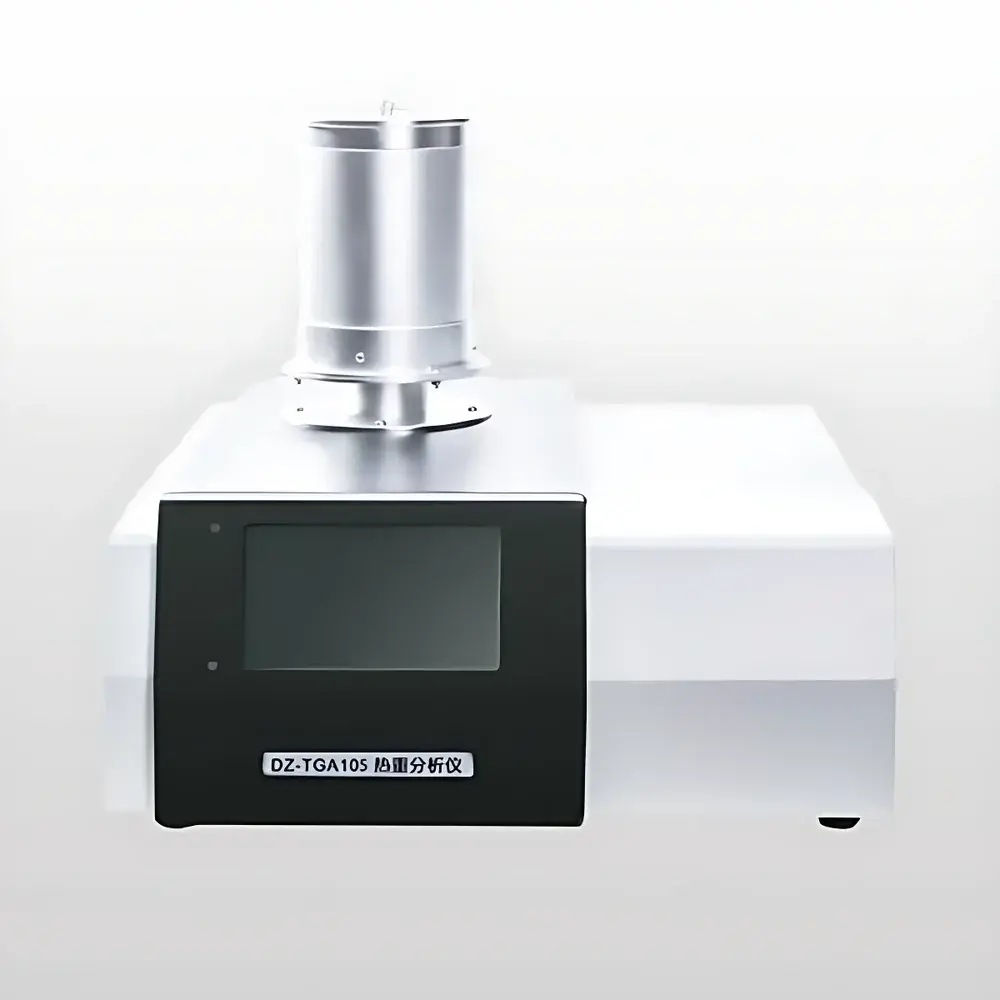
Nanjing Dazhan DZ-TGA105 High-Temperature Thermogravimetric Analyzer
| Brand | Nanjing Dazhan |
|---|---|
| Origin | Jiangsu, China |
| Manufacturer Type | Direct Manufacturer |
| Country of Origin | China |
| Model | DZ-TGA105 |
| Sample Capacity | 1 |
| Instrument Type | Dedicated TGA System |
| Temperature Range | Ambient to 1550 °C |
| Balance Sensitivity | 0.01 mg (full range: 0.1 mg–2 g, extendable to 30 g) |
| Heating/Cooling Rate | 0.1–100 °C/min |
| Temperature Resolution | 0.01 °C |
| Temperature Stability | ±0.1 °C |
| Cooling Time | ≤15 min (from 1000 °C to 100 °C) |
| Data Interface | USB 2.0 |
| Power Supply | AC 220 V, 50 Hz |
Overview
The Nanjing Dazhan DZ-TGA105 High-Temperature Thermogravimetric Analyzer is a precision-engineered instrument designed for quantitative measurement of mass change as a function of temperature or time under controlled atmospheric conditions. Operating on the fundamental principle of thermogravimetry—where sample mass is continuously monitored during programmed thermal cycles—the DZ-TGA105 delivers high-resolution, reproducible data essential for characterizing thermal stability, decomposition kinetics, oxidative behavior, and compositional evolution in solid and powdered materials. Its extended operational range up to 1550 °C enables rigorous evaluation of refractory ceramics, high-performance alloys, nuclear fuel matrices, and advanced catalysts—materials that exceed the capabilities of standard TGA systems limited to 1000 °C or below. The instrument integrates a high-stability microbalance with active drift compensation, coupled with a dual-zone furnace architecture optimized for uniform axial temperature distribution and rapid thermal response.
Key Features
- High-temperature capability: Fully validated operation from ambient to 1550 °C, supported by SiC heating elements and alumina fiber insulation for long-term thermal integrity.
- Ultra-sensitive microbalance: 0.01 mg resolution over a 0.1 mg–2 g dynamic range; optional extension to 30 g for bulk industrial samples without compromising baseline stability.
- Precise thermal control: Programmable heating/cooling rates from 0.1 to 100 °C/min, with temperature resolution of 0.01 °C and short-term stability maintained within ±0.1 °C during isothermal holds.
- Dual-mode operation: Independent control of heating ramp, isothermal dwell, and multi-step cooling profiles—enabling complex protocols such as oxidation-reduction cycling or stepwise pyrolysis.
- Embedded STM32 processor with 48-bit quad-channel ADC: Simultaneous acquisition of TG, DTG, and calibrated temperature signals at configurable sampling intervals (10–100 Hz), ensuring fidelity in kinetic event detection.
- 7-inch 24-bit color capacitive touchscreen interface: Local calibration (mass, temperature, buoyancy), real-time curve visualization, and parameter configuration without external PC dependency.
Sample Compatibility & Compliance
The DZ-TGA105 accommodates crucibles made from platinum, alumina, silicon carbide, and quartz—compatible with inert (N₂, Ar), oxidative (air, O₂), reductive (H₂, CO), and corrosive (Cl₂, SO₂) atmospheres via optional gas control modules. It supports standard sample masses between 1–20 mg for high-sensitivity applications and larger loads up to 30 g for process-representative testing. The system meets core requirements for GLP-compliant laboratories, including audit-trail-enabled software logging, user-access-level management, and electronic signature support. While not pre-certified to ISO 11358 or ASTM E1131, its hardware architecture and data traceability framework align with implementation pathways for ISO/IEC 17025 accreditation and FDA 21 CFR Part 11 readiness when deployed with validated software configurations.
Software & Data Management
The proprietary TGA Analysis Suite provides native support for TG, DTG, and derivative curves with synchronized temperature/time axes. Users may toggle between absolute mass (mg), normalized mass (%), and first/second derivatives (mg/min, mg/min²) with logarithmic or linear scaling. Data export includes CSV, TXT, and Excel-compatible XLSX formats; report templates comply with internal QA documentation standards and can be customized for regulatory submission (e.g., ICH Q5C, USP ). Automatic baseline correction, peak integration, onset/endpoint determination (tangent, intersection, derivative maximum), and multi-curve overlay are implemented algorithmically—not as heuristic approximations. Firmware and software updates are distributed free-of-charge via secure download portal, with version-controlled release notes and compatibility matrices provided for each update.
Applications
- Quantitative residue analysis in polymer composites and filled elastomers (e.g., carbon black, silica, CaCO₃ content verification).
- Thermal degradation profiling of pharmaceutical excipients and active ingredients under accelerated stability protocols (ICH Q1A).
- Oxidation onset temperature determination for Ni-based superalloys and Fe–Cr–Al oxide-dispersion-strengthened steels.
- Decomposition stoichiometry and kinetic modeling (e.g., Coats–Redfern, Kissinger) for metal-organic frameworks (MOFs) and battery cathode precursors.
- Moisture, solvent, and volatile organic compound (VOC) loss quantification in coatings, adhesives, and ink formulations.
- Inert-atmosphere pyrolysis studies of biomass feedstocks and carbonaceous precursors for activated carbon production.
FAQ
What crucible materials are recommended for measurements above 1200 °C?
Platinum-rhodium (90/10) or high-purity silicon carbide crucibles are recommended; alumina crucibles may exhibit gradual sintering above 1300 °C and require pre-firing validation.
Can the DZ-TGA105 perform simultaneous TGA-DSC measurements?
No—this is a dedicated thermogravimetric system. For combined thermal analysis, Nanjing Dazhan offers separate DSC and TGA-DSC hybrid instruments in its product portfolio.
Is buoyancy correction applied automatically during data acquisition?
Yes—the software applies real-time buoyancy compensation based on furnace atmosphere density, crucible geometry, and temperature-dependent air displacement models.
How is temperature calibration verified across the full 1550 °C range?
Calibration uses NIST-traceable reference materials (e.g., Ni, Cu, Ag, Al₂O₃, and graphite phase transitions) at defined points; users may execute multi-point calibration routines directly from the touchscreen interface.
Does the system support purge gas flow control and monitoring?
Standard configuration includes manual flowmeter integration; optional mass flow controllers (MFCs) with digital feedback and software-setpoint regulation are available as add-on modules.



