
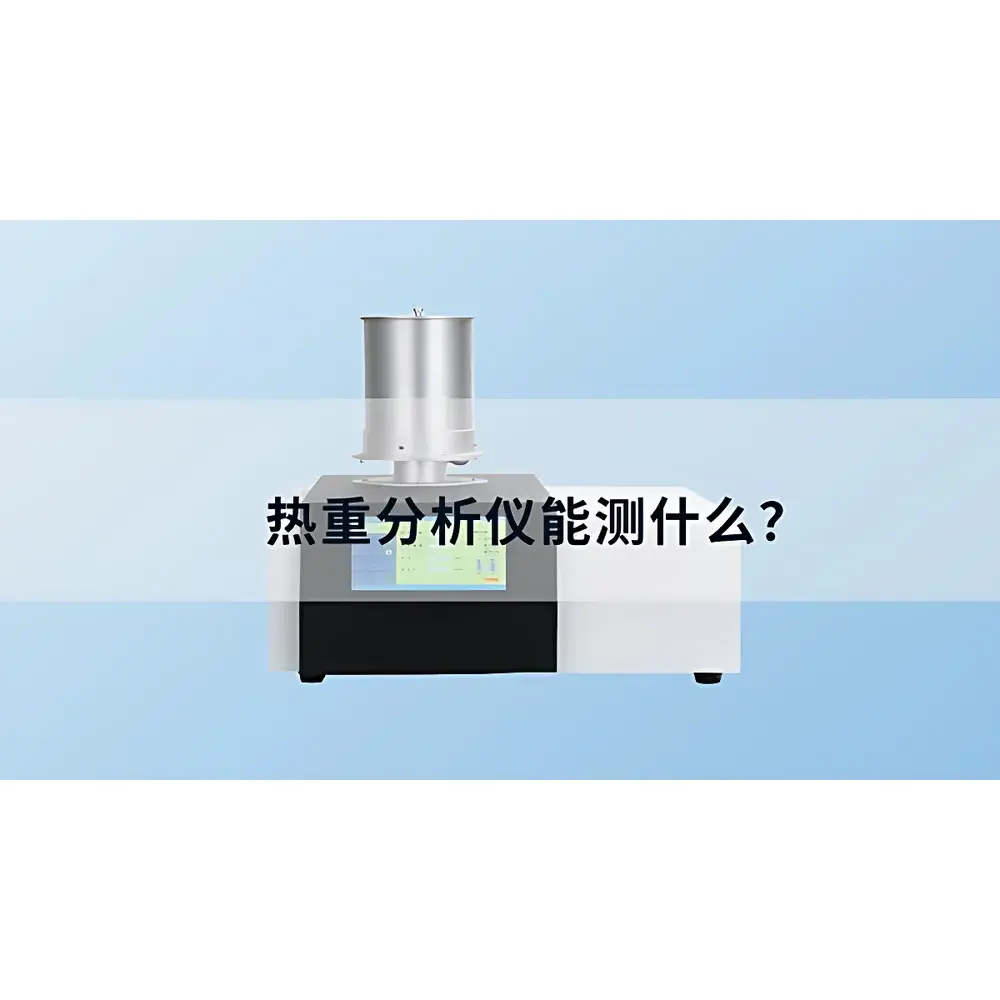
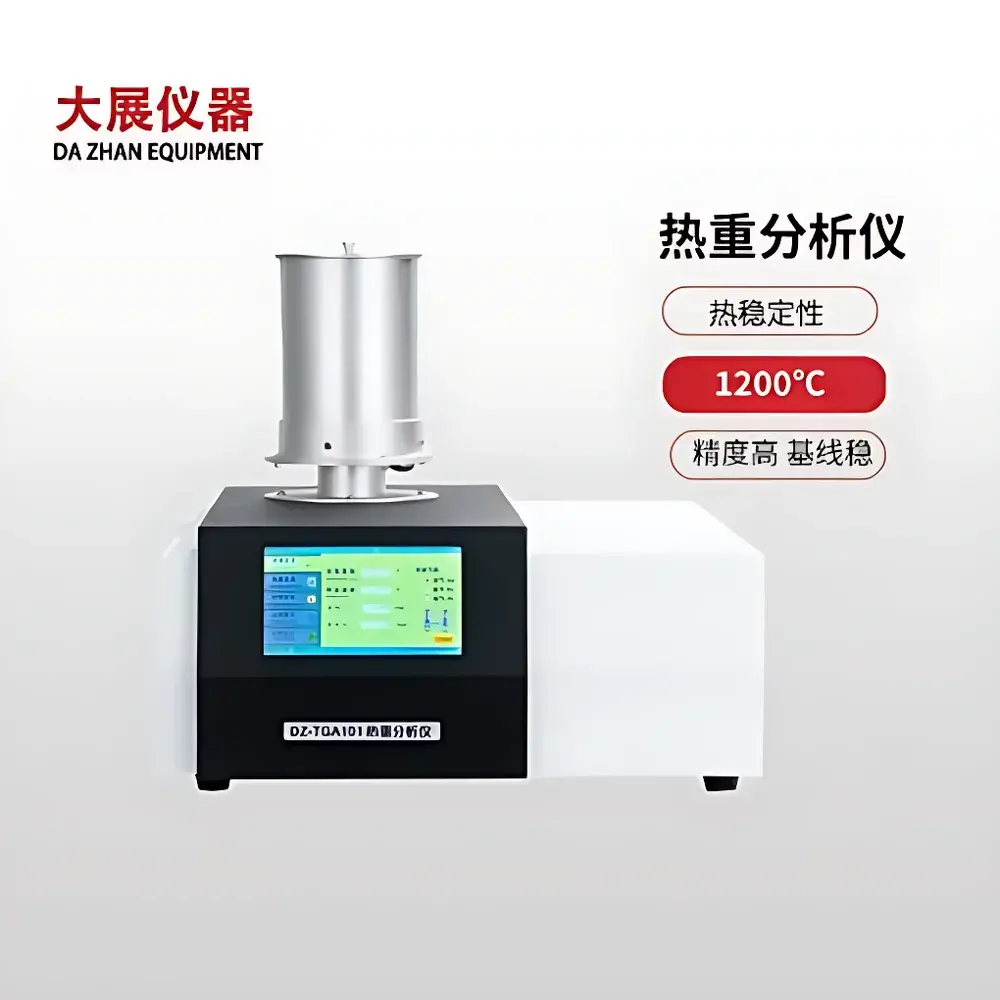
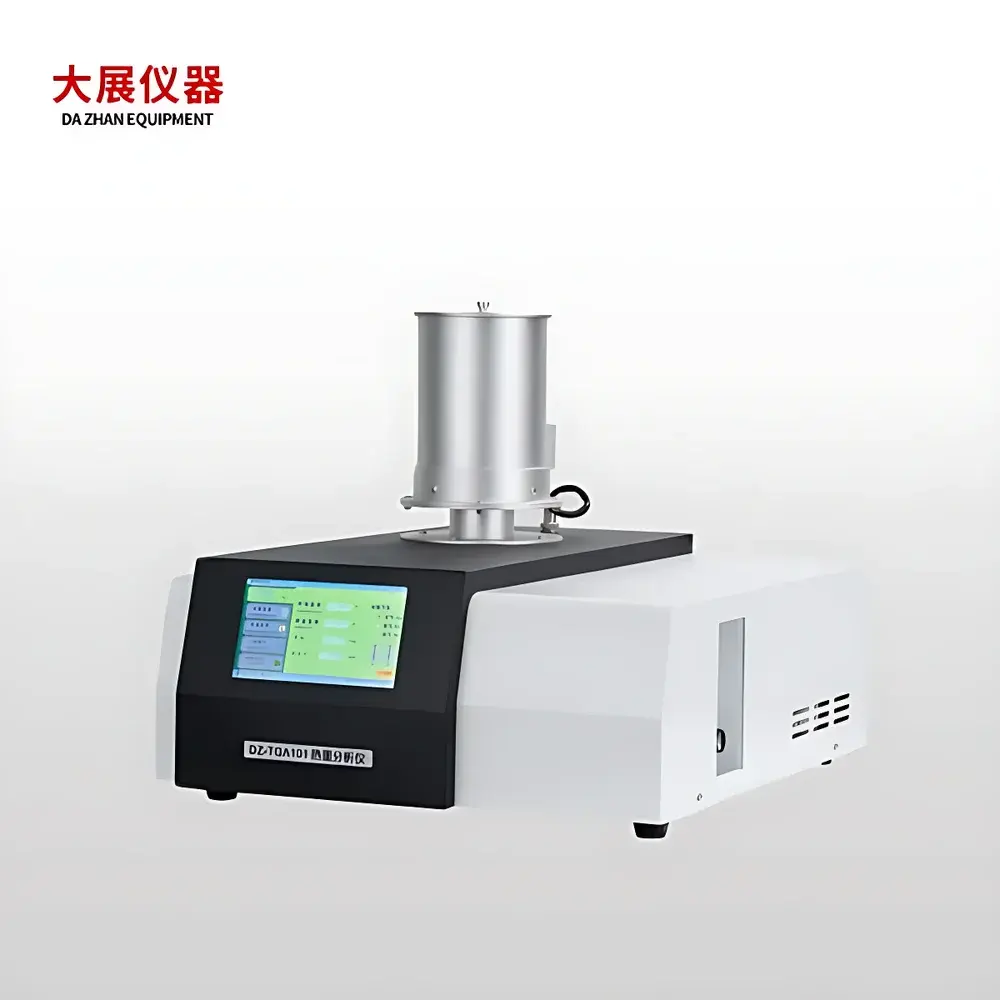
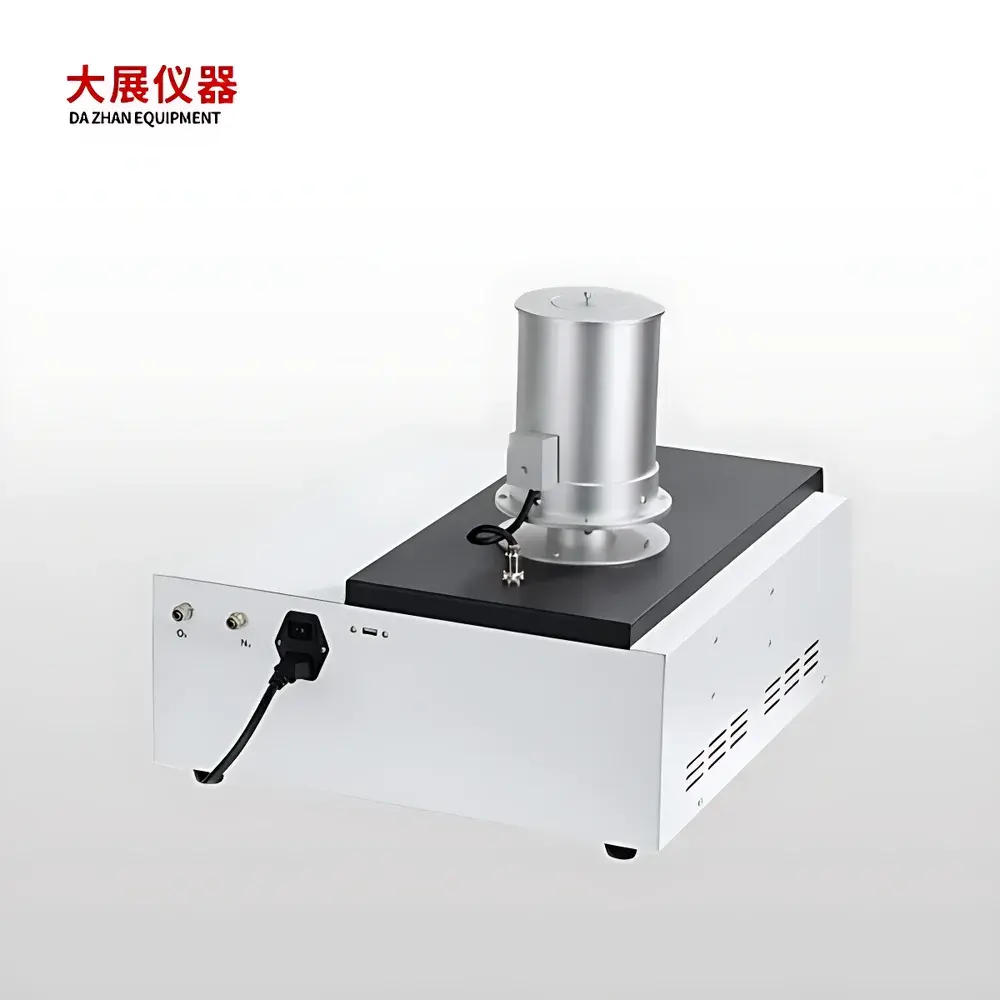
Nanjing Dazhan DZ-TGA101 High-Precision Thermogravimetric Analyzer
| Brand | Nanjing Dazhan |
|---|---|
| Origin | Jiangsu, China |
| Manufacturer Type | Manufacturer |
| Product Category | Domestic |
| Model | DZ-TGA101 |
| Temperature Range | Ambient to 1150 °C |
| Temperature Accuracy | ±0.01 °C |
| Temperature Resolution | 0.01 °C |
| Dynamic Weight Range | 0.01 mg to 3 g |
| Balance Sensitivity | 0.01 mg (up to 2 g), extendable to 30 g |
| Mass Accuracy | 0.01 mg |
| Heating/Cooling Rate | 0.1–100 °C/min |
| Maximum Sample Mass Capacity | 30 g |
| Baseline Drift | Negligible (<0.1 µg over 60 min at constant temperature) |
| Atmosphere Control | Dual-gas inlet with mass flow regulation (inert, oxidizing, reducing, static/dynamic) |
| Cooling Time | ≤15 min (1000 °C → 100 °C) |
| Isothermal Hold Duration | 0–500 min (extendable to 72 h) |
| Data Acquisition | 24-bit quadruple-channel ADC for TG, DTG, DSC (optional), and temperature signals |
| Controller Architecture | 32-bit ARM Cortex-M3 microcontroller + dedicated 8-bit MCU for water-cooling subsystem |
| Interface | USB 2.0 (bidirectional), touch-screen and PC remote control supported |
| Software | Integrated Windows-based analysis suite with ASTM/ISO-compliant reporting, multi-point temperature calibration, Excel/PDF export, GLP audit trail logging |
Overview
The Nanjing Dazhan DZ-TGA101 is a high-precision thermogravimetric analyzer engineered for rigorous thermal stability assessment and compositional quantification under controlled atmospheric conditions. Based on the fundamental principle of thermogravimetry—continuous monitoring of sample mass as a function of temperature or time under programmable heating, isothermal, or cooling profiles—the DZ-TGA101 delivers reproducible, traceable mass change data critical for materials qualification, decomposition kinetics modeling, and regulatory compliance testing. Its design centers on thermal isolation integrity, electromagnetic noise suppression, and long-term baseline stability—achieving negligible drift (<0.1 µg over 60 minutes at isothermal hold) through a dual-zone architecture: a water-jacketed main chassis isolates the microbalance and electronics from furnace radiative and conductive heat, while the upper-opening furnace assembly minimizes mechanical stress on the sample rod during loading. The instrument operates across an extended temperature range from ambient to 1150 °C, supporting both inert (e.g., N2, Ar) and reactive (e.g., O2, H2/Ar) atmospheres via integrated dual-mass-flow controllers, enabling full compliance with ASTM E1131, ISO 11358, and USP <41> thermal analysis guidelines.
Key Features
- High-stability microbalance system with 0.01 mg sensitivity and <0.01 mg accuracy across 0.01 mg–3 g dynamic range (extendable to 30 g with optional crucible configuration)
- Dual-zone thermal management: water-cooled mainframe housing + double-wound Ni-Cr alloy furnace with low-EMI heating elements for uniform temperature distribution and minimal thermal lag
- Modular furnace design—compatible with interchangeable furnace inserts for specialized applications (e.g., high-resolution low-temperature TGA, rapid-quench modules)
- Robust sensor architecture: corrosion-resistant Ni-Cr alloy sample holder and thermocouple sheath, rated for continuous operation up to 1150 °C in oxidative and reducing environments
- Real-time, synchronized acquisition of TG, DTG, and temperature signals via 24-bit quadruple-channel ADC—ensuring sub-millisecond temporal resolution and signal fidelity
- Embedded 7-inch 24-bit color touchscreen interface with intuitive navigation, on-device calibration (mass & temperature), and local data storage (SD card)
- Separate 8-bit microcontroller for closed-loop water circulation control—decoupling thermal management from measurement electronics to eliminate vibration and thermal crosstalk
Sample Compatibility & Compliance
The DZ-TGA101 accommodates standard ceramic, alumina, platinum, and aluminum crucibles (diameter: 5–10 mm), supporting solid powders, granules, films, and small monolithic specimens (max. 30 g total mass). Its dual-gas manifold enables precise switching between inert, oxidative, reductive, or static atmospheres—critical for oxidation onset temperature (OOT) determination per ASTM E2009, char yield evaluation in polymer composites (ISO 11358-1), and catalyst deactivation studies under simulated process conditions. All hardware and firmware comply with CE safety directives (2014/30/EU EMC, 2014/35/EU LVD); software includes configurable audit trails, electronic signatures, and data integrity safeguards aligned with FDA 21 CFR Part 11 and EU Annex 11 requirements for GMP/GLP-regulated laboratories.
Software & Data Management
The included TGA Analysis Suite is a Windows-native application supporting real-time instrument control, automated method sequencing, and post-run quantitative analysis—including derivative thermogravimetry (DTG), peak deconvolution, residual mass calculation, and kinetic parameter estimation (e.g., Arrhenius activation energy via Ozawa-Flynn-Wall method). Raw data are stored in vendor-neutral .csv and .tdms formats; reports export directly to Excel (.xlsx) and PDF with embedded metadata (operator ID, calibration timestamp, atmosphere log, instrument serial number). Multi-point temperature calibration (5–10 points across full range) ensures traceability to NIST-traceable reference standards. Firmware and software updates are delivered free-of-charge via secure HTTPS portal, with version-controlled changelogs and validation documentation available upon request.
Applications
- Thermal degradation profiling of polymers, elastomers, and bio-based materials (e.g., cellulose decomposition, PVC dehydrochlorination)
- Quantitative filler content analysis (e.g., CaCO3, SiO2, carbon black) in rubber and plastic compounds per ISO 9924
- Oxidative induction time (OIT) and oxidative onset temperature (OOT) testing of stabilizers in polyolefins
- Moisture, solvent, and volatile content determination in pharmaceutical APIs and excipients (USP <1251>)
- Decomposition stoichiometry and phase transition mapping in metal-organic frameworks (MOFs) and battery cathode materials
- In-situ reduction/oxidation behavior of heterogeneous catalysts (e.g., Ni/Al2O3, Fe2O3) under programmed gas switching
- Residue ash content and inorganic impurity quantification per ASTM D3174 and ISO 1171
FAQ
What is the maximum recommended sample mass for optimal resolution?
For highest mass resolution (0.01 mg), samples should be loaded within the 0.1–2 g range. Larger masses (up to 30 g) are supported with reduced sensitivity but retain full accuracy for high-mass industrial QA/QC applications.
Does the system support simultaneous DSC measurement?
The DZ-TGA101 is configured as a dedicated TGA platform. A hybrid DTA/TGA or DSC/TGA variant (DZ-TGA-DSC101) is available upon request, incorporating a separate differential thermocouple pair calibrated per ASTM E794.
How is temperature calibration verified across the full range?
The instrument supports multi-point calibration using certified reference materials (e.g., Ni, Cu, Al, KCl, CaC2O4·H2O) with automatic peak identification and deviation reporting against NIST SRM values.
Can the software generate 21 CFR Part 11-compliant audit trails?
Yes—audit trail settings include operator login/logout timestamps, parameter change logs, method execution history, and electronic signature capture with role-based access control.
What maintenance intervals are recommended for long-term baseline stability?
Furnace insulation inspection and balance zero-check every 6 months; ceramic crucible replacement after 50 high-temperature cycles (>800 °C); annual verification of gas flow calibration using certified bubble meters.



