
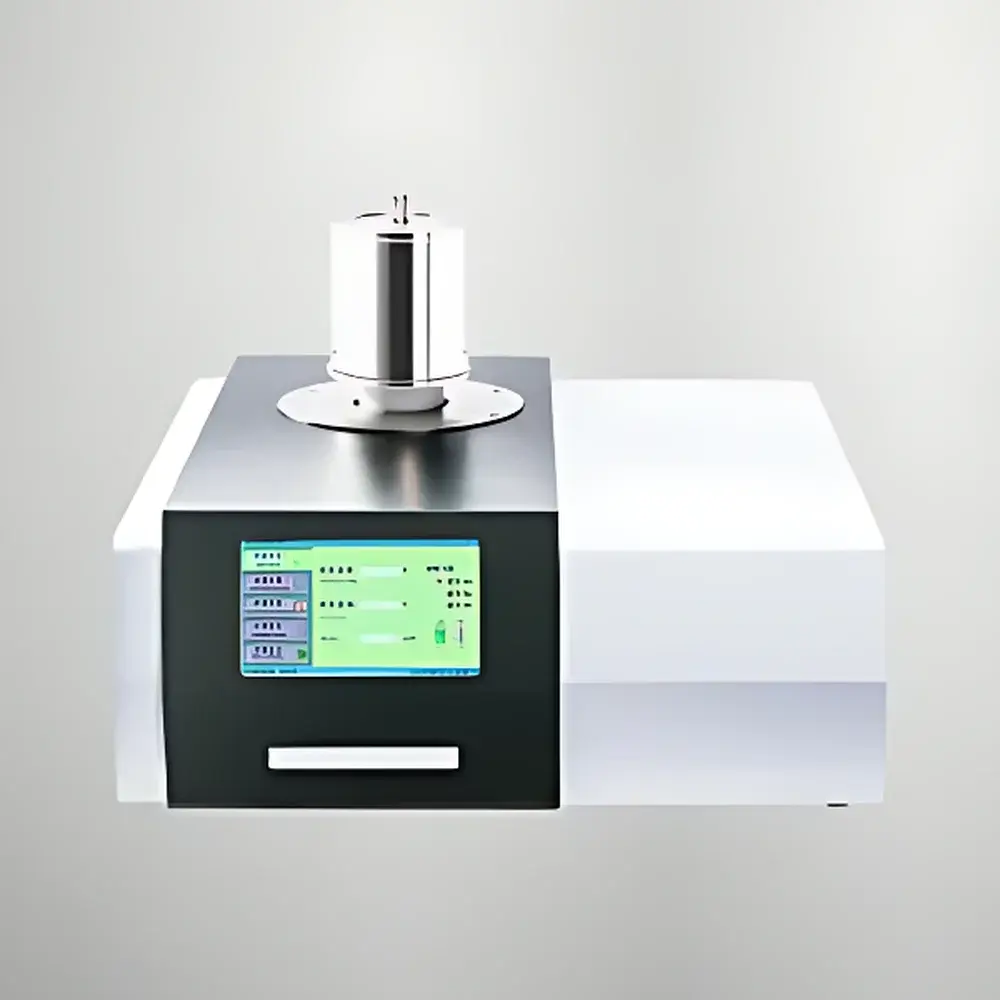
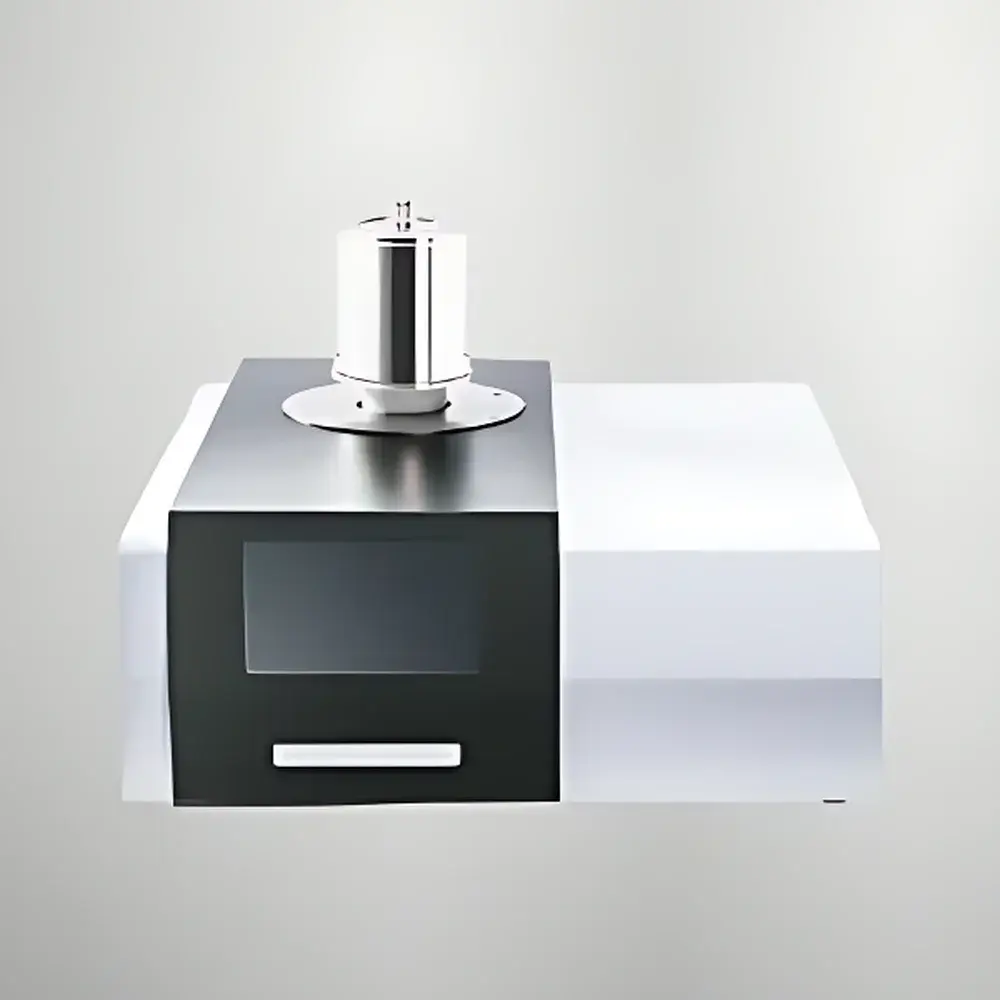
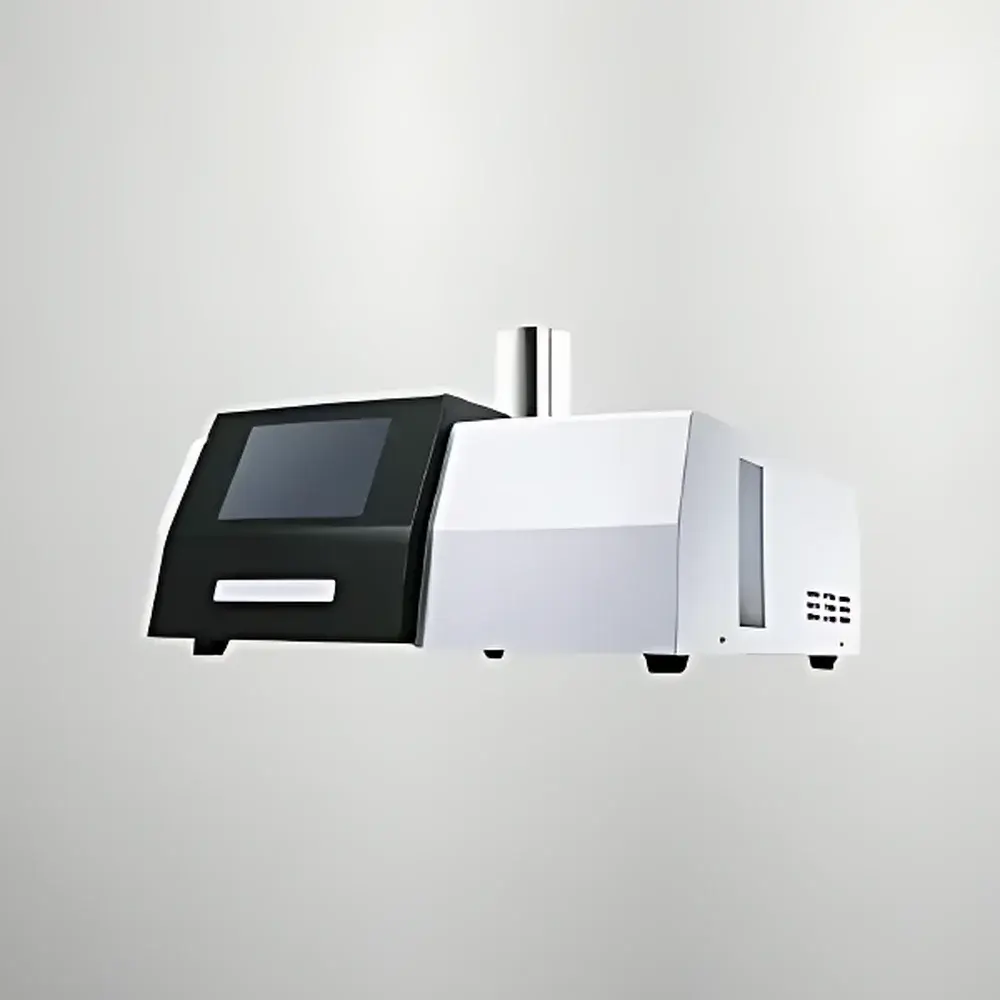
Nanjing Dazhan DT-3320C High-Temperature Differential Thermal Analyzer
| Brand | Nanjing Dazhan |
|---|---|
| Origin | Jiangsu, China |
| Manufacturer Type | Direct Manufacturer |
| Instrument Type | Differential Thermal Analyzer (DTA) |
| Model | DT-3320C |
| Temperature Range | Ambient to 1500 °C |
| Heating/Cooling Rate | 0.1–100 °C/min |
| DTA Signal Range | 0 to ±2000 µV |
| DTA Sensitivity | 0.01 µV |
| DTA Accuracy | 0.1 µV |
| Temperature Resolution | 0.01 °C |
| Temperature Accuracy | ±0.1 °C |
| Temperature Repeatability | ±0.1 °C |
| Sensor Material | Pt-Rh Alloy |
| Interface | USB 2.0 Bidirectional |
| Display | 7-inch 24-bit Color LCD Touchscreen |
| Furnace Design | Top-Lifting Lid Configuration |
| Atmosphere Control | Programmable Internal Gas Switching |
| Power Supply | AC 220 V, 50 Hz (customizable) |
Overview
The Nanjing Dazhan DT-3320C High-Temperature Differential Thermal Analyzer is a precision instrument engineered for quantitative thermal event detection under controlled temperature programs. Based on the fundamental principle of differential thermal analysis (DTA), the system continuously measures the temperature difference (ΔT) between a sample and an inert reference material as both are subjected to identical, programmable thermal profiles. Unlike calorimetric techniques that quantify heat flow directly, DTA detects exothermic or endothermic transitions—such as phase transformations, polymorphic transitions, crystallization, melting, decomposition, oxidation, reduction, or dehydration—as deviations in ΔT versus temperature or time. The DT-3320C is specifically designed for high-temperature applications up to 1500 °C, enabling robust characterization of refractory metals, ceramics, advanced composites, and inorganic oxides where conventional DSC systems reach operational limits.
Key Features
- High-stability Pt-Rh alloy thermocouple sensor pair ensures long-term signal integrity, thermal shock resistance, and corrosion resilience across oxidizing, inert, and mildly reducing atmospheres.
- Top-lifting furnace architecture eliminates vertical alignment drift and mechanical hysteresis associated with traditional lift-type furnaces—enhancing baseline stability and positional reproducibility.
- STM32-based embedded control system delivers deterministic real-time temperature regulation, supporting complex multi-segment heating/cooling/holding programs with sub-second response fidelity.
- USB 2.0 bidirectional interface enables seamless integration with Windows-based acquisition software, supporting synchronized data logging, remote parameter adjustment, and firmware updates without external adapters.
- 7-inch 24-bit color touchscreen provides intuitive graphical navigation, real-time curve overlay, and on-device baseline correction—reducing dependency on external PCs during routine calibration or method development.
- Programmable internal gas switching supports automated atmosphere transitions (e.g., N₂ → air → Ar) within a single run, critical for evaluating oxidation kinetics or redox-sensitive materials under stepwise reactive environments.
Sample Compatibility & Compliance
The DT-3320C accommodates standard alumina or platinum crucibles (up to 100 µL volume) and accepts solid powders, sintered pellets, thin foils, and granular ceramics. Its high-temperature capability aligns with ASTM E1131 (Standard Test Method for Compositional Analysis by Thermogravimetry), ISO 11357-1 (Plastics — Differential Scanning Calorimetry — Part 1: General Principles), and relevant sections of USP (Thermal Analysis). While classified as a DTA—not DSC—the instrument meets GLP documentation requirements through audit-trail-enabled software, electronic signature support, and calibrated reference standards (e.g., high-purity Al, Ni, and Zn) included with each unit. All temperature calibrations adhere to NIST-traceable protocols, and the ±0.1 °C accuracy is verified per IEC 60751 (Industrial Platinum Resistance Thermometers) and ASTM E77 (Standard Test Method for Inspection and Verification of Thermometers).
Software & Data Management
Bundled acquisition and analysis software provides full compliance with FDA 21 CFR Part 11 requirements—including user access controls, electronic signatures, audit trail logging, and immutable raw data storage in .dtax binary format. Key functions include automatic peak identification (onset, peak, offset), enthalpy estimation via area integration (with user-defined baselines), multi-curve comparison, derivative (dΔT/dT) plotting, and export to CSV, PDF, or Origin-compatible formats. Baseline subtraction routines accommodate both linear and polynomial fitting, while one-click calibration uses certified reference materials to correct for instrumental drift across the full 0–1500 °C range. Data files embed metadata such as operator ID, method name, atmospheric conditions, and hardware version—ensuring full traceability for QA/QC reporting and regulatory submissions.
Applications
- Characterization of high-temperature phase transitions in aerospace superalloys (e.g., γ’ → γ + δ in Ni-base alloys).
- Decomposition kinetics of metal oxides (e.g., Co₃O₄ → CoO → Co) under controlled O₂ partial pressures.
- Sintering behavior and densification onset in ceramic green bodies (Al₂O₃, SiC, ZrO₂).
- Thermal stability assessment of nuclear fuel matrix materials (UO₂, ThO₂) and cladding candidates (SiCf/SiC).
- Polymorph screening of pharmaceutical intermediates above 300 °C, where conventional DSC sensitivity degrades.
- Qualitative identification of reaction pathways in metallurgical slags and refractory linings used in electric arc furnaces.
FAQ
What distinguishes DTA from DSC in high-temperature applications?
DTA measures the temperature difference between sample and reference under identical thermal programs, making it inherently more stable at extreme temperatures (>1000 °C) where absolute heat-flow calibration becomes challenging. DSC requires precise thermal resistance modeling and is more sensitive to furnace asymmetry—limiting its upper operating range in many commercial systems.
Can the DT-3320C operate under vacuum or hydrogen atmospheres?
The standard configuration supports inert (N₂, Ar) and oxidizing (air, O₂) gases via solenoid-valve-controlled inlet lines. Vacuum operation (<10⁻² mbar) and H₂ compatibility require optional quartz-lined furnace housing and leak-tested gas manifolds—available as factory-installed upgrades.
Is third-party software integration supported?
Yes—raw data streams are accessible via documented DLL APIs and ASCII export modes, enabling direct import into MATLAB, Python (NumPy/Pandas), or LabVIEW environments for custom kinetic modeling or machine learning workflows.
How often must temperature calibration be performed?
Initial calibration is required upon installation and after any major maintenance. For GLP-compliant labs, quarterly verification using certified reference materials (Al, Ni, Zn) is recommended; daily baseline checks are sufficient for routine industrial QC.
Does the system meet CE or UL safety certification?
The DT-3320C carries CE marking per EU Machinery Directive 2006/42/EC and Low Voltage Directive 2014/35/EU. UL 61010-1 certification is available upon request for North American deployment.



