
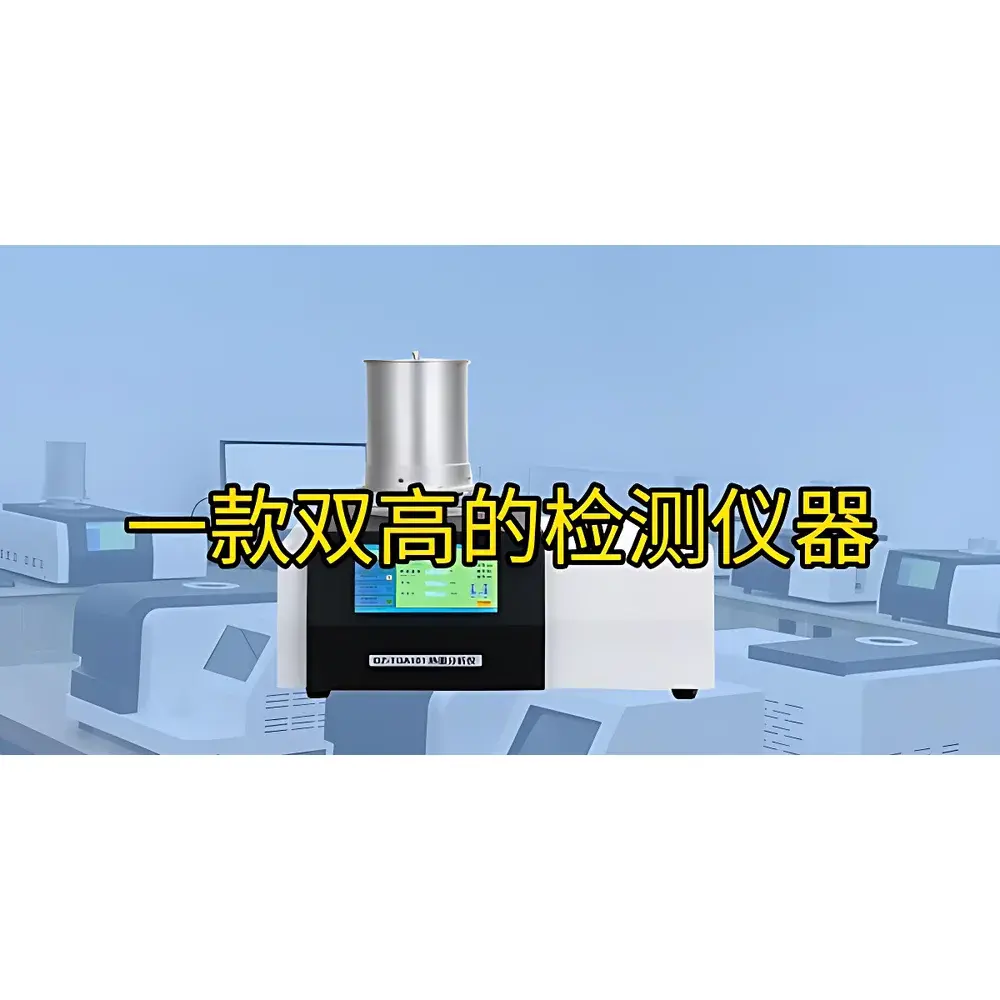
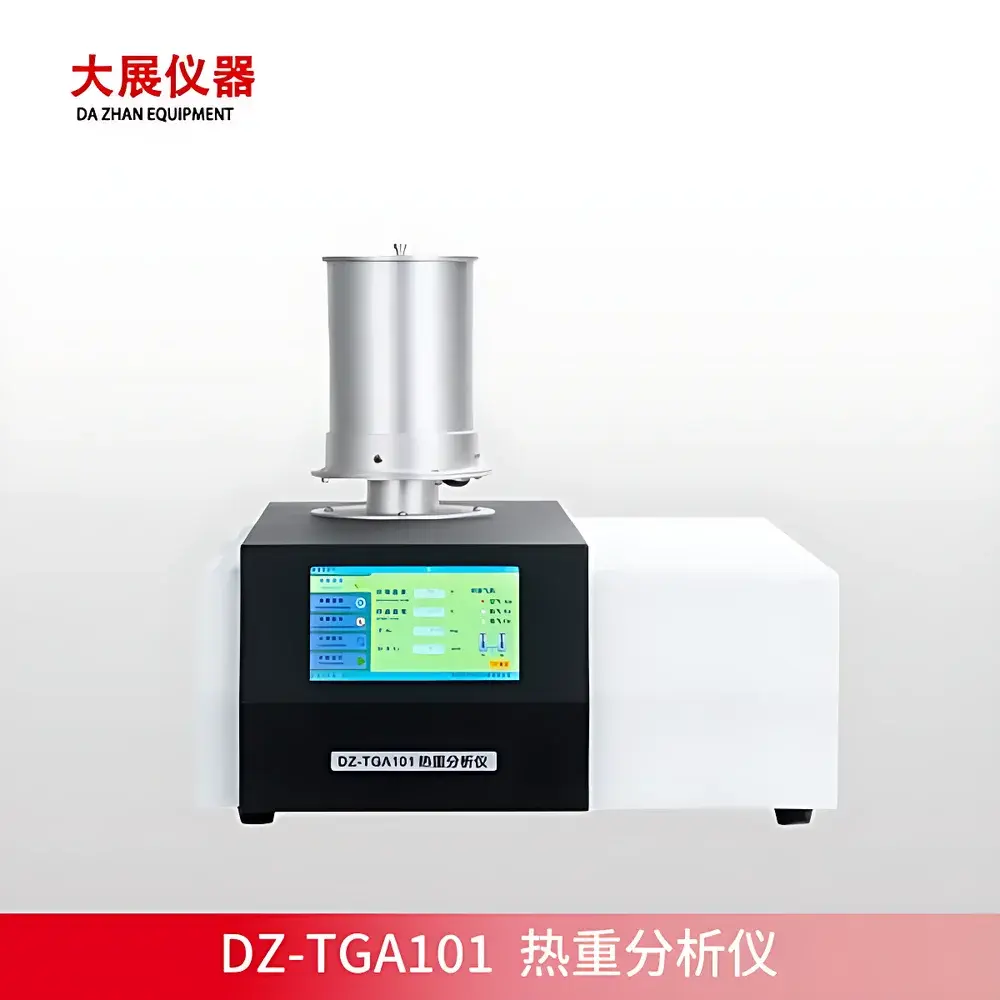
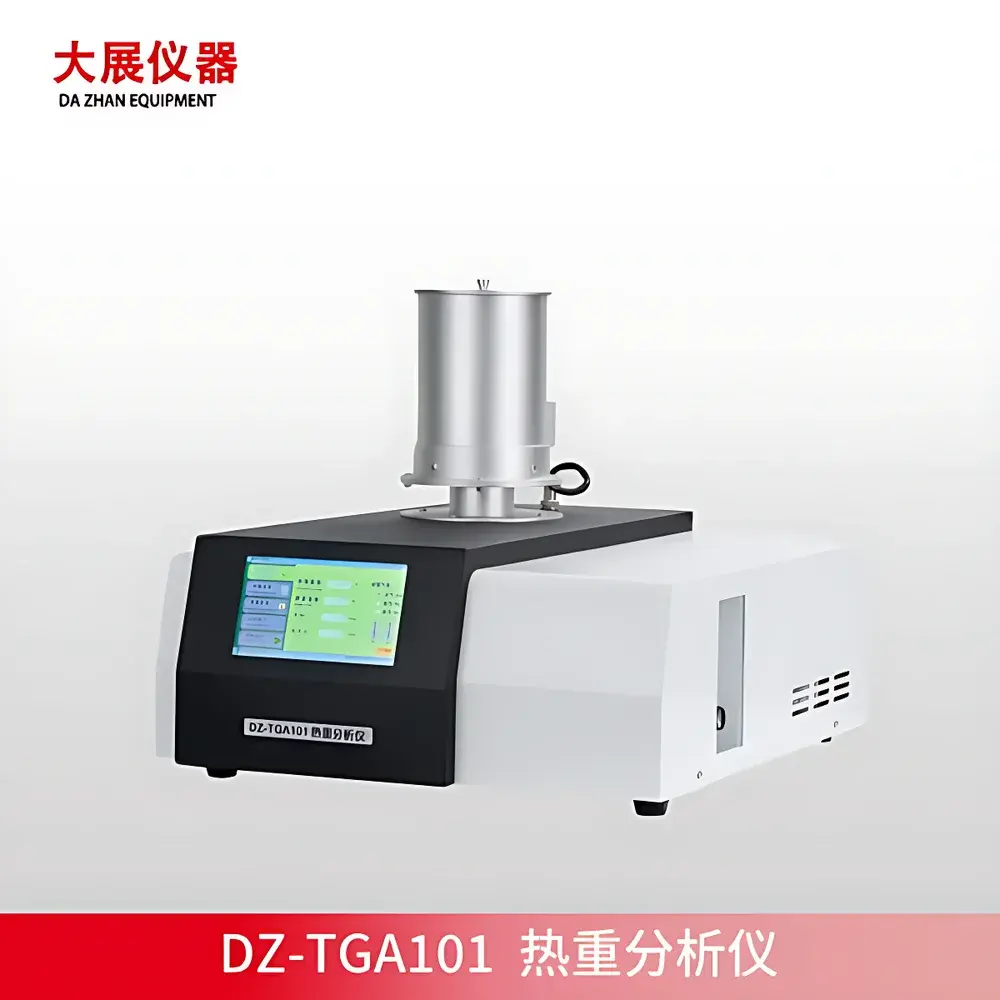
Nanjing Dazhan DZ-TGA101 Thermogravimetric Analyzer
| Brand | Nanjing Dazhan |
|---|---|
| Origin | Jiangsu, China |
| Manufacturer Type | Manufacturer |
| Origin Category | Domestic |
| Model | DZ-TGA101 |
| Testing Environment | Ambient Pressure |
| Sample Capacity | Single Sample |
| Instrument Type | General-Purpose |
| Temperature Range | Room Temperature to 1200 °C |
| Temperature Resolution | 0.01 °C |
| Temperature Accuracy | ±0.01 °C |
| Dynamic Weighing Range | 0.01 mg to 3 g |
| Heating/Cooling Rate | 0.1–100 °C/min |
| Maximum Sample Mass | 30 g |
Overview
The Nanjing Dazhan DZ-TGA101 Thermogravimetric Analyzer is a precision-engineered instrument designed for quantitative measurement of mass change in solid or liquid samples as a function of temperature or time under controlled atmospheric conditions. Operating on the fundamental principle of thermogravimetry (TGA), the system continuously monitors sample mass during programmed thermal cycles—ramp, hold, or cooling—enabling rigorous characterization of thermal stability, decomposition kinetics, moisture/volatile content, filler loading, oxidation behavior, and compositional heterogeneity. The DZ-TGA101 integrates a high-stability microbalance with a dual-row wound noble alloy (Ni-Cr) furnace, optimized for minimal thermal lag and exceptional baseline reproducibility across its full 25 °C to 1200 °C operational range. Its modular architecture supports seamless adaptation to diverse regulatory and research environments, including R&D laboratories, quality control departments, and academic thermal analysis facilities.
Key Features
- High-precision dual-wound Ni-Cr furnace with uniform heating profile and enhanced thermal inertia control, delivering stable temperature ramping and reduced thermal overshoot.
- Custom-engineered high-temperature crucible support rod and platinum-group alloy sensor assembly, resistant to oxidation and corrosion up to 1200 °C.
- Physically isolated power supply and forced-air cooling module—decoupled from the main chassis—to eliminate electromagnetic interference and mechanical vibration transmission to the microbalance.
- Top-opening furnace design with vertical lift mechanism, enabling safe, ergonomic sample loading without risk of probe misalignment or sensor damage.
- Water-jacketed thermal isolation housing surrounding the balance chamber, actively suppressing conductive heat transfer from the furnace to the weighing system.
- Modular furnace configuration: interchangeable furnace inserts available upon request for specialized applications (e.g., high-sensitivity low-mass mode, corrosive gas compatibility).
- Integrated dual-gas manifold with digital mass flow controllers (MFCs), supporting programmable switching between inert (N₂, Ar), oxidative (air, O₂), reductive (H₂, forming gas), static, or dynamic purge atmospheres.
Sample Compatibility & Compliance
The DZ-TGA101 accommodates standard ceramic, alumina, and aluminum crucibles (including hermetic variants), with optional platinum or quartz crucibles for elevated chemical resistance. It supports routine analysis of polymers, elastomers, pharmaceutical excipients and APIs, catalysts, metal oxides, carbon blacks, composites, and inorganic fillers. The instrument complies with core thermal analysis standards including ASTM E1131, ISO 11358, and USP <467> for residual solvent quantification. Data acquisition and reporting workflows are structured to support GLP/GMP environments: audit-trail-enabled software logging, user-access controls, electronic signatures (via optional validation package), and full traceability of calibration events—including multi-point temperature and mass calibration routines embedded in firmware.
Software & Data Management
The proprietary TGAControl software provides real-time visualization of TG and derivative thermogravimetric (DTG) curves, with synchronized temperature, mass, and gas flow data streams. Users may perform baseline correction, peak integration, onset/offset temperature determination, kinetic modeling (e.g., Flynn-Wall-Ozawa, Kissinger), and multi-step decomposition fitting. Export functions include native .tdf format, CSV, Excel-compatible .xlsx, and publication-ready PDF reports with customizable metadata fields (operator ID, sample ID, method name, instrument serial number). All data files are timestamped and digitally signed. USB 2.0 interface enables secure offline data transfer; software updates are distributed free-of-charge via encrypted download portal. Temperature calibration routines support ≥5-point verification across the full range (25–1200 °C), with automatic compensation applied during runtime.
Applications
- Determination of polymer degradation onset, char yield, and filler content in composites per ASTM D3850 and ISO 11358-1.
- Quantification of moisture, solvents, and volatile organic compounds (VOCs) in pharmaceutical powders and coatings (USP <467>, ICH Q5C).
- Thermal stability assessment of battery cathode/anode materials under air or argon, including decomposition enthalpy estimation via coupling with DSC modules.
- Carbon black content analysis in rubber compounds per ASTM D1604 and ISO 6964.
- Decomposition pathway mapping of metal-organic frameworks (MOFs) and hybrid perovskites under controlled reducing atmospheres.
- Residue ash analysis in catalysts and ceramic precursors, with gravimetric accuracy validated against certified reference materials (CRMs).
FAQ
What is the minimum detectable mass change?
The system achieves a resolution of 0.01 mg under standard operating conditions, with optional extended-range configurations supporting up to 30 g maximum sample load while maintaining sub-0.1 mg repeatability.
Can the instrument operate under vacuum or high-pressure conditions?
The base configuration is rated for ambient pressure operation with dual-gas purge capability. Vacuum or high-pressure adaptations require custom furnace sealing and pressure-rated gas manifolds—available as OEM-engineered options.
Is the software compliant with FDA 21 CFR Part 11 requirements?
Out-of-the-box functionality meets ALCOA+ principles. Full 21 CFR Part 11 compliance—including electronic signatures, role-based access, and audit trail generation—is achievable with validated installation, IQ/OQ documentation, and optional GxP software module.
How long does it take to cool from 1000 °C to 100 °C?
Using the integrated forced-air cooling system, the typical cooldown time is ≤15 minutes, verified per ISO 11358-2 Annex B test protocol.
Are calibration certificates provided with the instrument?
Yes—each unit ships with NIST-traceable temperature and mass calibration certificates, accompanied by as-found/as-left data from factory verification testing.



