
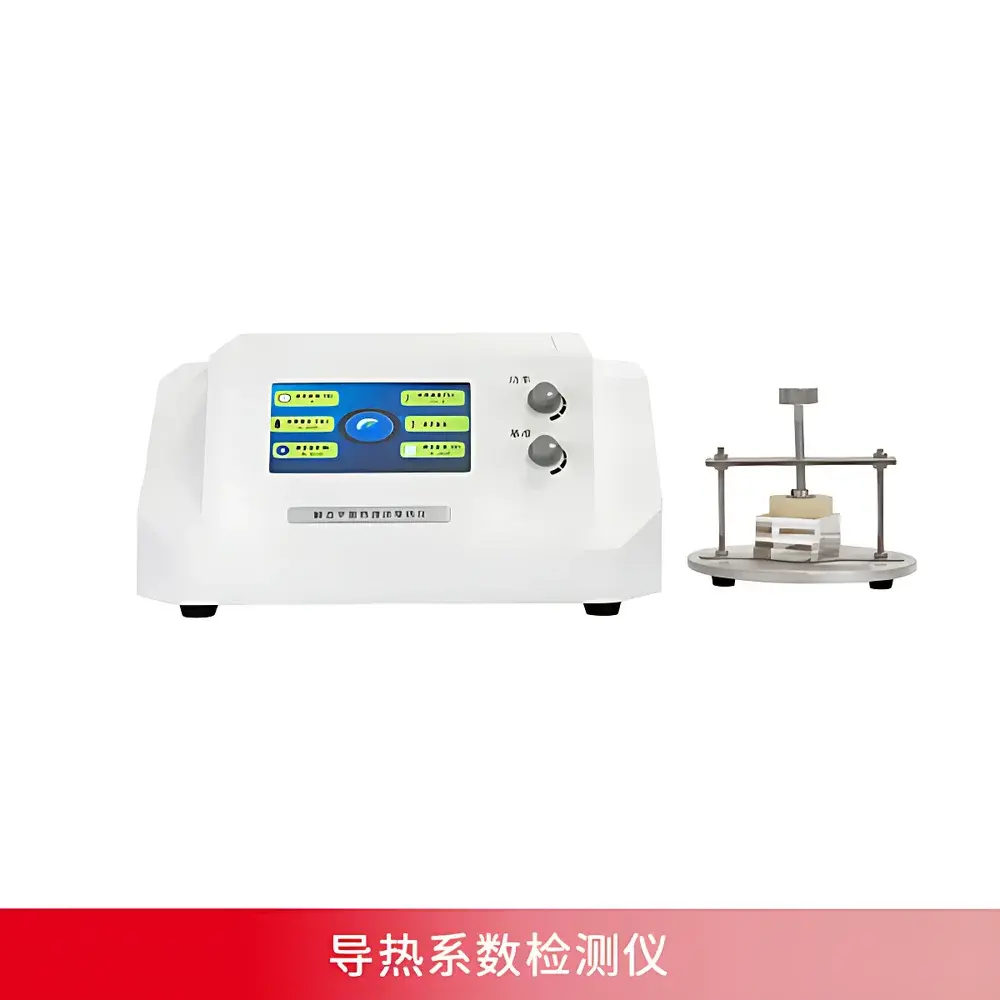
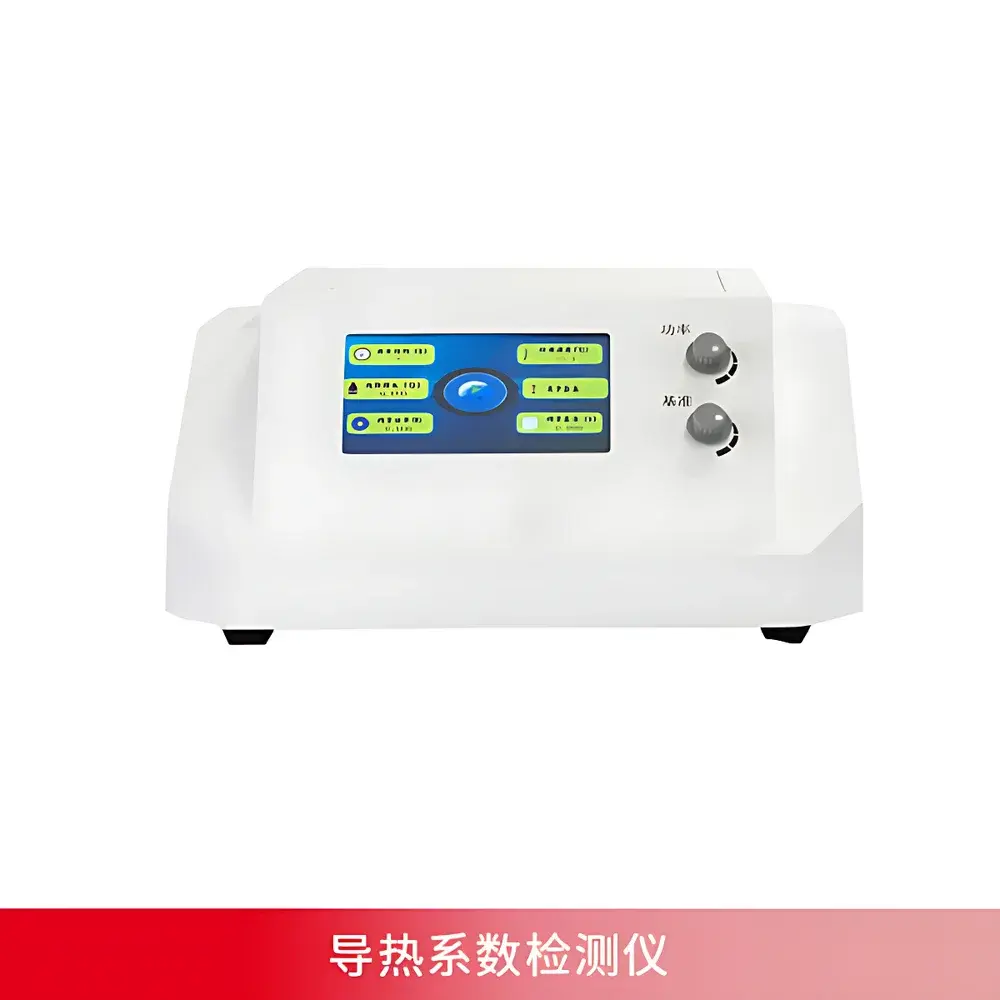
Nanjing Dazhan DZDR-S Transient Plane Source (TPS) Thermal Conductivity Analyzer
| Brand | Nanjing Dazhan |
|---|---|
| Origin | Jiangsu, China |
| Manufacturer Type | Direct Manufacturer |
| Instrument Type | Transient Plane Source (TPS) Method |
| Sample Capacity | Single sample per test |
| Test Environment | Ambient temperature (20–30 °C) |
| Thermal Conductivity Range | 0.0001–300 W/(m·K) |
| Accuracy | ±3% |
| Repeatability | ≤3% |
| Sample Forms | Solids (bulk, film, coating), powders, liquids, pastes, gels, metals, and insulating materials |
| Probe Options | 7.5 mm, 15 mm, and 50 mm diameter (standard) |
| Sample Dimensions (min.) | 15×15×3.75 mm (for 7.5 mm probe), 30×30×7.5 mm (for 15 mm probe), 50×50×7.5 mm (for 50 mm probe) |
| Measurement Duration | 5–160 s (user-configurable) |
| Power Supply | AC 220 V, <500 W |
| Data Acquisition | High-resolution imported ADC chip |
| Control System | ARM-based microprocessor architecture |
Overview
The Nanjing Dazhan DZDR-S Thermal Conductivity Analyzer is a precision instrument engineered for direct, non-destructive measurement of thermal conductivity using the Transient Plane Source (TPS) method—a well-established, ISO/ASTM-aligned technique for determining thermal transport properties in heterogeneous and anisotropic materials. Unlike steady-state or guarded-hot-plate methods, TPS applies a short-duration, low-energy pulse to a thin, double-helix sensor embedded between two identical sample halves (or placed on a single thick sample). The sensor acts simultaneously as both heat source and resistance thermometer; its time-dependent voltage response during heating and cooling is modeled using analytical solutions to the heat diffusion equation in Cartesian coordinates. This enables calculation of thermal conductivity (λ), thermal diffusivity (α), and volumetric heat capacity (ρcp) from a single transient measurement—without requiring thermal equilibrium or extensive calibration against reference standards.
Key Features
- Direct, contact-based measurement with no requirement for thermal interface materials—eliminating contact resistance artifacts common in comparative or steady-state methods.
- Configurable test duration (5–160 seconds), enabling rapid screening of production batches while preserving high resolution for R&D-grade characterization.
- Triple-probe modular design (7.5 mm, 15 mm, 50 mm diameters) optimized for diverse sample geometries—from thin films and coatings to bulk insulation and metallic alloys—each with validated minimum dimensional requirements.
- Non-destructive operation: samples remain structurally intact post-test and may be reused across multiple measurements or subjected to complementary analyses (e.g., SEM, XRD).
- ARM-based embedded control system ensures deterministic real-time data acquisition, low-latency signal processing, and robust handling of thermally induced noise during transient excitation.
- High-fidelity analog front-end featuring imported high-resolution ADC chips (≥24-bit effective resolution) for precise digitization of millivolt-level resistance changes in the spiral sensor.
- Intuitive mechanical stage accommodates variable sample thicknesses without recalibration; alignment guides and pressure-adjustable clamping ensure consistent sensor-sample thermal coupling.
Sample Compatibility & Compliance
The DZDR-S supports a broad spectrum of material classes under ambient laboratory conditions (20–30 °C), including rigid and flexible solids (polymers, ceramics, composites, metals), low-viscosity and viscoelastic liquids, granular powders (with optional containment vessel), aerogels, foams, pastes, and thin-film coatings (≥50 µm). Its TPS methodology complies with the physical principles outlined in ISO 22007-2 and ASTM D5930, and aligns with the theoretical framework of the Hot Disk method—a widely accepted benchmark in thermal property metrology. While not certified for GLP/GMP environments out-of-the-box, the system’s deterministic measurement sequence, full audit trail capability (via exported raw time-resistance datasets), and traceable probe geometry support validation protocols required for regulated quality control workflows, including those governed by FDA 21 CFR Part 11 when integrated with compliant LIMS software.
Software & Data Management
Instrument control, real-time visualization, and post-processing are handled via Windows-compatible software featuring a modular GUI. Raw sensor resistance vs. time data is streamed at ≥1 kHz sampling rate and stored in open-format ASCII (.txt) or HDF5 files for third-party analysis. Built-in algorithms implement the standard TPS solution for isotropic homogeneous media, with optional corrections for interfacial resistance and finite-sample-thickness effects. Calibration-free operation relies on absolute geometric parameters (probe radius, thickness, resistivity) pre-programmed into firmware. All measurement parameters—including pulse duration, gain settings, and probe ID—are automatically logged alongside results. Export options include CSV reports with metadata (date/time, operator ID, sample ID, probe type, ambient T), supporting integration into enterprise QA/QC databases.
Applications
- Thermal interface material (TIM) qualification for electronics packaging and battery module thermal management.
- Quality assurance of polymer composites, carbon-fiber laminates, and ceramic matrix materials in aerospace and automotive supply chains.
- R&D of phase-change materials (PCMs), aerogel blankets, and vacuum-insulated panels where low-λ (<0.03 W/(m·K)) accuracy is critical.
- Characterization of nanofluids, colloidal suspensions, and conductive inks used in printed electronics and additive manufacturing.
- Validation of thermal models in multiphysics simulation platforms (e.g., COMSOL, ANSYS Fluent) through experimentally derived λ(θ) inputs.
- Teaching laboratories demonstrating Fourier’s law, transient heat conduction, and the relationship between λ, α, and ρcp.
FAQ
What is the minimum sample thickness required for accurate measurement?
For reliable one-sided testing (single-sample configuration), thickness should exceed three times the probe radius. For example, the 15 mm probe requires ≥7.5 mm thickness; thinner samples must be tested in sandwich mode with two identical pieces.
Can the instrument measure anisotropic materials such as graphite or fiber-reinforced composites?
Yes—by orienting the probe parallel or perpendicular to the principal axis and comparing results, directional thermal conductivity can be inferred. However, quantitative anisotropy modeling requires multi-directional testing and custom post-processing.
Is temperature-controlled testing possible?
The base DZDR-S operates at ambient temperature only. Optional environmental chambers (−20 °C to +130 °C) are available as add-on modules with external temperature feedback integration.
How is probe calibration performed?
Probes are factory-characterized using NIST-traceable reference materials (e.g., Pyroceram 9606, copper). No user recalibration is needed; geometric and electrical parameters are stored in onboard memory and automatically loaded upon probe detection.
Does the software support automated batch testing?
Yes—the software includes scriptable test sequences with configurable pass/fail criteria, auto-naming conventions, and scheduled report generation for unattended operation over extended periods.
Related Products



