
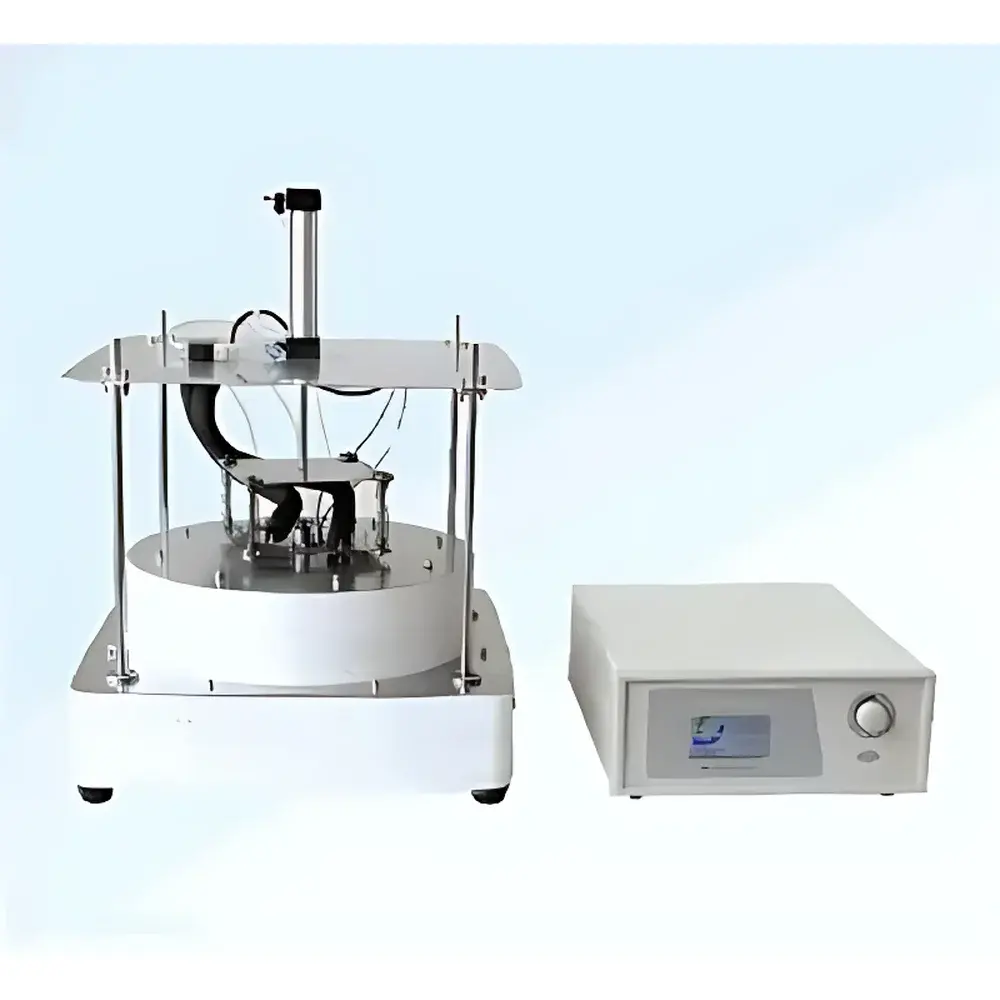
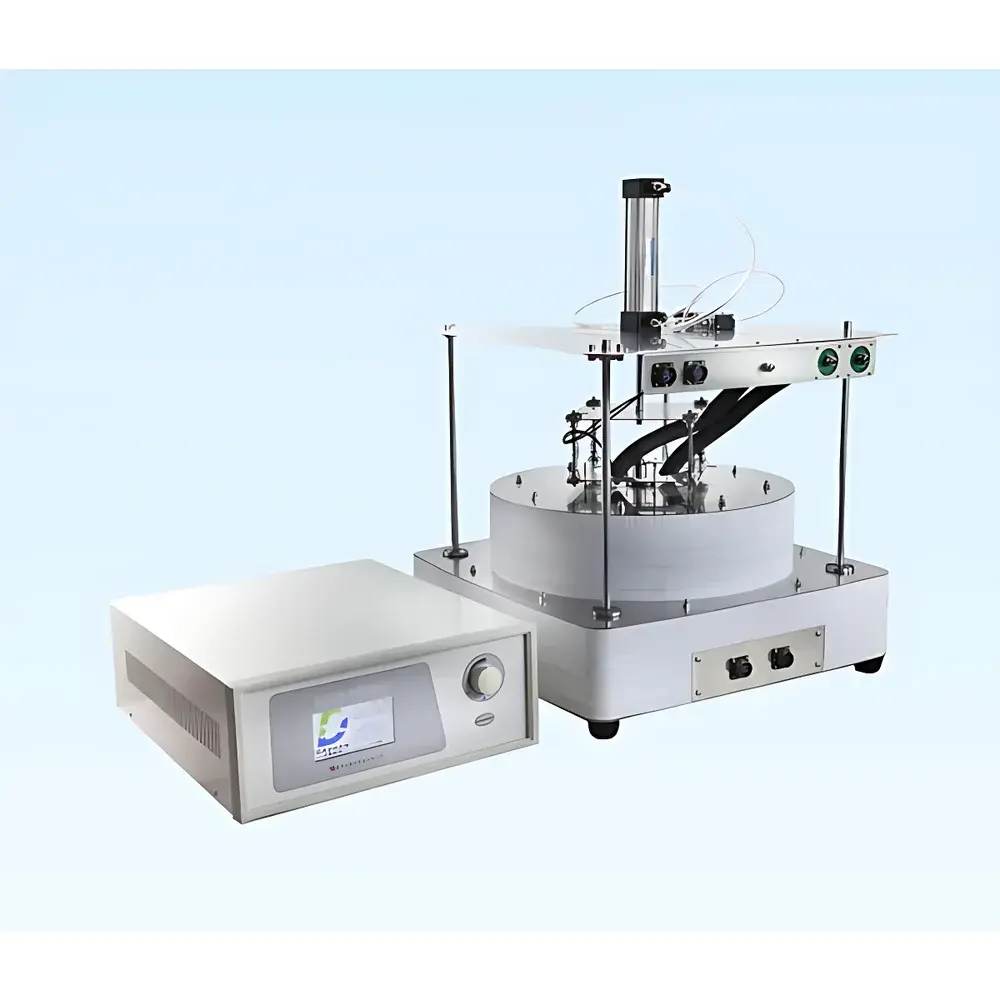
Nanjing Dazhan DZDR-R Thermal Conductivity Analyzer (Heat Flow Method, Ambient Temperature)
| Brand | Nanjing Dazhan |
|---|---|
| Origin | Jiangsu, China |
| Manufacturer Type | Direct Manufacturer |
| Instrument Type | Heat Flow Method |
| Model | DZDR-R |
| Dimensions (L×W×H) | 220 × 270 × 600 mm |
| Accuracy | Better than ±3% |
| Thermal Conductivity Range | 0.015–10 W/m·K |
| Repeatability | ≤3% |
| Sample Size | 100 mm × 100 mm |
| Sample Thickness | 2–15 mm |
| Operating Temperature Range | Ambient to 80 °C |
| Power Supply | 220 V / 50 Hz |
| Compliance Standards | MIL-I-49456A, GB 5598–1985, ASTM D5470–95 |
Overview
The Nanjing Dazhan DZDR-R Thermal Conductivity Analyzer is a precision heat flow meter (HFM) system engineered for steady-state measurement of thermal conductivity in low-to-moderate conductivity solid materials. Based on the guarded hot plate principle adapted for thin specimens, it applies a controlled temperature gradient across a flat, homogeneous sample sandwiched between two parallel plates—one heated and one actively cooled—while measuring the resulting heat flux via calibrated thermopiles. This method conforms to the fundamental definition of thermal conductivity (k = q·δ/ΔT), where q is heat flux, δ is sample thickness, and ΔT is the measured temperature differential. Designed specifically for ambient-temperature operation (up to 80 °C), the DZDR-R delivers high reproducibility for insulating and moderately conductive solids commonly encountered in electronics packaging, ceramic substrate development, and polymer thermal interface material (TIM) qualification.
Key Features
- Optimized heat flow architecture with dual-sensor thermopile detection for direct flux measurement and minimized edge-loss error
- Computer-controlled temperature regulation with PID feedback loops ensuring stable ΔT within ±0.1 °C during test cycles
- Guarded heating zone design compliant with ASTM C1113 and ISO 8301 principles to suppress lateral heat leakage
- Automated test sequencing including thermal equilibration monitoring, data acquisition at user-defined intervals, and real-time k-value calculation
- Rigid aluminum frame with precision-machined parallel platens (flatness ≤5 µm) to ensure uniform contact pressure and minimize interfacial thermal resistance
- Integrated calibration routine traceable to NIST-certified reference materials (e.g., SRM 1450c Fiberglass Board)
Sample Compatibility & Compliance
The DZDR-R is validated for flat, rigid, isotropic solids with thicknesses between 2 mm and 15 mm and planar dimensions up to 100 mm × 100 mm. Typical applications include alumina (Al2O3) and beryllium oxide (BeO) ceramics, silicone-based thermal interface pads, epoxy-filled composites, glass-fiber-reinforced laminates, and electrically insulating polymer films. It meets the geometric and procedural requirements of multiple international standards: ASTM D5470–95 (Standard Test Method for Thermal Transmission Properties of Thin Thermally Conductive Solid Electrical Insulators), MIL-I-49456A (specifying test methods for thermal insulating sheets and conductive resins), and GB 5598–1985 (Chinese national standard for BeO ceramic thermal conductivity testing). All measurements are performed under controlled laboratory conditions per ISO/IEC 17025 guidelines for testing laboratories.
Software & Data Management
The instrument operates via dedicated Windows-based software supporting full GLP-compliant data handling. The interface provides real-time visualization of temperature profiles, heat flux trends, and calculated k-values with uncertainty estimation. Each test record includes metadata such as operator ID, sample ID, environmental conditions (ambient T/RH), calibration date, and instrument configuration. Export options include CSV, PDF reports with embedded graphs, and XML for LIMS integration. Audit trail functionality logs all parameter changes, result modifications, and user logins—fully compliant with FDA 21 CFR Part 11 requirements when configured with electronic signatures and role-based access control.
Applications
- Quality assurance of ceramic substrates used in high-power LED modules and semiconductor packages
- R&D screening of phase-change materials (PCMs) and graphite-filled TIMs for battery thermal management systems
- Comparative analysis of filler dispersion effects in thermally conductive adhesives and encapsulants
- Validation of thermal performance claims for aerospace-grade insulating composites per MIL-STD-810G thermal shock protocols
- Teaching labs for undergraduate materials science courses covering Fourier’s law, thermal resistance networks, and steady-state conduction theory
FAQ
What sample preparation requirements apply to the DZDR-R?
Samples must be flat, parallel-faced, free of voids or delaminations, and cleaned of surface contaminants. Thickness must be measured at ≥5 locations using a micrometer with ±1 µm resolution; average value used in calculation.
Can the DZDR-R measure anisotropic materials?
No—the heat flow method assumes isotropy and homogeneity. For directionally dependent materials (e.g., carbon fiber laminates), transient plane source (TPS) or laser flash analysis (LFA) methods are recommended.
Is external cooling water required?
No—thermal regulation is achieved via Peltier-based active cooling and resistive heating; no external chiller or water loop is needed.
How is system calibration verified?
Users perform periodic verification using certified reference materials (CRMs) such as NIST SRM 1450c or custom-calibrated PMMA blocks; calibration certificates are stored within the software audit trail.
Does the software support multi-language UI or export formatting for non-English reports?
Yes—interface language can be switched between English and simplified Chinese; report templates support UTF-8 encoding for international character sets and customizable headers/footers.



