
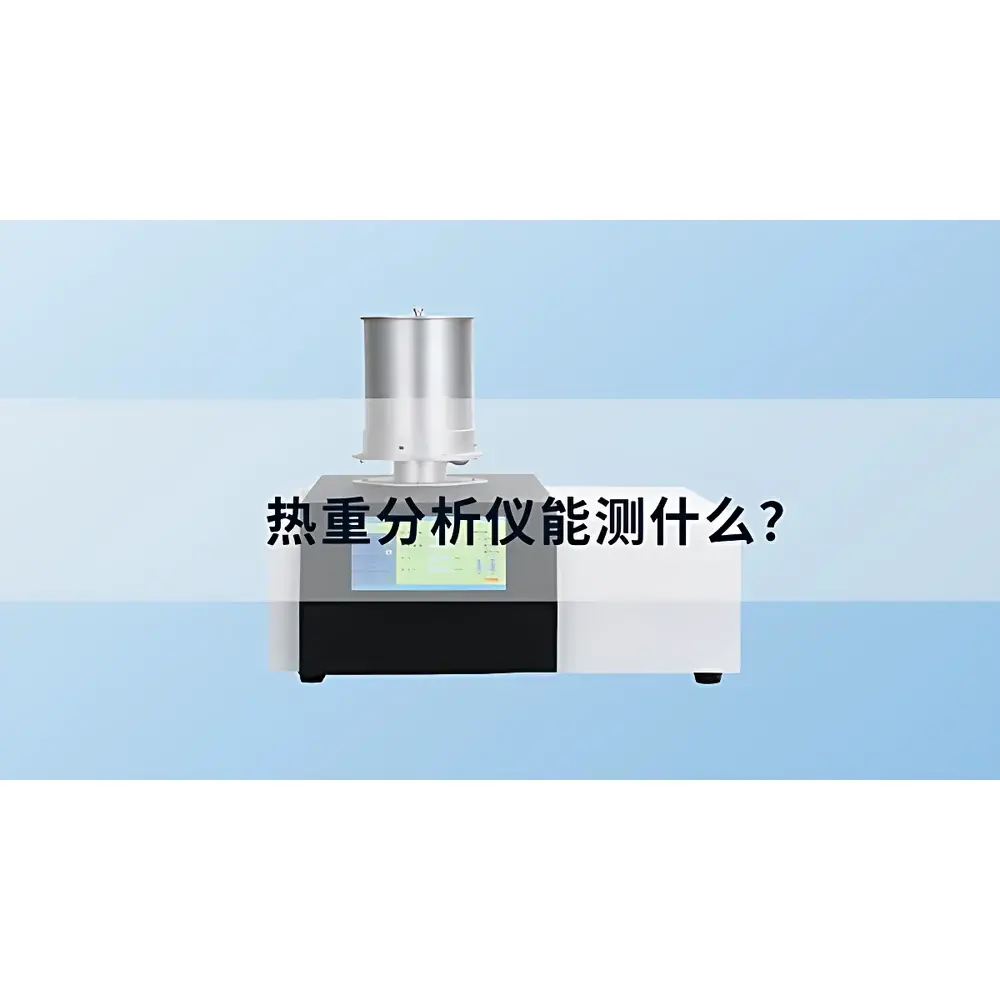
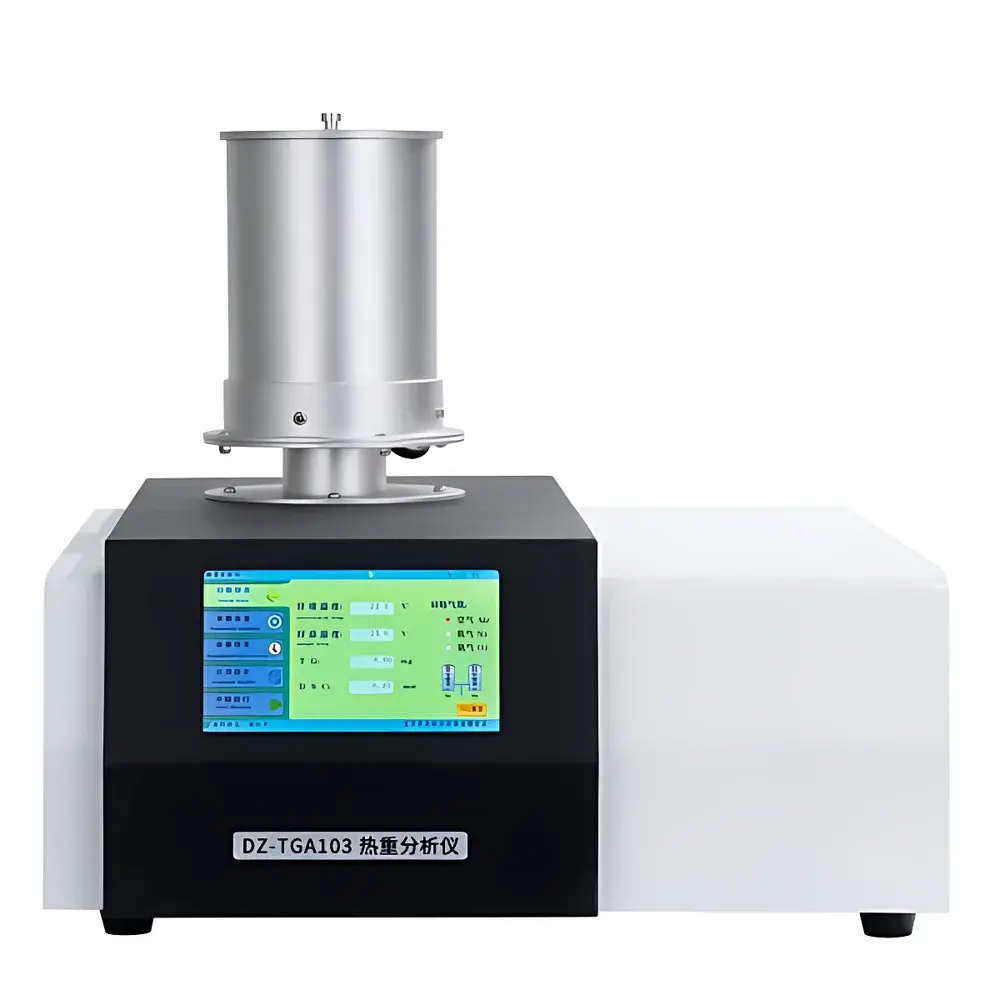
Nanjing Dazhan DZ-TGA103 High-Temperature Thermogravimetric Analyzer
| Brand | Nanjing Dazhan |
|---|---|
| Origin | Jiangsu, China |
| Manufacturer Type | Manufacturer |
| Country of Origin | China |
| Model | DZ-TGA103 |
| Sample Capacity | 1 |
| Instrument Type | General-purpose |
| Temperature Range | Ambient to 1450 °C |
| Balance Sensitivity | 0.01 mg |
| Heating/Cooling Rate | 0.1–100 °C/min |
| Maximum Sample Mass | 30 g |
| Temperature Resolution | 0.01 °C |
| Temperature Stability | ±0.1 °C |
| Cooling Time (1000 °C → 100 °C) | ≤15 min |
| Balance Range | 0.1 mg–2 g (extendable to 30 g) |
| Atmosphere Control | Dual-gas manifold with mass flow regulation (inert, oxidative, reductive, static, dynamic) |
| Data Interface | USB |
| Software | Proprietary TGA analysis suite with TG/DTG curve generation, multi-point temperature calibration, Excel export, report printing, and GLP-compliant audit trail |
Overview
The Nanjing Dazhan DZ-TGA103 High-Temperature Thermogravimetric Analyzer is a precision laboratory instrument engineered for quantitative measurement of mass change as a function of temperature or time under controlled atmospheric conditions. Based on the fundamental principle of thermogravimetry—where sample mass is continuously monitored during thermal treatment—the DZ-TGA103 enables rigorous characterization of thermal stability, decomposition kinetics, compositional analysis, moisture/volatile content, oxidation behavior, and residual ash formation. Its extended operational range up to 1450 °C supports high-temperature applications in metallurgy, advanced ceramics, refractory materials, and catalyst development—domains where conventional TGA systems (typically limited to 1000–1100 °C) lack sufficient thermal headroom.
Key Features
- High-stability dual-wound platinum-rhodium furnace assembly ensures uniform heating profiles and minimizes thermal interference across the full temperature range.
- Platinum-rhodium alloy sample holder and sensor platform provide exceptional resistance to oxidation, corrosion, and thermal drift at elevated temperatures.
- Modular thermal architecture: electrically and mechanically isolated furnace compartment with double-wall vacuum-insulated housing significantly reduces thermal conduction and mechanical vibration transmission to the microbalance system.
- Top-loading vertical design facilitates rapid sample insertion, crucible exchange, and routine maintenance without realignment of critical optical or mechanical components.
- Configurable furnace options allow adaptation for specialized applications—including high-vacuum, corrosive gas, or ultra-fast heating protocols—upon request.
- Dual independent gas lines with integrated mass flow controllers support precise switching and blending of inert (N₂, Ar), oxidative (air, O₂), or reductive (H₂, CO) atmospheres, enabling ASTM E1131, ISO 11358, and USP <631> compliant testing environments.
Sample Compatibility & Compliance
The DZ-TGA103 accommodates standard ceramic, alumina, and aluminum crucibles (including hermetic variants), supporting solids, powders, fibers, and thin films. Its 30 g maximum load capacity—combined with 0.01 mg sensitivity—enables both trace-component quantification and bulk material evaluation within a single platform. The system meets essential regulatory expectations for analytical instrumentation used in GMP and GLP environments: software includes user-level access control, electronic signatures, time-stamped audit trails, and version-controlled method storage aligned with FDA 21 CFR Part 11 principles. Calibration routines incorporate multi-point temperature verification across the entire operating range (ambient to 1450 °C), ensuring traceability to NIST-traceable reference standards.
Software & Data Management
The proprietary TGA analysis software provides native acquisition and processing of thermogravimetric (TG) and derivative thermogravimetric (DTG) curves. Users define complex temperature programs—including segmented ramp/hold/cool sequences up to 72 hours—with real-time visualization of mass loss rate, onset temperature, inflection points, and residue percentage. All data are stored in structured binary format with embedded metadata (operator ID, instrument serial number, calibration date, gas flow settings). Export functions generate CSV or Excel-compatible files for external statistical analysis; automated report templates comply with internal QA documentation requirements and include pass/fail criteria based on predefined thresholds. Software updates are delivered free-of-charge via secure download portal, with release notes documenting validation status per ICH Q5A and ISO/IEC 17025 Annex A.3 guidelines.
Applications
- Quantification of filler content, polymer degradation onset, and char yield in thermoplastics and elastomers (ASTM D3850, ISO 11358-1).
- Thermal stability assessment of pharmaceutical excipients and active ingredients under accelerated aging protocols (ICH Q1A, USP <1210>).
- Decomposition kinetics modeling of metal-organic frameworks (MOFs) and battery cathode precursors (e.g., LiCoO₂, NMC).
- Residue analysis and volatiles profiling in coatings, pigments, and ink formulations.
- Oxidation resistance evaluation of refractory metals (Mo, W, Nb) and SiC-based composites.
- Catalyst deactivation studies via coke deposition quantification under simulated regeneration cycles.
FAQ
What is the maximum recommended operating temperature for continuous use?
The DZ-TGA103 is rated for sustained operation up to 1450 °C; however, long-term exposure above 1350 °C requires periodic recalibration and inspection of furnace insulation integrity.
Can the system operate under vacuum or controlled partial pressure?
Vacuum operation is not natively supported; however, low-pressure inert gas purging (down to 10 mbar) can be implemented using optional pressure-regulated gas delivery modules.
Is the software validated for regulated pharmaceutical laboratories?
While the base software includes Part 11–aligned features (audit trail, electronic signature), site-specific IQ/OQ/PQ validation documentation must be developed by the end user in accordance with their quality management system.
How frequently should temperature calibration be performed?
We recommend quarterly calibration using certified reference materials (e.g., Ni, Cu, Al₂O₃) and annual full-system verification including balance linearity and gas flow accuracy.
Are crucibles included with the instrument?
Yes—each system ships with a set of five high-purity alumina crucibles (standard geometry, 70 µL capacity) and one empty reference pan; additional crucible types (Pt, Ir, graphite) are available as accessories.



