
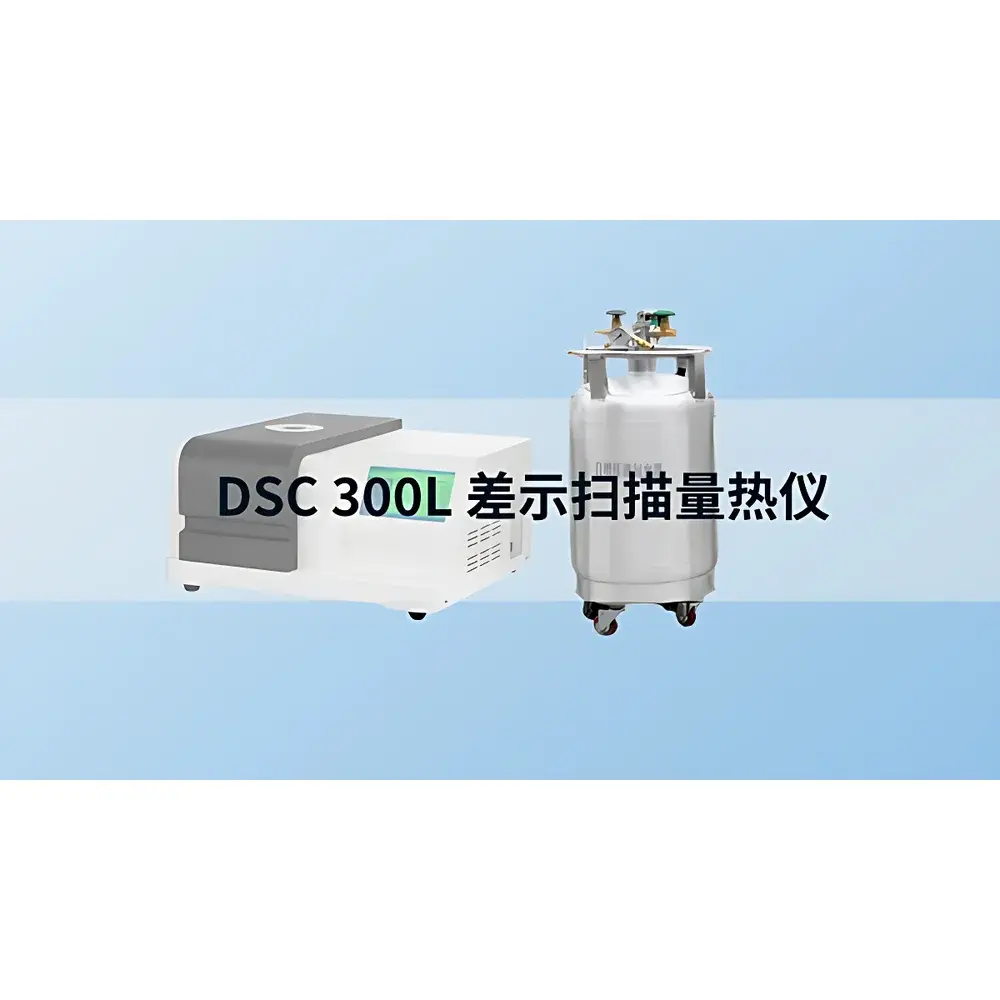
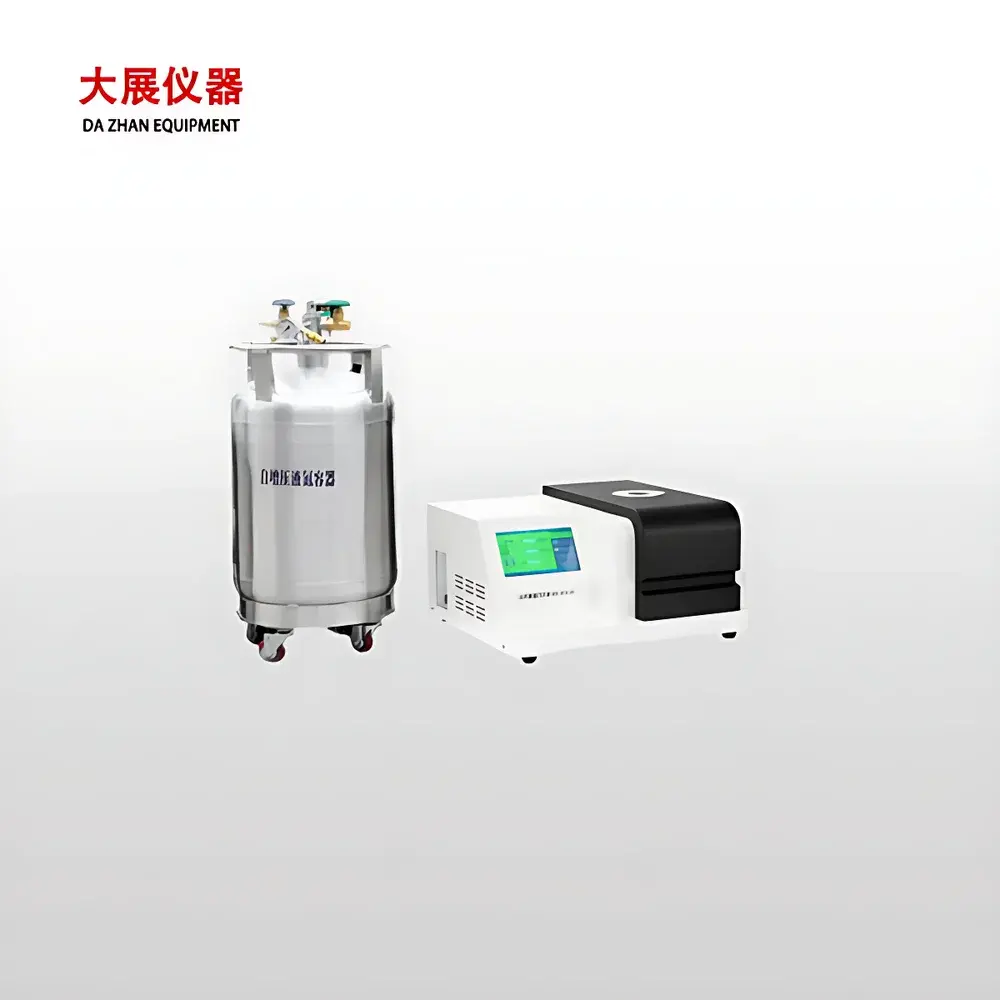
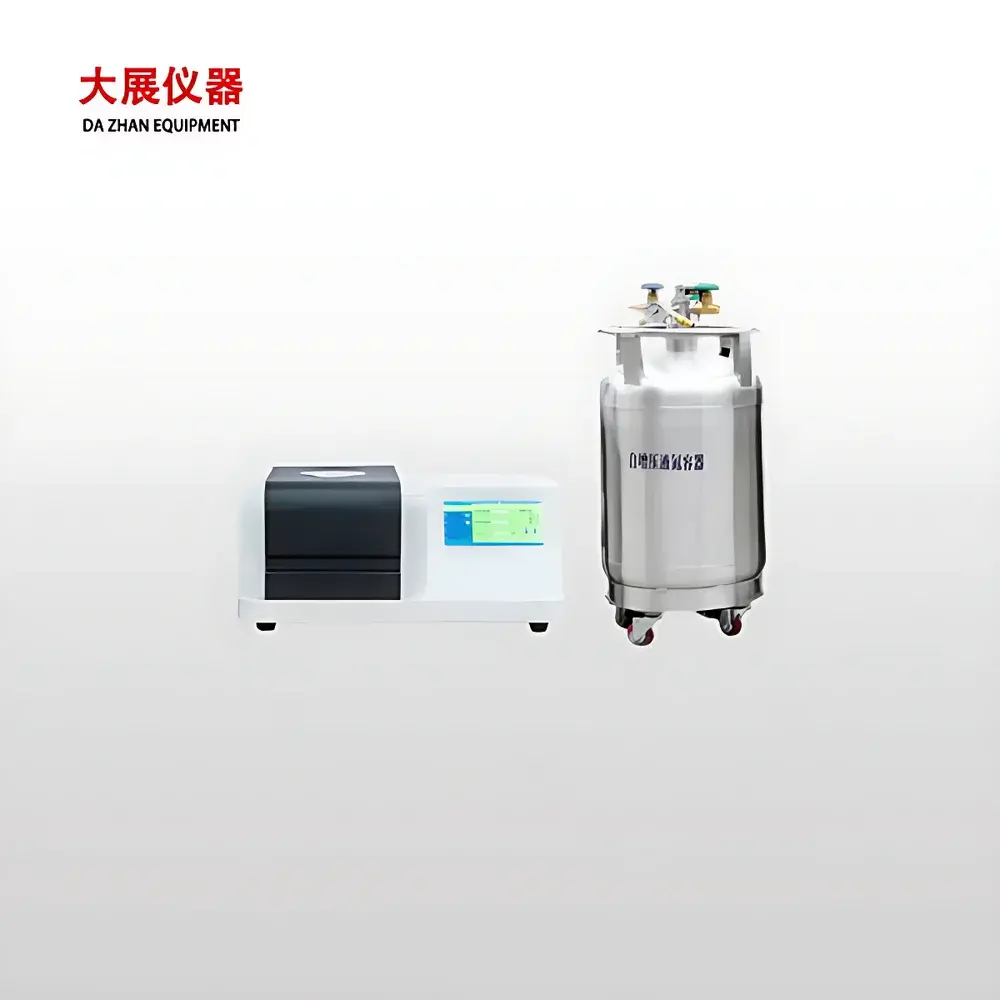
Nanjing Dazhan DZ-DSC300L Differential Scanning Calorimeter
| Brand | Nanjing Dazhan |
|---|---|
| Origin | Jiangsu, China |
| Manufacturer Type | Direct Manufacturer |
| Product Category | Domestic |
| Model | DZ-DSC300L |
| Sample Capacity | Single |
| Instrument Type | Differential Scanning Calorimeter (DSC) |
| Temperature Range | −170 °C to 600 °C |
| Heating/Cooling Rate | 0.1–100 K/min (heating), 0.1–40 K/min (cooling) |
| DSC Signal Range | 0 to ±600 mW |
| DSC Resolution | 0.01 µW |
| DSC Sensitivity | 0.001 mW |
| Temperature Stability | ±0.01 °C |
| Temperature Resolution | 0.001 °C |
| Gas Flow Control | Dual-channel automated switching, 0–300 mL/min, max pressure ≤5 MPa |
| Thermal Program | Up to six segments (ramp/hold/cool), user-definable |
| Interface | Standard USB |
| Display | 7-inch 24-bit color LCD touchscreen |
| Power Supply | AC 220 V / 50 Hz (customizable) |
Overview
The Nanjing Dazhan DZ-DSC300L Differential Scanning Calorimeter is a high-precision thermal analysis instrument engineered for quantitative measurement of heat flow differences between a sample and an inert reference as a function of temperature or time. Operating on the principle of heat-flux DSC, it delivers reliable thermodynamic data critical for characterizing phase transitions, reaction kinetics, and thermal stability in solid and semi-crystalline materials. Designed for rigorous laboratory environments—including R&D centers, quality control laboratories, and academic research facilities—the DZ-DSC300L supports standardized testing protocols aligned with ASTM E794, ISO 11357, and USP <1158> for thermal analysis. Its extended operational range (−170 °C to 600 °C) enables low-temperature glass transition studies in polymers and cryogenic characterization of pharmaceutical excipients, while its rapid heating capability (up to 100 K/min) facilitates kinetic analysis of fast-curing resins and decomposition onset detection.
Key Features
- Optimized furnace architecture with dual-sensor symmetry, delivering enhanced baseline flatness (drift <1 µW/h over 30 min) and improved peak resolution for closely spaced transitions such as cold crystallization and melting in semi-crystalline polyolefins.
- High-fidelity temperature control system featuring PID-regulated heating/cooling elements and real-time feedback from calibrated platinum resistance thermometers (PRTs), achieving thermal accuracy within ±0.1 °C across the full range and stability of ±0.01 °C at isothermal conditions.
- Integrated dual-gas manifold with automated electronic switching—enabling seamless transition between inert (N₂, Ar) and oxidative (air, O₂) atmospheres during a single run, essential for oxidation induction time (OIT) and decomposition pathway studies per ASTM D3895 and ISO 11357-6.
- 7-inch 24-bit color capacitive touchscreen interface with intuitive icon-driven navigation; supports local operation without PC connection, including real-time curve visualization, manual parameter adjustment, and immediate export of raw data via USB mass storage mode.
- Modular firmware architecture compatible with optional GLP-compliant software modules, supporting audit trail logging, electronic signatures, and 21 CFR Part 11–ready user access controls when deployed in regulated GMP/QbD environments.
Sample Compatibility & Compliance
The DZ-DSC300L accommodates standard aluminum, gold-plated aluminum, and high-pressure stainless-steel crucibles (including hermetic and vented configurations), enabling analysis of volatile, reactive, or moisture-sensitive samples—including lithium-ion battery cathode materials, epoxy prepolymers, and biopolymer blends. All thermal programs comply with ISO/IEC 17025 documentation requirements when used with certified reference materials (indium, tin, lead) supplied with the system. Calibration verification procedures follow ASTM E967 and E968 guidelines, ensuring traceability to NIST-traceable standards. Optional purge gas humidification kits extend compatibility to hygroscopic material characterization under controlled RH conditions.
Software & Data Management
The instrument interfaces with proprietary DSC Analysis Suite v3.x (Windows 10/11 compatible), offering multi-step baseline correction, peak deconvolution using Gaussian-Lorentzian fitting, and quantitative enthalpy integration with uncertainty propagation reporting. Raw data files (.dsc) are stored in ASCII-based format for third-party interoperability (e.g., OriginLab, MATLAB, Thermo Scientific™ OMNIC). The software supports IQ/OQ documentation templates compliant with FDA process validation guidance and includes configurable report generation with embedded metadata (operator ID, instrument serial number, calibration status, environmental log). Audit trail functionality records all parameter changes, file exports, and calibration events with timestamp and user attribution.
Applications
- Determination of glass transition temperature (Tg) in amorphous polymers and pharmaceutical amorphous dispersions.
- Quantification of crystallinity degree and cold crystallization kinetics in PET, PP, and PLA films.
- Assessment of thermal stability, decomposition onset, and activation energy via Ozawa-Flynn-Wall analysis.
- Measurement of curing exotherms and gelation time in thermosetting systems (e.g., epoxies, phenolics) under isothermal and dynamic conditions.
- Oxidative induction time (OIT) evaluation for antioxidant efficacy in polyolefin stabilization per ISO 11357-6.
- Heat capacity (Cp) determination using sapphire calibration method across variable heating rates.
FAQ
What reference materials are included for calibration?
Indium (Tm = 156.6 °C), tin (Tm = 231.9 °C), and lead (Tm = 327.5 °C) are provided as primary calibration standards for temperature and enthalpy verification.
Can the DZ-DSC300L perform modulated DSC (MDSC®)?
No—it is a conventional heat-flux DSC system. MDSC functionality requires additional hardware modulation and is not supported by this model.
Is remote monitoring or network connectivity available?
Local USB and touchscreen operation are standard; Ethernet or Wi-Fi connectivity is not built-in but can be enabled via optional USB-to-Ethernet adapters with compatible driver support.
What maintenance intervals are recommended for optimal performance?
Furnace cleaning and sensor inspection are advised every 500 operating hours; gas line filters should be replaced quarterly in high-throughput labs; annual recalibration against certified standards is recommended for GLP/GMP compliance.
Does the system support custom crucible types beyond aluminum?
Yes—stainless-steel high-pressure crucibles (up to 10 MPa), gold-coated pans for corrosive samples, and ceramic crucibles for ultra-high-temperature screening (up to 600 °C) are available as accessories.



