
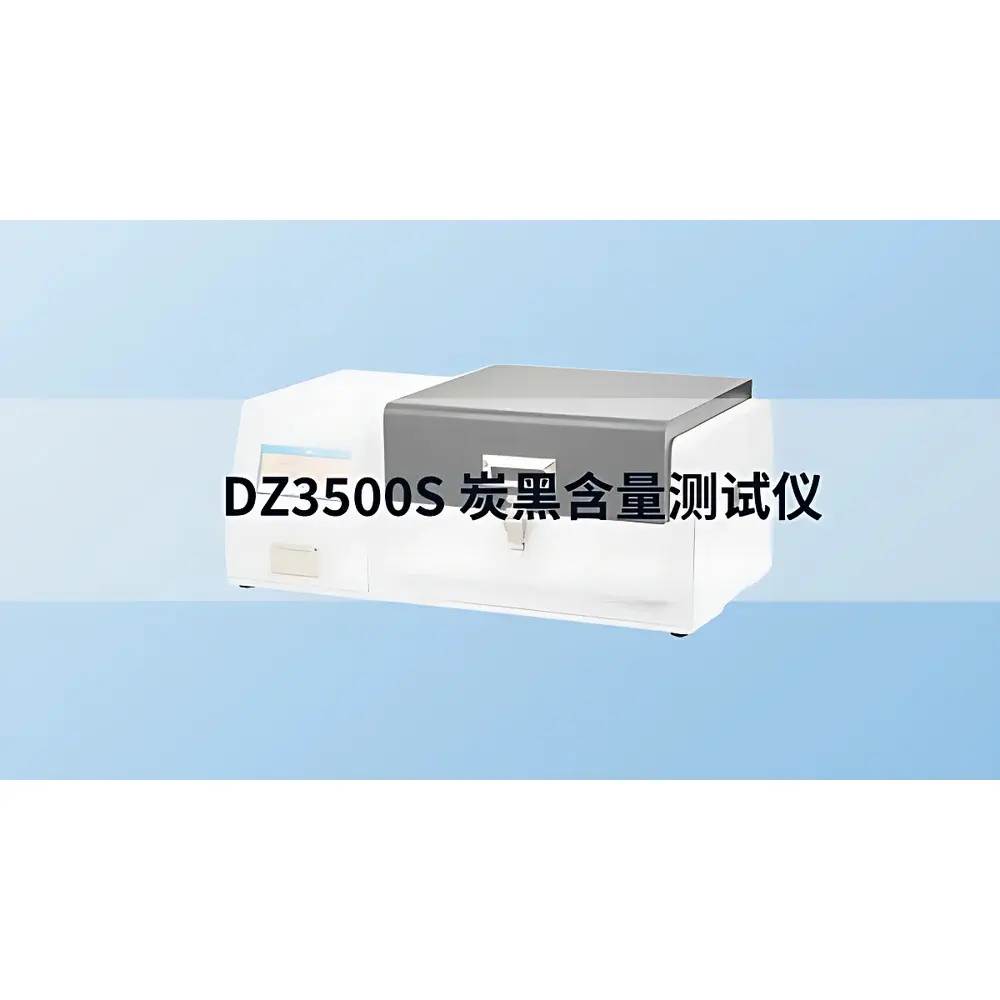
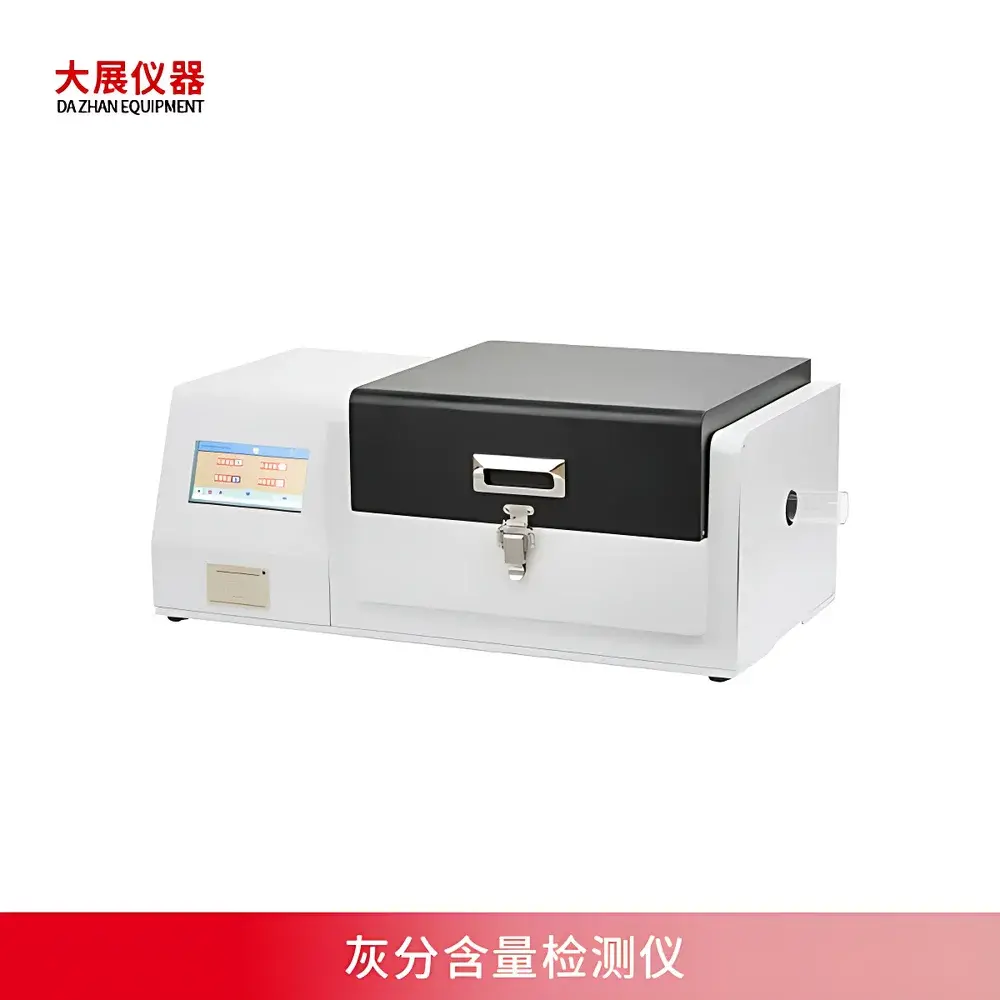
DZ3500S Carbon Black and Ash Content Analyzer by DAZHAN
| Brand | DAZHAN |
|---|---|
| Origin | Jiangsu, China |
| Model | DZ3500S |
| Heating Range | Ambient to 1200 °C |
| Sample Capacity | 4 positions |
| Temperature Control | Programmable multi-segment PID control |
| Cooling Time | ≤20 min (900 °C to ambient) |
| Display | 7-inch capacitive touchscreen |
| Quartz Tube Dimensions | φ44 × 600 ± 5 mm |
| Furnace Chamber Diameter | φ45 × 360 ± 5 mm |
| Heating Element | High-temperature alloy wire |
| Heating Zone Length | 350 mm |
| Temperature Sensor Resolution | 0.1 °C |
| Gas Flow Control | Dual-channel automated switching |
| Safety Features | Lid-open thermal warning, over-temperature cutoff |
| Optional Accessories | Exhaust filtration unit, thermal printer |
| Compliance Standards | GB/T 13021–1991, GB/T 13663.2–2018, GB/T 3515–2005, IEC 60881-4-1:2004, ASTM D1603–2012, GB/T 2951.41–2008 |
Overview
The DZ3500S Carbon Black and Ash Content Analyzer is a dedicated thermal gravimetric instrument engineered for precise quantification of carbon black loading and inorganic ash residue in polymer and elastomer matrices. It operates on the principle of controlled pyrolysis under inert or oxidative atmospheres—typically nitrogen followed by air—to sequentially volatilize organic polymer components and oxidize residual carbon black, enabling mass-loss differentiation between volatile organics, fixed carbon (carbon black), and non-combustible ash. Designed specifically for quality control laboratories in the rubber, plastic, and wire & cable industries, the DZ3500S delivers repeatable, traceable results aligned with internationally recognized test protocols including ASTM D1603, GB/T 3515, and IEC 60881-4-1. Its robust architecture integrates high-stability furnace control, dual-gas routing, and real-time mass tracking—ensuring compliance with GLP and GMP data integrity expectations.
Key Features
- Four-position sample carousel enables parallel processing of up to four specimens per run, reducing per-sample throughput time by up to 75% compared to single-sample analyzers.
- Top-opening furnace design with rapid-cool capability (≤20 minutes from 900 °C to ambient) minimizes turnaround time between consecutive tests without compromising thermal uniformity or sensor stability.
- 7-inch capacitive touchscreen interface provides intuitive navigation, real-time temperature/mass trend visualization, and direct access to preloaded test methods compliant with GB/T 13021, ASTM D1603, and IEC standards.
- Programmable multi-segment temperature ramping supports complex thermal profiles—including hold steps, gas-switch triggers, and derivative mass monitoring—for method flexibility across diverse polymer systems.
- Integrated dual-gas manifold with automated solenoid switching ensures precise atmosphere sequencing (e.g., N₂ purge → pyrolysis → air oxidation), critical for distinguishing carbon black from ash in filled compounds.
- High-resolution temperature sensing (0.1 °C) and calibrated quartz tube geometry (φ44 × 600 mm) ensure consistent thermal exposure and reproducible mass-loss kinetics across all sample positions.
Sample Compatibility & Compliance
The DZ3500S is validated for use with thermoplastic polyolefins (PE, PP, PB), crosslinked polyethylene (XLPE), ethylene-propylene-diene monomer (EPDM) rubber, and halogen-free flame-retardant (HFFR) cable compounds. It accommodates granular, pelletized, or finely cut specimens (recommended mass: 0.5–2.0 g) within standardized ceramic crucibles. All operational parameters—including heating rate, dwell time, gas flow rates, and switch points—are configurable to meet the procedural requirements of GB/T 13663.2–2018 (PE pipe systems), GB/T 2951.41–2008 (cable insulation testing), and ASTM D1603–2012 (carbon black in polyethylene). The system’s hardware and firmware architecture support audit-ready data logging, including timestamped temperature/mass records, operator ID, method version, and environmental conditions—facilitating 21 CFR Part 11–compliant electronic records when paired with validated LIMS integration.
Software & Data Management
The embedded analytical software performs automatic calculation of carbon black content (%) and ash content (%) using user-defined baseline correction and endpoint detection algorithms. Results are computed per ASTM D1603 Annex A1 methodology: Carbon black = [(mass after N₂ step – mass after air step) / initial sample mass] × 100; Ash = [(mass after air step) / initial sample mass] × 100. Raw data (time, temperature, mass) are exportable in CSV format for secondary analysis. Optional thermal printer output generates fully traceable hard-copy reports containing test ID, sample ID, operator name, date/time stamp, method reference, and calculated values with uncertainty flags. Data retention follows ISO/IEC 17025:2017 clause 7.5.2 requirements for record preservation and retrieval.
Applications
- Quality assurance of carbon black dispersion and loading in PE/PP pipe compounds per GB/T 13021–1991 and GB/T 13663.2–2018.
- Verification of filler content consistency in rubber formulations during R&D and production release testing (GB/T 3515–2005).
- Compliance screening of cable jacketing and insulation materials against IEC 60881-4-1 and UL 1581 requirements for flame-retardant additives and mineral fillers.
- Root-cause analysis of batch-to-batch variability in compounded polymers through comparative thermal decomposition profiling.
- Supporting regulatory submissions requiring documented thermal stability and inorganic residue data for medical-grade polymer extrusions.
FAQ
What standards does the DZ3500S support out-of-the-box?
The instrument includes preconfigured methods for GB/T 13021–1991, GB/T 13663.2–2018, GB/T 3515–2005, ASTM D1603–2012, IEC 60881-4-1:2004, and GB/T 2951.41–2008.
Can the DZ3500S distinguish between carbon black and other carbonaceous residues?
Yes—by leveraging sequential N₂ pyrolysis followed by controlled air oxidation, the system isolates mass loss attributable specifically to carbon black combustion, differentiating it from char or incomplete decomposition products.
Is the furnace temperature uniformity validated across all four sample positions?
Yes—furnace mapping per ASTM E1142 confirms ±3 °C radial uniformity and ±5 °C axial uniformity within the 350 mm heating zone at 900 °C.
Does the system support electronic signature and audit trail functions?
When deployed with validated third-party LIMS or ELN platforms, the DZ3500S meets 21 CFR Part 11 requirements for electronic records and signatures via secure user authentication and immutable data logging.
What maintenance is required for long-term accuracy?
Annual calibration of temperature sensors and mass transducers is recommended; quartz tube inspection and replacement every 500 cycles or as indicated by visible devitrification or cracking.






