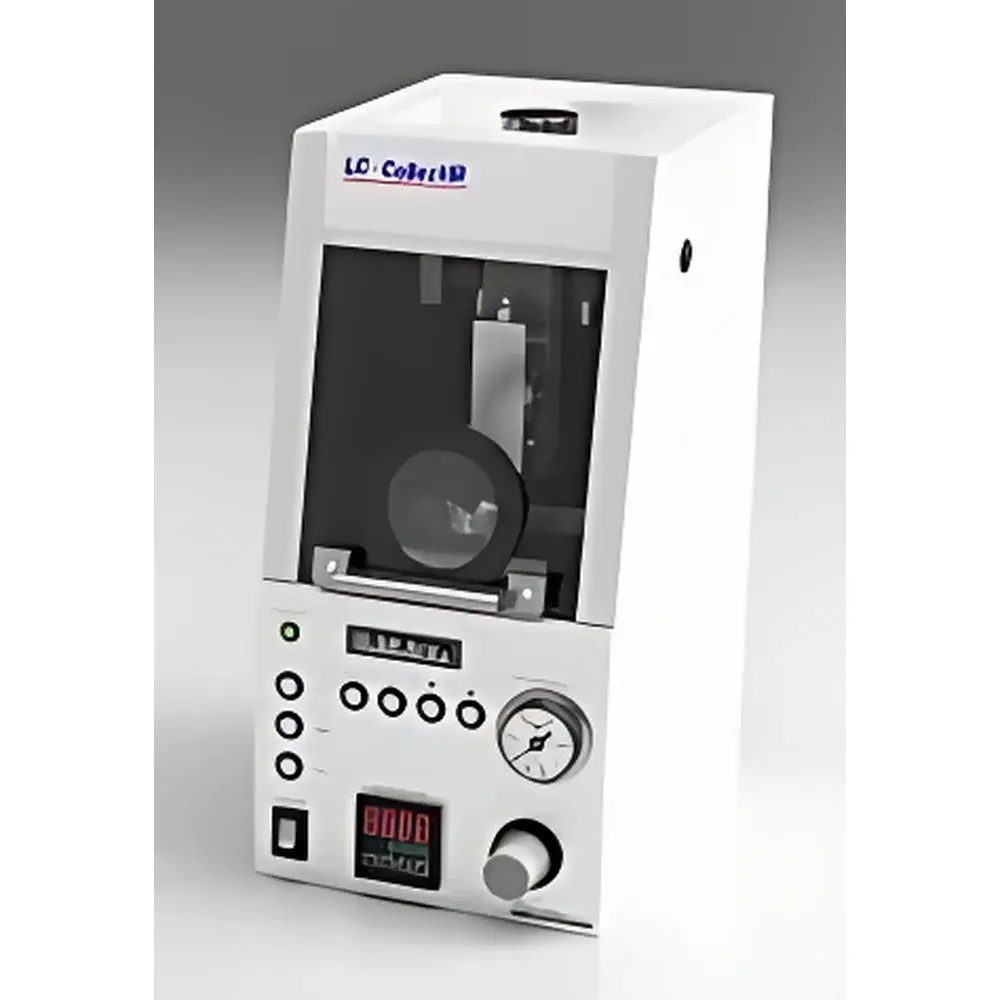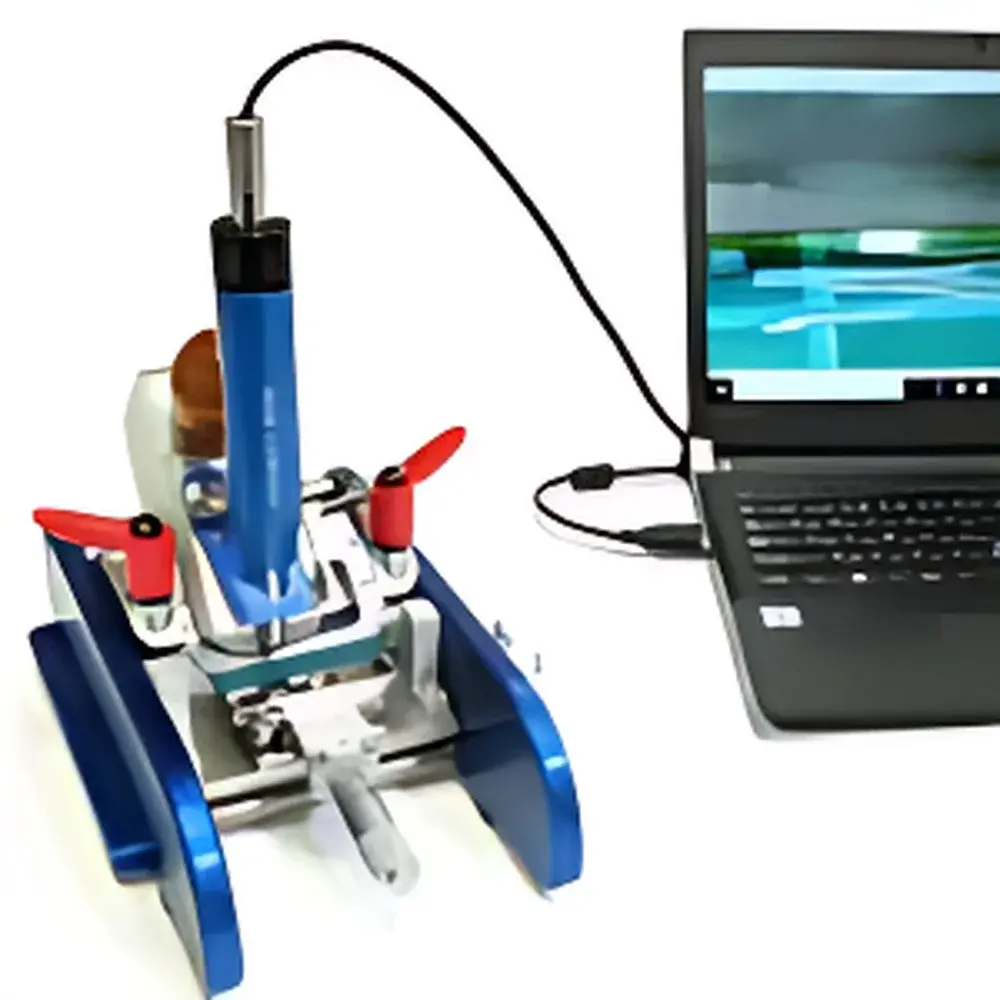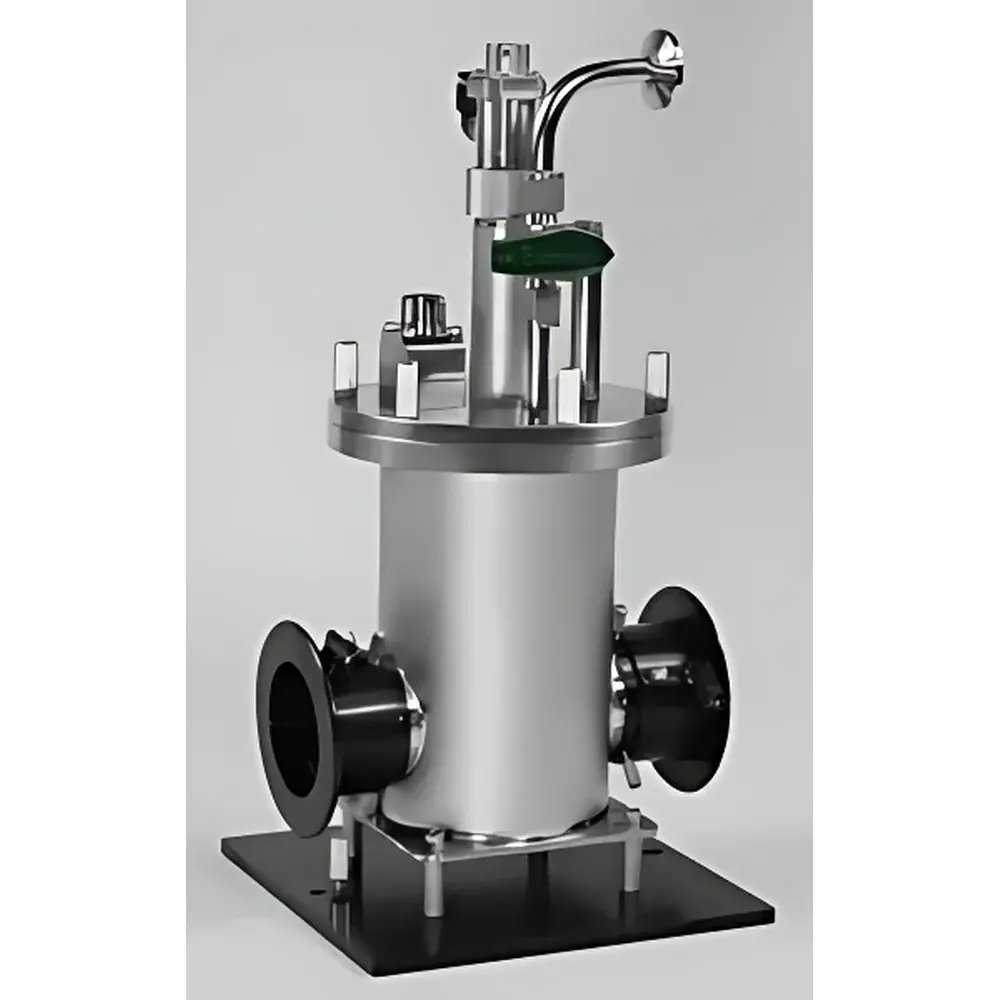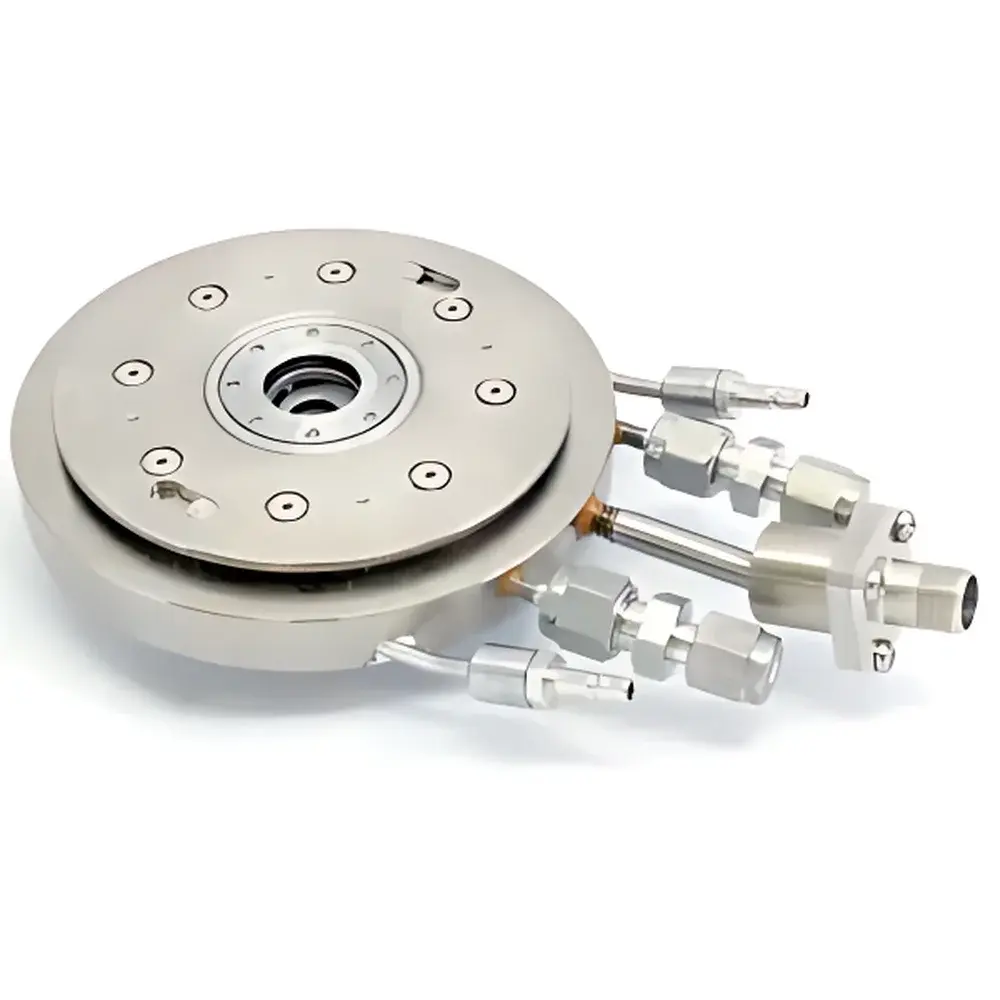
S.T. Japan S-100R High-Temperature Microscopy Heating Stage

| Brand | S.T. Japan |
|---|---|
| Origin | Japan |
| Model | S-100R |
| Temperature Range | Ambient to 600 °C |
| Optical Modes | Reflectance and Transmission |
| Vacuum Port | Integrated (1 × 10⁻³ Torr base pressure) |
| Pressure Rating | 0.5 MPa (with BaF₂, CaF₂, ZnSe, or SiO₂ windows) |
| Cooling Interface | Standard recirculating chiller port |
| Mounting Compatibility | Standard microscope stage adapters (e.g., Nikon, Olympus, Zeiss) |
Ask about pricing, availability and specifications.
Overview
The S.T. Japan S-100R is a precision-engineered high-temperature heating stage designed for in situ thermal analysis under optical microscopy. It operates on resistive heating principles with closed-loop PID temperature control, enabling stable, repeatable thermal environments from ambient up to 600 °C. Its dual-mode optical configuration supports both reflective and transmissive observation—critical for real-time monitoring of phase transitions, crystallization kinetics, thermal degradation, and solid-state reactions. The stage integrates seamlessly into inverted and upright optical microscopes via standardized mechanical interfaces, preserving parfocality and minimizing thermal drift during extended experiments. Constructed from high-purity alumina ceramics and Inconel alloy components, the S-100R maintains structural integrity and dimensional stability across repeated thermal cycling, ensuring long-term calibration reliability.
Key Features
- Wide operational temperature range: ambient to 600 °C with ±0.5 °C thermal stability (at setpoint, after 30 min equilibration)
- Dual optical path compatibility: optimized for both reflection-mode surface imaging and transmission-mode sample characterization through compatible IR-transparent windows
- Integrated ultra-high-vacuum interface: standard KF-16 flange with leak-tight sealing, supporting base pressures down to 1 × 10⁻³ Torr when paired with external vacuum pumps
- High-pressure window capability: rated for static pressure differentials up to 0.5 MPa when equipped with BaF₂, CaF₂, ZnSe, or fused silica (SiO₂) optical windows—enabling controlled-atmosphere or gas-phase reaction studies
- Dedicated cooling port: accepts standard 6 mm OD tubing for connection to external recirculating chillers, facilitating rapid cooldown and thermal gradient management
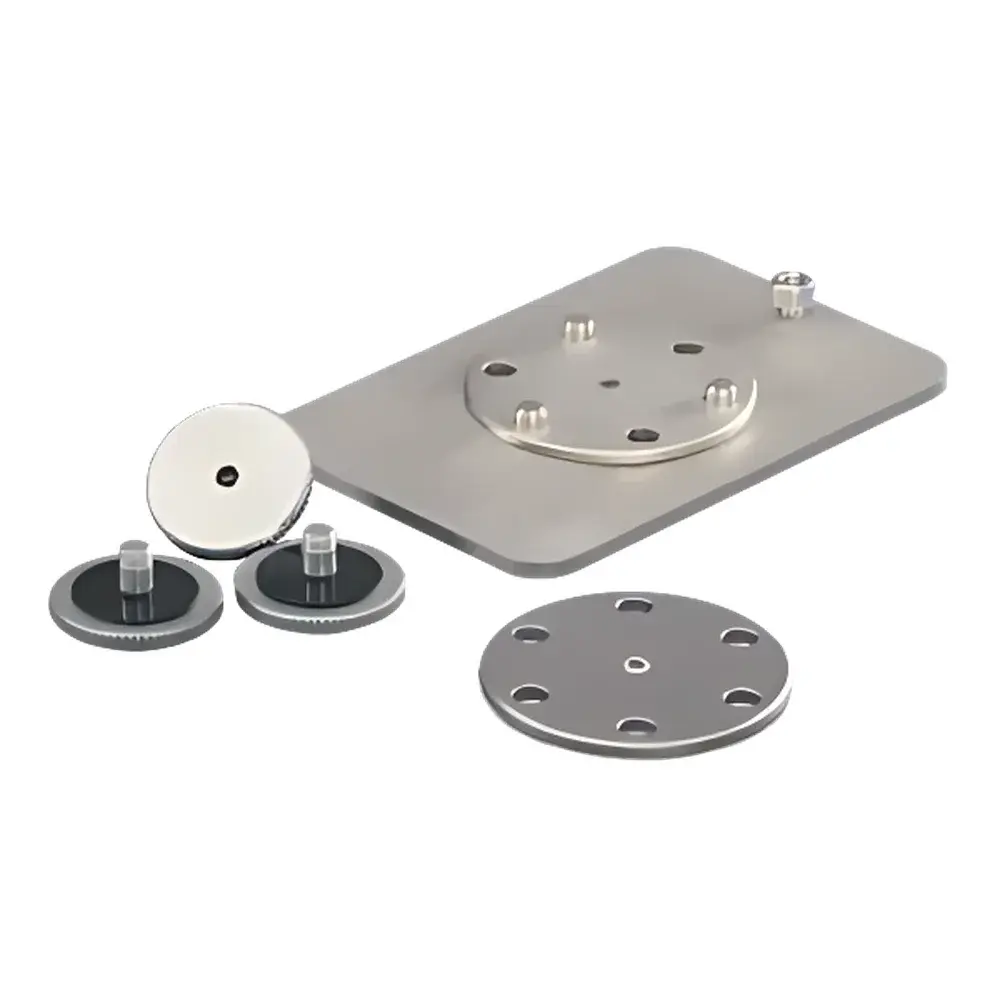
- Modular mounting system: includes interchangeable adapter plates for major microscope platforms (Nikon Eclipse, Olympus BX/IX series, Zeiss Axio line), ensuring minimal reconfiguration between instruments
Sample Compatibility & Compliance
The S-100R accommodates standard microscope slides (76 × 26 mm), circular coverslips (up to 25 mm diameter), and custom sample holders with ≤2 mm thickness. Its open-top design permits direct access for probe insertion, gas injection nozzles, or electrical leads. All materials in contact with samples or vacuum environments comply with ISO 8502-3 cleanliness standards and are free of outgassing-prone organics. The stage meets mechanical safety requirements per IEC 61010-1 for laboratory equipment and is compatible with GLP-compliant workflows when used with validated temperature logging systems. While not intrinsically certified for hazardous locations, its low-power operation (<150 W) and grounded chassis support integration into Class 1000 cleanroom environments.
Software & Data Management
Temperature control is managed via an external digital controller (sold separately) featuring RS-232 and USB interfaces. The controller supports programmable ramp/soak profiles, real-time temperature logging at 1 Hz resolution, and export of timestamped CSV data for post-acquisition correlation with image sequences. When integrated with third-party acquisition software (e.g., NIS-Elements, MetaMorph, or µManager), the controller can trigger synchronized image capture upon reaching target temperatures or detecting thermal thresholds. Audit trails—including setpoint changes, power status, and error codes—are retained for ≥30 days and comply with FDA 21 CFR Part 11 requirements when deployed with electronic signature-enabled host systems.
Applications
- In situ observation of polymorphic transitions in pharmaceutical compounds during thermal stress testing (aligned with USP & Ph. Eur. chapter <2021>)
- Real-time analysis of metal oxide reduction kinetics under controlled reducing atmospheres (H₂/N₂ mixtures)
- Thermal expansion coefficient measurement of thin-film coatings using digital image correlation (DIC)
- Phase behavior mapping of liquid crystal elastomers across nematic–isotropic transitions
- Corrosion initiation studies on coated alloys under combined thermal and humidified gas exposure
- Calibration validation of thermographic camera systems using traceable blackbody reference sources
FAQ
What optical window materials are recommended for infrared transmission up to 600 °C?
BaF₂ and CaF₂ are preferred for mid-IR (2–8 µm) work below 500 °C; ZnSe offers broader transmission (0.5–20 µm) but requires strict moisture exclusion above 300 °C. Fused silica (SiO₂) is optimal for UV–VIS–NIR applications and exhibits superior thermal shock resistance.
Can the S-100R be used under inert gas purge without vacuum pumping?
Yes—the vacuum port doubles as a gas inlet; continuous N₂ or Ar purging at 50–100 sccm achieves O₂ levels <10 ppm and eliminates oxidation artifacts during high-temperature imaging.
Is thermal drift compensated during long-duration experiments?
The stage’s symmetric heater geometry and embedded dual-sensor feedback loop minimize radial gradients (<±2 °C across 10 mm field of view); optional external pyrometer input enables active drift correction via controller firmware.
Does the S-100R support automated stage movement or motorized focusing?
No—it is a static thermal platform; however, it is fully compatible with motorized microscope stages and focus units from major OEMs when mounted via standard kinematic interfaces.
What maintenance is required to sustain vacuum integrity over time?
Annual inspection of the copper gasket and flange seating surface is recommended; replacement gaskets are available as S.T. Japan part #GK-100R-VAC. No lubrication or internal servicing is required under normal operating conditions.