
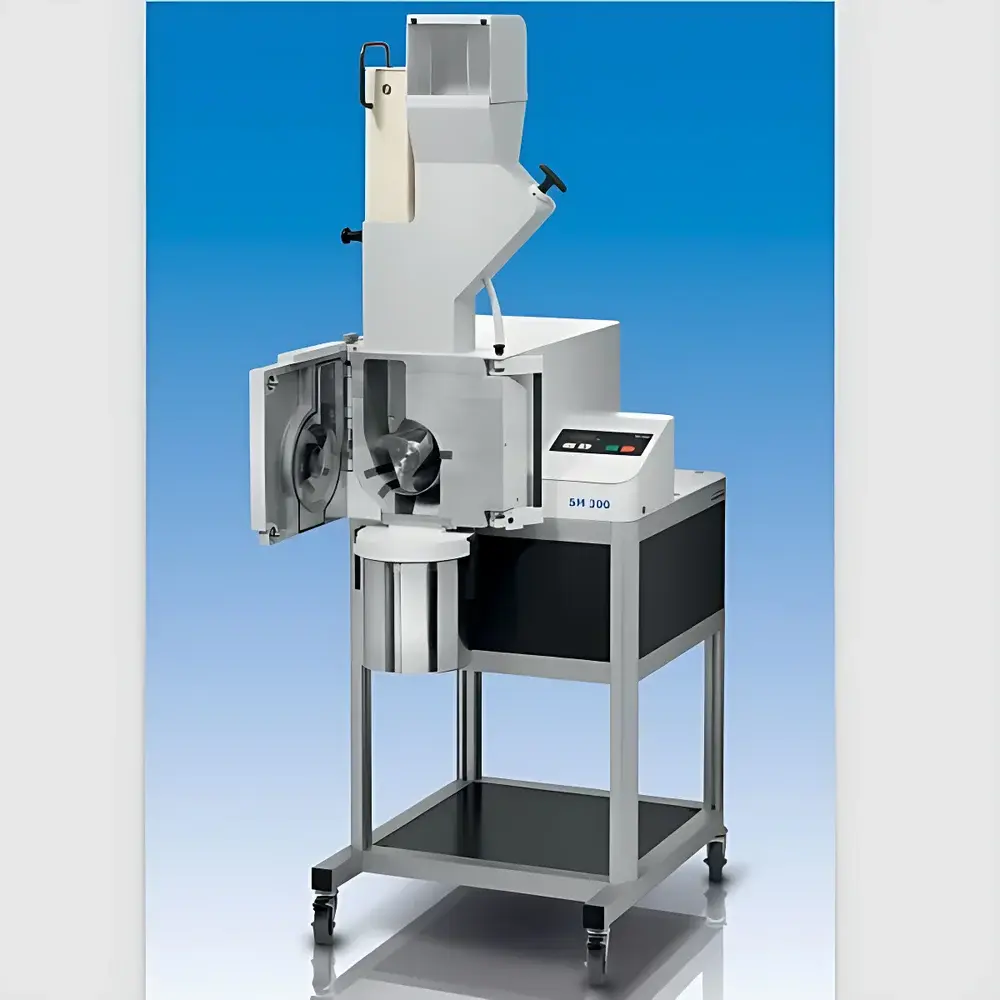
Retsch SM300 Variable-Speed Cutting Mill
| Brand | Retsch |
|---|---|
| Origin | Germany |
| Model | SM300 |
| Drive Power | 3 kW |
| Adjustable Speed Range | 700–3000 rpm |
| Feed Size | up to 60 × 80 mm |
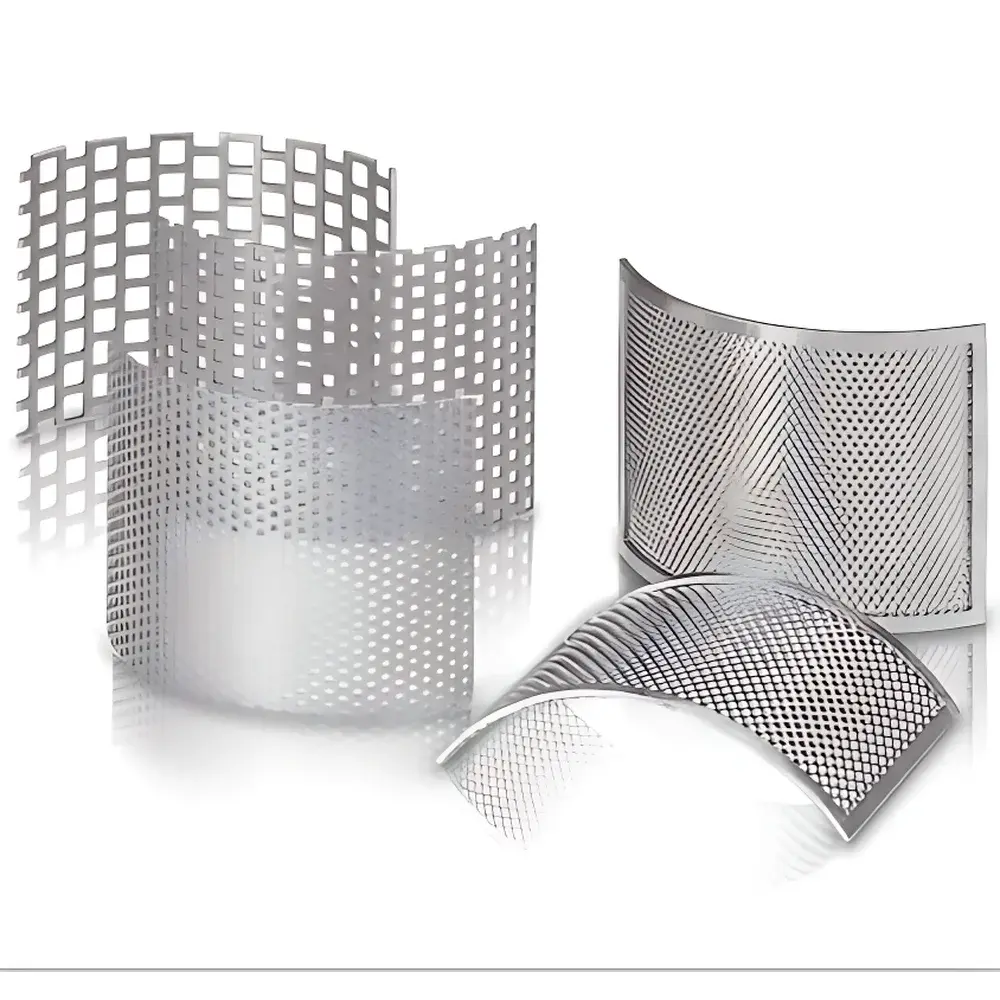
| Final Particle Size | 0.25–20 mm (via interchangeable bottom sieves) |
| Throughput Capacity | up to 5 L per batch |
| Sample Type | Soft to medium-hard, heat-sensitive, and non-metallic materials |
| Thermal Load | Low during operation |
| Cleaning | Tool-free access to rotor knives and sieve plates |
Overview
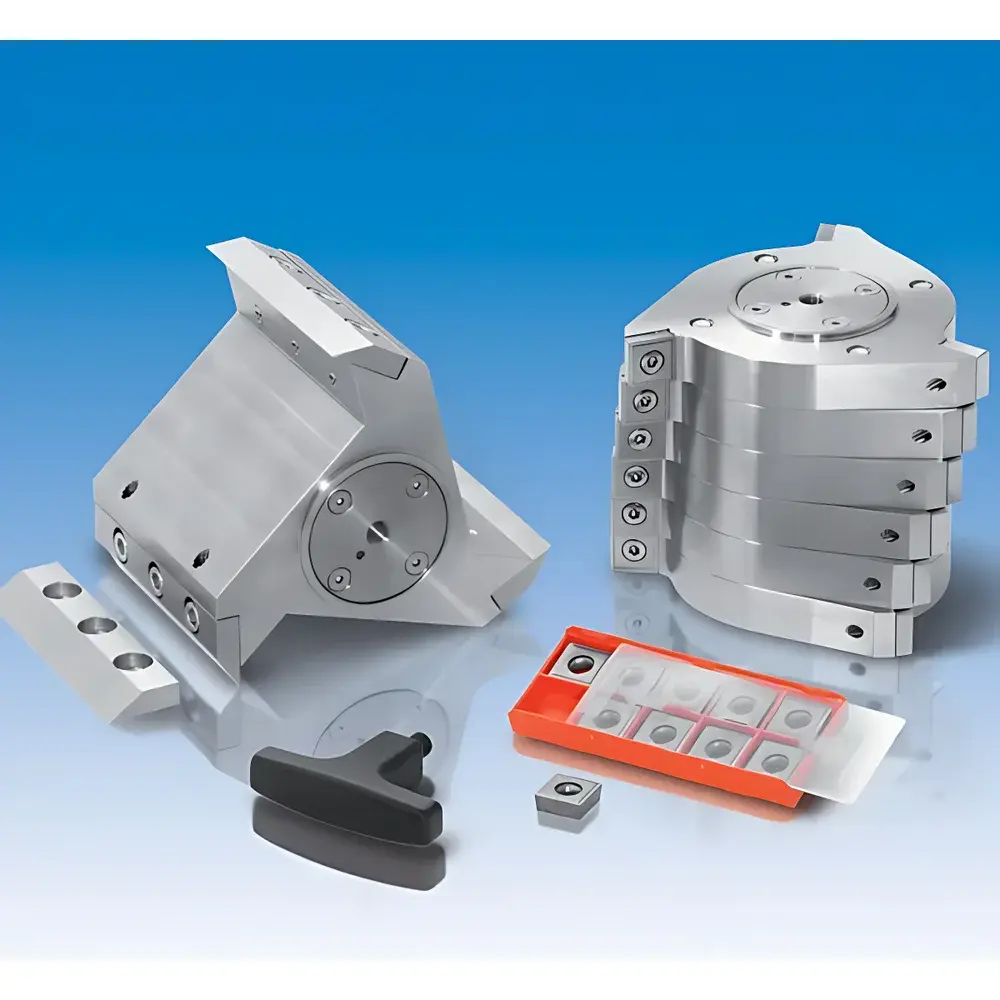
The Retsch SM300 is a high-performance, variable-speed cutting mill engineered for reproducible coarse and intermediate size reduction of heterogeneous laboratory samples. Operating on the principle of high-shear impact comminution, the instrument utilizes a robust horizontal rotor equipped with dual-edged, plug-in cutting knives rotating within a fixed stator chamber. As material enters the grinding zone via the feed hopper, it undergoes repeated shearing, cutting, and impact forces generated by the high-velocity rotor—resulting in efficient particle size reduction without excessive mechanical or thermal degradation. Designed specifically for applications where sample integrity, low heat generation, and operational flexibility are critical, the SM300 serves as a primary milling solution for soft, fibrous, elastic, and thermolabile materials—including polymers, leather, rubber, electronic waste (RoHS-compliant matrices), agricultural biomass, and pharmaceutical excipients. Its German-engineered architecture ensures structural rigidity, vibration damping, and long-term dimensional stability under continuous duty cycles.
Key Features
- Variable-speed drive (700–3000 rpm) enables precise control over impact energy and shear rate—optimizing throughput and final particle distribution for diverse material classes.
- Plug-in rotor knives and modular bottom sieves (0.25–20 mm aperture options) allow rapid configuration changes without tools—supporting method development and multi-analyte workflows.
- Low-thermal-load operation achieved through optimized airflow design, short residence time, and high-efficiency energy transfer—critical for preserving volatile compounds, enzymatic activity, or polymer crystallinity.
- Tool-free maintenance architecture: hinged lid, slide-out rotor assembly, and snap-fit sieve retention system reduce cleaning downtime and eliminate cross-contamination risks between batches.
- CE-compliant safety interlock system with integrated motor cutoff and lid-position monitoring—fully compliant with EN 61000-6-2 (EMC) and EN 61000-6-4 (emission) standards.
- Feed hopper, collection vessel, and grinding chamber available in stainless steel (AISI 304), hardened steel, or food-grade polymer variants—ensuring compatibility with GMP, GLP, and ISO/IEC 17025 environments.
Sample Compatibility & Compliance
The SM300 accommodates feed particles up to 60 × 80 mm and delivers consistent output down to ≤250 µm (with 0.25 mm sieve), making it suitable for pre-processing prior to analytical techniques such as XRF, ICP-OES, FTIR, or elemental leaching (e.g., TCLP or EN 12457). It is explicitly validated for non-metallic, non-ferrous, and heavy-metal-free matrices—aligning with RoHS Directive 2011/65/EU and WEEE compliance protocols. While not intended for abrasive or ultra-hard minerals (e.g., quartz >7 Mohs), its performance has been verified per ASTM D297–19 (rubber compounding), ISO 13320:2020 (laser diffraction support), and USP (pharmaceutical granule sizing). All wetted components meet FDA 21 CFR 177.2600 (plastics) and EU 10/2011 (food contact) requirements where applicable.
Software & Data Management
The SM300 operates as a standalone mechanical unit with analog speed control and mechanical timer (optional digital timer upgrade available). Though not inherently networked or software-driven, its operational parameters—including speed setpoint, run duration, sieve specification, and batch ID—are fully documentable within laboratory information management systems (LIMS) or electronic lab notebooks (ELN). When integrated into regulated environments, users implement procedural controls aligned with FDA 21 CFR Part 11—such as operator-specific logbooks, audit-trail-enabled SOPs, and calibration records for tachometer verification (traceable to DAkkS-accredited standards). Optional accessories include explosion-proof enclosures (ATEX Zone 22) and dust extraction interfaces compatible with ISO 14644-1 Class 8 cleanroom vacuum systems.
Applications
- Preparation of homogenized polymer blends for melt flow index (MFI) testing (ASTM D1238).
- Routine size reduction of leather, textiles, and composite laminates prior to TGA or DSC analysis.
- Processing of end-of-life electronics (PCBs, cables, housings) for halogen screening (IEC 62321-3-2) and metal leaching assays.
- Homogenization of botanicals, dried herbs, and animal feedstuffs for proximate analysis (AOAC 973.18, AOAC 985.29).
- Generation of representative sub-samples from bulk environmental soils or sediments prior to heavy metal extraction (EPA Method 3050B).
FAQ
Can the SM300 process metallic samples?
No—this instrument is explicitly designed for non-metallic, non-ferrous, and heavy-metal-free materials. Processing metals may damage rotor knives and compromise sieve integrity.
What is the recommended maintenance interval for rotor knives?
Under standard use (≤4 hrs/day), inspection is advised every 200 operating hours; replacement frequency depends on sample abrasivity and is typically 500–1000 hours.
Is the SM300 compliant with GLP documentation requirements?
Yes—when operated with defined SOPs, calibrated speed verification, and traceable batch records, it meets GLP Annex III (OECD Principles) for sample preparation equipment.
Can I retrofit an existing SM300 with digital speed control?
Yes—Retsch offers the SM300-DIGITAL retrofit kit, including encoder-based feedback, RS-485 interface, and optional LabX® connectivity module.
What sieve sizes are available as standard accessories?
Standard bottom sieves include 0.25, 0.5, 1.0, 2.0, 4.0, 6.0, 10, and 20 mm apertures—each manufactured to ISO 3310-1 tolerances and supplied with individual certification.



