
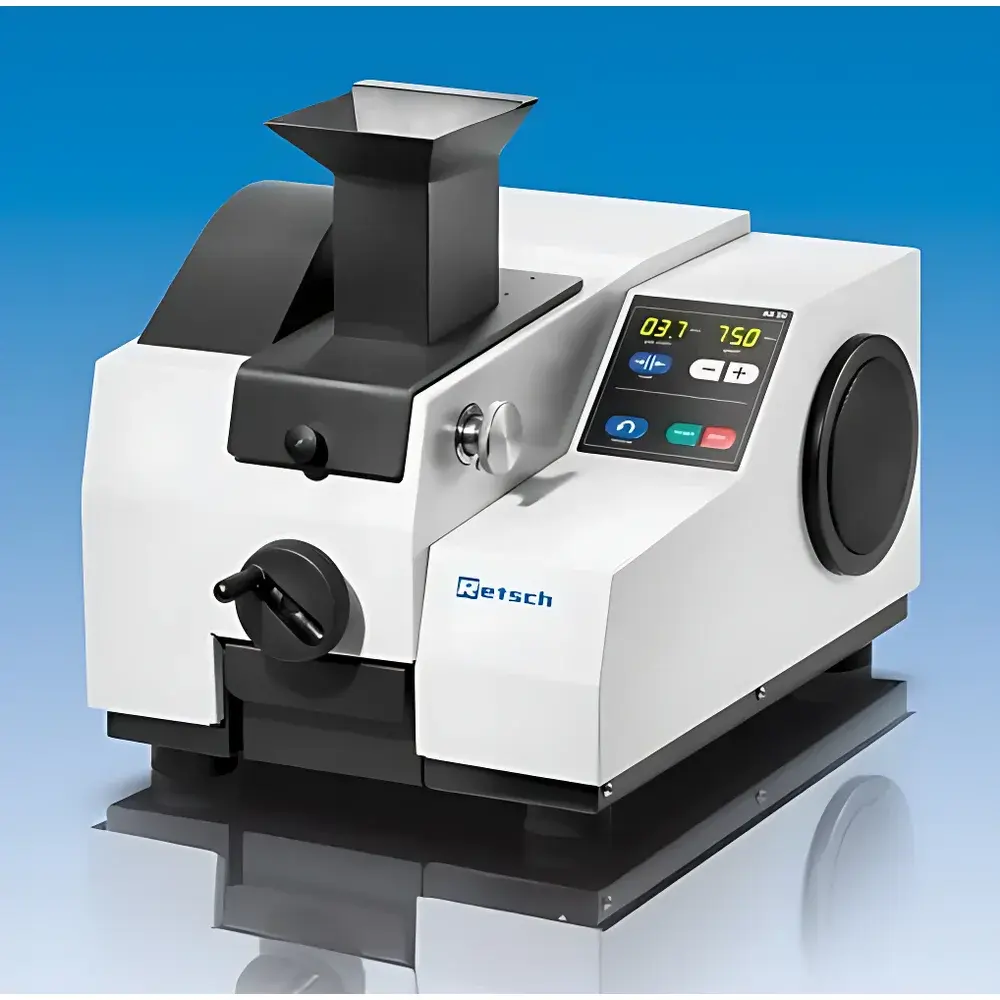
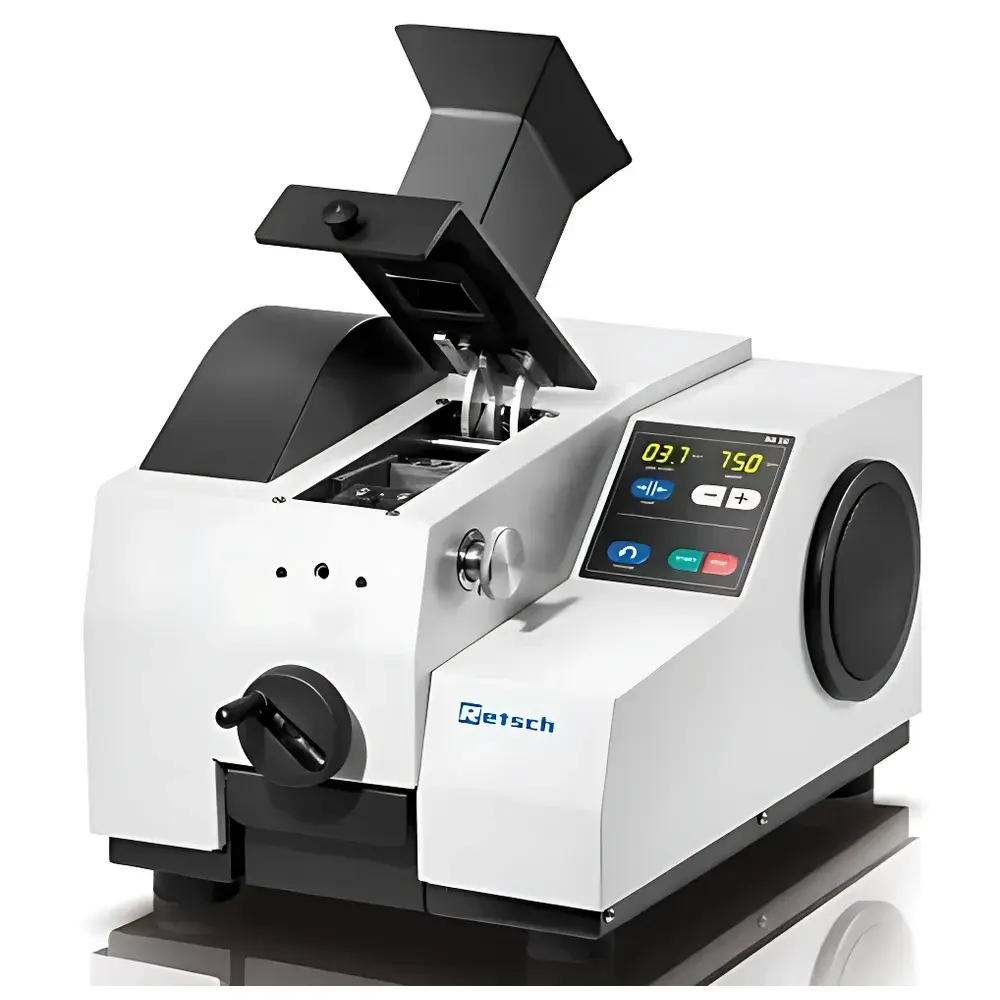
Retsch BB50 Benchtop Jaw Crusher
| Brand | Retsch |
|---|---|
| Origin | Germany |
| Model | BB50 |
| Crusher Type | Jaw Crusher |
| Sample Type | Hard and Brittle Materials |
| Feed Size | < 40 mm |
| Final Particle Size (d90) | < 0.5 mm |
| Output Granularity Range | 0.01–0.5 mm |
| Batch Capacity | 3 L |
| Drive Motor | 1100 W, Three-Phase Asynchronous Motor with Frequency Inverter |
| Jaw Speed | 550–950 min⁻¹ (adjustable) |
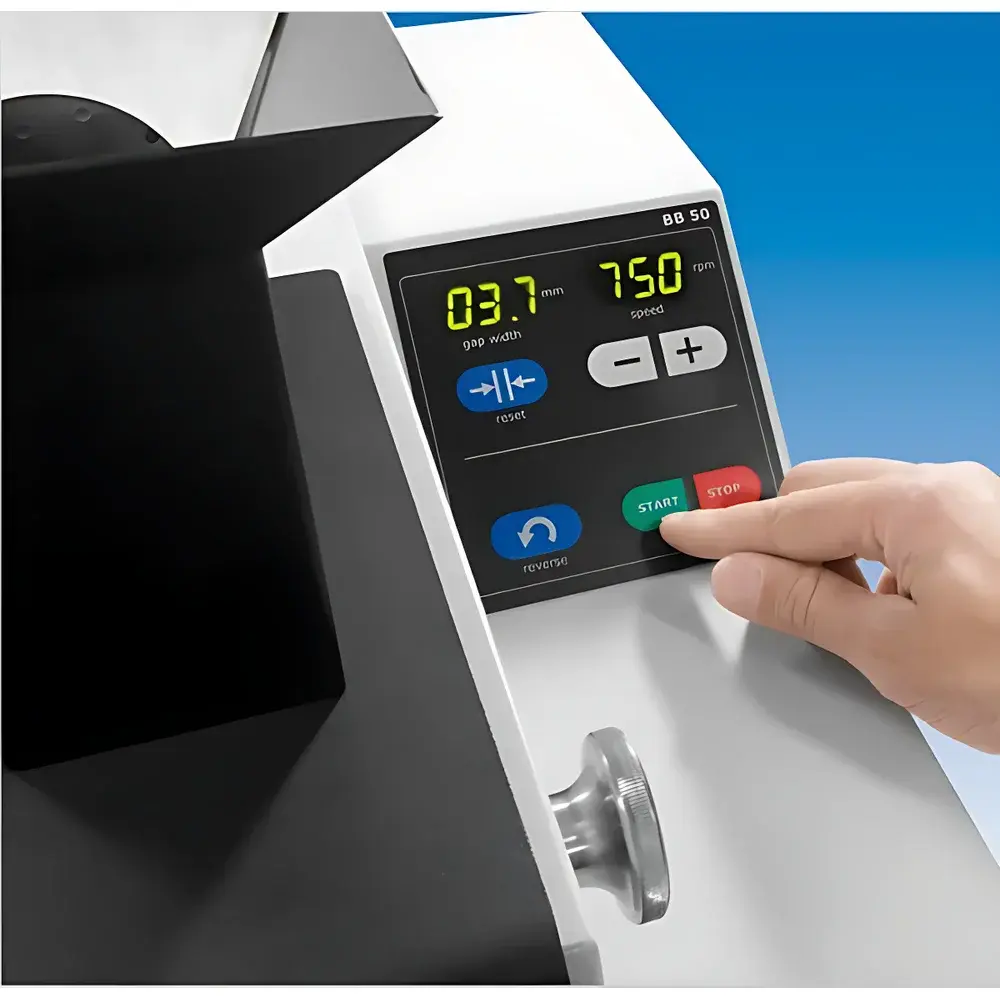
| Jaw Gap Display | Digital |
| Jaw Motion Reversal | Yes |
| Zero-Point Calibration | One-Touch Automated |
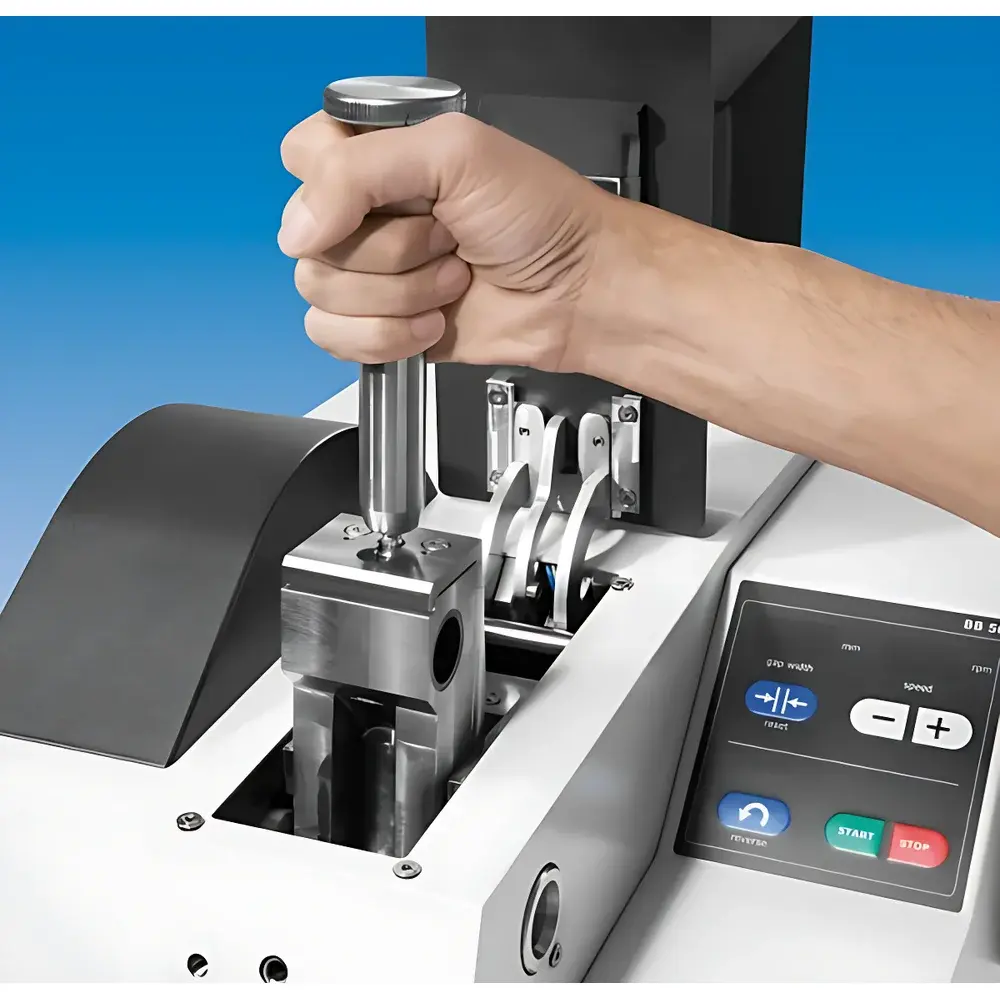
| Jaw Plate Materials | 5 Options (incl. ZrO₂, Stainless Steel, Hardened Steel, Tungsten Carbide, Anti-Heavy-Metal-Contamination Alloy) |
| Dust-Tight Sealing | Yes |
| Maintenance-Free Operation | Yes |
Overview
The Retsch BB50 Benchtop Jaw Crusher is an engineered solution for reliable, reproducible pre-crushing of hard, brittle, and medium-hard laboratory samples. Operating on the principle of compressive crushing—where material is fed between two opposing jaw plates (one fixed, one moving in elliptical motion)—the BB50 delivers controlled size reduction via adjustable gap geometry and precisely regulated jaw velocity. Designed for routine use in analytical, quality control, geological, and materials science laboratories, it bridges the gap between coarse feedstock (up to 40 mm) and fine intermediate particles suitable for downstream processing (e.g., milling, sieving, XRF, or elemental analysis). Its compact footprint, robust all-metal housing, and dust-tight construction meet stringent European safety standards (EN 61000-6-2/6-4, CE-compliant), making it suitable for ISO/IEC 17025-accredited labs requiring documented process control and operator safety.
Key Features
- Compact benchtop design with footprint under 400 × 450 mm—optimized for space-constrained lab environments.
- Digital display interface showing real-time jaw gap width (0.1 mm resolution) and rotational speed (550–950 min⁻¹), enabling method-driven parameter recall.
- One-touch zero-point calibration function compensates for jaw plate wear, preserving consistent particle size distribution (PSD) over extended operational life.
- Reversible jaw motion prevents jamming during overload; automatic restart after reversal eliminates manual chamber clearing.
- Five interchangeable jaw plate materials—including yttria-stabilized zirconia (ZrO₂), hardened stainless steel, tungsten carbide, and low-contamination alloy—allow tailoring to sample chemistry (e.g., trace metal analysis, pharmaceutical excipients, or ceramic precursors).
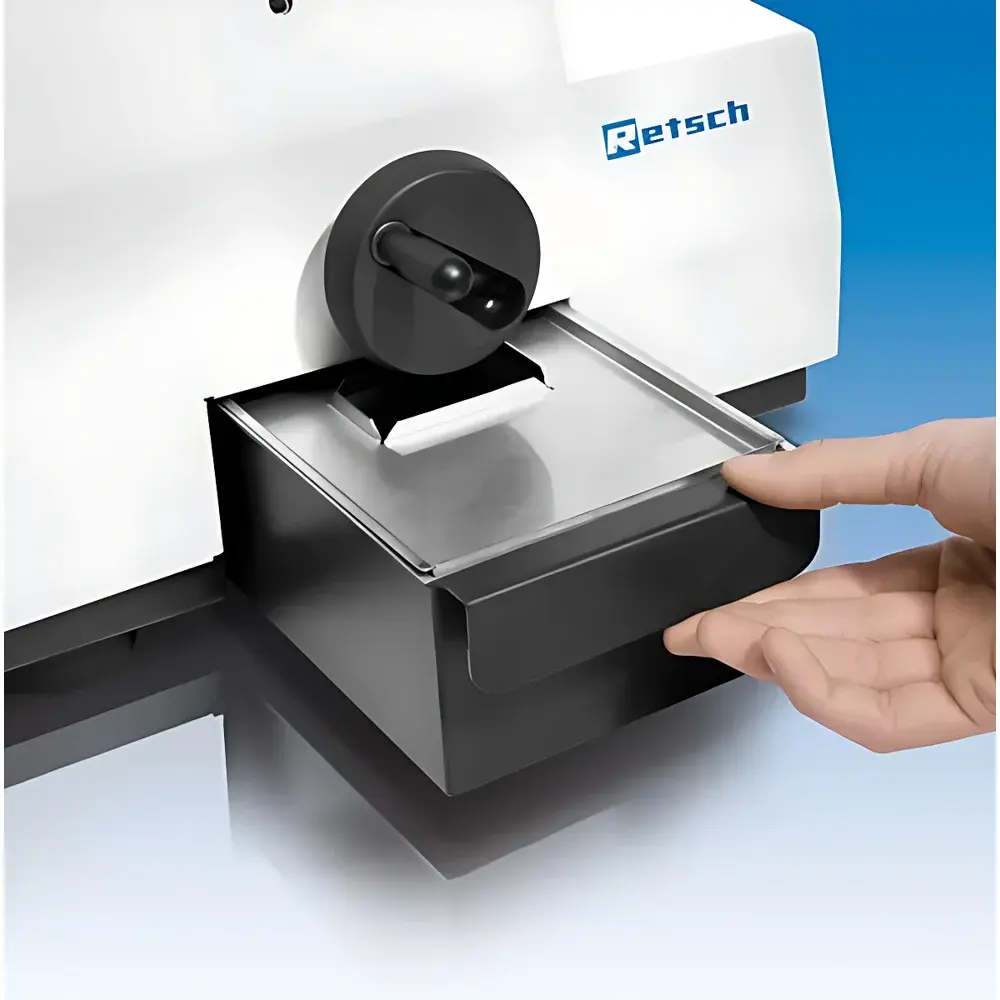
- Integrated anti-splash feed hopper with ergonomic loading angle minimizes sample loss and cross-contamination; fully tool-free jaw arm removal enables rapid cleaning and maintenance.
- Sealed, maintenance-free drive system with frequency-controlled 1100 W three-phase motor ensures stable torque delivery across speed range and long-term thermal stability.
Sample Compatibility & Compliance
The BB50 is validated for hard and brittle materials including minerals, ores, ceramics, concrete, slag, alloys, and pharmaceutical tablets. It is unsuitable for fibrous, elastic, or highly adhesive samples. Final output meets d90 ≤ 0.5 mm specifications per ISO 13320:2020 (laser diffraction particle sizing) and supports compliance with ASTM C117 (material sieve analysis) and USP (particle size distribution for solid dosage forms). Jaw plate material selection aligns with ICH Q5E (comparability of biotechnological products) and FDA 21 CFR Part 11 requirements when paired with Retsch’s optional software modules supporting audit trails and electronic signatures. All units are manufactured in Haan, Germany, and conform to RoHS 2011/65/EU and REACH Annex XIV restrictions.
Software & Data Management
While the BB50 operates as a stand-alone instrument, it integrates seamlessly with Retsch’s RETSCHcontrol software suite (optional) for method storage, parameter logging, and PDF report generation. When connected via RS232 or USB, the device records timestamped jaw gap settings, speed profiles, run duration, and calibration events—enabling full traceability required under GLP and GMP frameworks. Data export complies with CSV and XML formats for LIMS integration. The system supports user-level access control (admin/operator modes) and retains ≥100 method protocols with version history.
Applications
- Geological sample preparation prior to X-ray fluorescence (XRF) or ICP-MS analysis.
- Reduction of cement clinker, fly ash, or refractory bricks for chemical homogeneity testing (ASTM C114).
- Pre-crushing of battery cathode materials (e.g., LiCoO₂, NMC) before jet milling or laser diffraction.
- Pharmaceutical raw material size standardization for dissolution testing (USP ) and content uniformity assays.
- Recycling R&D: size reduction of electronic scrap, PV module fragments, or automotive catalysts for leaching studies.
- Academic research in powder metallurgy, where controlled initial particle morphology influences sintering kinetics.
FAQ
What is the maximum feed size the BB50 can accept?
The BB50 accepts feed particles up to 40 mm in largest dimension. Oversized samples must be pre-sized manually or via coarse crusher to avoid mechanical stress on jaw linkage.
How often should jaw plates be replaced?
Replacement frequency depends on sample hardness and daily throughput; typical service life ranges from 500–2000 operating hours. The digital interface displays a wear indicator and recommends replacement when gap compensation exceeds ±0.3 mm.
Is the BB50 suitable for moisture-sensitive or hygroscopic samples?
Yes—when equipped with optional inert gas purge kit (N₂ or Ar), the sealed chamber prevents oxidation or hydration during crushing. Standard configuration maintains ambient atmosphere.
Can the BB50 be used in regulated pharmaceutical QC labs?
Yes—when operated with RETSCHcontrol software, validated IQ/OQ documentation, and calibrated against NIST-traceable reference standards, it fulfills ALCOA+ data integrity principles and supports FDA 21 CFR Part 11 compliance.
Does the BB50 require external cooling or exhaust ventilation?
No—its thermally optimized motor and passive convection cooling eliminate need for water or air ducting. Optional fume hood mounting brackets are available for volatile or dusty applications.



