
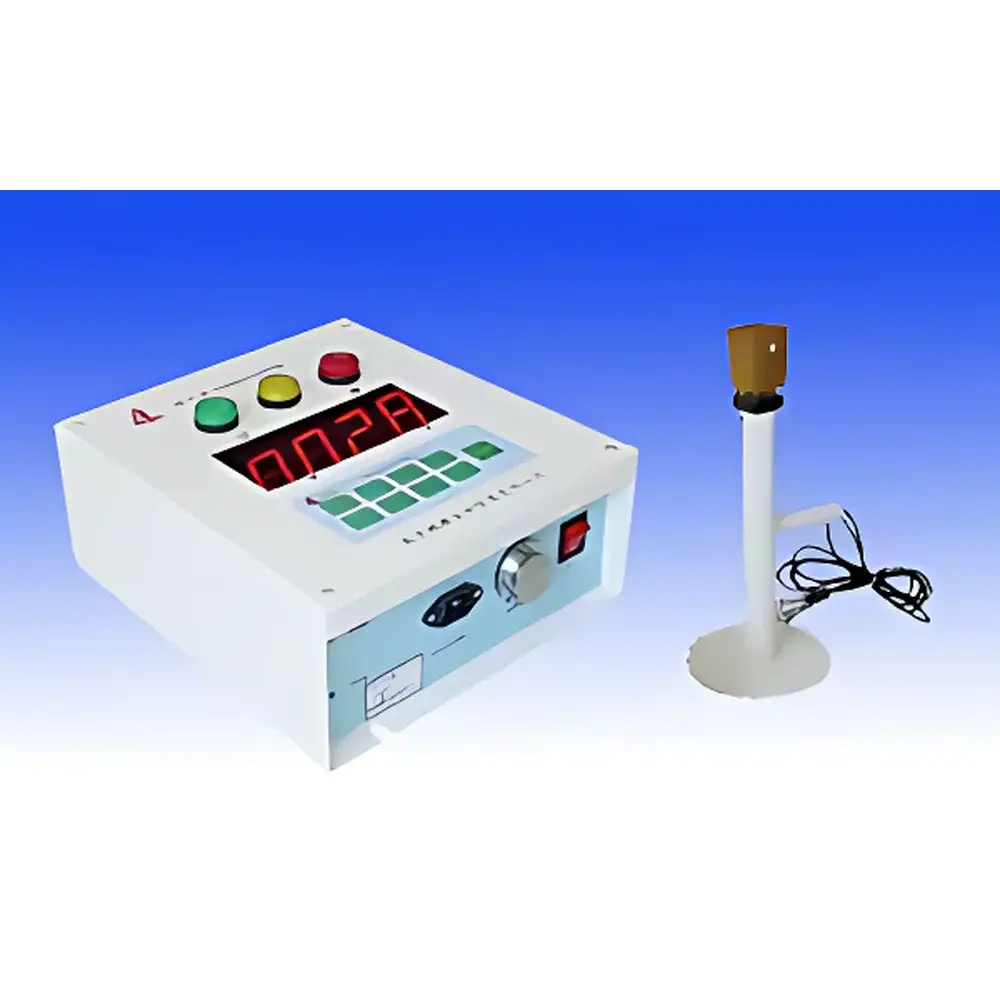
QL-TS-3 Iron Melt Carbon-Silicon Analyzer
| Brand | Qilin (QL) |
|---|---|
| Origin | Jiangsu, China |
| Model | QL-TS-3 |
| Measurement Time | 240 s |
| Carbon Equivalent (CEL) | 3.2–4.8 wt%, ±0.2 wt% |
| Total Carbon (C) | 2.8–4.2 wt%, ±0.08 wt% |
| Silicon (Si) | 0.9–3.0 wt%, ±0.2 wt% |
| Temperature Display | Selectable °C or °F |
| Temperature Compensation Range | 0–40 °C |
| Compatible Cup Types | S, R, B, K |
| EMC Compliance | EN 50081-2 & EN 50082-2 |
| Display Digit Height | 50 mm |
Overview
The QL-TS-3 Iron Melt Carbon-Silicon Analyzer is a dedicated thermal analysis instrument engineered for real-time compositional assessment of molten cast iron during foundry operations. It operates on the principle of solidification thermal analysis (STA), wherein the cooling curve of a small, standardized sample—poured into a thermally calibrated cup—is monitored with high-resolution thermocouple sensing. Characteristic inflection points (e.g., liquidus temperature TL, eutectic temperature TE, recalescence peak △T, and solidus temperature TS) are extracted from the first derivative of the cooling curve (dT/dt). These thermal parameters are correlated to carbon equivalent (CEL), total carbon (C%), silicon (Si%), saturation coefficient (SC), and graphite morphology indicators via empirically validated calibration models specific to gray and white cast irons. Designed explicitly for furnace-side deployment, the QL-TS-3 delivers compositional estimates within 240 seconds—enabling rapid feedback loops for charge correction, inoculation adjustment, and melt qualification prior to pouring. Its robust architecture supports continuous operation in high-temperature, high-vibration foundry environments without requiring laboratory-grade climate control.
Key Features
- Thermal analysis-based measurement with dual-type thermocouple input (Type K standard) for precise cooling curve capture
- Real-time dynamic display of cooling curve, derivative curve (dT/dt), and critical phase transition markers
- Configurable temperature unit selection (°C or °F) with automatic scaling and offset compensation
- Integrated ambient temperature compensation (0–40 °C) to maintain accuracy across seasonal workshop fluctuations
- Large-format 50 mm LED digits for unambiguous readout under low-light or dusty conditions typical of casting floors
- Visual status indication via tri-color LED system: green (“Ready”), amber (“Measuring”), red (“Complete”) — eliminating operator interpretation ambiguity
- Modular cup compatibility supporting S-type (standard gray iron), R-type (rapid-cooling), B-type (brake drum), and K-type (nodular iron) thermal cups per ISO 17836 and ASTM E1157 practices
Sample Compatibility & Compliance
The QL-TS-3 is validated for use with molten ferrous alloys in the temperature range of 1200–1500 °C, specifically targeting gray iron (ASTM A48, EN-GJL), ductile iron (ASTM A536, EN-GJS), and malleable iron (ASTM A47, EN-GJM). Sample introduction follows standardized thermal cup protocols: 100–150 g of representative melt is poured into pre-conditioned, alumina- or zirconia-lined cups under controlled atmosphere (ambient air or N2 purge where oxidation-sensitive grades are analyzed). The analyzer complies with electromagnetic compatibility requirements per EN 50081-2 (emission limits) and EN 50082-2 (immunity to electrostatic discharge, RF fields, and power supply transients), ensuring stable operation near induction furnaces, ladle handling systems, and arc welding equipment. While not certified to GLP or FDA 21 CFR Part 11 out-of-the-box, its deterministic thermal modeling and non-software-dependent output support audit-ready manual recordkeeping per internal quality procedures aligned with IATF 16949 clause 8.5.1.2.
Software & Data Management
The QL-TS-3 operates as a standalone embedded instrument with no external PC dependency. All thermal data acquisition, curve processing, and composition estimation occur locally using fixed-parameter algorithms stored in flash memory. No firmware updates or cloud connectivity are implemented—ensuring deterministic response time and immunity to cybersecurity vulnerabilities. Measurement results (C%, Si%, CEL, SC, △T, TL, TE) are retained in non-volatile memory for up to 500 cycles and may be manually recorded or exported via RS-232 serial interface (optional cable required) to external logging software or MES systems. The absence of proprietary drivers or closed-format databases ensures full interoperability with common industrial SCADA platforms and Excel-based statistical process control (SPC) templates used in foundry QA departments.
Applications
- Furnace-to-mold process control: Immediate adjustment of scrap/ferroalloy ratios based on C/Si deviation from target specs
- Inoculant dosing verification: Correlation of △T and undercooling behavior with nucleation efficiency of FeSi, CaSi, or rare-earth treatments
- Graphite form prediction: Differentiation between Type A flake (gray) and spheroidal (ductile) graphite tendencies via SC and CEL/TE relationships
- Melt homogeneity assessment: Detection of segregation or incomplete dissolution through inconsistent thermal arrest signatures across sequential samples
- Process capability studies: Integration of 240-second measurements into X-bar/R charts for Cp/Cpk evaluation of melt chemistry stability over shift cycles
- Training and troubleshooting: Visual cooling curve overlays enable metallurgists to identify anomalies such as chill formation, carbide stabilization, or excessive superheat
FAQ
What types of cast iron can the QL-TS-3 analyze?
It is calibrated for gray iron (including pearlitic and ferritic grades), ductile iron, and white iron—provided appropriate cup type (S, R, B, or K) and alloy-specific calibration curves are selected.
Does the instrument require daily recalibration?
No. Thermal analysis relies on physical phase transitions rather than chemical reference standards; routine verification uses certified reference iron samples per ASTM E290, typically performed weekly or after sensor replacement.
Can it measure sulfur or phosphorus content?
No. The QL-TS-3 is limited to C, Si, CEL, SC, and thermal parameters derived from solidification behavior. S and P require separate wet-chemical or spark-OES analysis.
Is the device suitable for automated foundry lines?
Yes—its 240-second cycle time, ruggedized enclosure (IP54-rated), and discrete I/O signals (ready/measurement/complete) allow integration with PLC-controlled sample handling and pour scheduling systems.
How does ambient temperature affect measurement accuracy?
The built-in 0–40 °C compensation circuit corrects for thermocouple cold-junction drift and electronics thermal drift, maintaining stated uncertainty limits across typical foundry ambient ranges.





