
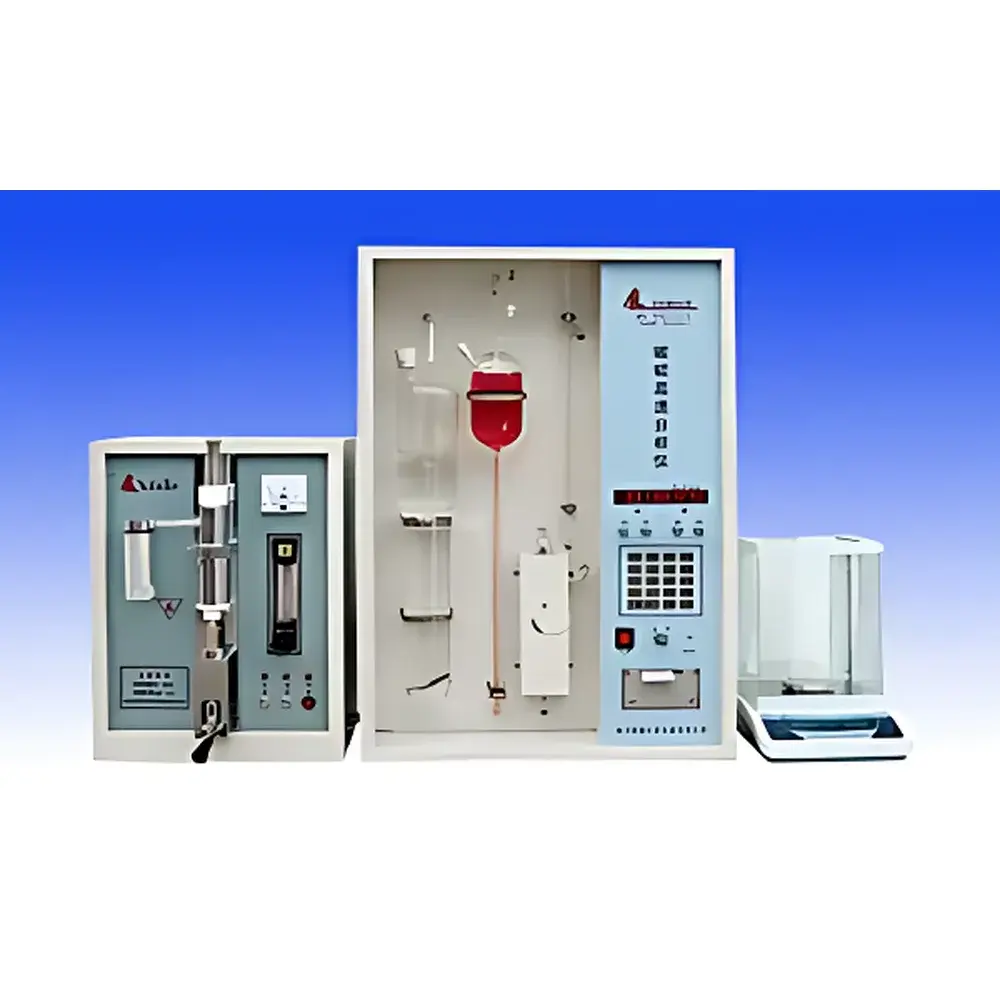
QL-CS3000A Carbon-Sulfur Analyzer by Qilin
| Brand | Qilin |
|---|---|
| Model | QL-CS3000A |
| Origin | Jiangsu, China |
| Analysis Method | CO₂ Gas Volumetry (C), Iodometric Titration (S) |
| C Range | 0.02–6.00 wt% |
| S Range | 0.005–0.300 wt% |
| Sample Mass Options | 0.25 g / 0.5 g / 1.0 g (auto-optimized per range) |
| Analysis Time | 65 s (with DL1A arc furnace), 85 s for dual-absorption mode |
| Compliance | GB/T 223.69–1997 (C), GB/T 223.68–1997 (S) |
| Operating Environment | 0–40 °C, 90.658–106.658 kPa |
Overview
The QL-CS3000A Carbon-Sulfur Analyzer is a dedicated high-precision elemental analyzer engineered for rapid and reliable quantification of total carbon (C) and sulfur (S) mass fractions in ferrous and non-ferrous metallurgical materials. Designed for integration with the DL1A high-energy arc combustion furnace, the instrument operates on two classical wet chemical principles: gas volumetric determination for carbon—based on CO₂ displacement measured via high-sensitivity differential pressure transducers—and iodometric titration for sulfur, where liberated SO₂ is absorbed and titrated with standardized iodine solution. This dual-method architecture ensures metrological traceability to national standards (GB/T 223.69–1997 and GB/T 223.68–1997) and delivers robust performance in demanding QC/QA environments such as steel mills, foundries, third-party testing laboratories, and raw material certification facilities. The system’s modular design supports seamless interfacing with analytical balances for variable sample mass input, eliminating fixed-weight constraints and enhancing throughput without compromising accuracy.
Key Features
- Differential-pressure-based gas volumetry for carbon measurement, utilizing calibrated pressure sensors with real-time drift compensation and microprocessor-driven data acquisition.
- Automated iodometric titration for sulfur analysis, featuring reagent delivery control without polarographic electrodes—reducing maintenance intervals and electrolyte-related failures.
- Variable sample mass operation (0.25 g, 0.5 g, or 1.0 g) with automatic range selection logic; software maps mass input to optimal calibration curves for C (0.02–6.00%) and S (0.005–0.300%).
- Isolated capacitive touch-key interface minimizes electromagnetic interference from arc furnace ignition and improves long-term operational stability.
- Integrated digital display and printer output with timestamped results; optional RS-232/USB connectivity for LIMS or ELN integration.
- Self-diagnostic routines for gas flow integrity, reagent level monitoring, and absorption efficiency validation prior to each analysis cycle.
Sample Compatibility & Compliance
The QL-CS3000A is validated for solid, homogeneous samples including carbon steels, alloy steels, cast irons, ferroalloys, copper and aluminum alloys, cement clinker, limestone, catalyst supports, and mineral concentrates. Sample preparation requires no acid digestion or fusion—only fine milling to ≤80 mesh and drying at 105 °C to remove surface moisture. All measurements comply with Chinese national standards GB/T 223.69 (carbon) and GB/T 223.68 (sulfur), which align methodologically with ISO 4935 (steel—determination of carbon content) and ASTM E1019 (standard test methods for determining carbon, sulfur, nitrogen, and oxygen in steel and iron). While not certified to FDA 21 CFR Part 11 or EU Annex 11 out-of-the-box, audit-ready data logs—including operator ID, sample ID, weight, date/time stamp, raw sensor outputs, and final reported values—are stored locally and exportable in CSV format for GLP/GMP documentation workflows.
Software & Data Management
The embedded firmware provides real-time graphical feedback during combustion and titration phases, displaying pressure curves for CO₂ evolution and titrant volume vs. potential response for SO₂ quantification. Calibration is performed using certified reference materials (CRMs) traceable to NIM (National Institute of Metrology, China); up to 12 multi-point calibration curves can be stored per element. Data files include full metadata: balance serial number, furnace electrode wear counter, gas cylinder pressure history, and ambient temperature/humidity readings. Export options support CSV, TXT, and PDF report generation with customizable templates. No cloud dependency—the system operates fully offline, ensuring data sovereignty and compliance with internal IT security policies common in industrial R&D and production QA departments.
Applications
- Quality control of incoming scrap metal and outgoing finished steel billets, slabs, and wire rods.
- Process optimization in electric arc furnace (EAF) and basic oxygen furnace (BOF) operations via rapid turnaround of C/S ratios.
- Verification of desulfurization efficiency in ladle metallurgy treatments.
- Raw material certification for limestone fluxes, coke, and synthetic slag components.
- Research-grade compositional screening of novel high-entropy alloys and powder metallurgy feedstocks.
- Environmental compliance testing of slag and dust residues for regulatory reporting under China’s GB 30760–2014 standard.
FAQ
What sample preparation is required prior to analysis?
Samples must be dried at 105 °C for 2 hours, cooled in a desiccator, and ground to ≤80 mesh. No acid digestion or fluxing is needed.
Can the instrument be used for non-metallic samples such as coal or polymers?
No—this analyzer is optimized for inorganic, high-temperature-combustible solids. Organic matrices with volatile halogens or phosphorus may interfere with SO₂ absorption and are outside its validated scope.
Is external calibration verification required between CRMs?
Yes. Daily verification using a secondary CRM is recommended per GB/T 223.69–1997 Annex B; system repeatability should remain within ±0.02% C and ±0.002% S over ten consecutive runs.
Does the system support remote diagnostics or firmware updates?
Firmware updates are performed via USB flash drive only; remote access is not implemented for cybersecurity reasons.
What maintenance intervals are specified for the titration module?
The iodine reagent reservoir requires replenishment every 200–250 analyses; the SO₂ absorption pipette and gas wash bottles should be cleaned weekly with deionized water and inspected for crystallization.





