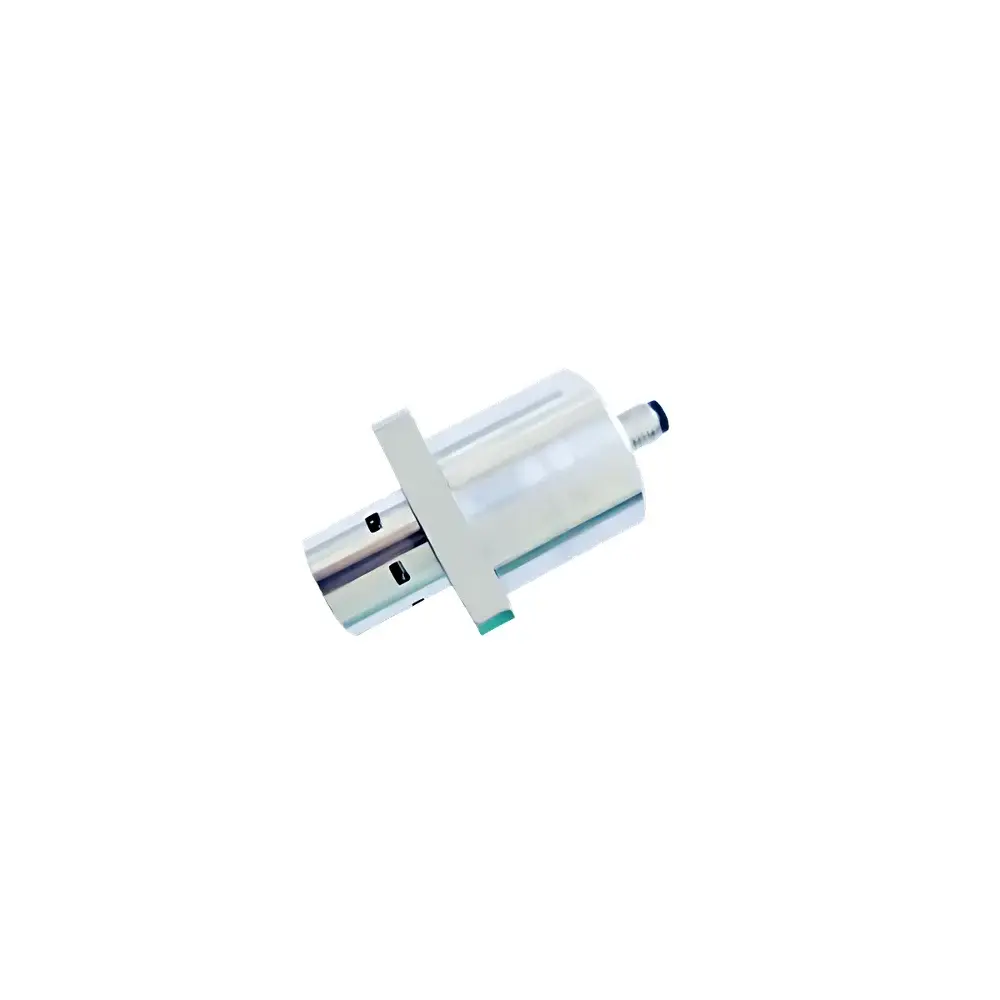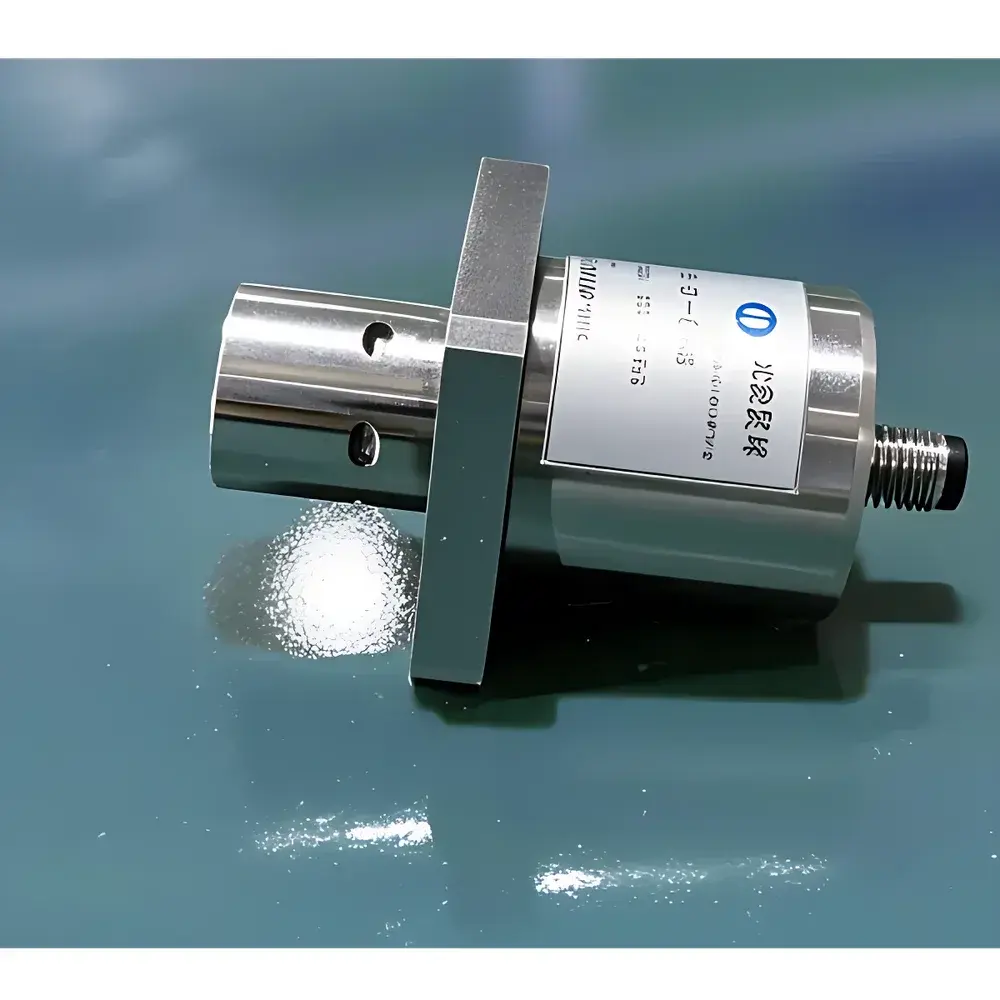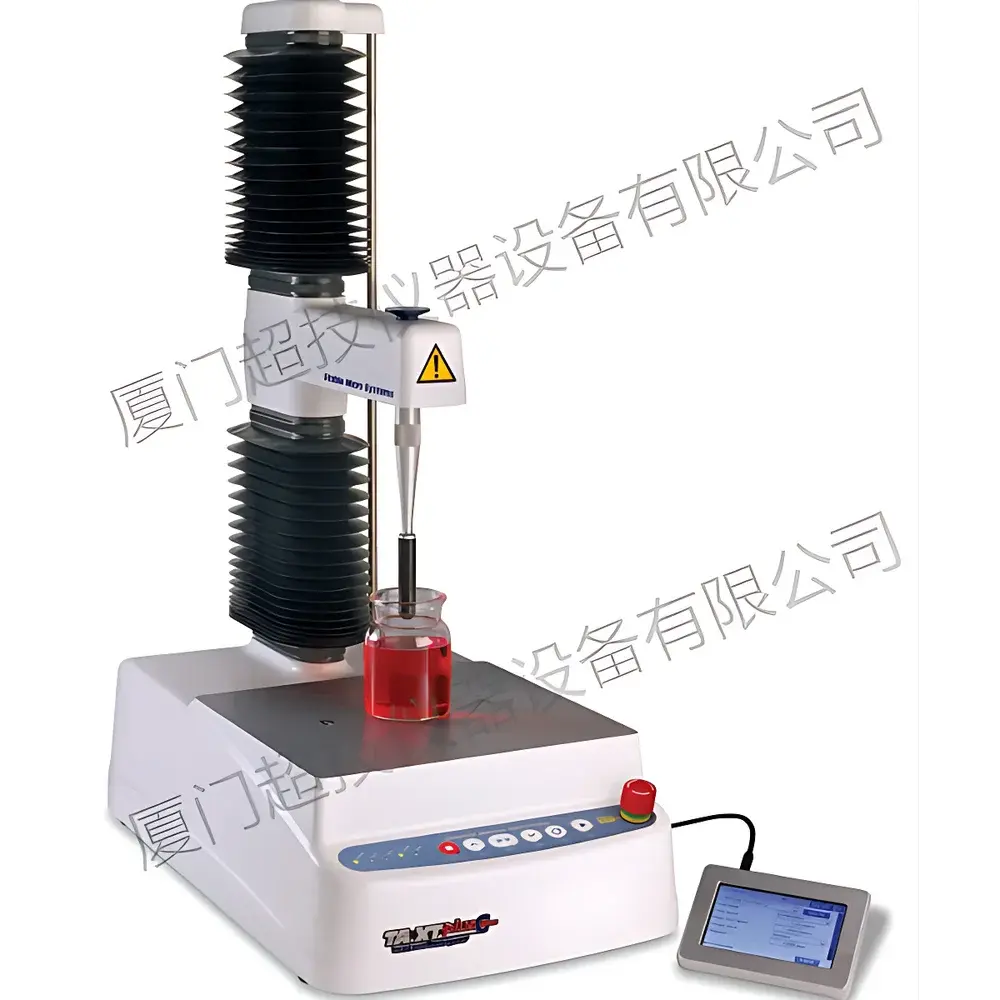
Stable Micro Systems TA.XTplus Texture Analyzer with Gel Strength Testing Module
| Key | Brand: Stable Micro Systems |
|---|---|
| Origin | UK |
| Model | TA.XTplus |
| Force Range | 0.5–50 kgf |
| Force Resolution | 0.1 g |
| Speed Range | 0.01–40 mm/s |
| Travel Distance | 0.001–370 mm |
| Position Resolution | 0.001 mm |
| Data Acquisition Rate | >2,000 points/sec (4-channel simultaneous sampling) |
| Compliance | ISO 11357-4, GMIA Gel Strength Guidelines, GB 6783–2013 |
Overview
The Stable Micro Systems TA.XTplus Texture Analyzer is a high-precision, motorized universal testing system engineered for objective mechanical property characterization of soft solids and semi-solid viscoelastic materials. Based on controlled-force compression, tension, extrusion, and penetration principles—governed by fundamental Hookean and viscoelastic deformation models—the instrument quantifies textural parameters critical to product development, quality control, and regulatory compliance in food science. Its modular probe architecture enables standardized execution of gel strength (Bloom value), spreadability, extrudability, cohesiveness, adhesiveness, and yield stress measurements per internationally recognized protocols including ISO 11357-4 (Plastics — Differential Scanning Calorimetry — Part 4: Determination of gel content), GMIA Gel Strength Test Methodology, and China’s national standard GB 6783–2013 (Gelatin — Determination of Bloom Strength). Designed and manufactured in Surrey, UK, the TA.XTplus integrates electromechanical precision with traceable metrology, delivering repeatable results across laboratories and production environments.
Key Features
- High-resolution dual-load-cell architecture supporting seamless switching between low-force (0.1 g resolution) and high-force (50 kgf max) measurement modes
- Programmable crosshead speed control from 0.01 to 40 mm/s with closed-loop feedback ensuring velocity stability ±0.1% of setpoint
- Sub-micron positional accuracy (0.001 mm) enabled by optical encoder feedback and zero-backlash ball-screw drive
- Real-time 4-channel synchronized data acquisition at >2,000 Hz, capturing force, displacement, time, and auxiliary sensor inputs (e.g., temperature, torque)
- Barcode-triggered test initiation via integrated USB scanner interface—eliminates manual protocol selection and reduces operator-induced variability
- Remote operation capability via iOS/Android mobile devices and tablets using Secure Socket Layer (SSL)-encrypted connection to the Exponent Connect software platform
- Modular probe library compliant with ISO/ASTM-defined geometries: cylindrical probes (P/2, P/36), spherical tips (P/0.5, P/2), extrusion cells (A/EX), and texture-specific fixtures for butter, jam, and gelatin testing
Sample Compatibility & Compliance
The TA.XTplus accommodates a broad spectrum of food matrices—from thermoreversible gels (gelatin, agar, carrageenan) and dairy spreads (butter, margarine, cream cheese) to fruit-based systems (jams, jellies, marmalades) and confectionery products (chocolate fillings, fondants). All gel strength tests follow Bloom methodology per GB 6783–2013: samples are conditioned at 10 °C for 16–18 h, then penetrated 4 mm into a 6.35 mm diameter cylindrical probe at 1 mm/s. Extrusion tests employ sealed piston configurations (A/EX fixture) to quantify yield pressure and flow consistency index for pumpable formulations. The system meets GLP/GMP documentation requirements through audit-trail-enabled software, electronic signatures per FDA 21 CFR Part 11, and calibration traceability to UKAS-accredited standards.
Software & Data Management
Exponent Connect v3.0 software provides full method programming, real-time visualization, and automated report generation. Users define multi-stage test sequences—including pre-test equilibration, trigger-based start conditions, dwell periods, and post-test recovery phases—without scripting. Over 400 peer-reviewed application notes and video tutorials are embedded directly within the software interface, covering gelatin bloom validation, jam spreadability correlation studies, and inter-laboratory reproducibility benchmarks. Raw data exports in CSV, Excel, and ASTM E1447-compliant XML formats support integration with LIMS and statistical process control platforms. Email auto-notification functionality dispatches validated reports upon test completion, enabling cross-functional review without local workstation access.
Applications
- Gelatin bloom strength quantification for raw material qualification and supplier benchmarking
- Impact assessment of hydrocolloid concentration, pH, and thermal history on carrageenan gel network integrity
- Spreadability profiling of dairy-based creams under variable temperature conditions (4–25 °C)
- Yield stress determination of fruit preserves to optimize filling line throughput and nozzle design
- Texture mapping of layered dessert systems (e.g., panna cotta + fruit coulis interfaces) via depth-controlled penetration
- Regulatory submission support for USP , EP 2.9.35, and Codex Alimentarius standards requiring instrumental texture verification
FAQ
What gel standards does the TA.XTplus support for routine calibration?
The system supports NIST-traceable stainless-steel reference weights and certified polymer gel standards aligned with ISO 11357-4 Annex B for thermal gelation validation.
Can extrusion data be correlated with rheological viscosity models?
Yes—extrusion force vs. displacement curves are convertible to apparent viscosity using the Mooney equation, provided die geometry and flow consistency are documented per ASTM D3835.
Is the software compliant with FDA 21 CFR Part 11 for electronic records?
Exponent Connect v3.0 includes role-based access control, electronic signatures, and immutable audit trails meeting all predicate rule requirements for regulated environments.
How is probe alignment verified prior to gel strength testing?
A built-in laser alignment tool and adjustable probe mount ensure perpendicularity within ±0.1° relative to the sample surface, as verified by digital inclinometer calibration.
Does SMS provide method transfer support between instruments?
Yes—method portability is ensured via standardized firmware versioning, probe ID tagging, and cross-platform Exponent script compatibility across TA.HDplus, TA.XTplus, and TA.HDi models.
Related Products