
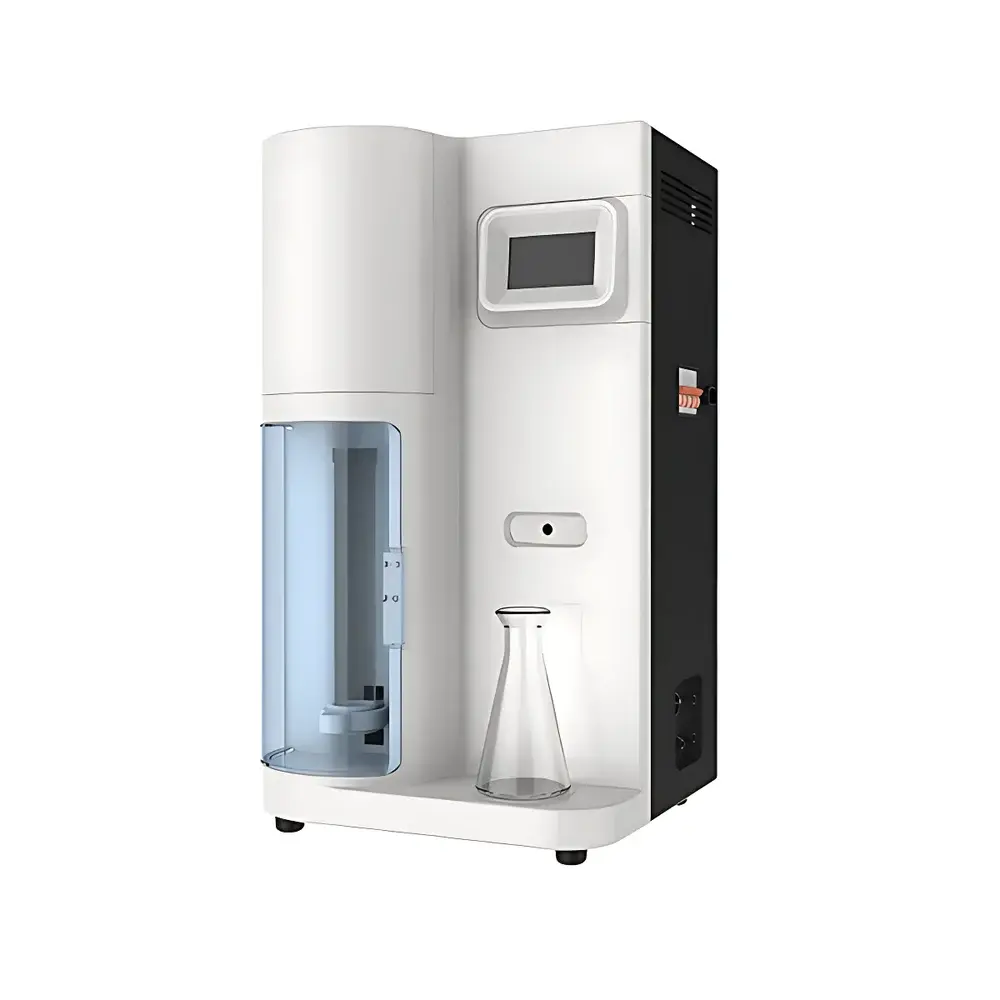
Sonnen K1305 Semi-Automatic Kjeldahl Nitrogen Determinator
| Brand | Sonnen |
|---|---|
| Origin | Shanghai, China |
| Manufacturer Type | Authorized Distributor |
| Instrument Type | Kjeldahl Nitrogen Determinator |
| Automation Level | Semi-Automatic |
| Nitrogen Range | 0.1–240 mg N (including nitrate nitrogen) |
| Distillation Time | 3–8 min per sample |
| Repeatability | ±0.5% RSD |
| Sample Weight Capacity | ≤6 g (solid) or ≤25 mL (liquid) |
| Recovery Rate | ≥99.5% (100% ± 0.5%) |
| Power Rating | 1800 W |
| Dimensions (L×W×H) | 420 × 365 × 710 mm |
| Linearity | RSD ≤1% within 1–3× nominal nitrogen content in digestion tube |
Overview
The Sonnen K1305 Semi-Automatic Kjeldahl Nitrogen Determinator is engineered for precise, trace-level quantification of total nitrogen and nitrate nitrogen in diverse solid and liquid matrices using the internationally standardized Kjeldahl digestion–distillation–titration methodology. Based on ISO 8585, AOAC 984.27, and ASTM D1142, the system performs acid digestion in concentrated sulfuric acid under catalytic conditions, followed by alkaline steam distillation, boric acid trapping, and endpoint detection via colorimetric titration. Designed for routine QC/QA laboratories in food safety, pharmaceutical development, agricultural research, environmental monitoring, and soil science, the K1305 delivers metrologically traceable results compliant with GLP and GMP documentation requirements. Its architecture integrates robust thermal control, pressure-regulated steam generation, and real-time fluidic monitoring to ensure method fidelity across heterogeneous sample types—without requiring operator intervention during critical distillation phases.
Key Features
- Programmable reagent delivery: automated dosing of NaOH solution, dilution water, and boric acid absorbent via high-precision PTFE diaphragm pump—resistant to corrosion, particulate clogging, and vacuum-induced hazards
- Intelligent steam management: digitally regulated steam generator with dual-level water level sensing, overtemperature cut-off, pressure transducer feedback, and self-cleaning cycle—eliminating dry-burn risk and ensuring consistent vapor output
- Operator-safe enclosure: transparent acrylic shield around digestion tube station; interlocked safety door sensor; real-time monitoring of cooling water flow (≥1.5 L/min), steam chamber temperature, condenser inlet/outlet temperatures, and digestion tube positioning
- Human-centered interface: 7-inch color TFT touchscreen with intuitive workflow navigation; programmable distillation duration (0–99 min), delay time (0–99 min), and steam intensity (0–100%); automatic parameter saving and recall
- Dual-mode operation: seamless switching between manual override and fully scheduled semi-automatic runs—supporting method validation, troubleshooting, and training scenarios
- Compliance-ready design: built-in self-diagnostic routines verifying pump function, sensor integrity, valve actuation, and thermal stability prior to each analysis cycle
Sample Compatibility & Compliance
The K1305 accommodates a broad spectrum of sample forms—including cereals, dairy powders, meat homogenates, pharmaceutical excipients, compost, sediment slurries, wastewater effluents, and plant tissues—within defined mass/volume limits (≤6 g solids or ≤25 mL liquids). All operational parameters adhere to national and international standards referenced in GB/T 22923–2008 and JJF 109–2012, with documented traceability to NIST-traceable nitrogen reference materials. The instrument’s CE marking confirms conformity with EU Machinery Directive 2006/42/EC and Electromagnetic Compatibility Directive 2014/30/EU. ISO 9001 quality management certification applies to manufacturing and final inspection processes. For regulated environments, audit trails, user access logs, and electronic signature support can be implemented via optional software modules compliant with FDA 21 CFR Part 11 requirements.
Software & Data Management
Embedded firmware enables direct calculation of nitrogen concentration (mg N), protein content (using standard conversion factors), and recovery efficiency based on certified reference standards. Raw data—including distillation start/stop timestamps, reagent volumes dispensed, steam pressure profiles, and titration endpoints—are stored internally with time/date stamping and user ID tagging. Export options include CSV and PDF formats compatible with LIMS integration. Optional PC-based software provides advanced reporting templates, statistical process control (SPC) charts, calibration curve management, and electronic record archiving aligned with ALCOA+ principles (Attributable, Legible, Contemporaneous, Original, Accurate, Complete, Consistent, Enduring, Available).
Applications
The K1305 serves as a core analytical platform in accredited testing laboratories performing nitrogen determinations per official methods across multiple sectors: crude protein quantification in feed and foodstuffs (AOAC 981.10, ISO 8968); total Kjeldahl nitrogen (TKN) in wastewater and sludge (EPA 351.2, ISO 11261); ammonium-nitrogen and nitrate-nitrogen speciation in soils and fertilizers (ISO 13878, DIN 19730); and cation exchange capacity (CEC) assessment via ammonium saturation (USDA NRCS Method 10-102). Its validated recovery rate (≥99.5%) and repeatability (±0.5% RSD) meet stringent acceptance criteria for proficiency testing schemes administered by FAPAS, UK NEQAS, and AOAC PT programs.
FAQ
What nitrogen species does the K1305 measure?
The instrument quantifies total Kjeldahl nitrogen (TKN), including organic nitrogen and ammonium, and—when used with appropriate pre-reduction steps—nitrate nitrogen via cadmium column or Devarda’s alloy reduction.
Is nitrate nitrogen measurement included in the standard configuration?
Yes, the K1305 supports both conventional TKN and nitrate-amended protocols when paired with optional reduction modules and validated sample preparation workflows.
Can the system be integrated into a laboratory information management system (LIMS)?
Raw data export in CSV format and optional software with ODBC connectivity enable bidirectional LIMS integration for automated result transfer and sample tracking.
What maintenance intervals are recommended for optimal performance?
Daily visual inspection of tubing and seals; weekly cleaning of condenser coils and steam trap; quarterly calibration verification using potassium sulfate reference material; annual preventive maintenance including pressure sensor validation and pump diaphragm replacement.
Does the instrument comply with FDA 21 CFR Part 11 requirements?
Out-of-the-box functionality meets foundational data integrity expectations; full Part 11 compliance—including electronic signatures, audit trail review, and role-based access control—is achievable through validated software add-ons and documented SOP implementation.





