
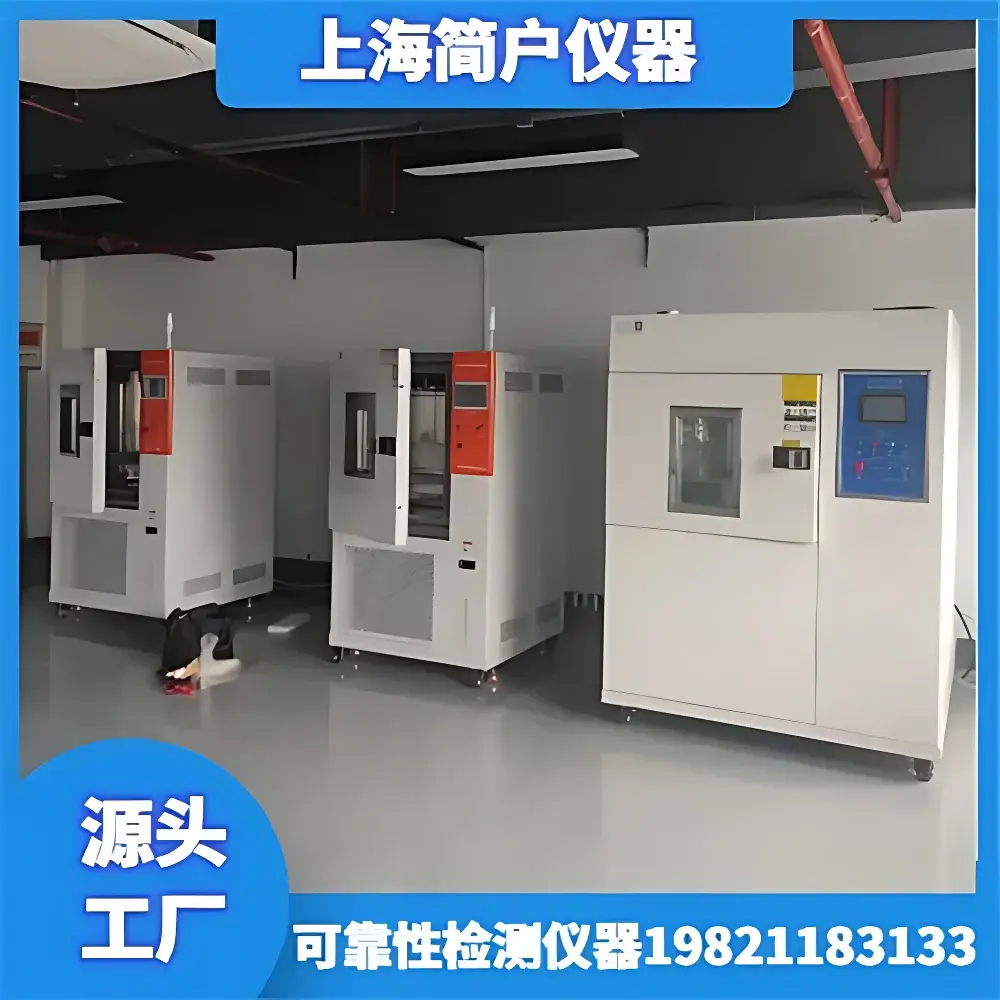
JianHu JH-Series Wide-Temperature Range Thermal Shock Test Chamber
| Brand | JianHu |
|---|---|
| Origin | Shanghai, China |
| Manufacturer Type | Authorized Distributor |
| Product Category | Domestic |
| Model | JH-Wide-Temp Thermal Shock Chamber |
| Price Range | USD 1,100 – 11,000 |
| High-Temperature Range | Up to +200 °C |
| Low-Temperature Range | Down to −60 °C |
| Thermal Shock Range | −55 °C to +125 °C |
| Temperature Stability | ±0.5 °C (steady-state) |
| Heating Rate | ≥15 °C/min (typical, 5–20 °C/min depending on load and chamber size) |
| Cooling Rate | ≥10 °C/min (typical, 5–15 °C/min depending on load and chamber size) |
Overview
The JianHu JH-Series Wide-Temperature Range Thermal Shock Test Chamber is an engineered environmental simulation system designed for accelerated reliability assessment under extreme thermal cycling conditions. Based on a dual-chamber (hot/cold) or single-chamber with rapid air transfer architecture, it subjects test specimens to controlled, repetitive transitions between ultra-low and high-temperature extremes—enabling evaluation of thermal expansion mismatch, interfacial delamination, solder joint fatigue, and material embrittlement. Its operational envelope spans −60 °C to +200 °C, exceeding standard IEC 60068-2-14 and MIL-STD-810H thermal shock test profiles. This range supports qualification testing across aerospace electronics, automotive power modules, high-reliability PCBAs, and advanced packaging substrates where transient thermal gradients exceed 100 °C within seconds.
Key Features
- Triple-zone temperature control architecture with independent hot and cold chambers, minimizing cross-contamination and ensuring repeatable thermal transition profiles
- High-efficiency cascade refrigeration system using environmentally compliant R404A/R23 mixed refrigerant, enabling stable operation at −60 °C without liquid nitrogen dependency
- Heating via high-density stainless-steel sheathed NiCr resistance elements with PID+ fuzzy logic control for ±0.3 °C setpoint accuracy in steady state
- Programmable thermal shock cycles with adjustable dwell times (1 min to 999 min), transfer time (<15 s typical), and up to 999 segments per test program
- Integrated safety interlocks including over-temperature cut-off, refrigerant pressure monitoring, door safety switch, and real-time chamber leak detection
- Stainless-steel 304 interior with rounded corners and removable insulated shelves for compatibility with DIN/ISO-standard test fixtures and DUT mounting plates
Sample Compatibility & Compliance
The JH-Series accommodates samples up to 500 mm × 500 mm × 500 mm (W×D×H), with optional custom cavity configurations available. It supports standard test specimen mounting via universal rail systems compatible with JEDEC trays, socketed IC carriers, and automotive ECU housings. The chamber meets structural and performance requirements referenced in ASTM D5229/D5229M (low-temperature impact), ISO 16750-4 (road vehicles—electrical loads), and IEC 60749-25 (integrated circuits—thermal shock). While not certified to UL 61010-1 or ATEX by default, it complies with CE marking directives (2014/30/EU EMC, 2014/35/EU LVD) when configured with optional safety upgrades. Calibration traceability follows ISO/IEC 17025 guidelines through third-party accredited providers.
Software & Data Management
Equipped with JianHu’s proprietary JH-TCMS v3.2 control software, the system provides full-cycle programmability, real-time temperature logging at 1 Hz resolution, and automated report generation in PDF/CSV formats. The interface supports user-defined pass/fail criteria based on maximum deviation from nominal profile, dwell stability thresholds, and cumulative cycle counting. Audit trail functionality records operator login, parameter changes, calibration events, and alarm history—fully compliant with FDA 21 CFR Part 11 requirements when deployed with Windows OS domain authentication and electronic signature modules. Remote monitoring via Ethernet (TCP/IP) or optional Wi-Fi enables integration into centralized lab management platforms such as LabVantage or Thermo Fisher SampleManager.
Applications
- Electronics reliability validation: thermal cycling of GaN/SiC power devices, MEMS sensors, and multi-die stacked packages per JEDEC JESD22-A104E
- Automotive component qualification: engine control units (ECUs), ADAS radar modules, and battery management systems (BMS) under ISO 16750-4 Clause 4.3 (thermal shock)
- Aerospace hardware screening: avionics enclosures, RF front-end assemblies, and composite structural joints exposed to re-entry thermal transients
- Materials science research: characterization of coefficient of thermal expansion (CTE) mismatch in metal-ceramic brazed joints, polymer matrix composites, and thin-film metallization layers
- Quality assurance in contract manufacturing: incoming inspection of solder paste performance, conformal coating adhesion, and wire bond integrity after thermal stress exposure
FAQ
What is the minimum achievable transfer time between hot and cold zones?
Typical transfer time is ≤12 seconds for standard configuration; optional high-speed pneumatic transfer mechanisms reduce this to ≤8 seconds.
Does the chamber support ramp-and-soak profiles in addition to step thermal shock?
Yes—JH-TCMS v3.2 includes full ramp/soak/dwell programming, enabling complex thermal profiles such as linear ramps (0.1–20 °C/min), plateau holds, and variable-rate cooling/heating sequences.
Is NIST-traceable calibration documentation provided with shipment?
Standard delivery includes factory calibration certificate (−60 °C to +200 °C at three points); NIST-traceable calibration with uncertainty budget is available as an optional service.
Can the system be integrated into a larger environmental test suite with humidity or vibration modules?
Yes—the JH-Series features Modbus TCP and RS-485 interfaces for synchronized operation with complementary chambers (e.g., combined thermal-humidity or thermal-vibration test systems) via centralized SCADA or custom PLC control.
What maintenance intervals are recommended for long-term operational reliability?
Compressor oil and filter replacement every 2,000 operating hours; refrigerant circuit leak check annually; temperature sensor verification every 6 months per ISO/IEC 17025 internal quality protocol.



