
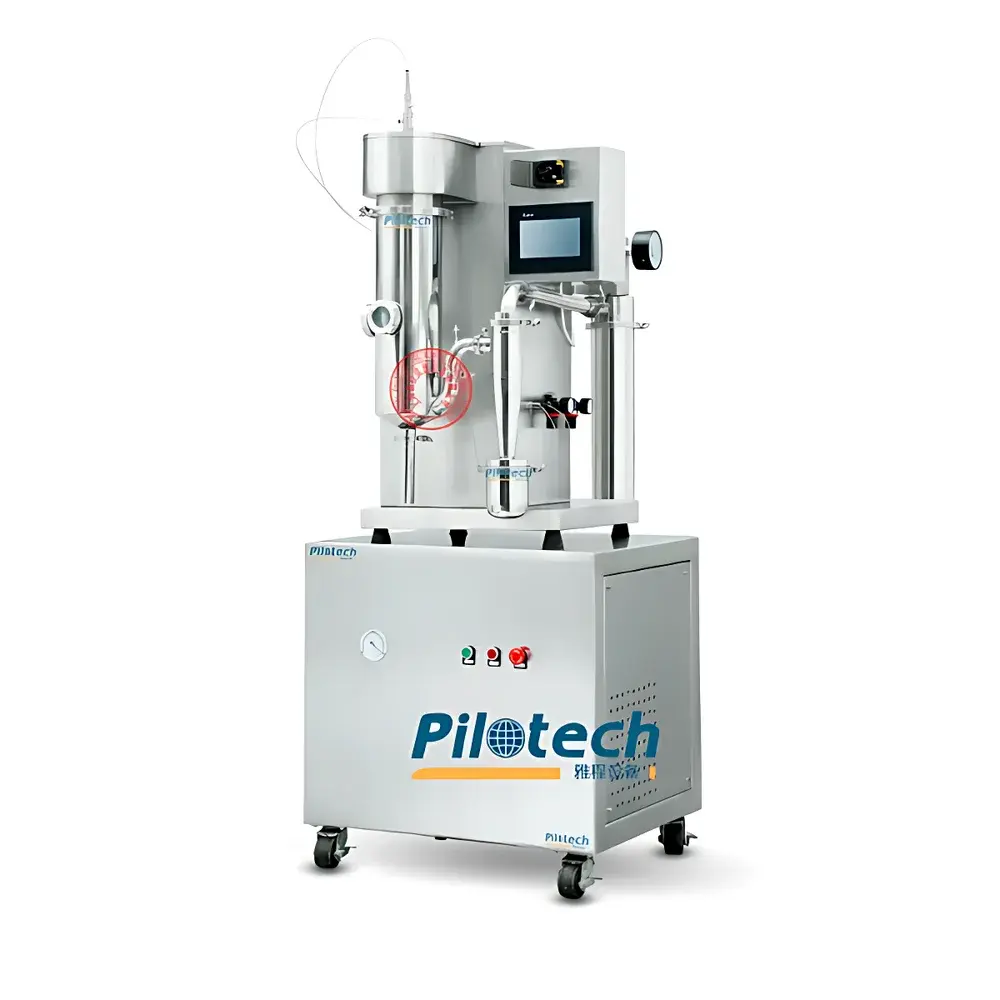
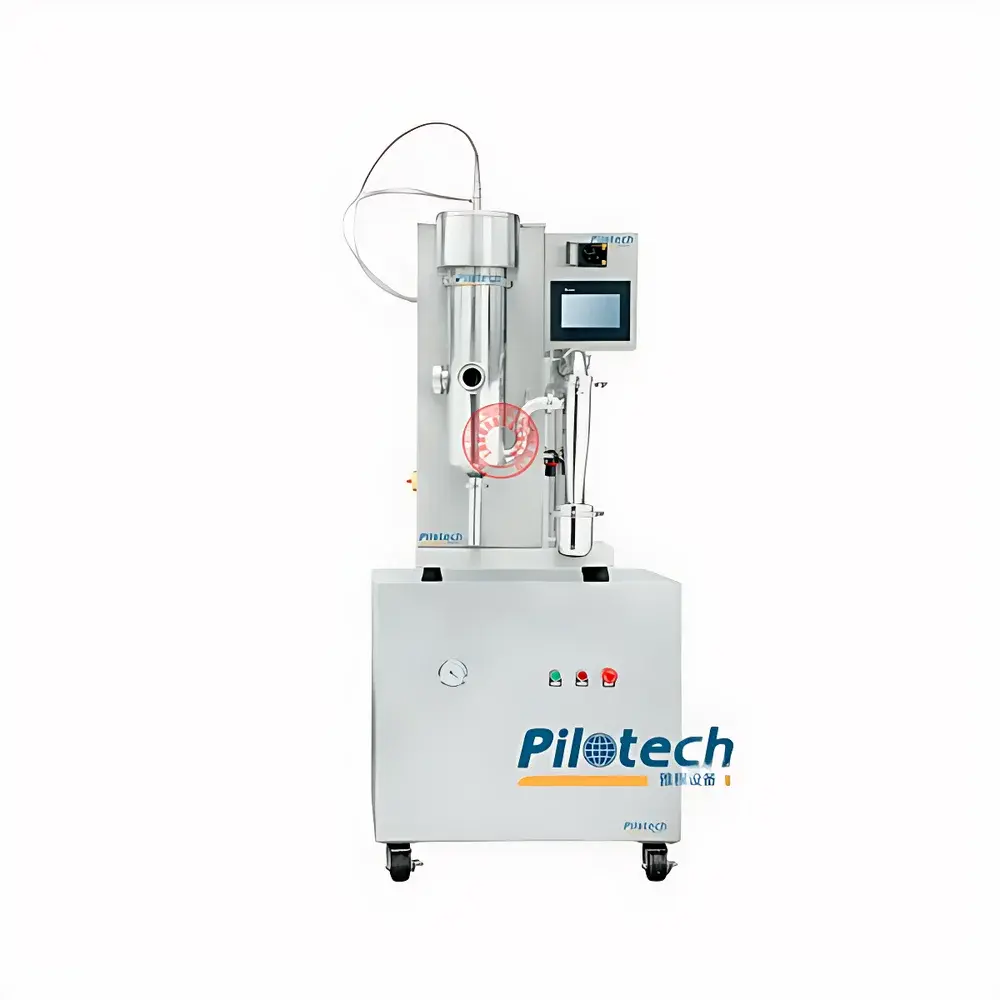
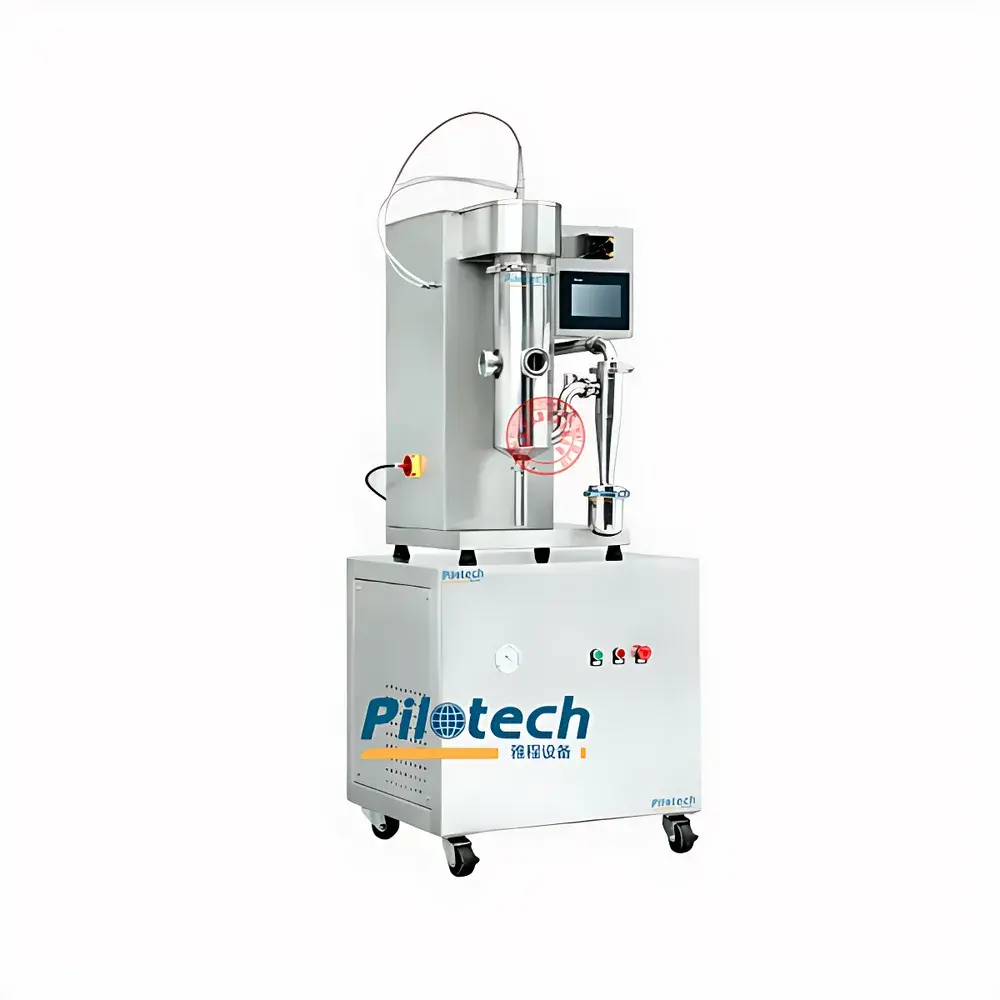
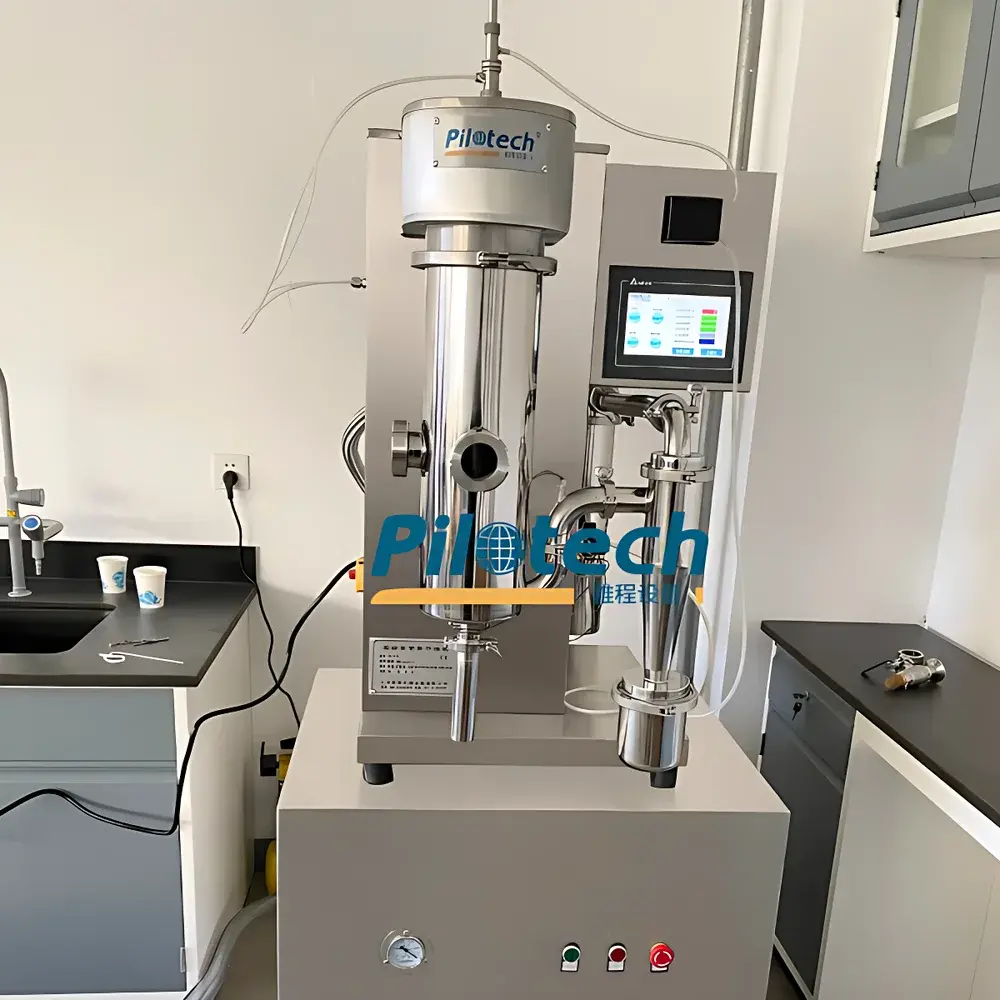
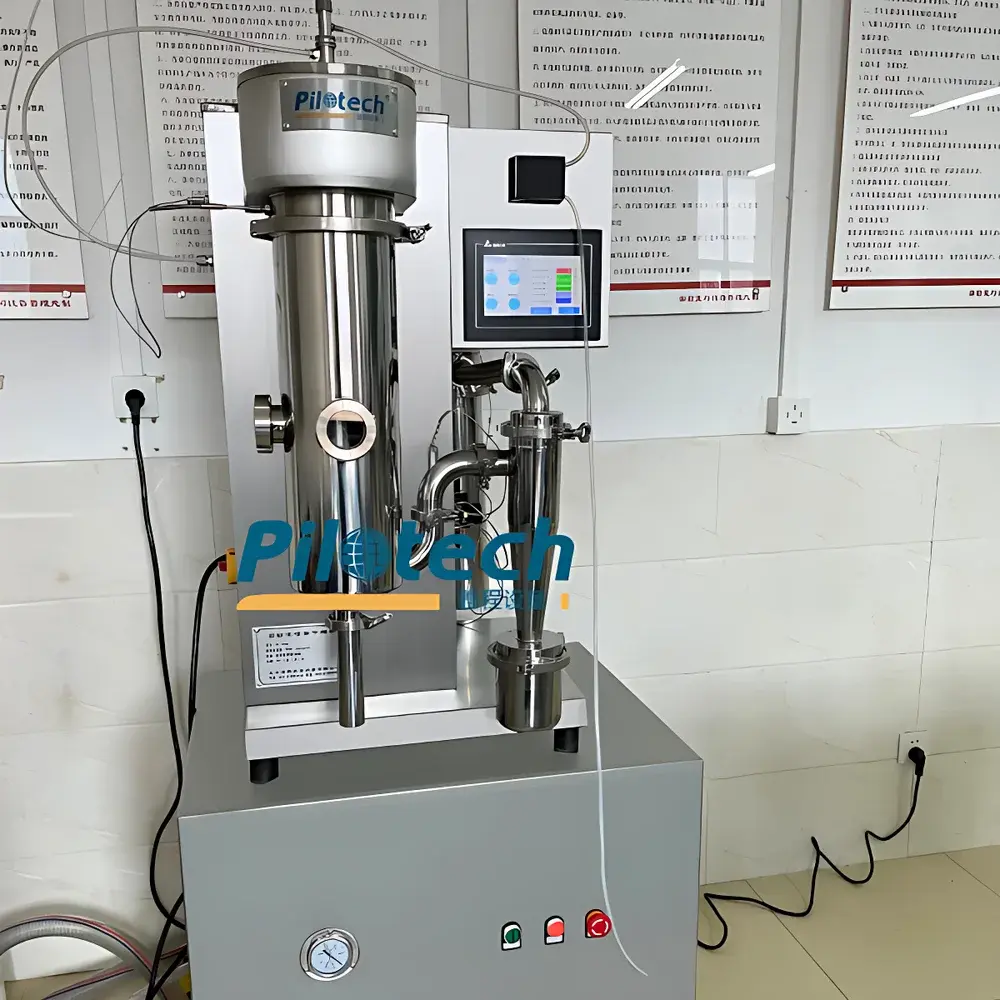
Yacheng YC-510 Benchtop Vacuum-Low-Temperature Spray Dryer
| Brand | Yacheng / PILOTECH |
|---|---|
| Origin | Shanghai, China |
| Manufacturer Type | Direct Manufacturer |
| Country of Origin | China |
| Model | YC-510 |
| Sample Type | Aqueous solutions only |
| Maximum Feed Rate | 500 mL/h |
| Inlet Air Temperature Range | 50–200 °C |
| Particle Size Distribution | 1–25 µm |
| Vacuum Level | −0.08 MPa |
| Temperature Control Accuracy | ±1 °C |
| Nozzle Orifice | 1.0 mm standard (optional: 0.5 / 0.8 / 1.5 / 2.0 mm) |
| Minimum Sample Volume | 10–20 mL (dependent on solids content) |
| Total Power Consumption | 3.5 kW |
Overview
The Yacheng YC-510 Benchtop Vacuum-Low-Temperature Spray Dryer is an engineered solution for the gentle, rapid, and scalable drying of thermolabile materials under controlled low-temperature and reduced-pressure conditions. Unlike conventional spray dryers that rely on high inlet air temperatures (typically ≥120 °C), the YC-510 integrates a modular vacuum system with precision PID-controlled heating to enable true low-temperature spray drying—down to 50 °C inlet temperature—while maintaining efficient solvent evaporation kinetics. This is achieved through the physical principle of boiling point depression under sub-atmospheric pressure: lowering the system pressure reduces the vaporization temperature of water and other volatile solvents, allowing rapid droplet desolvation without thermal degradation. The instrument is particularly suited for applications where preservation of biological activity, molecular conformation, or oxidative stability is critical—such as live probiotics, enzymatic preparations, glycosylated natural product extracts, heat-labile polymers, and volatile aroma compounds.
Key Features
- Modular architecture: Separable benchtop spray dryer unit and vacuum module for seamless switching between standard and vacuum-assisted low-temperature operation.
- Real-time PID temperature control with ±1 °C accuracy across the full 50–200 °C inlet temperature range.
- Coaxial two-fluid nozzle design fabricated from high-grade stainless steel (AISI 316), ensuring symmetrical atomization and eliminating wall impingement; nozzle position is vertically adjustable for optimal spray trajectory alignment.
- Touchscreen LCD interface with intuitive Chinese-language UI (configurable firmware supports English localization upon request); all parameters—including feed rate, temperature setpoint, and vacuum level—are digitally logged and recallable.
- Integrated peristaltic feed pump with continuous flow regulation (0–500 mL/h), enabling precise control over residence time and particle morphology.
- Full stainless-steel construction (304/316) compliant with laboratory-grade corrosion resistance and cleanability standards.
Sample Compatibility & Compliance
The YC-510 is validated for aqueous-based feedstocks only, including protein solutions, bacterial suspensions, polysaccharide extracts, and colloidal dispersions with total solids content up to 25 wt%. It is not suitable for organic solvents, high-viscosity melts, or suspensions containing abrasive particulates >50 µm. The system meets general safety requirements per IEC 61010-1 for laboratory electrical equipment. While not certified to ISO 22000 or FDA 21 CFR Part 11 out-of-the-box, its digital logging capability (time-stamped temperature, feed rate, and vacuum data) supports GLP/GMP-aligned documentation when integrated into validated lab workflows. Users performing pharmaceutical or clinical trial material processing are advised to conduct in-house IQ/OQ/PQ validation per ASTM E2500 and USP .
Software & Data Management
The embedded controller records operational parameters at 1-second intervals and stores them in CSV format on internal flash memory (≥10,000 cycles). Data export is supported via USB port; no proprietary software installation is required. For integration into centralized LIMS or ELN platforms, the device provides RS-232 serial output (Modbus RTU protocol) for external telemetry acquisition. Audit trail functionality—including operator ID tagging and parameter change history—is available via optional firmware upgrade (v3.2+), satisfying baseline requirements for traceability in regulated environments.
Applications
- Stabilization of live microorganisms (e.g., Lactobacillus, Bifidobacterium) into respirable or ingestible powder formats without loss of viability.
- Drying of monoclonal antibody formulations and enzyme conjugates while retaining tertiary structure and catalytic activity.
- Production of amorphous solid dispersions for poorly water-soluble phytochemicals (e.g., curcumin, resveratrol) with enhanced dissolution kinetics.
- Rapid prototyping of nanostructured polymer microparticles (PLGA, chitosan) for controlled release studies.
- Preparation of reference standards for food authenticity testing—preserving volatile terpenes and Maillard reaction products in dried fruit or herb extracts.
FAQ
Can the YC-510 process organic solvents such as ethanol or acetone?
No. The system is designed exclusively for aqueous feed solutions. Organic solvents pose explosion hazards under vacuum and may compromise gasket integrity or corrode internal components.
What is the typical residual moisture content of dried powders?
Under optimized vacuum-low-temperature conditions (inlet air: 55 °C, vacuum: −0.08 MPa), final moisture content is consistently ≤1.0 wt%, as verified by Karl Fischer titration (ASTM D6304).
Is the nozzle interchangeable without tools?
Yes. The coaxial nozzle assembly features quick-release bayonet mounting; standard (1.0 mm) and optional orifices can be swapped in <60 seconds without disassembly of gas/liquid lines.
Does the system support GMP-compliant electronic signatures?
Not natively. However, raw log files exported via USB may be imported into third-party validated e-signature platforms (e.g., LabArchives, Benchling) for regulatory submission.
What maintenance intervals are recommended?
Daily: Clean nozzle and collection chamber with deionized water. Quarterly: Inspect vacuum pump oil, replace if discolored or emulsified. Annually: Calibrate temperature sensor against NIST-traceable reference probe.



