Huake Instrument HK-1309pH Computational pH Analyzer
| Brand | Huake Instrument |
|---|---|
| Origin | Beijing, China |
| Model | HK-1309pH |
| Measurement Principle | Conductivity-based pH calculation (VGB-R 450L compliant) |
| pH Range | 7.5–11.5 |
| Cation Conductivity Range | 0.000–200.0 µS/cm (with selectable cell constants: 0.01, 0.1, 1.0 cm⁻¹) |
| Resolution | 0.001–0.1 µS/cm (dependent on range) |
| Ammonia Range | 0.01–10 ppm |
| Temperature Compensation | Linear, neutral salt, ammonia water, strong acid modes |
| Compliance | HK-338 Enterprise Standard, JJG 376–2007 Verification Regulation for Conductivity Meters |
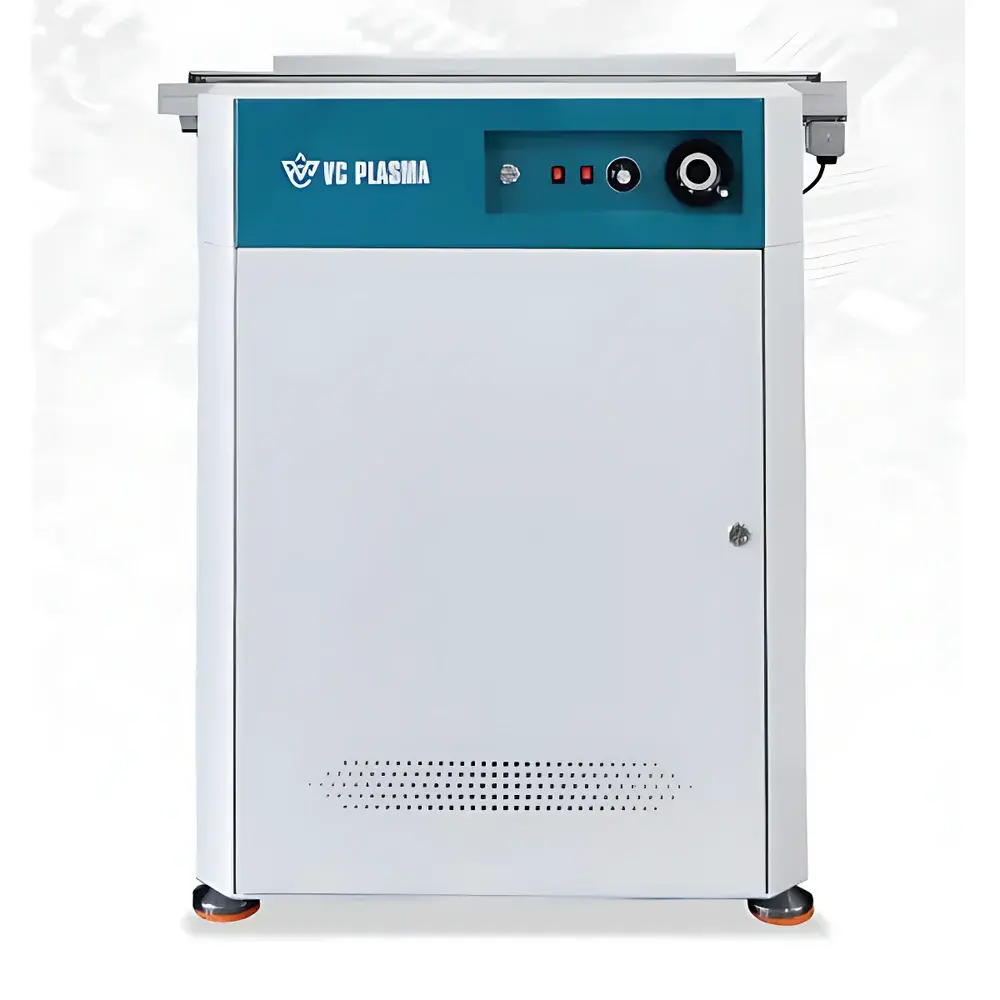
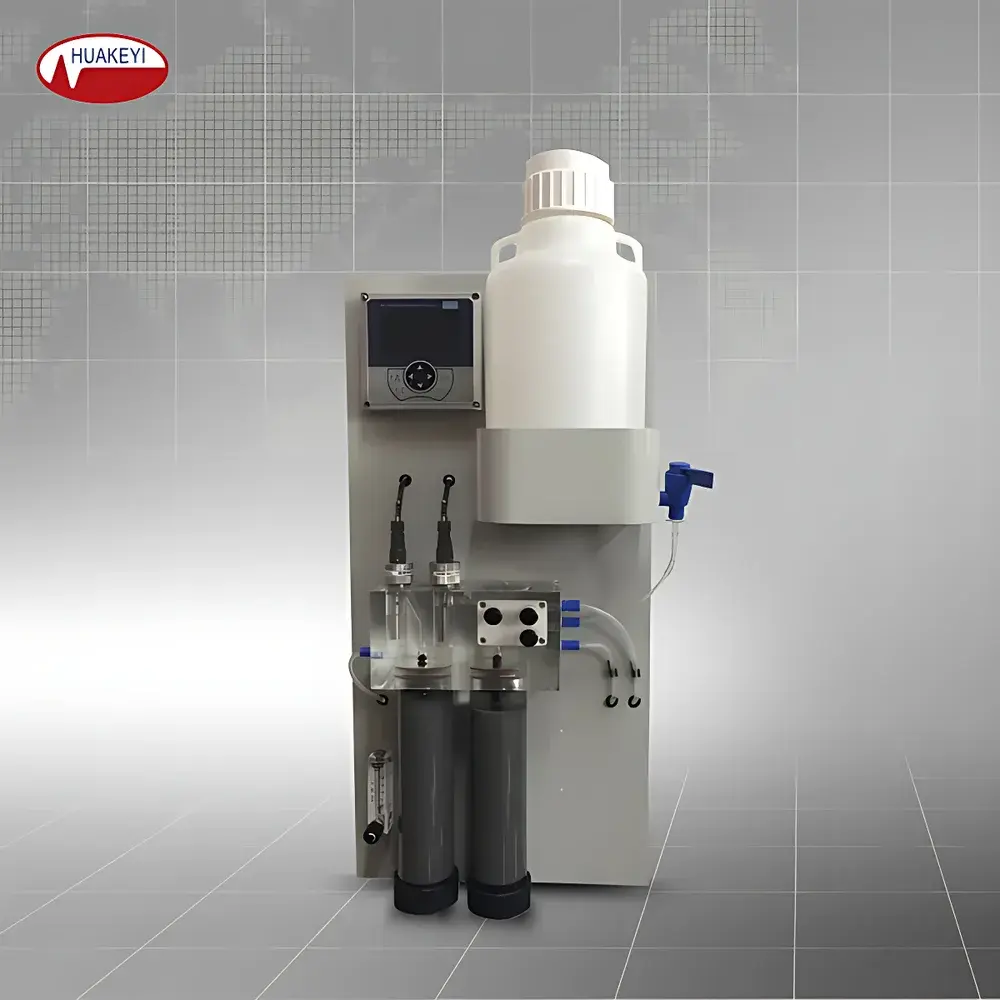
| System Integration | Integrated stainless-steel panel with flow cell, cation exchange column, regeneration unit, solenoid valves, and dual-conductivity sensors |
Overview
The Huake Instrument HK-1309pH Computational pH Analyzer is an industrial-grade online analytical system engineered for high-precision pH determination in ultra-pure, low-conductivity water streams—specifically targeting boiler feedwater, condensate, and steam cycle samples in fossil-fueled power plants. Unlike conventional glass electrode-based pH meters, which suffer from high impedance errors, liquid junction instability, and sodium error in sub-1 µS/cm conductivity environments, the HK-1309pH implements a computational methodology grounded in the German VGB-R 450L guideline. It derives pH indirectly by measuring both specific conductivity and cation conductivity (after cation exchange), then applying thermodynamically consistent algorithms to calculate hydrogen ion activity in ammoniated pure water systems. This approach eliminates electrode drift, reference junction contamination, and temperature-induced asymmetry—critical failure modes in traditional pH sensing under GLP- and ISO 5667-compliant power plant water chemistry monitoring.
Key Features
- Conductivity-derived pH computation per VGB-R 450L: Eliminates reliance on pH electrodes and associated calibration drift, junction potential errors, and response lag in low-ionic-strength media.
- Multi-parameter simultaneous output: Real-time display and analog/digital output of specific conductivity, cation conductivity, calculated pH (7.5–11.5), ammonia concentration (0.01–10 ppm), and sample temperature.
- Configurable temperature compensation: Supports linear, neutral salt, ammonia-water, and strong acid models—enabling accurate correction across varying base chemistry profiles in drum-type and once-through boilers.
- Integrated cation exchange system: Onboard regenerable cation resin column with automated valve sequencing and regeneration cycle control ensures long-term stability of cation conductivity measurement.
- Modular stainless-steel panel architecture: All components—including dual conductivity sensors (K = 0.01/0.1/1.0 cm⁻¹), flow-through cell, pressure-regulated sample loop, and pneumatic actuation—are pre-engineered and factory-aligned for ASME B31.1-compliant installation in hazardous area Zone 2 environments.
- Traceable metrology: Fully compliant with JJG 376–2007 (Chinese national verification regulation for conductivity meters) and aligned with HK-338 enterprise standard for conductometric instrumentation—supporting audit-ready calibration documentation.
Sample Compatibility & Compliance
The HK-1309pH is validated exclusively for use in single-base alkalizing agent systems where ammonia is the dominant volatile treatment chemical. Per VGB-R 450L requirements, optimal performance assumes: (1) absence of mixed alkalizing agents (e.g., no co-dosing of morpholine or ethanolamine); (2) chloride contamination limited to NaCl at concentrations ≤ 100 ppb; (3) phosphate content < 0.5 mg/L; and (4) negligible non-volatile cationic contaminants when pH < 8.0. The analyzer is not suitable for seawater, wastewater, or high-TDS industrial process streams. It meets electromagnetic compatibility (EMC) requirements per IEC 61326-1 for industrial environments and supports SIL 2 functional safety integration via optional HART 7 or Modbus TCP outputs. Data integrity conforms to ALCOA+ principles, with full audit trail capability when paired with compliant DCS historian systems.
Software & Data Management
The embedded firmware provides real-time calculation logging with timestamped raw conductivity values, temperature readings, and derived parameters stored in non-volatile memory (retention ≥ 10 years). Optional RS-485/Modbus RTU or Ethernet/IP interfaces enable seamless integration into DeltaV, PCS7, or Emerson DeltaV DCS platforms. All configuration changes—including cell constant assignment, temperature model selection, and alarm thresholds—are digitally signed and version-logged. When deployed in regulated environments (e.g., ISO 9001-certified power generation facilities), the system supports 21 CFR Part 11-compliant electronic records when connected to validated third-party data acquisition software with user access controls and electronic signature enforcement.
Applications
- Continuous pH monitoring of turbine condensate in supercritical coal-fired units per ASTM D4582 and VGB-R 450L.
- Closed-loop ammonia dosing control in high-pressure boiler feedwater systems (ASME PTC 19.11).
- Corrosion mitigation verification in nuclear secondary-side water chemistry programs (EPRI TR-102291).
- Commissioning support for ultra-supercritical (USC) plant start-up chemistry campaigns requiring < ±0.05 pH uncertainty.
- Regulatory reporting for China’s DL/T 805 series standards on thermal power plant water and steam quality.
FAQ
Why does this instrument calculate pH instead of measuring it directly with a glass electrode?
Because glass electrodes exhibit significant measurement uncertainty (> ±0.2 pH) in ultra-pure water (< 0.2 µS/cm) due to high source impedance, slow response, and liquid junction potential instability—conditions routinely encountered in modern power plant condensate systems.
Can the HK-1309pH be used with amine-based alkalizing agents other than ammonia?
No. The VGB-R 450L algorithm is calibrated specifically for NH₃/NH₄⁺ equilibria. Morpholine, cyclohexylamine, or ethanolamine introduce non-linear conductance contributions that invalidate the computational model.
Is cation exchange column regeneration performed manually or automatically?
Regeneration is fully automated via integrated solenoid valves and programmable logic—triggered either by elapsed time or cation conductivity deviation exceeding user-defined thresholds.
What certifications are available for validation in GMP or ISO 17025 laboratories?
While the HK-1309pH itself is not ISO/IEC 17025-accredited, its measurement traceability chain complies with JJG 376–2007, and factory calibration certificates include uncertainty budgets referenced to NIM (National Institute of Metrology, China) conductivity standards.
Does the system support remote diagnostics or predictive maintenance alerts?
Yes—via optional HART 7 diagnostics, the analyzer reports sensor health status, resin exhaustion indicators, flow rate anomalies, and temperature sensor deviation—enabling condition-based maintenance planning within CMMS platforms.
Related Products