
Eco-Watch SPAC Integrated Ecological Remote Sensing and Telemetry System
| Origin | Shanghai, China |
|---|---|
| Manufacturer Type | Authorized Distributor |
| Regional Origin | Domestic (China) |
| Model | Eco-Watch |
| Pricing | Available Upon Request |
Overview
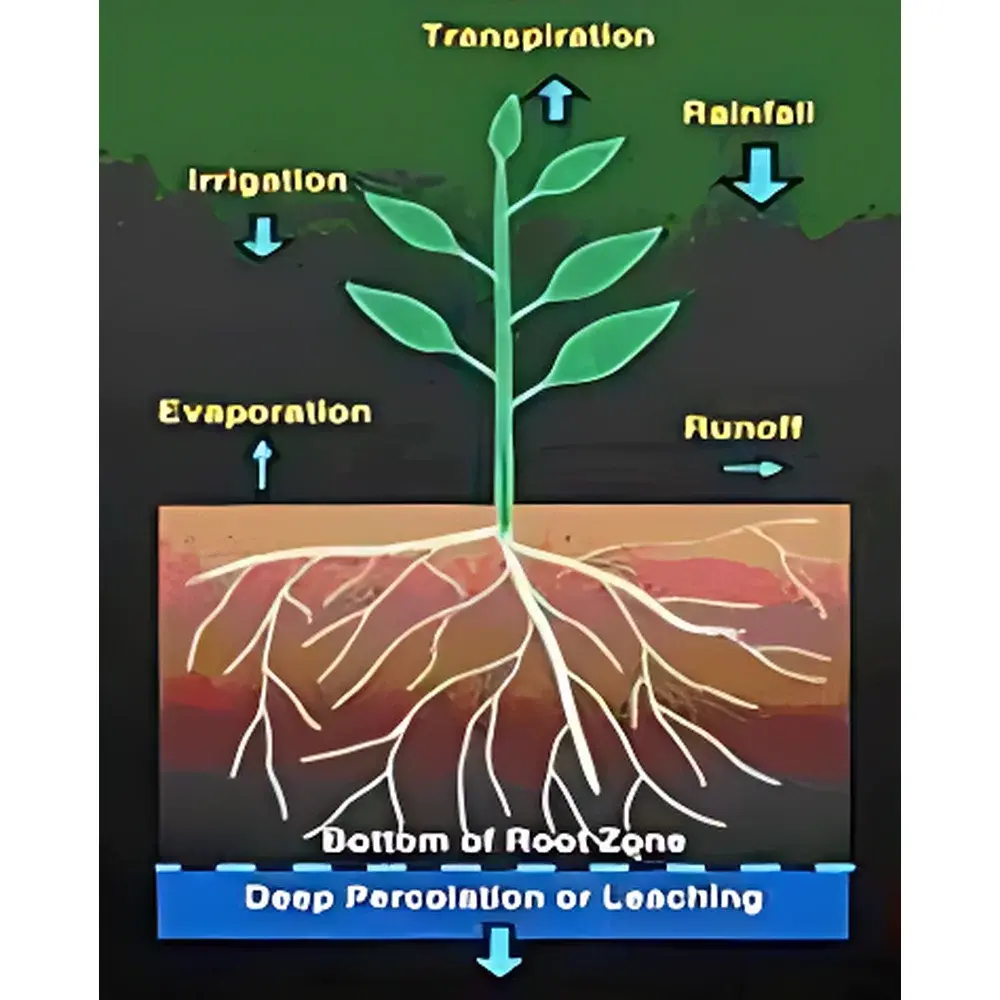
The Eco-Watch SPAC Integrated Ecological Remote Sensing and Telemetry System is a purpose-built, multi-compartment environmental monitoring platform engineered to quantify dynamic water, energy, and information fluxes across the Soil–Plant–Atmosphere–Groundwater–Surface Water continuum—commonly referred to as the “Five-Water” (5W) system. Rooted in Philip’s foundational Soil–Plant–Atmosphere Continuum (SPAC) theory and extended by Prof. Liu Changming’s conceptual framework of interlinked atmospheric, plant, surface, soil, and groundwater hydrological reservoirs, the system implements a physically consistent, sensor-fused architecture for long-term, synchronized observation of biogeochemical interfaces. It operates on principles of eddy covariance, thermocouple-based sap flow measurement, time-domain reflectometry (TDR), tensiometric water potential sensing, optical spectral reflectance (NDVI, PRI, CIred-edge), and multi-level piezometric and water quality profiling. Designed for deployment in agro-ecosystems, forest watersheds, and semi-arid riparian zones, Eco-Watch supports hypothesis-driven research into coupled hydrological–physiological feedbacks under changing climate and land-use regimes.
Key Features
- Modular, expandable architecture supporting simultaneous acquisition from ≥30 physical, physiological, and geochemical parameters across four environmental compartments
- High-temporal-resolution telemetry: sub-minute sampling intervals for meteorological and plant physiological variables; 15-minute logging for soil moisture profiles and groundwater metrics
- Field-hardened sensor nodes with IP68-rated enclosures, solar-rechargeable power management, and LoRaWAN/NB-IoT dual-mode wireless backhaul
- Integrated calibration traceability: onboard reference sensors for temperature, humidity, and pressure; factory-calibrated TDR probes certified to ASTM D5778 and ISO 11277
- Edge-computing gateway enabling real-time quality control (e.g., spike detection, gap-filling via linear interpolation and Penman-Monteith-based estimation)
- Compliance-ready data structure: timestamped, unit-annotated, metadata-enriched CSV/NetCDF outputs aligned with FAIR principles and ICOS (Integrated Carbon Observation System) data standards
Sample Compatibility & Compliance
Eco-Watch is validated for continuous operation across diverse terrestrial biomes—including irrigated croplands, deciduous and coniferous forests, grassland-steppe ecotones, and shallow-unconfined aquifer systems. All embedded sensors meet IEC 60529 (IP68), IEC 61000-4-3 (EMC immunity), and ISO 14644-1 Class 8 cleanroom handling requirements during manufacturing. The system conforms to GLP-aligned field data collection protocols, with audit trails for sensor initialization, firmware updates, and manual intervention events. Groundwater probes comply with US EPA Method 1604 for microbial enumeration support, while meteorological sensors adhere to WMO Guide to Meteorological Instruments and Methods of Observation (CIMO Guide, 2022 edition). Data export formats satisfy ISO/IEC 17025:2017 clause 7.7.1 for result reporting integrity.
Software & Data Management
The Eco-Watch Control Suite (v4.2+) provides a browser-based interface for remote configuration, real-time dashboard visualization, and batch processing. It includes embedded modules for SPAC-specific diagnostics: stomatal conductance inversion (Ball-Berry model), root-zone water balance closure analysis, canopy resistance estimation (Jarvis-type parameterization), and groundwater–soil water exchange flux modeling (using analytical solutions to Richards’ equation). Raw and processed datasets are stored in an encrypted PostgreSQL database with role-based access control (RBAC), versioned backups, and optional integration with institutional data repositories (e.g., Zenodo, PANGAEA). The software supports 21 CFR Part 11-compliant electronic signatures, audit logs, and user-defined alarm thresholds with SMS/email alerting—fully auditable for GMP or ISO 9001-certified research workflows.
Applications
- Agricultural hydrology: Quantifying irrigation efficiency, crop water productivity, and root-zone depletion dynamics under deficit irrigation regimes
- Forest ecohydrology: Partitioning evapotranspiration components (transpiration vs. interception vs. soil evaporation) using coupled sap flow–eddy covariance–remote sensing fusion
- Environmental hydrology: Assessing phreatophyte response to groundwater table fluctuations and saline intrusion impacts on riparian vegetation
- Climatic impact studies: Evaluating drought resilience indices (e.g., hydraulic safety margin, leaf turgor loss point) across species gradients
- Model validation: Providing high-resolution forcing and validation data for CLM5, SWAP, HYDRUS-1D, and ParFlow-CMU simulations
- Policy-support monitoring: Supporting national-scale assessments under China’s Ecological Conservation Red Line initiative and UN SDG Indicator 6.4.1 (Water Stress)
FAQ
Is Eco-Watch compatible with third-party sensors (e.g., Campbell Scientific, Decagon, METER Group)?
Yes—via standardized SDI-12, RS-485 Modbus RTU, and analog (0–5 V / 4–20 mA) input channels, with configurable scaling and unit conversion in firmware.
What is the maximum spatial scale supported for networked deployments?
A single gateway supports up to 64 sensor nodes within a 5 km radius (LoRaWAN); multi-gateway mesh configurations enable watershed-scale deployments (>100 km²) with synchronized GPS timing.
Does the system support offline data logging during communication outages?
Yes—each node features ≥32 MB internal flash storage (≥6 months at 15-min interval), with automatic upload upon reconnection and CRC-32 integrity verification.
Are calibration certificates provided with each sensor shipment?
Yes—NIST-traceable calibration reports (including uncertainty budgets per ISO/IEC 17025) are delivered digitally and archived in the Control Suite metadata registry.
Can historical data be reprocessed with updated algorithms or models?
Yes—the Control Suite supports version-controlled pipeline execution; users may apply revised stomatal conductance models or soil hydraulic parameterizations retroactively across stored datasets.







