AP4 Dynamic Porometer
| Origin | UK |
|---|---|
| Manufacturer Type | Authorized Distributor |
| Origin Category | Imported |
| Model | AP4 |
| Pricing | Available Upon Request |
| Stomatal Resistance Accuracy | ±20% of reading (0–50 s·cm⁻¹, with resolution 0.2 s·cm⁻¹) |
| Relative Humidity Range | 0–100% RH |
| RH Accuracy | ±4% RH |
| Sample Chamber Temperature Range | −5 to +55 °C |
| Operating Ambient Temperature | 0–50 °C |
| Operating Humidity Range | 10–90% RH (non-condensing) |
| Memory Capacity | 32 KB (stores 630–1600 measurements depending on data type) |
| Battery Life | ~20 hours per full charge |
| Charging Time | ~14 hours |
Overview
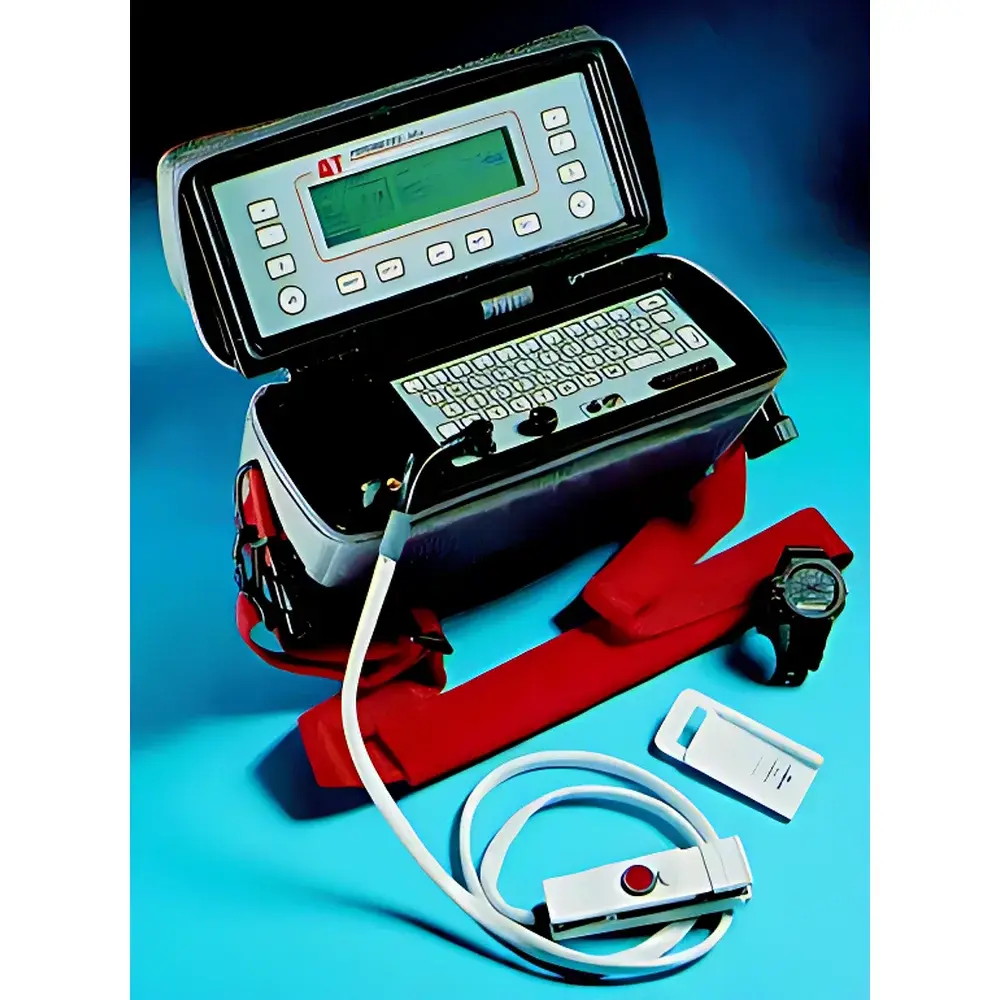
The AP4 Dynamic Porometer is a field-deployable, high-precision instrument engineered for non-destructive, real-time measurement of stomatal conductance and stomatal resistance in intact plant leaves. It operates on the principle of cyclic diffusion, quantifying water vapor flux across leaf surfaces by dynamically monitoring humidity gradients within dual-chamber leaf cuvettes. Unlike steady-state porometers that assume equilibrium conditions, the AP4 employs time-resolved humidity sampling—capturing transient changes in boundary layer vapor concentration—to compute stomatal parameters with enhanced sensitivity to rapid physiological responses (e.g., light-induced aperture dynamics or drought-triggered closure). Designed for rigorous plant ecophysiology and agronomic research, the AP4 delivers traceable, reproducible data under variable ambient conditions—from controlled growth chambers to open-field trials.
Key Features
- Dual-Cuvette Sensor Head: Equipped with two interchangeable leaf chambers—a slot-shaped chamber for narrow or elongated leaves (e.g., grasses, cereals) and a circular chamber optimized for broadleaf species (e.g., soybean, tomato)—ensuring optimal sealing and minimal edge leakage.
- Integrated Environmental Sensing: Onboard high-stability capacitive RH sensor (±4% RH accuracy) and quantum PAR sensor (400–700 nm) enable simultaneous recording of photosynthetic photon flux density and leaf-level humidity, supporting stomatal response modeling relative to irradiance.
- Active Thermal Regulation: A miniature Peltier-based heater-cooler maintains precise temperature control within the sample chamber (−5 to +55 °C), minimizing thermal drift and enabling measurements across diurnal temperature fluctuations and cold-acclimation studies.
- Traceable Calibration System: Includes a certified calibration disc fabricated from polypropylene with six precisely laser-drilled orifices (diameters traceably calibrated to NIST-traceable standards). When covered with saturated filter paper, it generates known vapor diffusion rates—serving as a physical reference source for field validation and inter-instrument comparability.
- Robust Field Architecture: IP54-rated enclosure, lithium-ion battery with 20-hour operational endurance, and low-power microcontroller architecture ensure reliable performance in remote locations without AC infrastructure.
Sample Compatibility & Compliance
The AP4 accommodates a wide morphological range of angiosperm and gymnosperm leaves—including thick succulents, thin herbaceous tissues, and needle-like conifer foliage—via its modular cuvette design and adjustable clamping mechanism. All wetted-path components are chemically inert (FDA-compliant polypropylene and silicone gaskets), preventing leaching or surface adsorption artifacts. The instrument conforms to ISO 17025-aligned calibration practices through its physical diffusion standard; while not a regulated medical device, its measurement methodology aligns with established protocols in ASTM E1318 (Standard Practice for Determination of Stomatal Conductance) and supports GLP-compliant data acquisition when used with timestamped, audit-trail-enabled logging software (see Software section).
Software & Data Management
Data are stored internally in non-volatile 32 KB memory (supporting 630–1600 readings depending on enabled sensor channels) and exported via USB 2.0 to Windows-compatible desktop software. The proprietary AP4 Data Manager provides: (i) automated calculation of stomatal conductance (mmol·m⁻²·s⁻¹), stomatal resistance (s·cm⁻¹), and transpiration rate (mmol·m⁻²·s⁻¹); (ii) time-series visualization with synchronized PAR and RH overlays; (iii) batch export in CSV and Excel formats compliant with FAIR data principles; and (iv) optional metadata tagging (operator ID, site code, treatment group). For regulated environments, optional 21 CFR Part 11-compliant add-ons include electronic signatures, audit trails, and user-access role management—validated for use in crop trait screening programs subject to OECD GLP guidelines.
Applications
- Phenotyping drought-tolerant cultivars via dynamic stomatal response kinetics under progressive soil moisture deficit
- Evaluating stomatal sensitivity to abscisic acid (ABA) application or CO₂ enrichment in controlled-environment chambers
- Field validation of canopy-scale models (e.g., Penman-Monteith) using leaf-level conductance inputs
- Ecological studies of stomatal behavior across elevational or latitudinal gradients
- Teaching laboratory modules on plant water relations, photosynthesis–transpiration coupling, and environmental stress physiology
FAQ
How does the AP4 differ from static or steady-state porometers?
The AP4 uses cyclic diffusion analysis—measuring the rate of humidity change over time—rather than assuming constant vapor pressure gradient equilibrium. This enables detection of sub-second stomatal adjustments and improved accuracy under non-steady-state conditions such as rapidly changing light or humidity.
Can the AP4 measure on conifer needles or small epiphytic leaves?
Yes—the slot-shaped cuvette accommodates narrow samples down to 2 mm width; custom adapter inserts (available upon request) support needle clusters and micro-leaves with minimal chamber volume.
Is calibration required before each use?
Daily verification with the included calibration disc is recommended for critical studies; full recalibration by an authorized service center is advised annually or after mechanical impact or extended storage.
Does the AP4 comply with FDA or EU regulatory requirements for agricultural research data?
While not a medical device, its data structure, audit-trail-capable software, and traceable calibration support compliance with OECD GLP, ISO/IEC 17025, and internal QA/QC frameworks used in commercial crop science R&D.
What maintenance is required for long-term reliability?
Routine cleaning of cuvette seals and RH sensor mesh with lint-free swabs and isopropyl alcohol; annual inspection of Peltier module thermal interface paste; and replacement of desiccant cartridges (if used in high-humidity deployments) every 6 months.