
Zealquest AI PTM-NG26 Distributed Plant Photosynthetic Physiology & Environmental Monitoring System
| Brand | Zealquest AI Netherlands |
|---|---|
| Origin | Netherlands |
| Manufacturer Type | Authorized Distributor |
| Product Origin | Imported |
| Model | PTM-NG26 |
| Pricing | Upon Request |
Overview
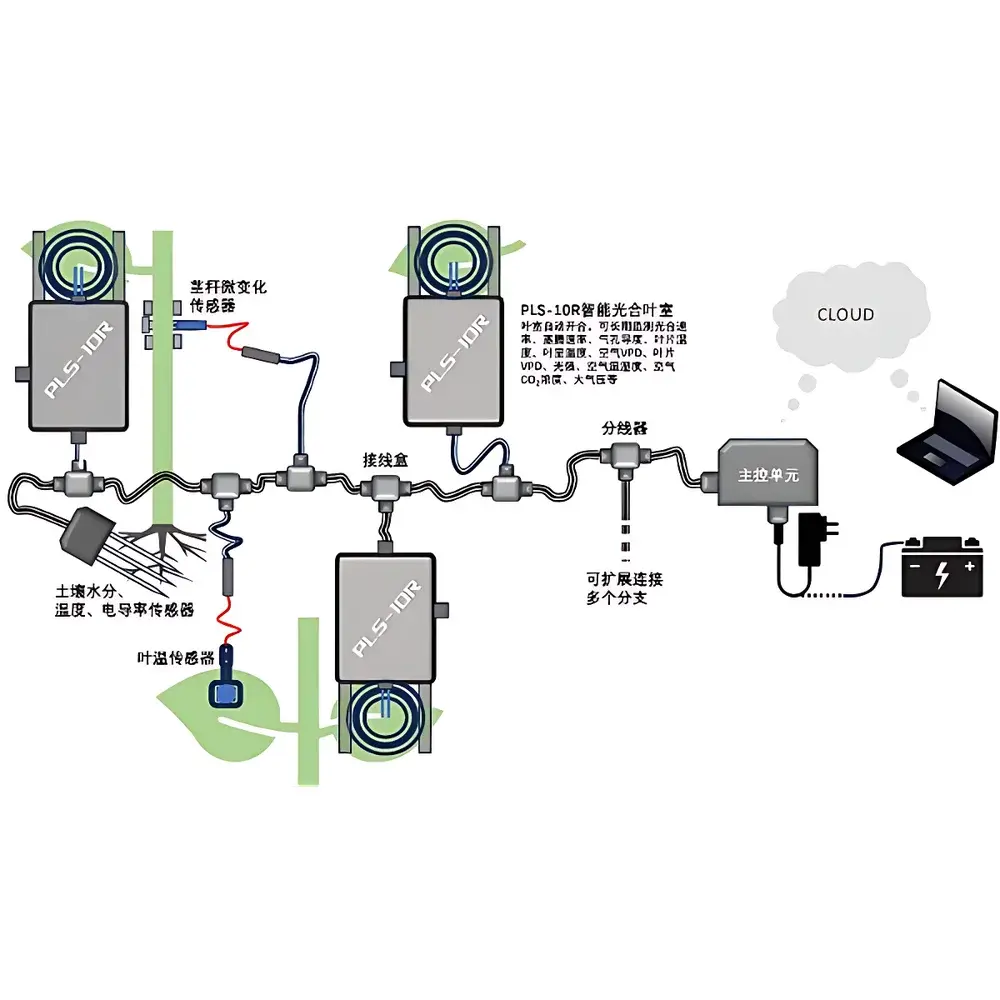
The Zealquest AI PTM-NG26 is a distributed, multi-channel plant physiological monitoring platform engineered for long-term, unattended field or controlled-environment deployment. Unlike conventional portable photosynthesis systems designed for spot measurements, the PTM-NG26 implements a continuous gas exchange measurement architecture based on infrared gas analysis (IRGA) and precision mass flow control. It operates on the principle of open-path, differential CO₂ and H₂O concentration sensing across leaf chambers under regulated environmental conditions—enabling high-temporal-resolution quantification of net photosynthetic rate (Anet), transpiration rate (E), stomatal conductance (gs), and intrinsic water-use efficiency (iWUE). Its modular design supports scalable deployment across heterogeneous plant populations, making it suitable for ecological time-series studies, agronomic phenotyping trials, and climate-response experiments requiring sub-hourly physiological resolution over days to weeks.
Key Features
- Dual-mode operation: automatic continuous monitoring with programmable measurement intervals (1–30 min) and manual spot-check mode
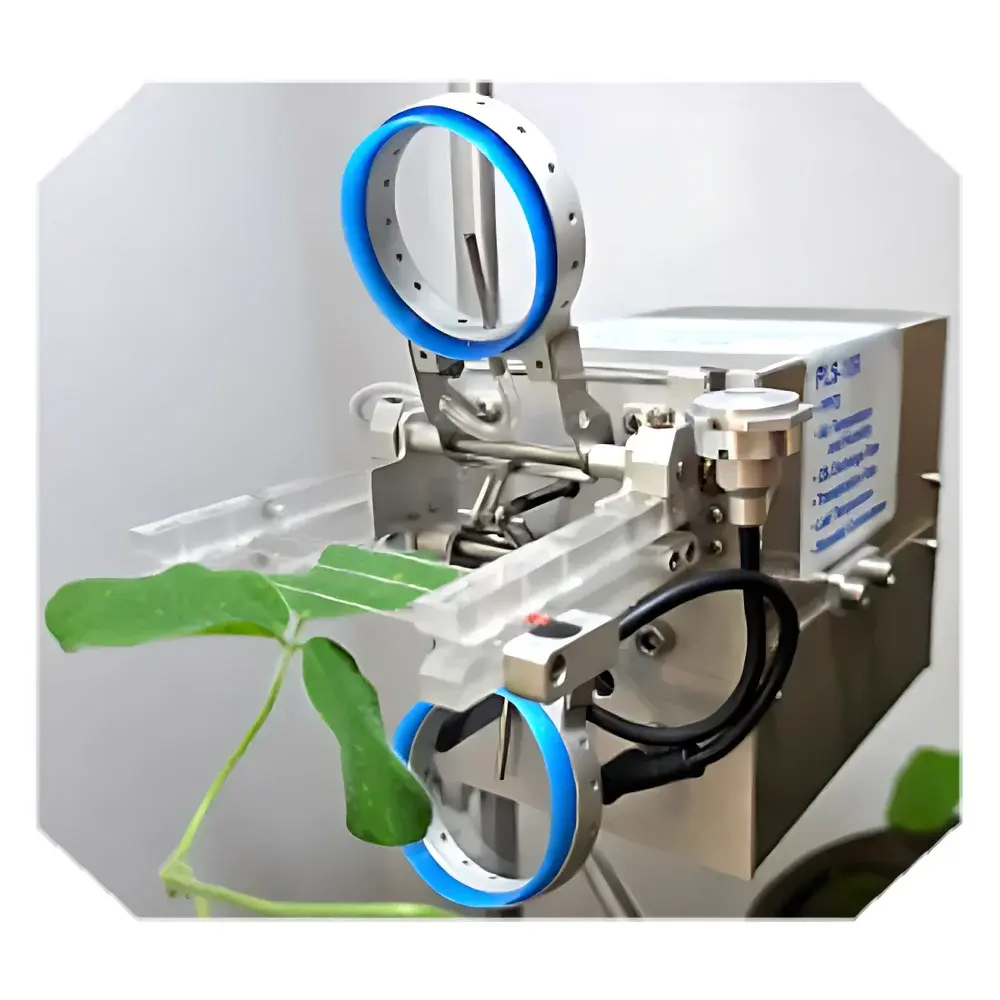
- 2–10 independently controlled, motorized leaf chambers with auto-opening/closing mechanism—minimizing mechanical stress and preserving natural leaf microclimate between measurements
- Circular standard chamber area: 10 cm² (rectangular variants available upon request); chamber temperature actively stabilized within ±0.5°C
- Integrated environmental sensing: on-board measurement of air temperature, relative humidity, atmospheric pressure, leaf temperature, chamber temperature, and photosynthetically active radiation (PAR/PPFD) up to 2000 µmol·m⁻²·s⁻¹
- IP53-rated enclosure for outdoor use; operational range: 5–50°C ambient temperature
- Wireless sensor expansion via LoRaWAN and RS-485 interfaces—supporting external probes for stem sap flow, dendrometer-based stem diameter variation, fruit growth kinetics, soil volumetric water content (VWC), and soil temperature profiles
Sample Compatibility & Compliance
The PTM-NG26 accommodates broadleaf, needleleaf, and monocot species with leaf lamina thickness ≤ 5 mm and petiole diameter ≥ 1.5 mm. Chamber geometry allows non-destructive clamping of intact, attached leaves without epidermal damage. All gas path components are chemically inert (electropolished stainless steel and fluoropolymer-lined tubing), ensuring minimal adsorption or catalytic interference during CO₂/H₂O detection. The system complies with ISO 17025 traceability requirements for calibration documentation and supports audit-ready data logging aligned with GLP principles. While not FDA-cleared (as it is a research instrument), its data structure and timestamping protocol meet foundational criteria for regulatory-compliant environmental physiology studies under ISO 22000 and OECD Test Guidelines 110/111 frameworks.
Software & Data Management
Data acquisition and visualization are managed through Zealquest AI’s proprietary EcoLog v4.2 software suite, compatible with Windows 10/11 and macOS 12+. The platform delivers real-time telemetry dashboards, automated daily summary reports (CSV, PDF), and raw time-series export (NetCDF 4.0 compliant). All measurements include embedded metadata: GPS coordinates (optional GNSS module), chamber ID, sensor calibration IDs, and environmental context tags. Audit trails record user actions, configuration changes, and firmware updates—supporting 21 CFR Part 11 readiness when paired with institutional electronic signature workflows. Remote access is enabled via secure TLS 1.3–encrypted web interface or MQTT broker integration for IoT ecosystem interoperability (e.g., PhenoSight, Eco-Watch, or custom SCADA platforms).
Applications
- Diurnal and circadian analysis of carbon assimilation and respiratory loss in response to light, VPD, and CO₂ enrichment gradients
- Quantifying stomatal vs. non-stomatal limitations to photosynthesis using A/gs response curves and marginal water-use efficiency modeling
- Long-term drought stress phenotyping—correlating stem shrinkage dynamics, soil moisture depletion, and canopy-level transpiration decline
- Varietal screening under controlled environment agriculture (CEA) settings, including vertical farms and growth chambers
- Ecophysiological monitoring along Mediterranean coastal transects to assess plant–atmosphere CO₂ exchange resilience under climate variability
- Integration with canopy-scale micrometeorological stations for scaling leaf-level fluxes to ecosystem-level models (e.g., Penman-Monteith parameterization)
FAQ
Can the PTM-NG26 operate autonomously for more than 72 hours without intervention?
Yes—when powered by a 12 V DC source (e.g., deep-cycle battery with solar charge controller) and configured with low-power sensor sampling, the system sustains continuous operation for >14 days with onboard data storage (32 GB SD card) and optional cloud backup.
Is calibration required before each experiment?
Zero and span calibration using certified CO₂ (0 ppm and 500 ppm) and humidity standards is recommended every 7 days for research-grade accuracy; automated zero-check routines run hourly during idle periods.
Does the system support third-party sensor integration beyond Zealquest AI’s catalog?
Yes—via Modbus RTU or analog 0–5 V / 4–20 mA inputs, provided the sensor outputs conform to IEC 61000-4-5 surge immunity and operate within the specified voltage isolation limits.
How is leaf temperature measured, and what is its stated uncertainty?
Using a contactless infrared pyrometer (8–14 µm spectral band) with factory-calibrated emissivity correction (ε = 0.96 ± 0.01); typical uncertainty is ±0.3°C at 25°C ambient.
Can data from multiple PTM-NG26 units be synchronized across a field site?
Yes—using GPS-synchronized NTP time servers and shared network time protocols, enabling millisecond-level alignment of multi-node physiological time series for spatial gradient analysis.



